
UNC women’s lacrosse coach built a dynasty. How her daughter is keeping it alive
Ask Kate Levy about the “golden key incident” and she blushes. A quick wave of embarrassment cuts through the composure she carries on the field.
“Oh gosh…” she says, trailing off before she can get to the details, already shaking her head like she can see it happening again in real time.
The story about the golden key is as good a place as any to begin to understand what it meant to grow up the youngest of the three Levy siblings. To be the only girl of the bunch, always fighting in one way or another to earn her place. To be Kate Levy, tagging along with two older brothers and their friends, taking the hits, learning quickly that nothing would be given. Not in the backyard, not in the house, not on the field, not anywhere.
She played soccer too, and played it well enough to imagine a future there. But lacrosse was always there, constant and unavoidable, passed down through two parents who had lived it at the highest level. Jenny Levy, the only UNC women’s lacrosse head coach in program history and Kate’s mother, led Virginia to its first national championship in 1991 as an All-American. Dan Levy, a vice president at Wasserman and Kate’s father, also won a national title in 1991. He did so at UNC. Kate’s two older brothers, Ryan (24) and Alec (22), also played lacrosse at North Carolina.
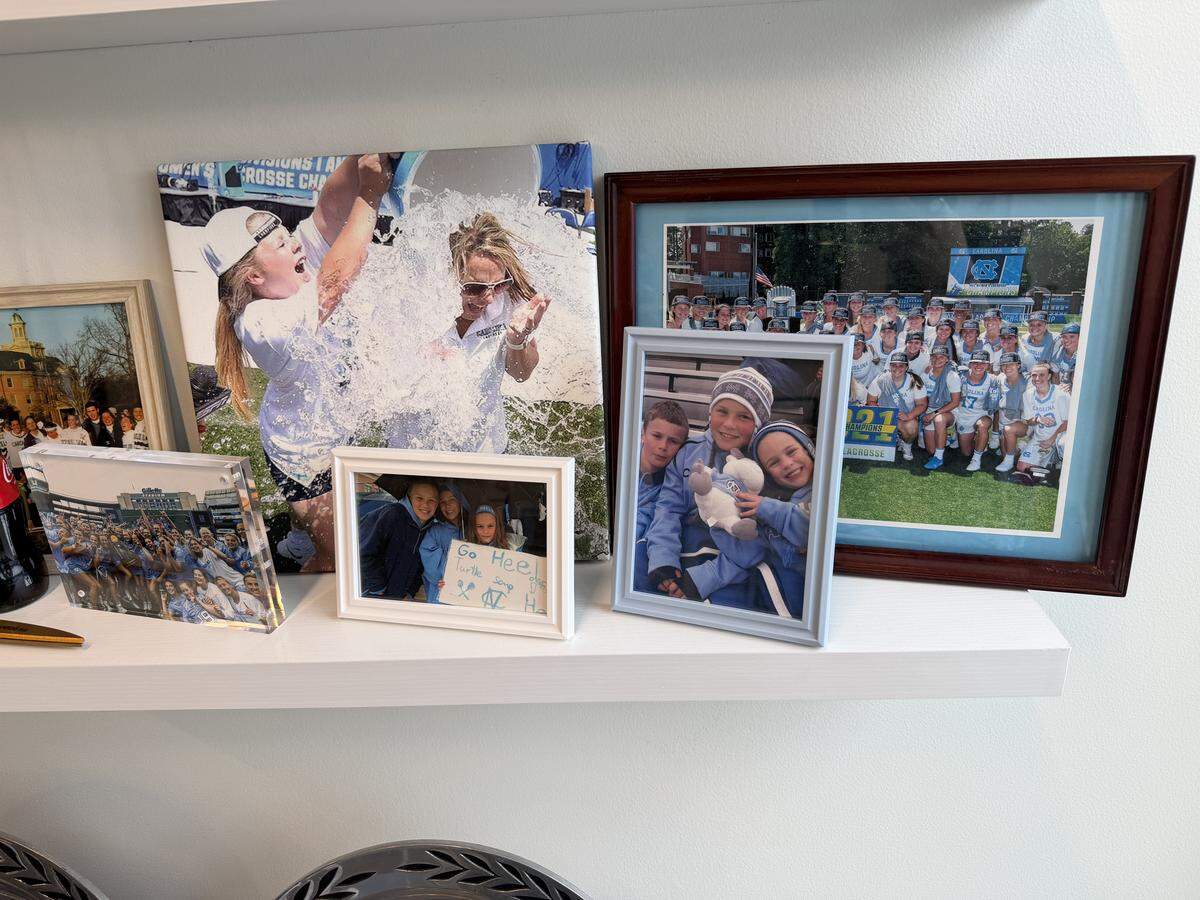
Lacrosse, from the time Kate was old enough to hold a stick, became the proving ground — the place she climbed from all-boys youth leagues to a second-team All-American at UNC. Now, Kate “Coast-to-Coast” Levy is a starting midfielder for the Tar Heels, who are preparing to bring that same edge to the Final Four in Evanston, Illinois, as they defend their national title this weekend. That fight has always defined Jenny, which is why it’s defined her powerhouse program in Chapel Hill and, of course, trickled down to her daughter Kate.
It’s also why, sitting in her office in late April in front of her four NCAA championship trophies, Coach Levy doesn’t start with stats or accolades when asked to describe her daughter.
She starts with a story.
Her favorite. The one about the golden key.
It was a Sunday afternoon toward the end of spring. Kate was about three years old, Jenny estimates, which would make Alec “probably five” and Ryan “probably seven.”
Kate had a habit then, Jenny said, of slipping into her brothers’ rooms and “rummaging” through whatever she could find. That day, Ryan’s golden key was the subject of her search.
From what Ryan recalls, he tracked Kate down in their backyard to reclaim his key — complete with a forceful shove — before going over to a friend’s house for a couple hours, leaving his bedroom defenseless against Kate’s fury.
“I came back and it was a friggin’ gong show,” Ryan said. “There were crayon marks on my walls. My bed was covered in baby powder and shampoo. I lost my mind.”
Ryan’s Nintendo DS, a centerpiece of childhood currency, took the worst of it. Alec vividly remembers it “completely glued shut with body wash.” Jenny said it sat “sizzling” in the corner of Ryan’s room. The two brothers still commiserate about the Mario Kart levels lost on that fateful day.
“We had a brand-new house,” Jenny added. “The rugs were stained. There was crap everywhere. It looked like she came and robbed his room, at (age) three. We were all like, ‘that might be an indicator that we’ve got a live wire.’”
As for Kate?
“I learned that I was not a very nice sister,” Kate said, “and I think I’ve definitely grown to like Ryan and Alec a little more.”
But upon reflection, and with a little bit of prompting, she’ll give her brothers some credit.
“I think my personality is based off of growing up with my brothers,” Kate added, “and it’s been constructed by fighting with them, having some battles. I joke with my roommates all the time. They’re like, ‘You’re really confrontational.’ If something’s going on or something needs to be said, it’s just said. No one beats around the bush. I think that’s how my family operates. That’s definitely rubbed off on me, for sure.”
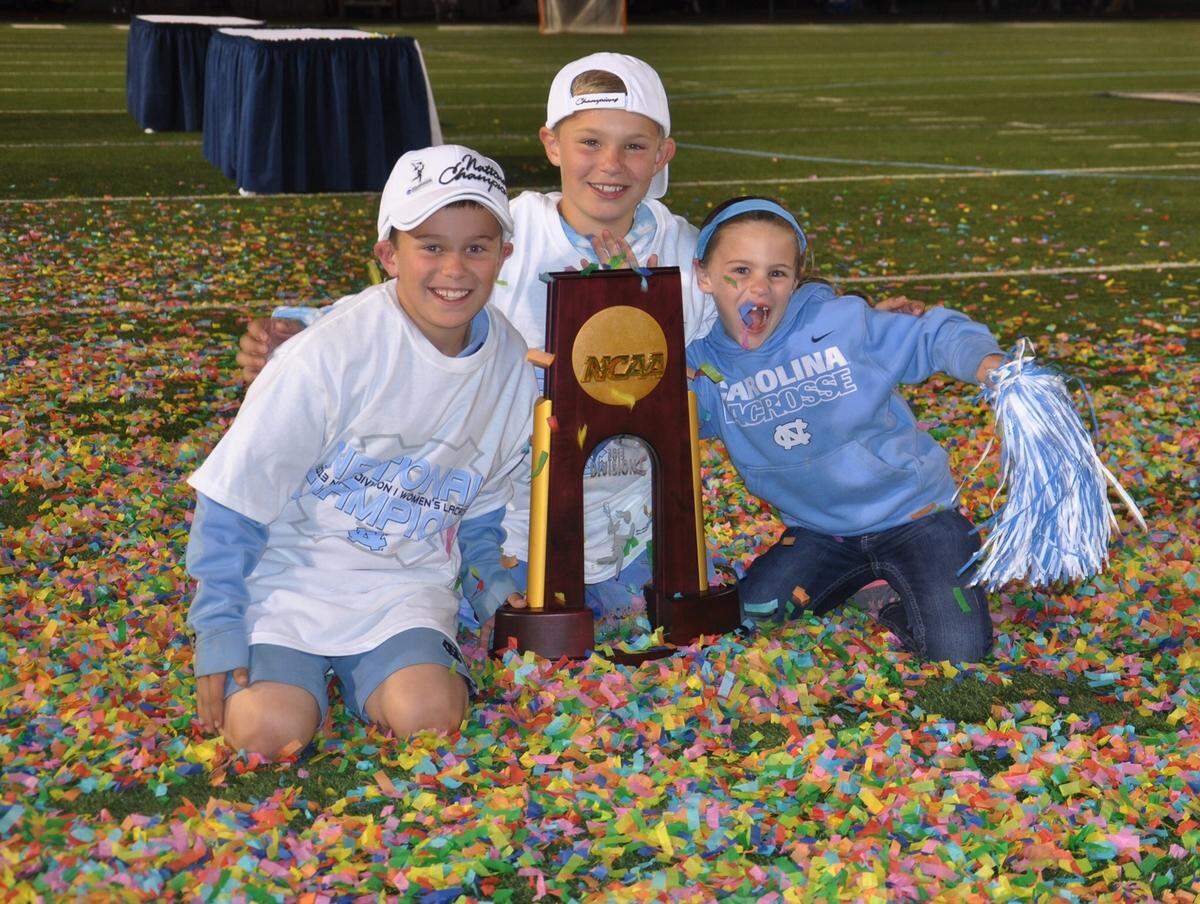
No princess treatment
Kate didn’t need to be pushed into sports as a kid. She was always forcing her way in.
Whether it was street hockey or pickup basketball, she wanted a spot with her brothers.
“(It) made her a better athlete,” Jenny said, “because she’s always playing up with the boys. And the rule was, if you played with the boys, there’s no whining or complaining. You had to be tough.”
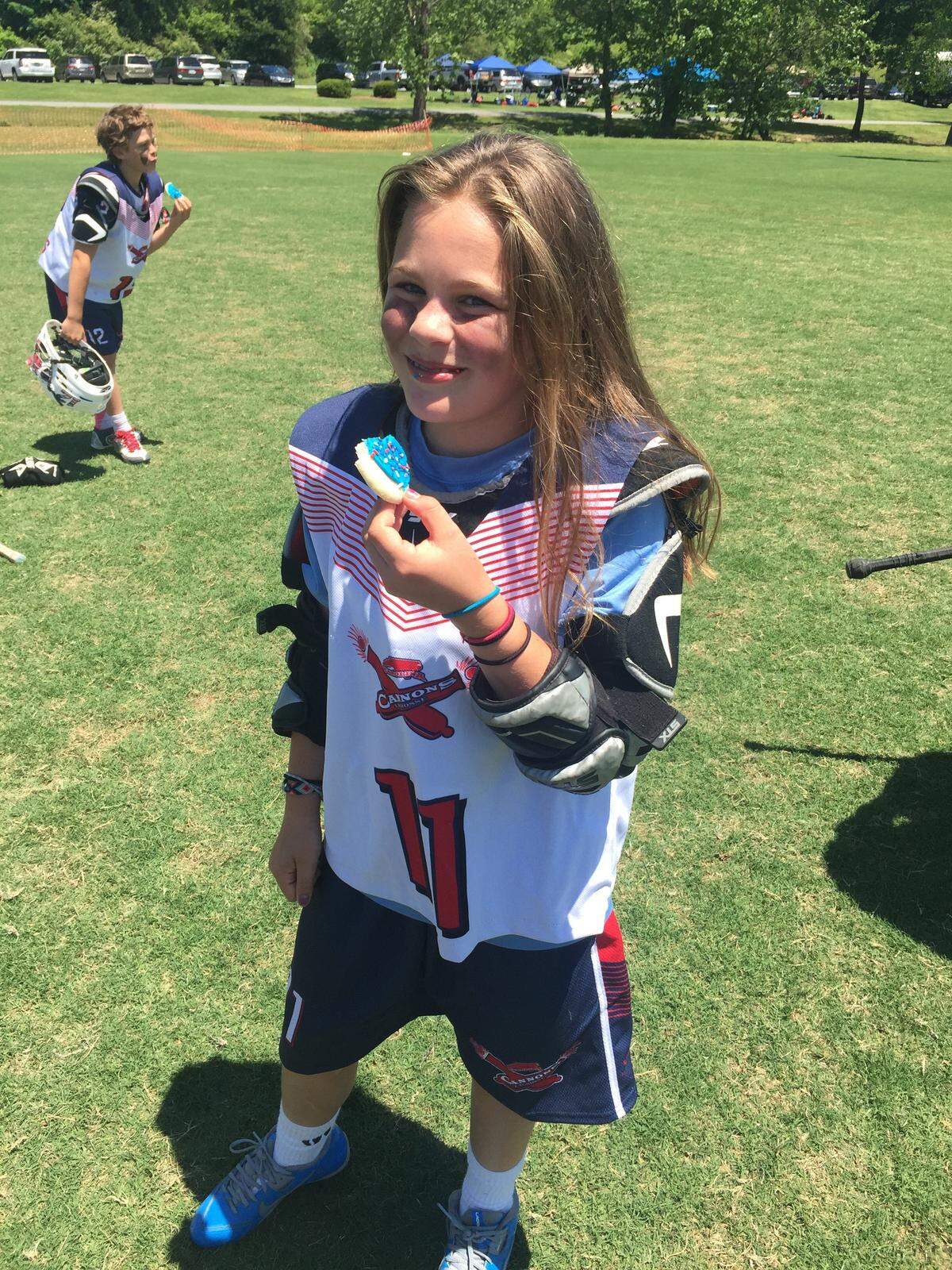
Kate played club boys’ lacrosse with the Carolina Cannons until sixth grade — long enough for the game to shape her in ways that still show up now.
That meant getting knocked around. It meant learning how to hold onto the ball with defenders slashing at her and her stick.
It also meant hearing it.
“The other kids I was playing against saw the braid coming out of the back and would be like, ‘You’re a girl. You can’t be here. You can’t play with us,’” Kate said. “And then I would just take that personally and go put it into my play.”
That same idea applied at home.
“There wasn’t any type of princess behavior going on in our household,” Jenny said.
Ryan and Alec didn’t take it easy on her. If anything, they made it harder. They teamed up on her. Pushed her. Tested how much she would take.
One summer at a UNC boys’ lacrosse camp, Alec — who estimates Kate was about eight at the time — found himself lined up across from his little sister, the smallest person on the field.
Kate and Jenny remember it being a ground ball drill. Alec recalls it a bit differently.
“We’re scrimmaging, and someone was smart enough to put us on opposite teams,” Alec said. “The goalie throws an outlet pass to her. I see this golden arch of the ball. I have a full-on 10-yard head start to just hit her as hard as I can.”
All the Levys remember the next part the same way.
“He just came out of nowhere and just blew me up,” Kate said. “Like, ‘Oh sh*t.’ Completely rocked me.”
Kate went down hard. Then she got up and charged her brother — swinging her stick without hesitation.
“Sometimes I definitely would go cry to my dad,” Kate said. “And then other times, I’d be like, ‘All right. If you’re gonna do that to me, I’m gonna come after you.’”
During COVID, that meant stepping into workouts with her high school brothers. Ryan had just graduated from East Chapel Hill High and was trying to prepare for the next level. His eight-grade sister “dropping passes left and right” wasn’t exactly conducive to that.
Jenny told Kate, “if you want to be included, you got to get better.”
So she did.
Kate turned to the garage, where a cinder block wall became her training partner. She kept tally on a wooden post, determined to outwork her brothers.
“I’m like, ‘I want to hit the wall more than you guys do,’” Kate said. “And I want to win this battle and always be ahead. So that’s when I really saw an improvement in my stick work.’”
The difference showed. The drops faded and her game sharpened. But Ryan didn’t ease up. His passes still came in hot. Early on, Kate’s instinct was to flinch. He wouldn’t allow it.
“But you’re throwing it at my face!” Kate would say.
“I don’t care, catch the ball,” Ryan would reply before firing another pass at her head.
Over and over. No excuses. Just reps, and the expectation she’d handle them.
‘Kate was in the huddle’
To grow up in the Levy household is to be constantly surrounded by pressure. That’s not to say the Levy kids didn’t have their childhood fun — far from it. Some of Alec’s earliest memories around his mom’s program, he said, are running around the outside of Dorrance Field, circling the rocky ground and a tree stump he and Ryan always gravitated toward.
“We were so young, we had no clue what was going on in the game,” Alec added.
But Kate did.
“Kate was in the huddle and was in practice from ages five to 15,” Ryan said. “She was not playing, but she was a part of those conversations. She was a fly on the wall during film, during meetings. Whether she understood it or not, she was taking in information and understanding how to feel in those moments.”
Jenny’s players were there at every stage of Kate’s childhood. They were babysitters when she was a toddler. They were coaches when she first picked up a stick. They took time after practice to shoot on goal with her. Most kids take field trips to zoos or museums. Kate’s field trips were bus rides with her mom’s teams to Charlottesville. She saw how these young women prepared for high stakes games. She sat with them after wins and losses.

The wins, of course, outnumbered the losses. UNC’s first national title came in 2013, a triple-overtime championship game Kate remembers only in fragments — the nerves, Ryan in tears afterward and the rush of fans spilling out from the stands.
“I just remember being so invested in it,” Kate said. “It’s so funny that now I’m invested in another way. Sometimes I find myself reacting to my teammates’ goals on the sideline and I just get super intense. I’m like, ‘Wow. That hasn’t changed.’”
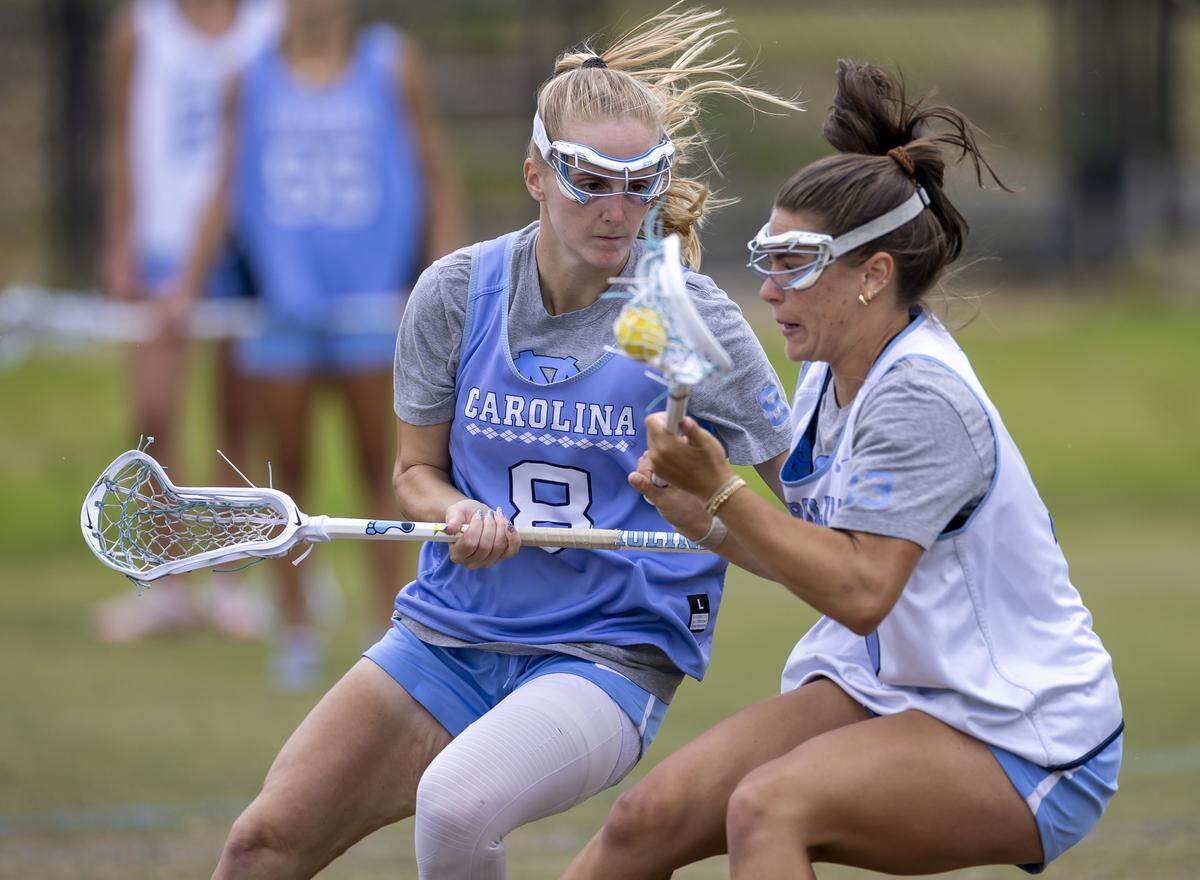
‘Finally’ a Tar Heel
By the time recruiting opened, Kate Levy wasn’t just a coach’s daughter. She was one of the best high school players in the country — a top-three recruit nationally and U.S. U20 gold medalist. College coaches weren’t questioning her ability. They were deciding whether it was even worth trying to pull her away from mom.
For a moment, Kate considered it. She remembers that lasting about a week.
“It was one day,” Dan countered. “Honestly.”
Dan talked Kate through her options one November day as he drove her to a soccer practice. They ran through what she wanted: a great school, a place that could win a national championship, a high level of play. Then he started naming schools.
One by one, the list fell apart.
No, not there. No, I wouldn’t go there. No.
Finally, Dan asked, “If your mom wasn’t the coach at Carolina, where would you go?”
She’d still want to go to Carolina, she said. And just like that, her recruitment process was over. She told her club coach not to bother fielding calls. There would be no visits. No flood of offers that most elite prospects spend years anticipating.
On Sept. 1 of her junior year, the first day college coaches can officially make direct contact, Kate was getting ready for class when her phone rang around 7:30 a.m.
While most recruits watch for particular area codes to call their line, her phone lit up with “mom.” Jenny knew what her daughter’s answer would be, but she still had to ask the question.
“Hey,” Jenny said, “do you want to finally be a Tar Heel?”
.JPEG "IMG_0051 (1).JPEG")
‘She is just a dog’
One of Dan’s favorite photos of Kate is grainy and dim, taken inside the locker room after Coach Levy’s first national championship in 2013.
Kate is six. A backwards championship hat swallows her little head. Around her, UNC players form a loose circle, half-exhausted, half-elated. Kate’s on her knees, both hands wrapped around the trophy, staring at it like nothing else exists.
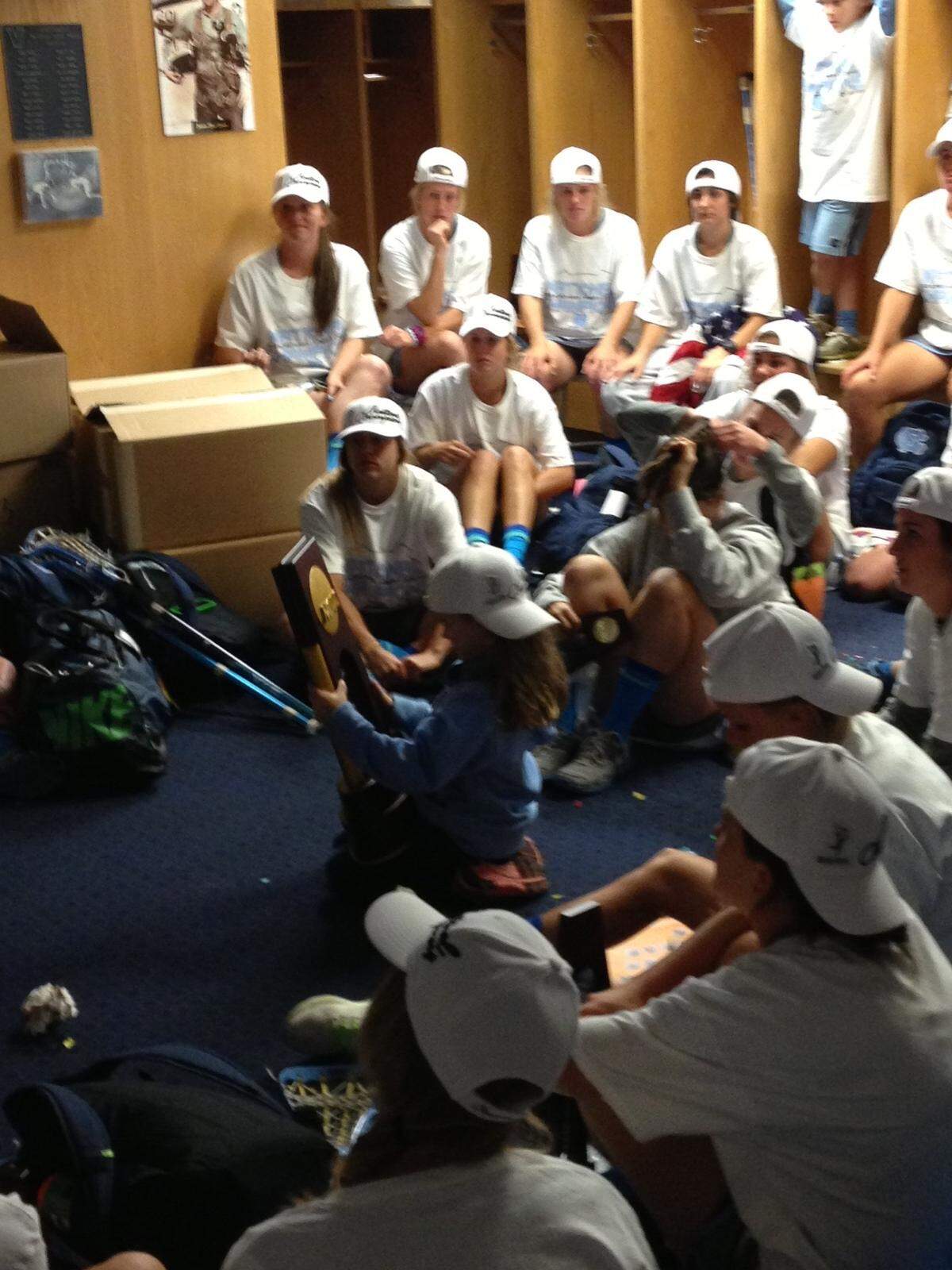
The next day, she and her brothers wore all their championship gear to school — even the adult sneakers Kate joked looked like “clown shoes” on her.
At Estes Hills Elementary in Chapel Hill, the principal came over the loudspeaker to congratulate Kate, Alec and Ryan’s mom on winning the national title. The siblings brought pieces of the cut-down net and passed it around to their classmates like a show-and-tell item.
“You would've thought we just won the Super Bowl,” Alec said with a laugh. “And played in it.”
In the Levy household, this didn’t stay a one-off memory for long. UNC women’s lacrosse won it again in 2016 when Kate was nine, and again in 2022 when she was 15. Last year, as an 18-year-old freshman, she scored and caused two turnovers in the Tar Heels’ national championship win over Northwestern.
Kate played all 22 games last season and was ranked by Inside Lacrosse as the No. 5 impact freshman in the country.
Her production has only grown since.
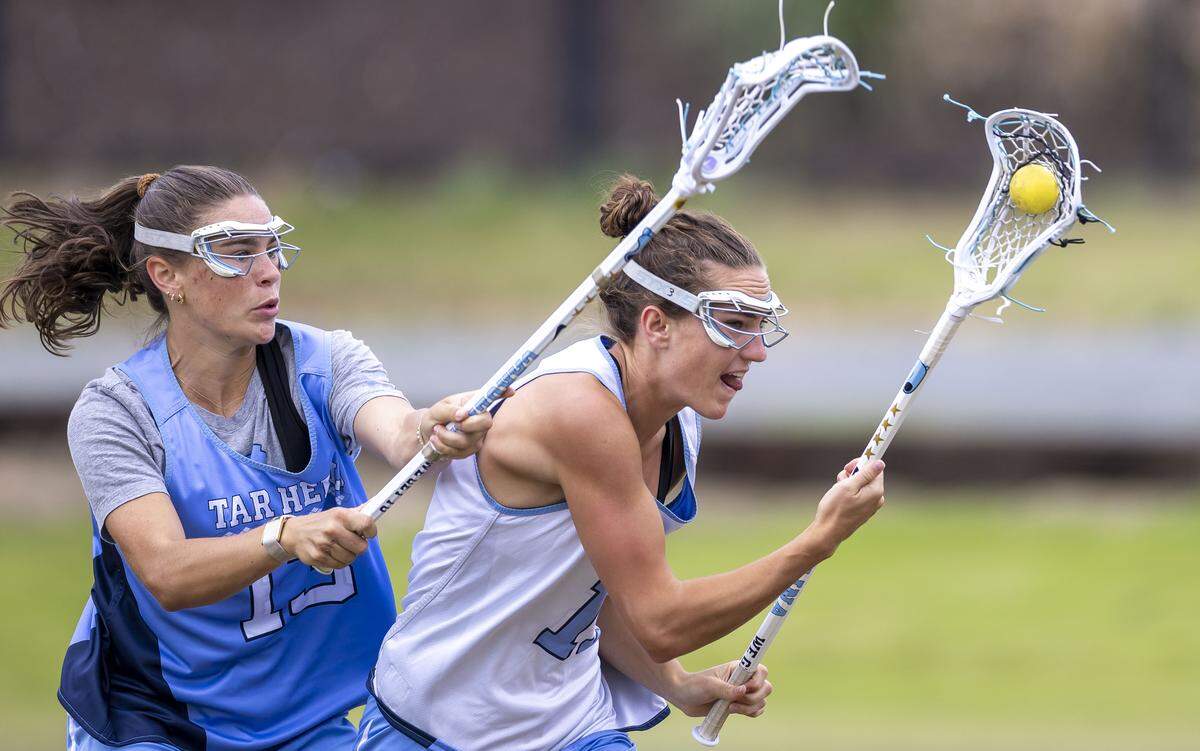
As a sophomore starter this year, Kate was named a second-team All-American and currently has 26 goals, 14 assists, 27 ground balls (second on the team), 21 caused turnovers (tied for the team lead) and 10 draw controls on the season.
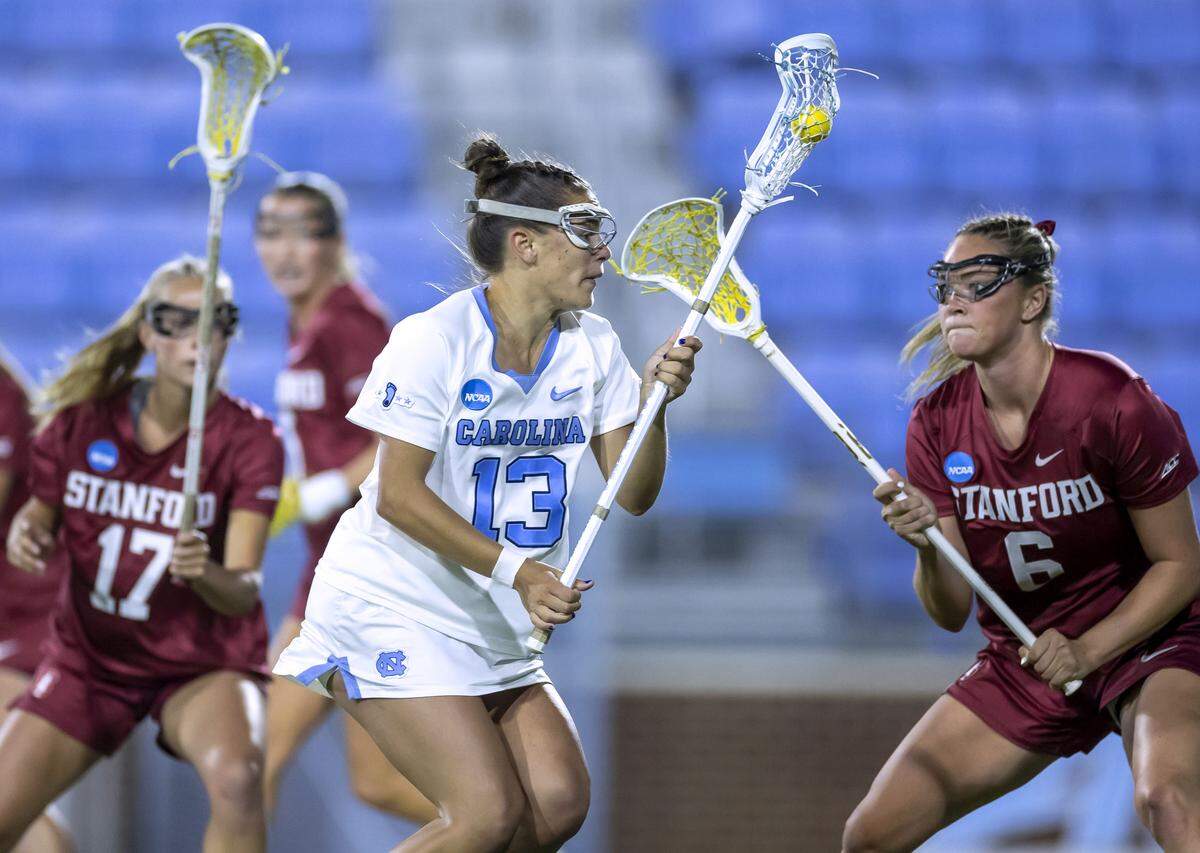
“It’s an honor to play alongside Kate,” UNC sophomore attacker Chloe Humphrey, the reigning national player of the year, said. “She is just a dog. She’ll put the team on her back to do anything we need to win… she’s such a menace all over the field.”
And in the biggest moments, Kate keeps showing up the same way she did in that photo: in the center of the action. Ryan still raves about his little sister’s goal in the 2025 ACC Championship, which saw her “cause the turnover, pick up the ground ball, and (go) right to the rack.” Alec is practically giddy when he describes his favorite play of hers from this year’s conference title game — reciting the moment with the precision of a seasoned play-by-play announcer.
Stanford had clawed back with three straight fourth-quarter goals. Then Kate stepped in.
“There’s maybe eight minutes left, and you could tell it was a little tighter,” Alec said, recalling his view from the stands. “And she catches the ball on the backside, dodges the first girl, basically splits the second girl — gets hit across the face — and stomps one home.”
“I looked at my dad,” Alec continued, “and I was like, ‘that was the biggest goal of the game.’”
Kate’s goal sealed a 12-8 ACC championship win for North Carolina and a hat trick for her. But Humphrey’s still thinking about Kate’s first goal of the game — which saw her break through a double team and hit the floor as her goggles were knocked off her head.
“That play says so much about Kate as a player and as a leader,” Humphrey said. “She doesn’t try and flail and get the call. She just puts her head down… Kate Levy can literally go through five sticks and still get the ball in the back of the net. So she’ll do whatever it takes and no one’s gonna get in her way.”
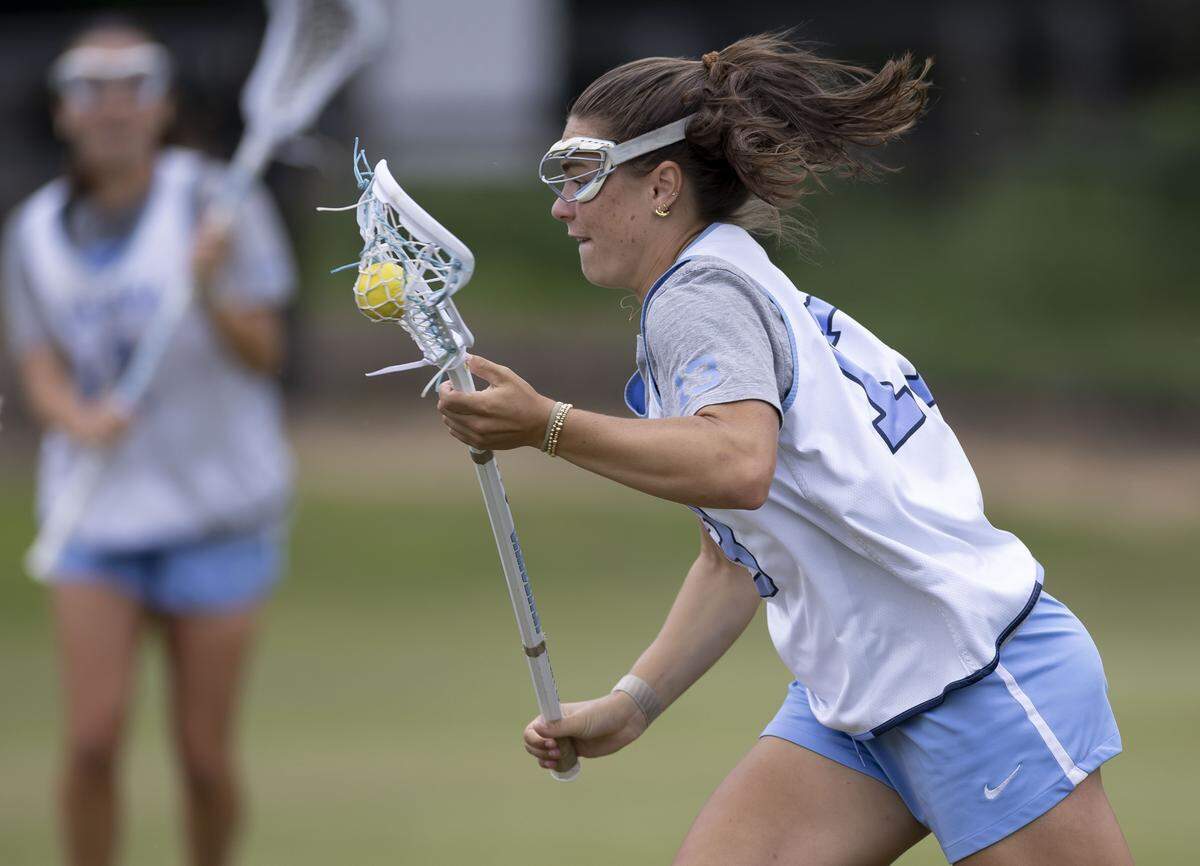
Jenny’s girls
There were less than two hours until the team bus would leave for RDU, the first leg of a trip that would end in Evanston, Illinois, and, they hope, another national title. The sun sat heavy over midday practice at the Bill Koman Practice Complex — 89 degrees pushing past 90 with the humidity, the outdoor turf trapping and radiating heat back up through their cleats. And still they ran.
The Tar Heels had already gone through everything: full-field scrimmaging, half-field sets, scout looks, shooting — the kind of practice that empties you out. And then they followed that with sprints.
“Last one, best one!” a staffer yelled, finally.
Hands dropped to hips. Heads tilted back. Pinnies doubled as towels, dragged across faces. Someone turned up Rihanna’s “Breaking Dishes,” on the speaker, the bass thumping as some line about “taking names” cut through the heat. The players braced for the whistle that would release them for one last sprint from baseline to midfield. One last run and they’d be out of their misery.
Kate Levy bounced on her toes.
Not restless. Ready.
She tapped her feet, quick and light. She jerked her neck to the side — a small reset, like flipping a switch. While others gathered themselves, she leaned forward.
In the distance, Jenny Levy watched.
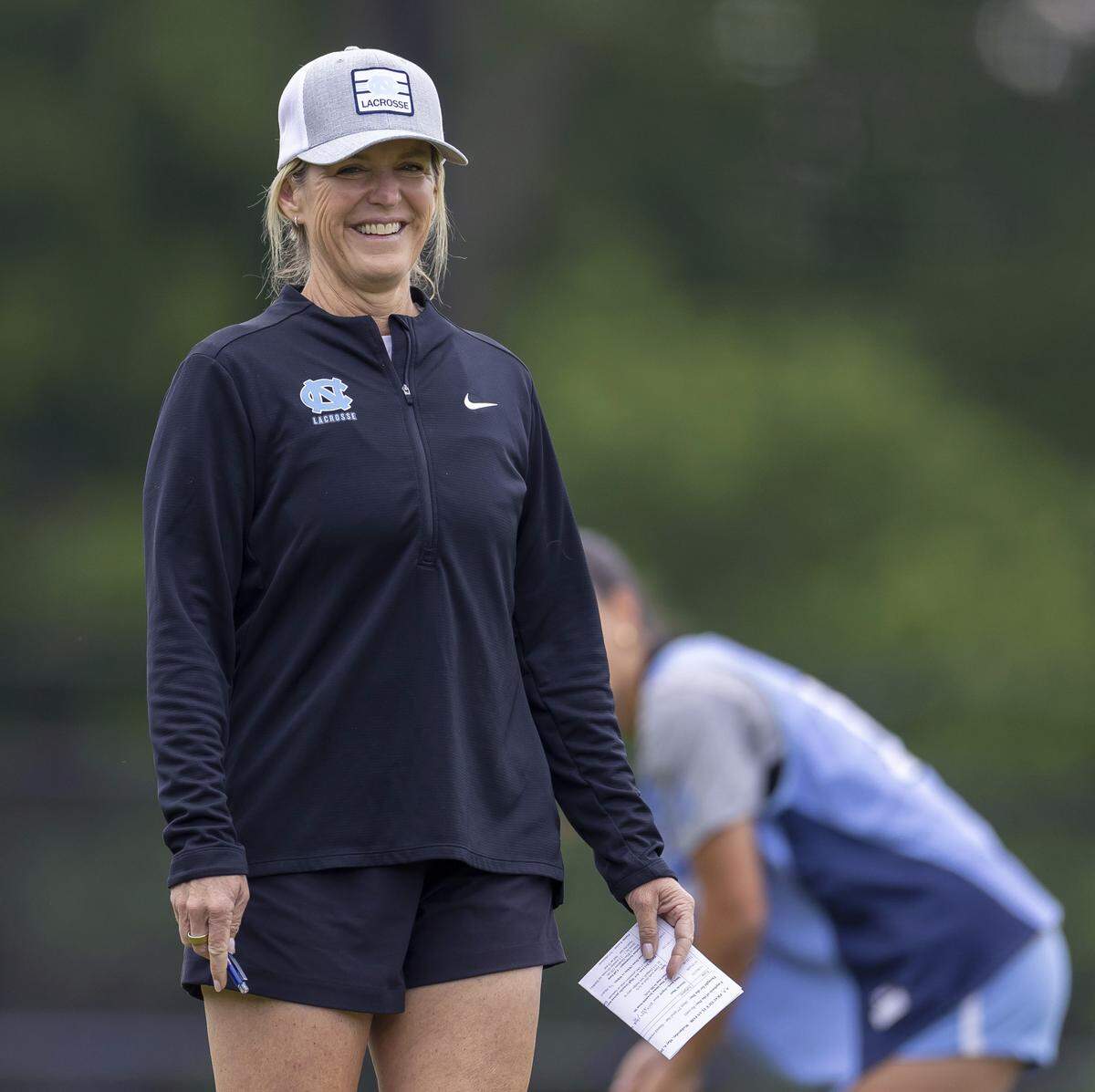
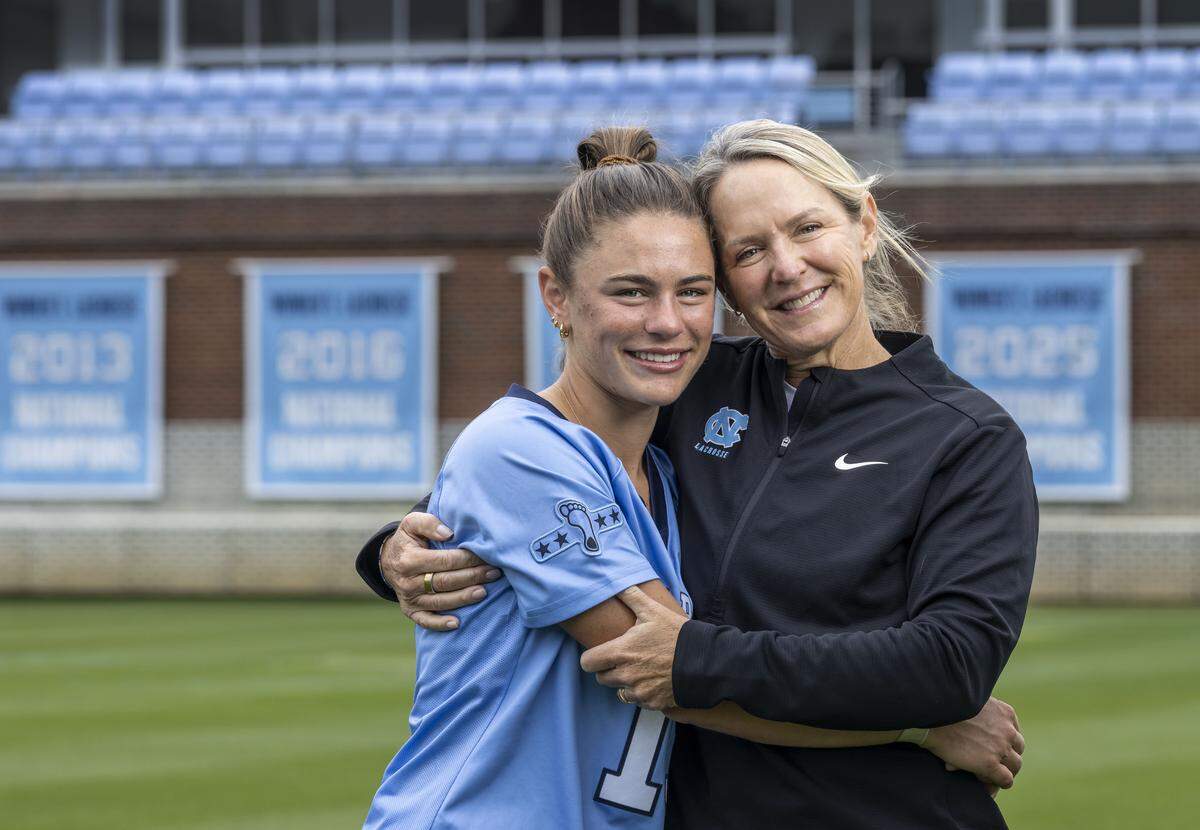
Truthfully, there hasn’t been much time for her or Kate to reflect about how special this experience is. The two are the first mother-head coach/daughter-player relationship in Division I women’s lacrosse, says Jenny. Winning their first national title together last year — thus becoming the first mom-daughter pair to do so — offered a brief period to breathe and ruminate. And then Jenny’s focus quickly turned to doing it again. To pushing her Tar Heels, who went 22-0 last season, past perfection.
Because Jenny demands the best. Because Jenny loves each of her players like her own daughter.
“She’s always very vocal, very direct, but also encouraging,” Kate said. “She’s very good at mixing criticism with compliments. And I think that’s why what she has to say is really well received. I think that’s something I’ve tried to emulate in my leadership.”
So, three days before another Final Four, under a punishing sun, the Tar Heels ran again. And in the middle of the pack was Kate, already set, already wanting it.
She bent into her sprinter stance and prepared to take off again alongside her teammates — she and the rest of Jenny’s girls.
“Ultimately, what I want for her as a mom and as a coach is to have her experiencing all these moments and memories with her team,” Jenny said. “It’s not as much about me and her. But I think after the fact, in five years, we’ll look back be like, ‘That was sick.’”
This story was originally published May 21, 2026 at 5:00 AM.