
UNC tennis player settles lawsuit, forces NCAA to relax prize money rules
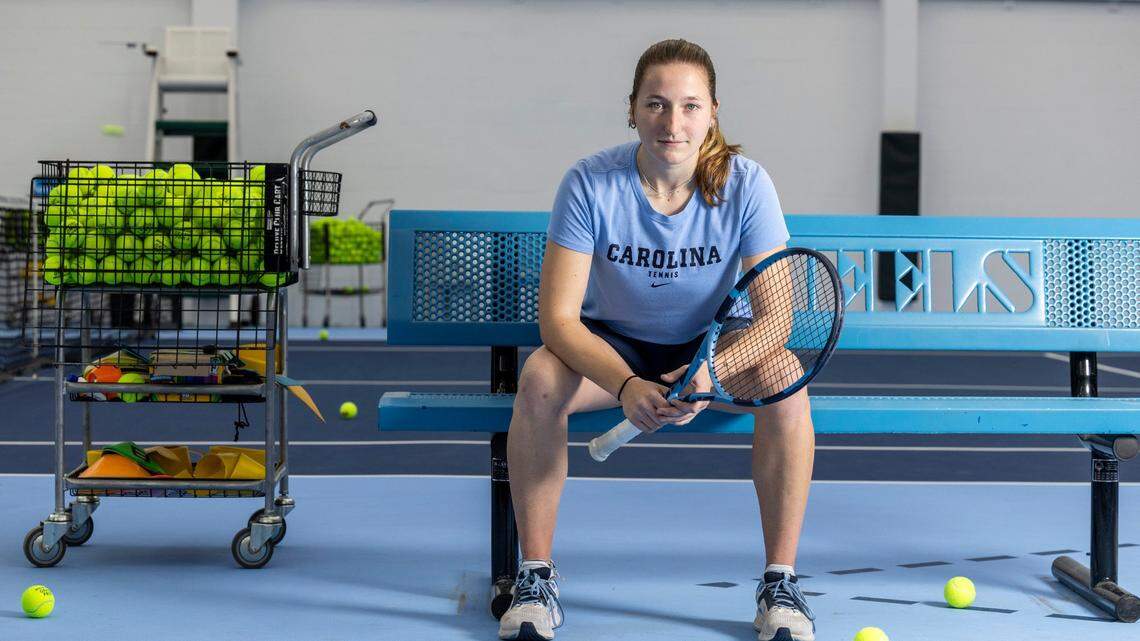
UNC women’s tennis star Reese Brantmeier won an NCAA singles title in December. She earned another win recently in the courtroom.
The NCAA has agreed to a significant overhaul of its antiquated prize money rules and a $2.02 million settlement in a class action lawsuit spearheaded by Brantmeier.
The proposed settlement, filed Tuesday in the U.S. District Court for the Middle District of North Carolina, aims to resolve antitrust claims challenging the NCAA’s restrictions on college athletes accepting monetary prizes pre-enrollment.
Brantmeier, alongside co-plaintiff and fellow tennis player Maya Joint, initiated the lawsuit on behalf of current and former NCAA Division I athletes in “numerous individual sports, including tennis,” per the settlement. The plaintiffs argued that the NCAA’s prize money rules violated Section I of the Sherman Act by restricting college athletes’ ability to accept “cash awards, bonuses, and other monetary prizes.”
The NCAA has allowed athletes to profit off their name, image and likeness since 2021. In 2025, the NCAA allowed schools to begin sharing revenue directly with athletes. But, at the same time, the NCAA’s rules have remained quite strict regarding prize money matters.
NCAA prize money regulations previously held that athletes could accept up to $10,000 per calendar year prior to enrollment, but beyond that, only funds that cover “actual and necessary expenses” from competing in these professional-level tournaments can be accepted. Brantmeier was ineligible the fall of her freshman season due a dispute with the NCAA over whether her U.S. Open expenses fell under said criteria.
Brantmeier earned nearly $50,000 in prize money at the U.S. Open prior to coming to UNC in 2022, but forfeited the money in order to maintain her college eligibility.
Now, under the terms of the proposed settlement, the NCAA agreed to eliminate all restrictions on college athletes’ ability to accept prize money prior to their initial, full-time collegiate enrollment. This change, which became effective on February 25, will apply to athletes across all sports, not just tennis.
The NCAA will also be permanently enjoined from reinstating these pre-college enrollment prize money rules. This injunctive relief is expected to positively impact future generations of student-athletes, with an estimated present value of future pre-enrollment prize money that can now be retained by athletes at approximately $14.8 million.
As previously reported by the N&O, Brantmeier’s case could affect as many as 12,000 athletes who competed in Division I tennis since March 19, 2020, or couldn’t compete because of prize money restrictions.
And that’s before factoring in those who gave up prize money during that time or future athletes who may benefit from a ruling in Brantmeier’s favor.
“I’m hoping that another girl who comes in behind me, who is in my shoes — hopefully we have that top level of talent playing in college,” Brantmeier told the N&O in December. “I want girls playing the U.S. Open and then going to college. That’s incredible. People want to pursue their education. They shouldn’t have to choose between earning money that is rightfully theirs and pursuing education.”
Brantmeier said the lawsuit has come with plenty of “frustrations,” but she knows it will do “a lot of good.”
“I think when I truly feel like I have a joy and a purpose in what I’m doing, I’ll always be able to find the energy for it,” Brantmeier said.
Brantmeier declined comment when reached Wednesday morning by the N&O.
Postseason play for Brantmeier and the Tar Heels begins this weekend at Chapel Hill’s Chewning Tennis Center.
This story was originally published April 29, 2026 at 9:24 AM.