
An interview with UNC AD Bubba Cunningham: Part I
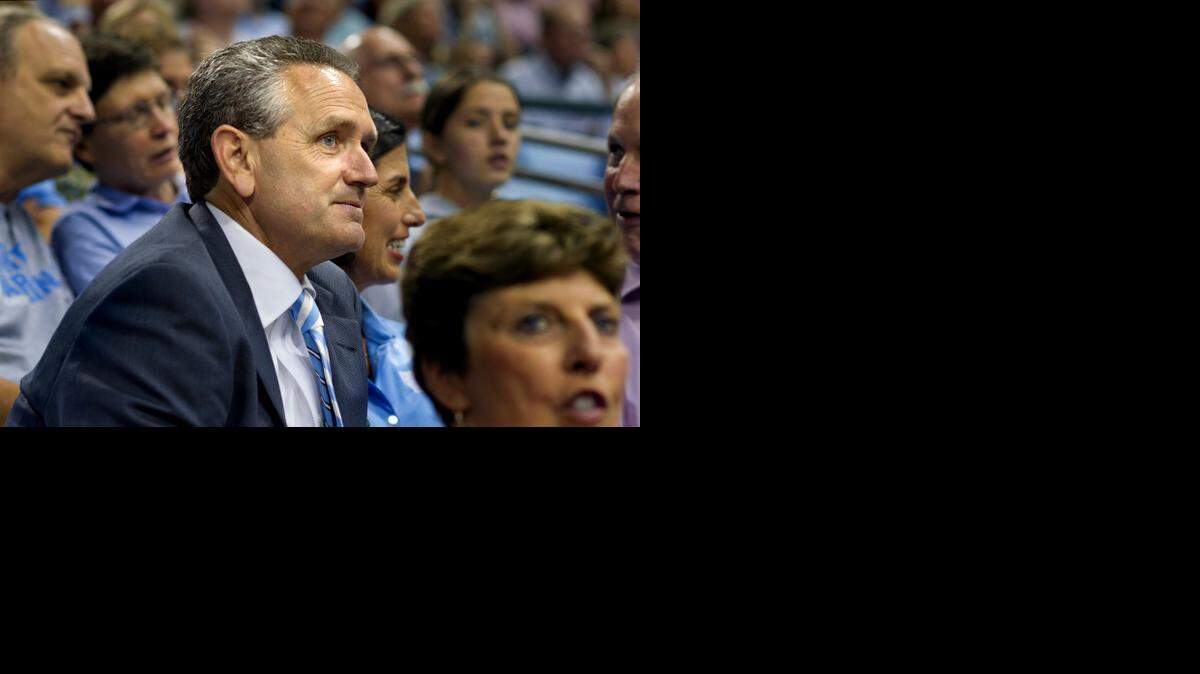
Bubba Cunningham is entering his third full academic year as the athletic director at North Carolina. He recently sat down with me for an extended interview about the changing landscape of college sports, the NCAA's decision to reopen its investigation into academic issues at UNC, Roy Williams' future and other topics.
Here is the first part of the interview:
Andrew Carter: Autonomy was recently approved for the Power 5 conferences – the ACC, Big 12, Big Ten, Pac-12 and SEC. What are your thoughts on autonomy and what does UNC want out of it?
Bubba Cunningham: It's a huge topic. I've been concerned about autonomy for over a year. You know, I feel like the autonomy package is moving us further and further down a professional model and away from the collegiate model. And you and I have talked about this for a long time. And I think there's two critical elements in college athletics, and that is provide an education to those that you invite, and create opportunities for kids to play college sports. And as we drive down the professional model, it's going to reduce opportunities to go to college and get a scholarship. And that's where we're headed. And I can't simply say it's part of the autonomy package. It's the legal system, as well. The litigation is moving us in that direction also. And I think it's very short-sighted.
AC: It sounds like you might have been against autonomy.
BC: I don't think having 65 schools having some ability to make rules that govern those 65 is inappropriate. I think what we have chosen to be priorities I think is a mistake.
AC: Are you talking about the full-cost of attendance stipend?
BC: Anything that will reduce opportunities and not support education. And many of those things do.
AC: So how would this work, exactly – a full-cost stipend?
BC: We don't know for sure, because we also have the Jenkins case (in which the plaintiffs seek to open the market for football and men's basketball players) that's still outstanding. So we know in the ruling in the O'Bannon case that you basically said anything less than cost of attendance is a violation of anti-trust. So it looks as though the courts have set a new minimum for not violating anti-trust, at a cost of attendance figure. For The University of North Carolina, to get to full-cost of attendance for our existing student populations, it's going to be $1.8 million. We don't have $1.8 million, discretionary, that we're going to apply for cost of attendance. That's going to create challenges.
AC: So if it came to that, and you had to come up with $1.8 million, how do you do it?
BC: You have to look at the options and make some decisions. I don't have an answer for you because it's too early. But I know what some of the options are. And the options that people like to throw out aren't realistic.?
AC: Like what?
BC: Slowing down facility expansion, or salaries.
AC: There's no going back on there, is there?
BC: Yeah, you're not going to touch the programs that generate the revenue. So what it does is it puts a lot of other programs at risk.
AC: So what do you make of all of these changes and the direction things seem to be headed, and given that you have concerns, what can you do?
BC: I have real concerns, again, that it's going to adversely affect opportunities for students to play. It may be the right avenue given the amount of money in college athletics today. I'm not saying it's right or wrong. But I'm very concerned about the unintended consequences of where we're headed. And again, you and I have talked about the chance for opportunities. And when I first got here, I talked about the basketball tournament being better. People didn't like to hear that because I believed that the more opportunities you had to participate in the postseason, the more opportunities people are going to be willing to offer kids to play to have a chance. I've also said that the number of sports that we've had started in 1978. A broad-based program in 1978 was 16 sports. We haven't changed it. We should have been talking about increasing opportunities for the last 25 years and we haven't. And we started seeing the money rise – that's when we should have had the conversation. But we've had a couple of years that we could have been talking more programming, more opportunities. And we're doing things that are absolutely counter to it. That's what really bothers me.
AC: Can UNC have the same number of sports it does now if you'd have to come up with $1.8 million for stipends?
BC: Well, that's going to be a challenge. So our 300 is based on 300 scholarships that we offer here. I don't know how many scholarships Texas offers. Ohio State will be probably more than 300. But there's a disincentive right now to have large programs. And when we started the broad-based programming, and when Title IX came in, it was all about creating opportunities. This is the opposite. That bothers me.
AC: How would a full-cost of attendance stipend work exactly with athletes who are on a partial scholarship – say one-fifth of a full athletic scholarship?
BC: Well in our case, if he or she is an in-state student, you take the in-state rate, you add the cost of attendance and then if you get one-fifth (of a scholarship), you get one-fifth of that number.
AC: It doesn't sound like anyone has any real answers to a lot of these questions in terms of how any of this will be implemented. When do you expect those answers to arrive?
BC: I think we'll pass full cost of attendance by January.
AC: And it would go into effect the next year?
BC: My guess is it would probably go into effect, I would guess 16-17, but that's a pure guess. Because I think they would try, at least preliminarily to synch it up with the name, image and likeness ruling, as well, so that there would be a significant change in landscape.
AC: What other some other priorities, from an ACC point of view, for autonomy?
BC: I can't speak for the league, because we all have to come together and say what are our priorities are. And we have some opportunities to do that going forward. But any legislation has to be in by Oct. 1, so we don't have a ton of time. … My priorities are an educational trust fund that students that haven't graduated can finish somewhere else. I think that would be No. 1. I think No. 2 would be time. How do we manage time more efficiently for (athletes). Provide them the experience that they want, both academically and athletically. I think we really need to take a hard look at that.
Andrew Carter is the UNC athletics beat reporter for The News & Observer and Charlotte Observer. Follow him on Twitter at @_andrewcarter .
This story was originally published August 29, 2014 at 12:47 PM with the headline "An interview with UNC AD Bubba Cunningham: Part I."