How Toe Groves, with the help of his imprisoned father, made it from the projects to UNC
The day after Rontavius Groves made a first-down catch on fourth-and-17 late in UNC’s 28-25 win over Miami, his father called.
Ronald Armstrong, who had watched his son’s catch on ESPN’s SportsCenter, poked fun at Groves’ route running and offered him a little advice. He then told Groves he was proud of him.
“I’m overwhelmed with joy and pride,” Armstrong wrote about his son in a three-page letter to The News & Observer in September. “It blows my mind to see my son playing on T.V.”
The call on that September day lasted only five minutes; that’s how long inmates at Turney Center Industrial Complex in Only, Tenn., are allowed to be on the phone. There, Armstrong is inmate No. 468535.
Armstrong is serving a 15-year sentence in the state prison as part of a plea deal to second-degree murder charges in October 2013.
Groves, who goes by “Toe,” was 15 at the time. He says Armstrong’s incarceration, and the obstacles his family faces from that, are big reasons why he’s an important piece on UNC’s football team.
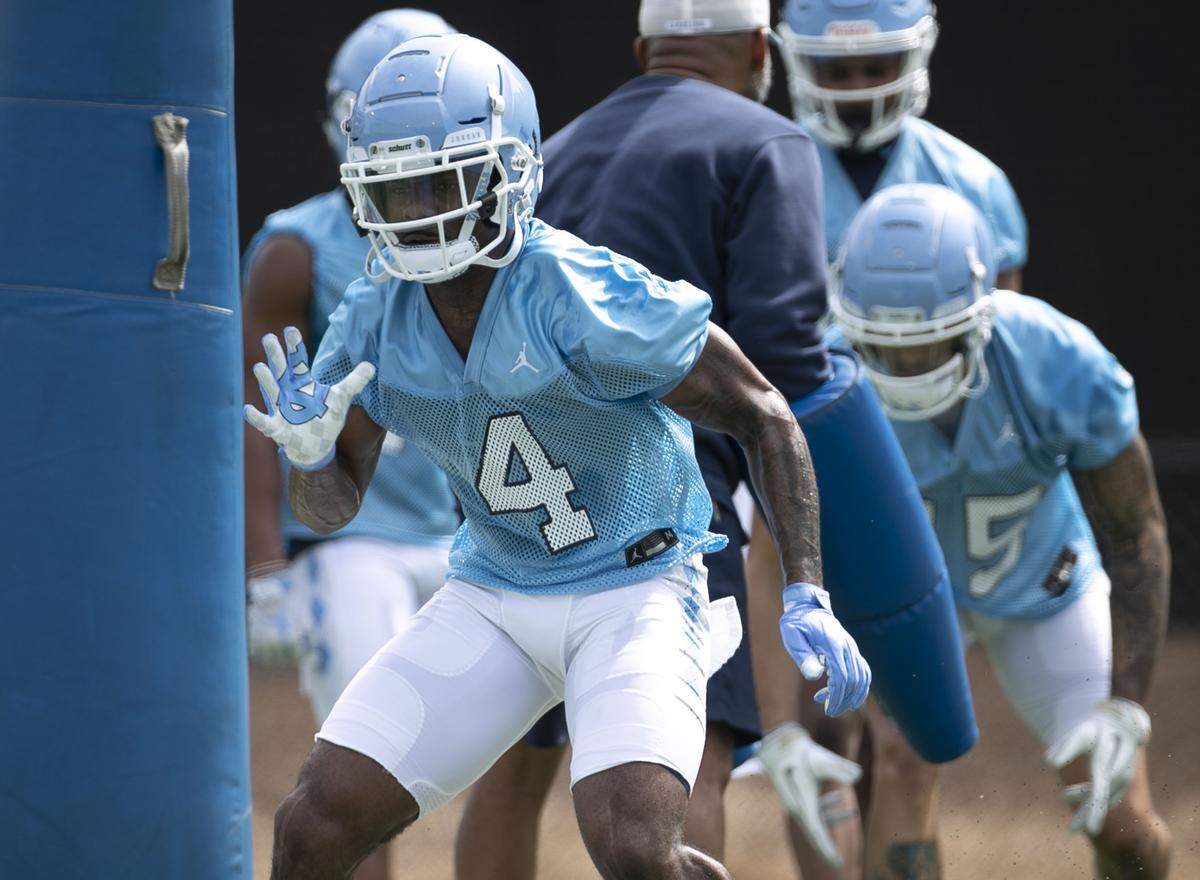
Through seven games this season, the 5-11, 195-pound junior wide receiver has 19 catches for 193 yards and one touchdown. His teammates and coaches say he’s probably the most respected player on the team based on what he’s been through and the way he carries himself.
“I get goosebumps talking about Toe,” UNC senior linebacker Dominique Ross told the N&O.
Football isn’t a game for Groves — it’s a how-to guide he’s writing for a better life. He plays for his family and his community. He wants to show his seven siblings and others looking up to him that there’s a way out of the projects.
And he’s approaching every day with a smile.
“He’s the most positive human being I’ve ever been around,” UNC coach Mack Brown told the N&O. “So for me and our coaches, we’re pulling for him every minute of every day.”
An emotional time
“I watched him play in person since he was five years old pee wee. I’ve been unable to do so since his 8th grade school year and it is extremely painful. It is a bitter sweet experience for me because I am unable to give him the full support he deserves, however he receives all the support I have to offer.” Ronald Armstrong on his son, Toe Groves.
About eight years ago, Groves was at his aunt’s two-bedroom apartment in Nashville when a newscast about his father’s murder accusation flashed across the TV.
Groves, 13 at the time, couldn’t contain himself. He ran to the bathroom, shut the door and broke down crying.
“It was a shock just to see him on the news,” Groves said. “And then, what he was being accused of was like, ‘Dang. My dad, really accused of murder.’”
Groves’ mother, Jatabya Groves, remembers that day, too. She was at work when the news broke.
“It’s still a little emotional for me,” she said quietly.
Armstrong, who had played football in high school, was known in the community for being athletically gifted. Groves looked up to him, even though Armstrong often spent months in jail for things such as eluding arrest, driving with a revoked license and drug and weapons charges.
But Groves always knew he’d returned home.
Until that last arrest.
According to a 2012 press release by the Nashville Metro Police Department, James Nicholson III, “who was armed with a handgun, was standing alone outside the convenience store when the suspect calmly walked up to him and fired several shots at close range just after 2 p.m.”
‘Either jail or dead’
“I never questioned if I would be part of my son’s life or his siblings because, as a man, regardless of my current situation, I am going to be a father to my kids.”
Groves grew up in the John Henry Hale projects, one of Nashville’s poorest communities. Men in the neighborhood, Groves said, often chose the gang life or sold drugs to survive.
It was rare for men to get out of those projects and be successful.
“It’s either jail or dead,” Groves bluntly told the N&O.
Some of Groves’ childhood friends were killed or sent to prison. He didn’t want that life.
His mother and father didn’t want that for him, either, so they put him in sports and kept him busy. Football was his best sport. He was smaller than most kids his age, but he had speed and talent.
Brandon Woods, Groves’ offensive coordinator at Pearl-Cohn High School in Nashville, recalls meeting him when the boy was playing for McKissack Middle School.
“He had an athletic ability that was out of this world, and the kids were just drawn to him,” Woods said.
Before Groves landed at Pearl-Cohn, a public magnet school, he was recruited by private schools. It was unclear to coaches where he would attend high school.
But one day at a Pearl-Cohn summer practice, Groves, a skinny ninth grader, showed up and ran onto the field. He’d made his decision.
“His teammates were screaming, ‘It’s Toe! It’s Toe! He’s here!’” Woods recalled.
In a scrimmage later that week, Groves had three touchdowns, one of which he ran to one side of the field, then reversed to the other to score.
“It was ridiculous,” Woods said with a laugh.
Woods also knew Groves’ circumstances. He knew that his father was in prison, and his family was struggling.
“From that point, I was like ‘Hey, man, as long as you do what you are supposed to do, and keep your head on straight, I will be there for you,’ ” Woods said.
‘Better kid than football player’
“I believe the two biggest pieces of advice I gave him were, Always family first, and look at the big picture (meaning think of where you want your life and try to choose the best path to get there, not the quickest or most common for our environment).”
When Groves’ father was first sent to jail, his mother was left alone to care for her eight children. Jatabya Groves, needed her second-oldest child, the 13-year-old Toe, to step up and help keep the family afloat.
Armstrong was the family’s primary financial provider. Without him at home, Groves’ mother worked multiple jobs — cleaning up after patients at a hospital and working the night shift at Taco Bell — just to pay the bills. And sometimes that wasn’t enough.
When Groves was in 10th grade, he and three of his friends developed a plan to make money cutting grass. They bought two lawnmowers and charged $20 to $40 per yard and split the money at the end of each day.
“Wasn’t too much, but it was enough for me to eat, buy a pizza for my brothers and sisters,” Groves said.
When Jatabya was at work, Groves had to help take care of his younger siblings. Some days he missed practice so he could be home with them. But he had a lot of support from his coaches and family.
Woods offered to pay for child care so Groves could make it to practices. His other coaches gave him rides home. They saw his potential as an athlete.
The help allowed him to focus on school and football.
“He’s a better kid than he is a football player,” Woods said. “He’s so humble. He has an inner drive that’s unmatched. A lot of people would have been laid down with some of the stuff he’s been through.”
Eventually, Groves caught the eye of the UNC football coaches. Then-coach Larry Fedora and his staff were at a Pearl-Cohn game to watch another player when Groves had seven catches, 200 yards and three touchdowns.
Fedora offered him a scholarship on the spot.
The only coaches to meet his dad in prison
“It showed commitment, I felt joy, love and pride. To play a part in such an important decision in my son’s life meant the world to me, but for him to express the need for Fedora to come and visit with me to discuss the recruitment showed the love and bond me and my son share and let me know he appreciates my advice and direction. I understand the stigma prisons and inmates have has [sic] as it relates to society so for Fedora to come kinda let my son see they really wanted him.”
Groves usually talks to his father once a week or every other week. He often asks for advice, and Armstrong encourages him to stay focused and not repeat his mistakes.
“Even with him going to college, it took a while because he wanted to make sure his daddy’s input mattered, too,” Jatabya Groves said.
Groves said the primary reason he chose UNC was because Fedora and his staff were the only coaches who offered to meet his father in prison.
When Fedora and then-assistant coach Gunter Brewer visited Armstrong at Turney, they sat face to face with him and talked for an hour-and-a-half about their vision for his son.
“He wanted Toe to be successful,” Fedora told the N&O. “I was impressed just because he cared so much about Toe and what Toe’s future was going to be. I knew at that point that Toe was a pretty special person.”
Playing for more than himself
“I have watched two games this season (South Carolina and Wake Forest) ... I seen the (Miami) highlight on Sportscenter. I thought it was a clutch play, awesome, I feel when he gets the opportunity he takes advantage of it.”
In UNC’s 24-20 win over South Carolina and 24-18 loss at Wake Forest this season, Groves had a combined four catches for 31 yards, and 8 yards rushing. Against Miami, Groves had three catches for 41 yards, including that first-down catch that helped seal the Tar Heels’ 28-25 victory.
But the path to this season wasn’t always easy.
In a 2017 spring scrimmage, Groves, then a redshirt freshman, tore the patellar tendon in one of his knees. He rehabbed and was back on the field a few weeks into the fall season. In his first game back against Duke, he tore the patellar tendon in his other knee and missed the rest of the season.
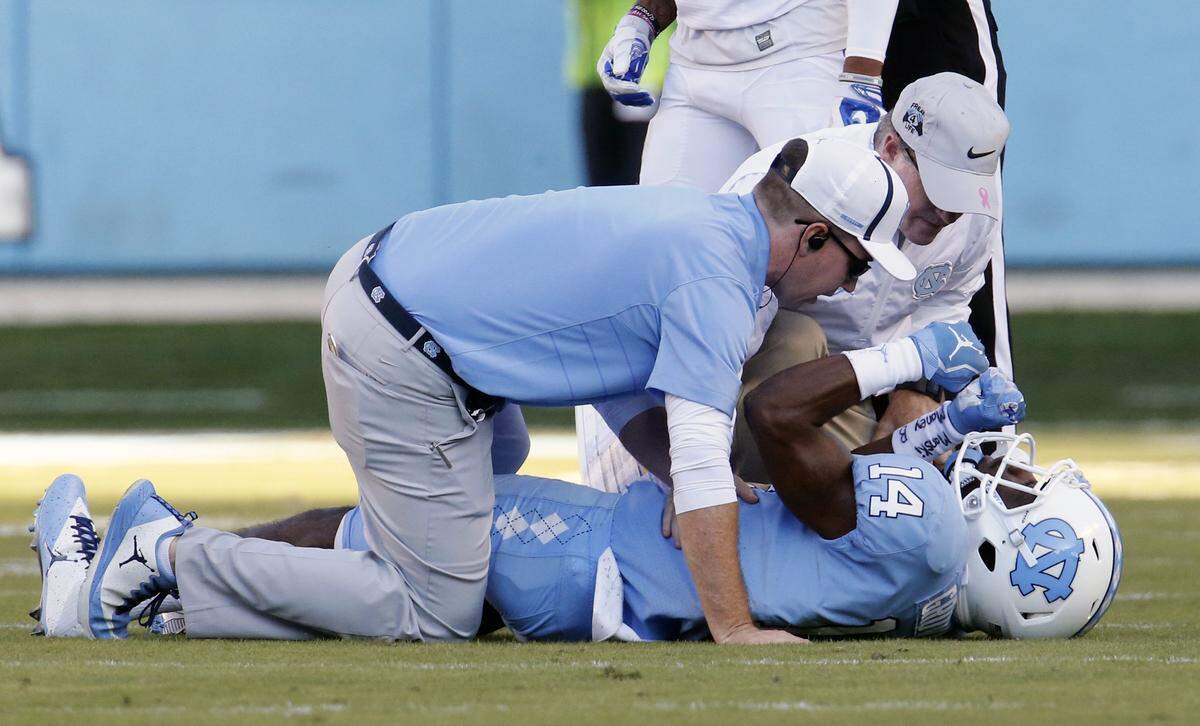
Senior linebacker Dominique Ross, who was one of Groves’ roommates at the time, remembers the day Groves injured his knee. He remembers how hurt Groves was, and how he was unsure of whether football was right for him. Groves thought about quitting school and going home.
“It was tough on him, but me and K.J. (Sails), we always made sure we were there for him at all times,” Ross said. “We never left him, always helped him and he just continued to grind.
“It was us pushing him, but it was more on himself, being the guy that he is, to keep working at it everyday, coming back to still make plays as if he was never hurt.”
Groves’ parents encouraged him, too. He listened and remembered he was playing for more than himself.
In 2018, he returned to football as a healthy sophomore, and had 10 receptions for 183 yards and a touchdown in nine games.
“The word to describe who he is as a person is sedulous,” Sails, another of Groves’ former roommates, said. “He just doesn’t give up. He gave me hope.”
Armstrong is eligible for parole in less than two years. He earned an associate degree while in prison and will start working on his bachelor’s degree there in January.
Groves is appreciative of his father, and what he’s done for him. Armstrong put him in football when he was a boy, and has tried to support him as much as he can.
Armstrong won’t be able to watch any of his son’s college games in person. He’ll still be in prison by the time Groves graduates. The idea that his father can’t be there is painful for Armstrong and Groves.
“We just want him home,” Groves said.
Groves hopes to play professionally some day. If that happens, he hopes Armstrong can go watch him play like old times. He wants to show his appreciation for all his dad has done for him, and he wants to help his family financially.
“Putting me in a sport, and helping me develop the talent that God has given me through him, and showing him that I never gave up with what I was doing just because he was locked up,” Groves said about his father. “I always kept a straight head and stayed away from all the stuff that could have potentially stopped me from achieving the dream of mine.”
Groves plans to keep grinding — until long after his father is out of prison and his family is out of the projects.
Duke at UNC
When: 4 p.m., Saturday
Where: Kenan Stadium, Chapel Hill
Watch: Fox Sports Carolinas
Listen: WTKK-106.1 Raleigh; WCHL-97.9, WCHL-1360 Chapel Hill; WBT-99.3, WBT-1110 Charlotte
This story was originally published October 24, 2019 at 11:43 AM.