A look back at the Tar Heels’ 2019-20 season and why it went so wrong
As the seconds ticked down in North Carolina’s loss to Syracuse, Garrison Brooks began to cry.
By that time, UNC coach Roy Williams had taken out his starters. He had waved the white flag.
Kendall Marshall, UNC’s director of recruiting, tried to encourage Brooks. But at that point, his words didn’t mean much.
The Tar Heels’ season was done. It was finished in a brutal 81-53 loss to the Orange in Wednesday’s second round of the ACC tournament.
“It’s tough, man,” Brooks, a junior forward, said after the game, his eyes still red. “It sounds crazy but I didn’t want (our season) to end.”
The Tar Heels lost their 19th game. It was the second-most losses in program history. Even without the threat of the coronavirus ending the college basketball season, it’s unlikely UNC would have been invited to any postseason tournaments.
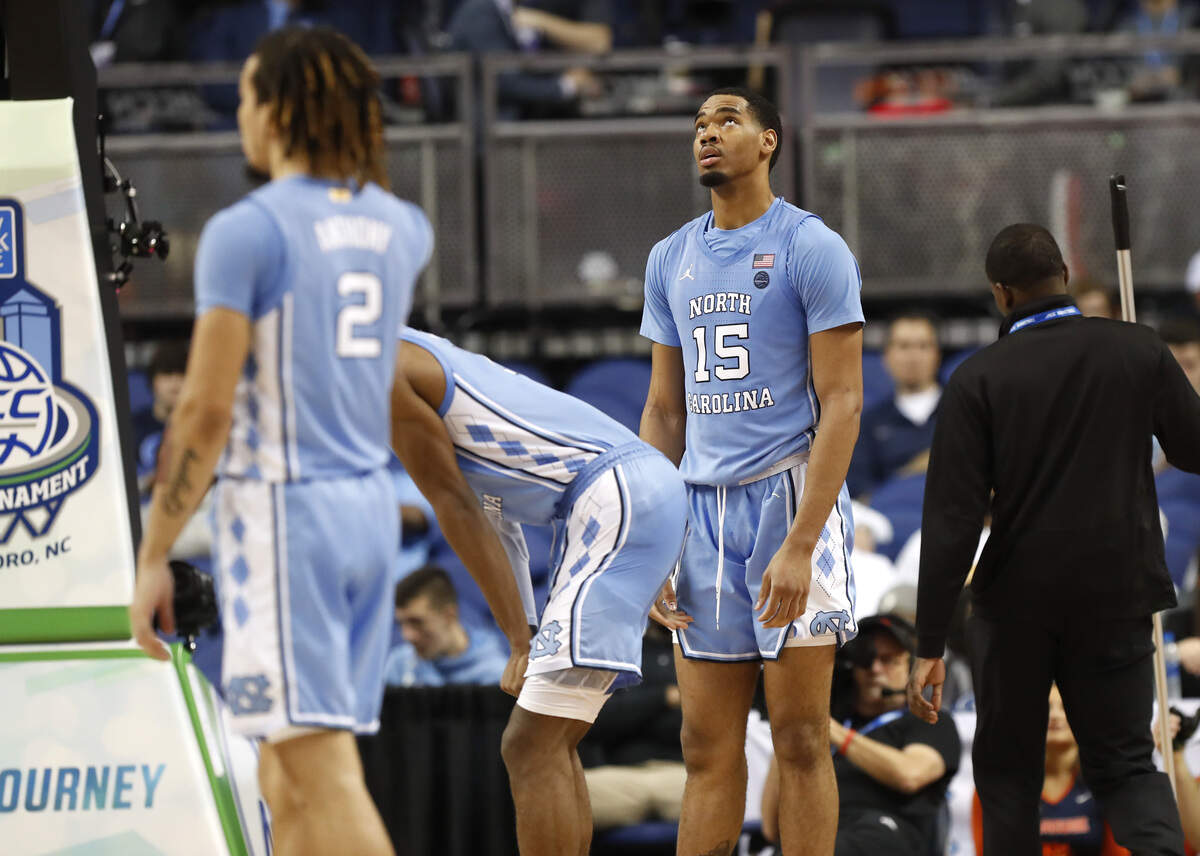
Their season has been filled with too many lows.
Those lows began before the season even started, when Roy Williams, who lost his top five scorers from the 2018-19 team, had to piece together a roster he wasn’t sure would work.
And it never did. The Tar Heels had trouble scoring all season.
It culminated in the Tar Heels’ final game — a 28-point defeat to Syracuse in front of a crowd of mostly UNC fans in Greensboro. The Tar Heels shot 33 percent overall and 13 percent from 3.
The loss was the largest UNC has ever suffered in the ACC tournament. It surpassed a 26-point loss to Duke in the 2001 ACC tournament championship in Atlanta.
This time, though, the Tar Heels fell in the second round.
Brandon Robinson thanks UNC fans
Players Wednesday night had trouble putting into words how tough this season has been. The Tar Heels started the season as the No. 9 team in the country and ended as the No. 14 seed in the ACC tournament.
Fans criticized them and they were the butt of bad jokes.
After the game, senior guard Brandon Robinson thanked UNC fans who stuck with them through the season.
“Because a lot of people were saying a lot of bad things about us, individually, as a team, that they wouldn’t say to our face,” Robinson said. “I was disappointed to see that from our fans, because your fans, they are supposed to be the ones supporting you. We know we played bad. We know we didn’t have the season we wanted to have.”
‘Least-gifted team’
There were plenty of red flags for the The Tar Heels early in the season. On Nov. 1, in its first preseason game, UNC turned the ball over 23 times in its 96-61 win over Division II Winston-Salem State.
In the season-opener against Notre Dame, another red flag came to light.
After freshman guard Cole Anthony, who scored 34 points in that game, there was no clear No. 2 scorer. Anthony also had a tendency to over-dribble and not get his teammates involved. That oftentimes, caused his teammates to play hot potato late in the shot clock.
When Anthony had surgery in December to treat a partially torn meniscus, the Tar Heels were basically left in limbo, wondering how they might score.
As expected, UNC struggled and went 4-7 in the 11 games he missed.
During that stretch, Williams referred to his team as the “least-gifted team he’s ever coached” on his radio show. While Williams said he didn’t mean anything by it, only that his players have to bring their A-game to win, the comments reverberated around the country.
It was one of the top stories on ESPN, and fans from opposing teams used it to antagonize the Tar Heels on road games.
The Tar Heels’ biggest loss of the season was to Clemson. The Tigers beat the Tar Heels 79-76 in overtime on Jan. 11. It was the first time in 59 tries that Clemson won in Chapel Hill. The series dated back to 1928.
Out-of-sync
The only good that came out of Anthony’s absence was that junior forward Garrison Brooks had emerged as a go-to scorer. He became a terror for ACC opponents, averaging 16.8 points per game, and 8.6 rebounds. He won the ACC’s most improved player and was voted second-team All-ACC.
But his production alone was not enough.
The Tar Heels didn’t record their first 90-point game until 19 games into the season.
When Anthony returned on Feb. 1, the Tar Heels struggled with chemistry on the court, and lost seven consecutive games.
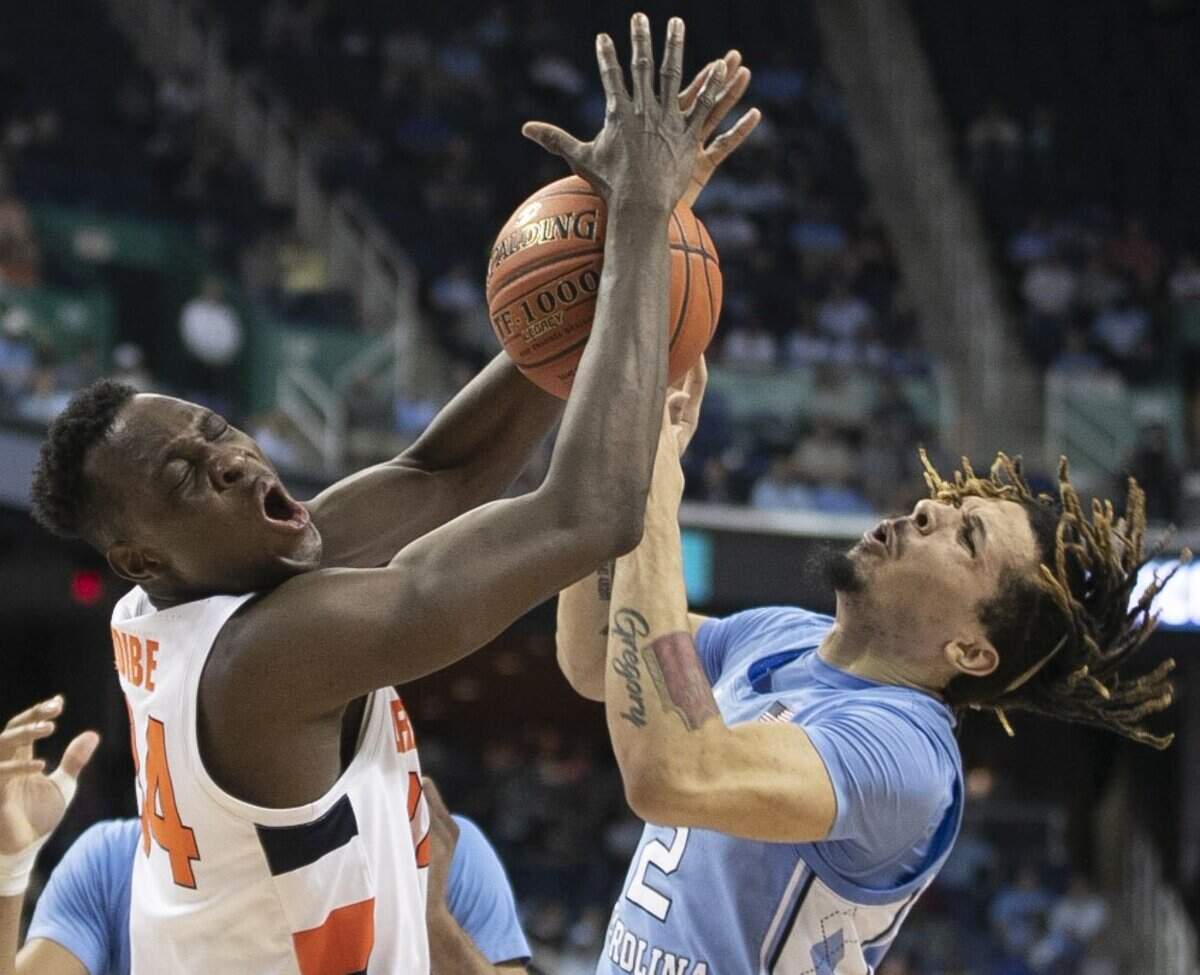
They looked out-of-sync. The style they used when Anthony was out, clashed with the style they used when he returned. After UNC’s Feb. 3 65-59 loss to Florida State, a game in which Anthony finished 5-for-21 from the floor, Brooks publicly stated that he was open and just didn’t get the ball.
The Tar Heels’ first win after Anthony’s return didn’t come until 22 days later. But when UNC did win, the team started to gain some momentum. They went on a three-game win streak, but lost the season-finale against Duke 89-76.
Injuries on top of injuries
The Tar Heels were plagued by a number of injuries. Entering the ACC tournament, 11 scholarship players missed 98 games combined. It was the most missed games since Williams became head coach in 2003.
It started with junior forward Sterling Manley, who had soreness in his knee and did not play a minute this season. Then Robinson sprained his ankle in the preseason game against Winston-Salem State and missed the first four games of the season.
Sophomore guard Leaky Black had a toe injury and missed one game. Junior guard Andrew Platek sprained his ankle and missed a couple of games.
Freshmen guards Anthony Harris and Jeremiah Francis missed the first eight games because of knee injuries they suffered in high school. Then, Harris tore his ACL in a December game against Yale.
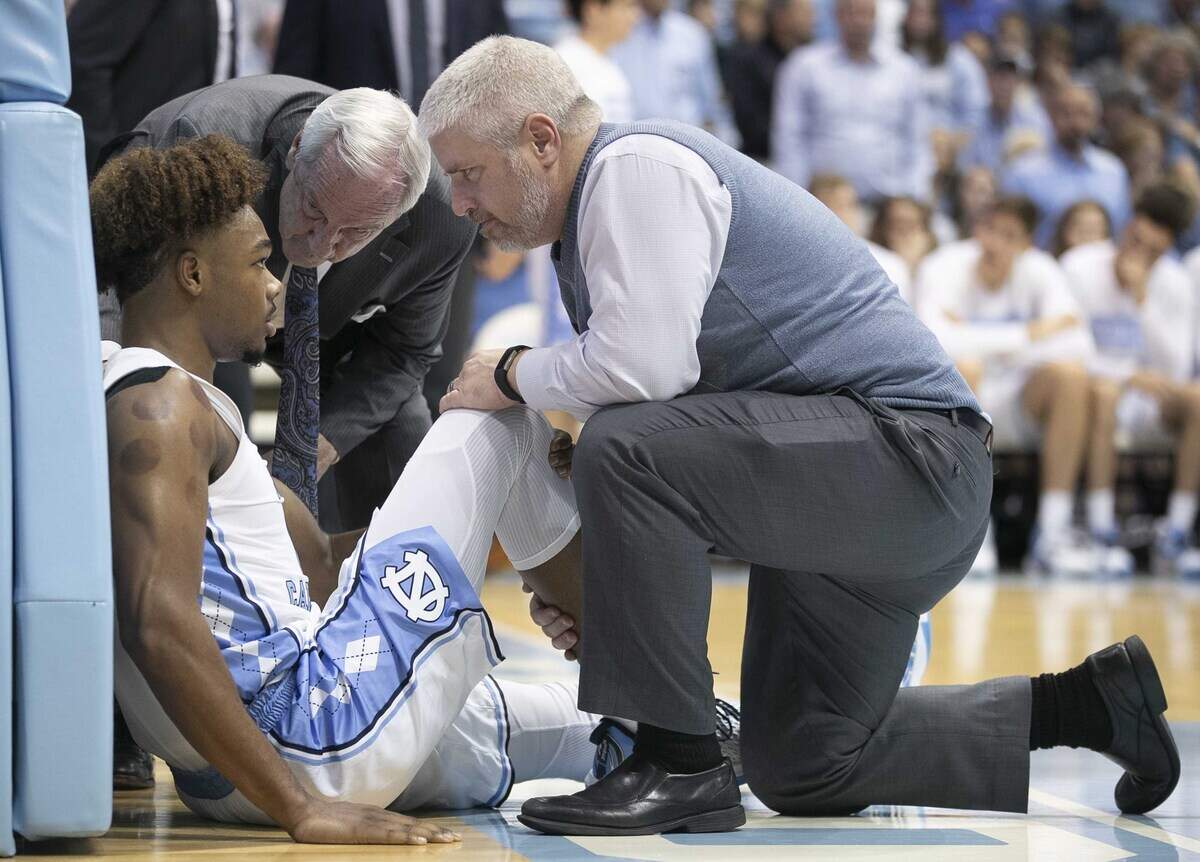
UNC made a surprise announcement in December that Cole Anthony would sit out against Wofford because of a knee issue. A few days later, he had a procedure to treat it and missed the next 10 games.
Robinson was in a car accident after UNC’s home loss to Clemson. He missed a game because of neck pain caused by whiplash.
Both Justin Pierce and Garrison Brooks missed the Louisville game on Feb. 22. Brooks had the flu. Pierce turned his ankle. And UNC freshman forward Armando Bacot missed UNC’s game against Wake Forest on March 3 because of a sprained ankle.
The only rotational player who did not miss a game was Christian Keeling, and even he suffered a sprained ankle in the first round of the ACC tournament.
Better days ahead?
When fans look back on this season, they’ll likely wonder what could have been.
What could have happened if UNC had stayed healthy throughout the season?
Before Anthony went out, the Tar Heels were 6-3 and still ranked. With a down-year for the ACC, a healthy UNC team would have likely made the NCAA tournament. But when Anthony missed those 11 games, the team took a nosedive and never fully recovered.
There’s always next year. The Tar Heels, who had their first losing season since 2002, aren’t expected to be down very long. Anthony is a projected lottery pick who is expected to leave, but the Tar Heels are returning a number of key players, including Brooks, Black and Bacot.
UNC has the third best recruiting class in the country. The program signed three five-star players, and two four-star prospects who are all expected to contribute immediately next season.
But the sting of this season will linger for a while.
When asked on Wednesday which point in the season was most frustrating, coach Williams said “tonight.”
“First time in my life, I felt sort of hopeless,” Williams said. “I couldn’t find any cures, couldn’t find any solutions. You know, and I’ve lost before, Jiminy Christmas. We’ve had great teams that have lost before. But tonight wasn’t much fun.”
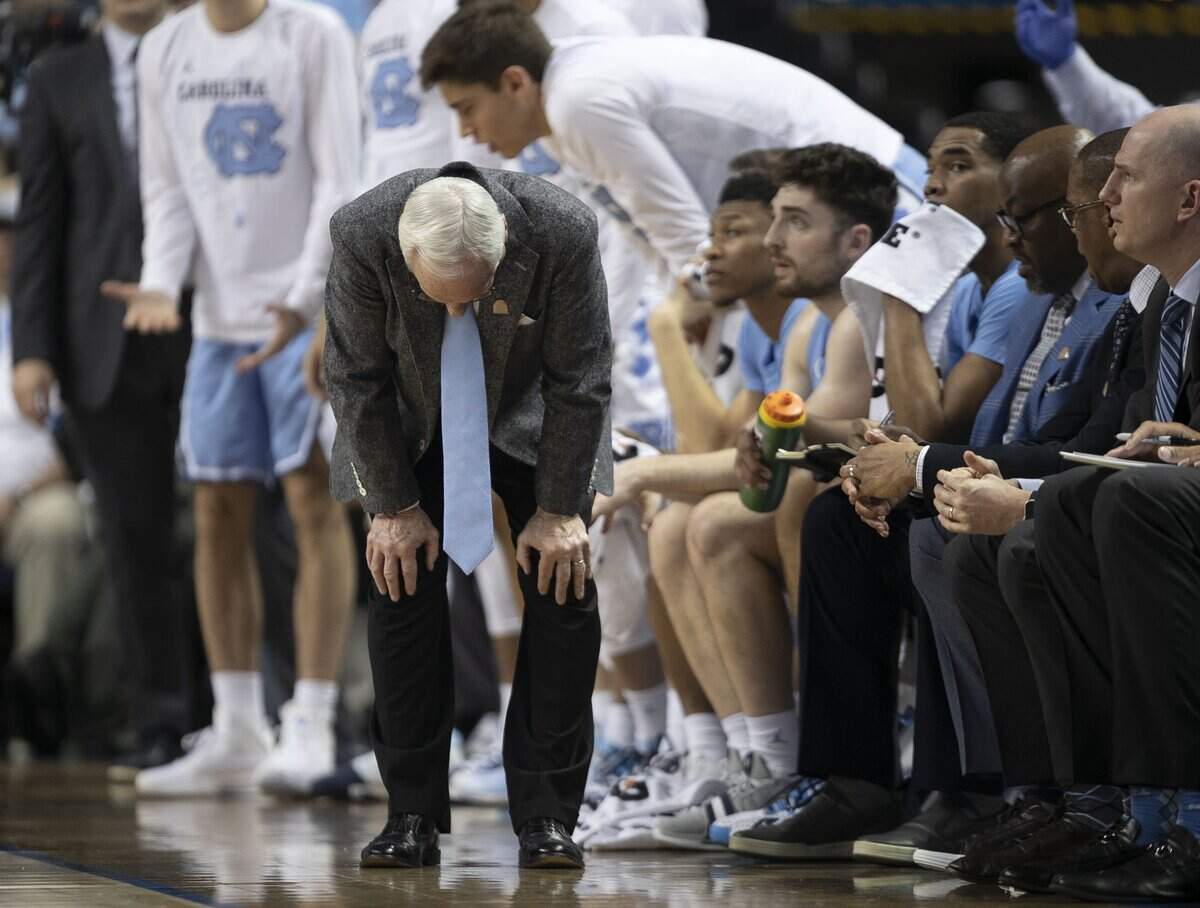
The game was over early. The Tar Heels had no answer for Syracuse, which jumped out to a 21-point lead at halftime.
The way the Tar Heels lost and how they exited the ACC tournament was just a microcosm of the 2019-20 season.
“Some days we’d come to play, and some days we wouldn’t,” Bacot said. “But I guarantee it won’t be like that next season.”
This story was originally published March 12, 2020 at 11:13 AM.