
A basketball coach and one deadly punch: Grieving Raleigh mom seeks $18 million
AI-generated summary reviewed by our newsroom.
- Donna Kent seeks $18 million in damages for son's 2018 wrongful death case.
- Former coach Jamill Jones was found liable by default for failing to respond.
- Judge to decide civil damages after prior assault conviction without jail time.
Donna Kent refuses to call the legal system “justice.”
Seven years after a punch from former Wake Forest assistant basketball coach Jamill Jones led to the death of her son, Sandor Szabo, and captivated national headlines, Kent and her family are close to the end of a five-year civil court battle.
It hasn’t softened the pain of their loss, but Kent is ready to focus her energy outside of a court room.
“It’s such a relief to finally [finish],” Kent said. “I feel like this chapter has just been opened and it’s always on your mind. It’s hard to focus on other things when something that strong is on your mind. I’m just so happy that maybe I can focus on something else more positive.”
In a brief submitted to a New York Supreme Court on July 24, Kent, as a representative of Szabo, requested damages of more than $18 million for wrongful death, intentional infliction of emotional distress, assault, battery and negligence.
Jones was already found liable by default for failing to respond to the suit within the deadline, so Judge Scott Dunn is expected to decide the amount to award Kent on or after Aug. 7.
In 2020, Jones was found guilty in criminal court of third-degree assault against Szabo, a 35-year-old Raleigh native.
Jones was sentenced to three years of probation, 1,500 hours of community service and $1,000 fine, but did not receive jail time, which Kent called “grossly inadequate and unfair” at the time of the decision. She filed the civil complaint soon after.
Jones did not respond to multiple requests for comment for this story made through his social media and the nonprofit, Purpose is Life, he founded in 2020.
His attorney, Tanya Branch of Quintairos, Prieto, Wood & Boyer, told the News & Observer she will be submitting a brief in response to the Kent’s damages brief on or before the Aug. 7 deadline, but did not comment further.
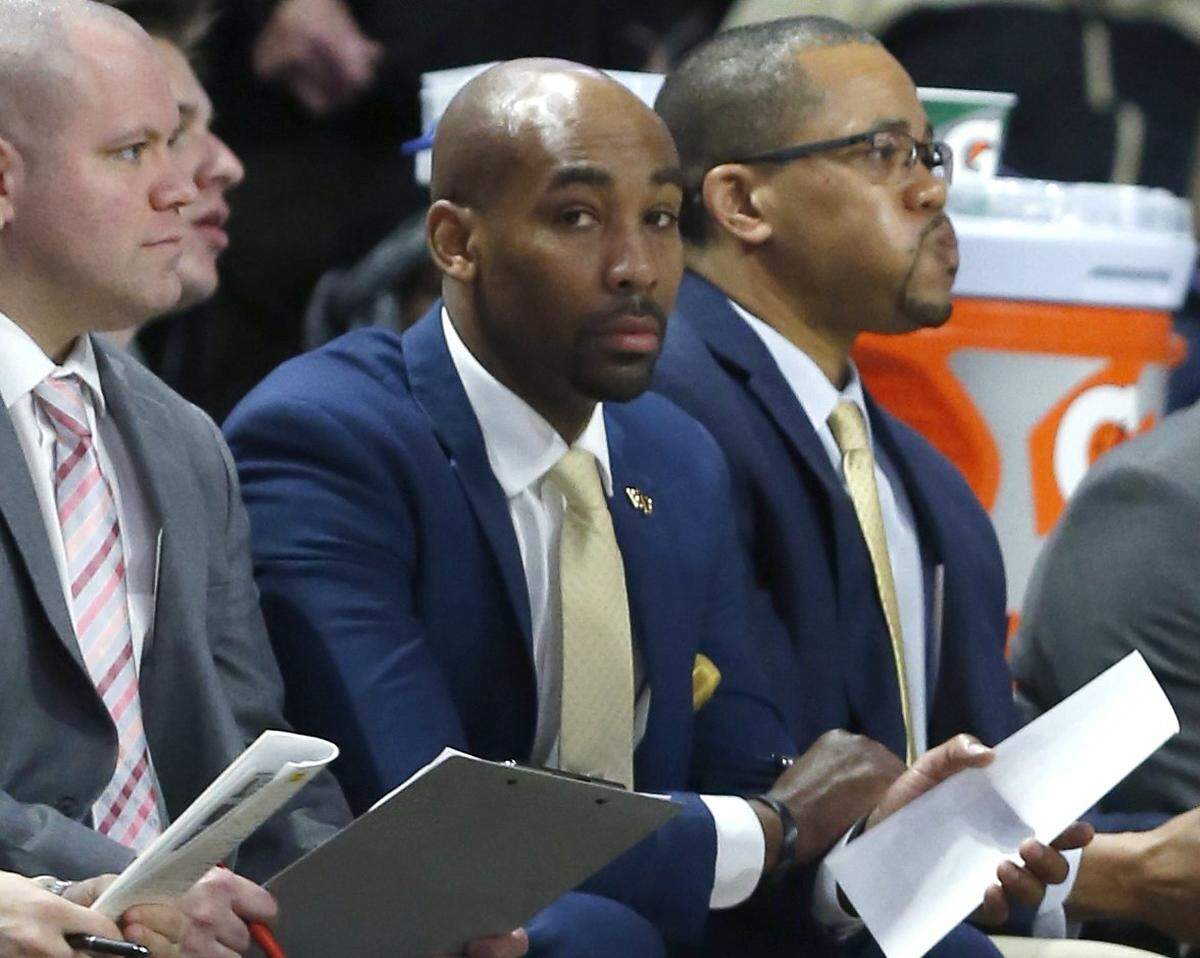
The aftermath of a late-night encounter
On August 4, 2018, Szabo attended his stepsister’s wedding in New York. Jones was in the city to stop by a high school recruit’s going away party, then spent his evening watching a performance on Broadway with his then-fiancé and members of her family, according to his testimony from the criminal trial.
Szabo lived in Florida at the time, working in digital marketing, but grew up in Raleigh, where his mother remains. Jones joined Wake Forest men’s basketball team under Danny Manning as an assistant coach in 2017 and lived in North Carolina. Prior to Wake Forest, Jones served as an assistant at UCF, VCU and Florida Gulf Coast.
Kent’s complaint states that around 1 a.m. on Aug. 5, Szabo ordered a Lyft from the wedding’s after party back to his hotel. But the car did not arrive at the correct destination. A witness in the criminal case testified Szabo appeared intoxicated, and blood tests revealed his blood alcohol content was above the legal limit to operate a motor vehicle.
Twenty minutes after Szabo left the party, Jones stopped at a Long Island City intersection while looking for a place to park the white BMW SUV he was driving. Szabo stood nearby, attempting to arrange another Lyft.
The details of the interaction that followed were presented differently by Kent and Jones in their descriptions to the court.
During Jones’ testimony in the criminal case, he claimed he stopped to park when Szabo approached his car and broke the vehicle’s rear window. Jones said he was worried about what Szabo would do next and exited his car to confront him.
“In that moment, I was in protect mode, to be honest,” Jones said in his 2020 testimony. “I was afraid and I was thinking about the safety of myself and my fiancé.”
Kent’s complaint states her son approached several vehicles to try to find his Lyft and approached Jones’ vehicle, but eventually walked away. She told the N&O after Jones’ sentencing that Szabo’s hands did not have any cuts or bruising to suggest he’d broken a car’s window, and she questioned how his intoxicated state would’ve allowed her son to have the strength to cause such damage.
The civil court’s record show a Safelite Autoglass Service receipt from Aug. 9 — four days after the encounter — for replacing the back glass of a white BMW, likely the vehicle Jones drove that night.
But surveillance footage taken from a convenience store nearby did not show the entire interaction, only when Jones got out of his car and approached Szabo, who backed up with his hands in the air. Jones punched Szabo in the face, knocking Szabo’s teeth through his lower lip and lacerating the tissues in his face.
According to Kent’s complaint, Szabo also suffered a rotational injury to his brain stem, a potentially fatal injury, before he fell and hit his head against the sidewalk’s curb.
Szabo never regained consciousness and was pronounced brain dead two days later.
During his 2020 sentencing, Jones apologized to Szabo’s family.
“I pray that this family at some point can have peace,” he said in July 2020. “That at some point they can come together and move past this. My actions were never to cause this.”
At the time, New York prosecutors said they were limited in “one punch” cases. Current NY law says a single punch can not be used as a basis for homicide charges unless there is proof of an intent to kill, limiting most legal action to misdemeanor assault charges.
“From my own internal investigation of the evidence and what was put forth, it’s clear as day that this should have been tried as a homicide case,” Kent’s attorney in the civil suit, Andrew Green, told the N&O. “At the bare, bare, bare minimum this could have been even a negligent homicide, a negligent murder on that count, a voluntary manslaughter. It’s remarkable to me that he doesn’t have any criminal punishment for what’s going on here. That to me is just crazy.”
Mother pursues civil action
Two weeks after Jones’ sentencing in 2020, Kent filed her civil complaint against Jones and Wake Forest, seeking monetary damages for the actions and negligence that led to Szabo’s death. Kent said the suit is not about money, rather pursuing accountability that she didn’t believe criminal court achieved.
“Where I get strength in my whole day is when I know I’m fighting for Sandor,” Kent said. “The rest of the day can fall apart, but when I’m doing something for Sandor, I put 100 percent into it and really fight for him.”
Kent’s complaint said because Jones was in New York acting as an agent for Wake Forest when he committed the assault, the university is also liable. However, a judge dismissed Wake Forest from the suit in March 2021 because he was not acting within the scope of his employment.
Years passed before Kent saw Jones in court again. Proceedings moved slowly, while continuances and a judge switch delayed the suit further. Green, Kent’s attorney, said civil actions taking this amount of time isn’t abnormal, but Jones’ lack of action added time.
Eight months after Wake Forest’s dismissal, Kent’s attorneys filed a motion in November 2021 for a default judgement because Jones failed to respond to the original complaint.
Jones’ attorneys finally answered with opposition to the default in January 2022, over a year after the complaint was filed. Jones attempted to extend his time to respond, claiming attorneys that were previously assigned to the case by the firm left and circumstances with the COVID-19 pandemic reasonably delayed the answer.
The judge found the excuse was insufficient, granting the default judgement and automatically finding Jones liable. A trial to determine the amount Kent would receive in damages was not held until early May 2025.
Kent said she and her husband traveled back-and-forth between Raleigh and New York 17 times during the criminal proceedings. With the civil suit, they only had to appear for the trial for three days, but all of the flights and hotels from both experiences in court have cost the family tens of thousands of dollars.
Jones also failed to appear on the second day of trial, according to Kent and Green, forcing a reschedule to May 21 and another day of trial.
“You cannot state that he is at all regretting what [happened],” Green said. “Regret itself is funny because you can regret something just based on the consequences because you are inconvenienced by the punishment, but you cannot at all say that he’s fully handling his own actions with such accountability when he can’t even avail himself for the entirety of a civil action.”
Since the criminal charges, Jones has not coached at the college level, but has coached several youth teams, such as Team Takeover in the Nike Elite Youth Basketball League, a Nike World Team and a USA basketball youth mini camp. He resigned from Wake Forest in April 2019, about a year before he was found guilty of third-degree assault. The school placed him on leave in August 2018 after he was charged.
Jones founded a 501(c)(3) nonprofit, Purpose is Life, the same year as his sentencing. The D.C.-based organization is aimed to deter local youth from crime as well as “help the youth reach their fullest potential and enrich future generations.” Through the nonprofit, Jones distributed Thanksgiving meals for unsheltered children, donated school supplies to local charter schools and hosted a toy drive.
He also offers opportunities to book him as a keynote speaker, where he tells the story of “how a chance interaction led to a life-altering tragedy simply while parking a car.” His website said he aims to teach others resiliency skills when facing adversity.
“He goes to universities and talks about killing my son,” Kent said. “To me, that is just sick that he is actually OK with that.”
By the time of publication, Jones’ attorneys have not submitted their response to Kent’s damages brief.
Where the money will go
Szabo loved the ocean. He loved to spend his time in the water, whether spearfishing, swimming or diving.
That’s why Kent decided to place his ashes in a coral reef in Florida, known as Eternal Reefs. His ashes were mixed with concrete to withstand the salt water and shaped into a pearl to rest inside a clay vase. The vase is covered with mementos that represent him — things like a glass Pickle Rick figurine from the show Rick and Morty that he loved, a bronze symbol to represent Hawaii where Szabo was born and the paw print of his dog, Tank.
Every year, Kent and the rest of the family visit the reef on Szabo’s birthday and anniversary of his death. Sometimes, they dive into the water to see the vase and the fish that swim around it.
No matter what amount is ultimately awarded to the family at the conclusion of the civil suit, Kent said she hopes to use some to support wildlife sanctuaries or ocean conservation efforts in honor of her son.
“I know that’s what Sandor would have definitely wanted,” she said. “He would stop for a turtle on a six-lane highway and make sure he got it across. There wasn’t a day that he wasn’t bringing home some injured animal to our garage [to help].”
And once Kent closes this chapter of legal fights, she hopes to get a bill passed in New York to change the restrictions on the ability to prosecute “one-punch” cases. She doesn’t want families to continue to have to go through what she did.
“I’m sure I’ll cry every single day, but it’ll be a different kind of crying,” Kent said. “I just want to be able to say we did everything [we could], now here’s what we’re gonna do that’s really positive for him.”
This story was originally published August 6, 2025 at 6:00 AM.