
‘A greater appreciation’: How NC high school football returned to play under a new normal
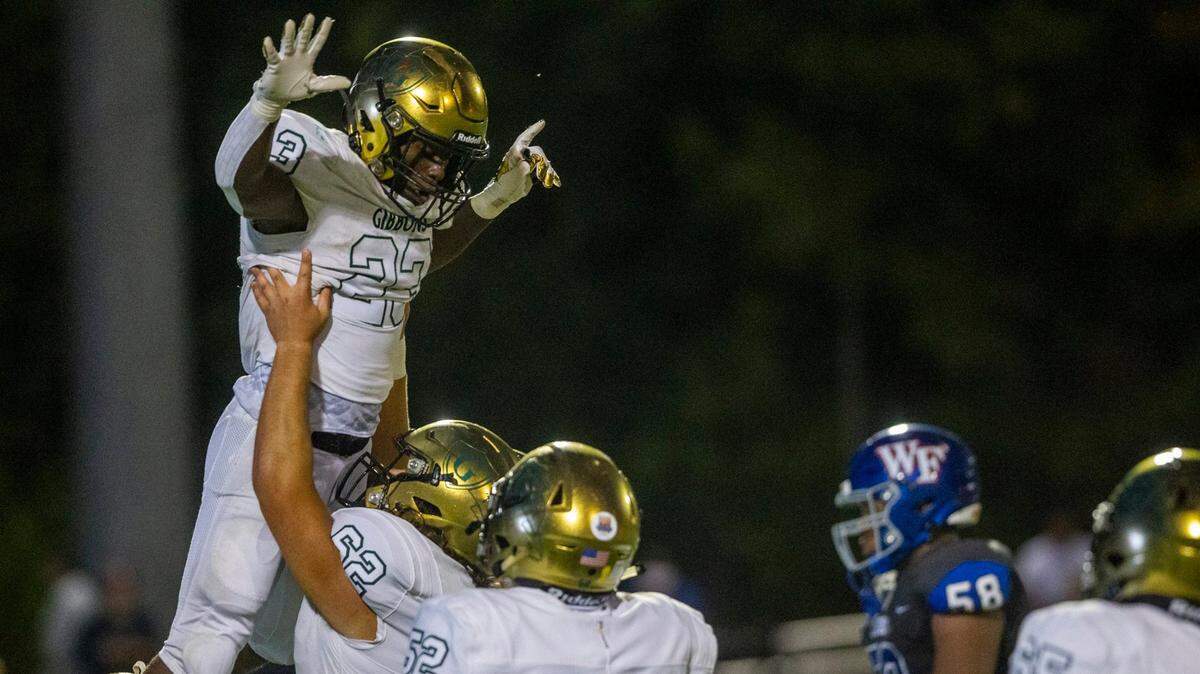
Teams across North Carolina played their final games of the Fall 2021 high school football season this past Friday — no small feat considering the circumstances. There were moments throughout the season when some coaches and athletes questioned whether they’d get here at all.
Yet, here we are.
Ravenscroft coach Ned Gonet is perhaps the foremost authority on putting things into perspective. He just completed his 41st campaign leading the Falls Of Neuse Road school’s program. No one ever has served longer as head coach at one N.C. high school.
“There’s no comparison to it,” Gonet said, referencing the way teams have had to adjust to the past two seasons. “Hope you never experience it. If you do, then you always have to be of mind for making intelligent decisions for how you prepare your program to participate.”
On the other end of the spectrum, Middle Creek coach Andrae Jacobs marked his 91st day at the helm of his first head-coaching stop in Friday’s regular-season finale.
Navigating the transition from remote to in-person teaching and learning, playing in realigned conferences, preparing for one, 64-team state playoff bracket per N.C. High School Athletic Association (NCHSAA) classification, and working proactively to avoid contact tracing quarantines is all Jacobs knows as a head coach. This is his “normal.”
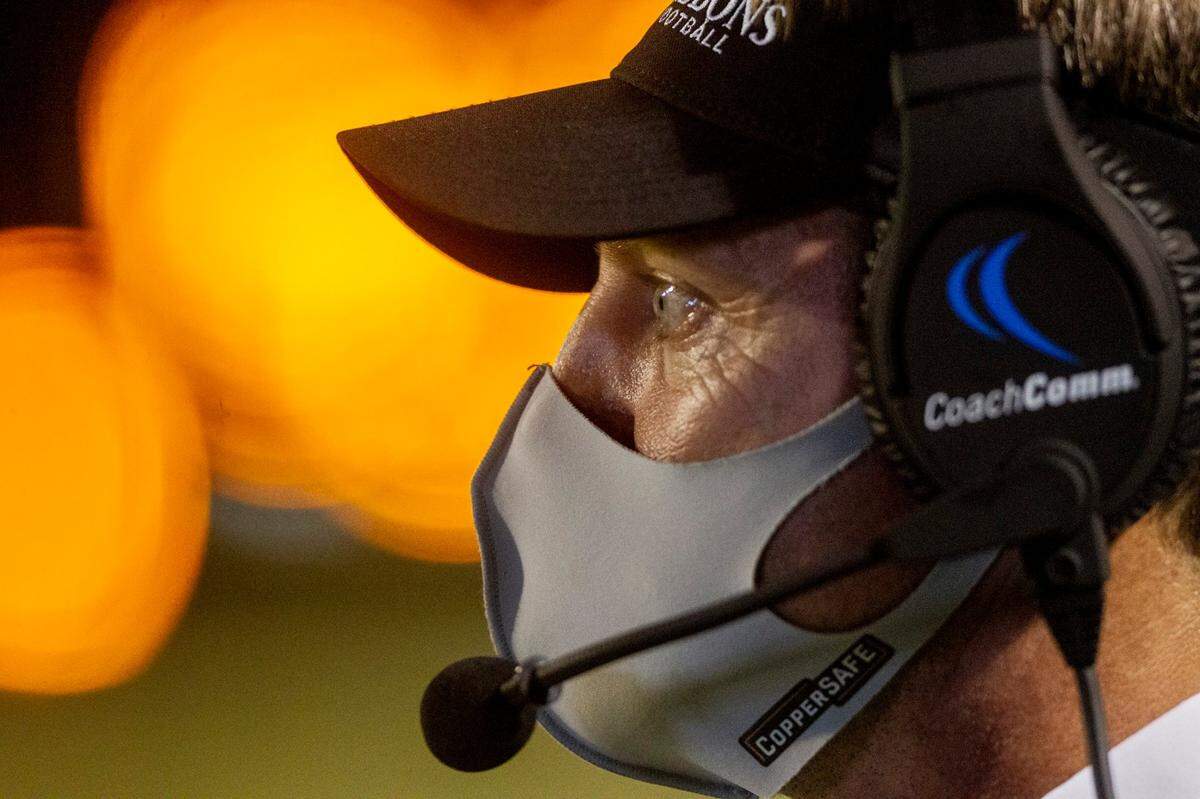
“It’s just being safe, taking care of the kids, and the kids taking care of themselves,” Jacobs said. “It’s something we really don’t think about anymore because we’re so used to doing it.”
Gonet, Jacobs, and their coaching counterparts are accustomed to ensuring student-athletes and coaches are masked during indoor activities and bus rides. At Cleveland, where coach Scott Riley has guided his team to a thus-far unbeaten campaign, the school has returned to in-person, appropriately distanced film sessions after conducting virtual film sessions last spring.
“If my phone rings on Friday, the whole team goes silent,” Riley said.
They know that phone call could mean the end of that week’s Friday night dream. Cleveland played just nine of its 10 scheduled regular-season games after Conley (Greenville) entered contact tracing protocol and had to cancel the teams’ Sept. 3 game that same day.
At Southern Durham, coach Darius Robinson and his squad were fortunate to play all 10 games in their schedule, but they worked hard to make that happen.
“Every Sunday, we send out a message about our COVID policies,” Robinson said. “You’ve always got your head on the swivel making sure everyone is doing what they are supposed to do.”
Gonet, Jacobs, Riley, Robinson, and Cardinal Gibbons coach Steven Wright have all have coached in state finals. They’ve seen firsthand the joy, disappointment — and gratitude — of which their student-athletes are capable, and the past two years have put the whole endeavore into context.
“There’s a greater appreciation to be able to participate,” Wright said. “We’ve approached it just week to week, like, ‘Hey, we get an opportunity to play this week.’”
Forming partnerships
Coaches have positioned their programs to thrive amid an ongoing pandemic through time-tested school community partnerships.
Gonet, who is also Ravenscroft’s athletics director, has two athletics administration and football coaching lieutenants — Chip Hoggard and Jim Gibbons — who have served on Gonet’s staff since 1995 and 2008, respectively.
Jacobs convinced Jason Willix — Middle Creek’s offensive and strength and conditioning coordinator — to make the move with him from Lee County to Middle Creek; Riley has been at Cleveland (in some capacity) since the school’s 2010 opening; Robinson has the benefit of six Southern Durham coaching staff members working on campus. And at Cardinal Gibbons, Wright’s offensive coordinator, Bill Liedy, and JV head coach Chris Walker, have been in their capacities throughout Wright’s 11 seasons.
That consistency was vital in helping the players — and the school communities — through the process.
“We did get back to some normalcy with attendance in the stands,” Gonet said. “It was good to see the return of people who could come see their teams play.”
Jacobs, who worked with remote teaching and learning in Lee County, saw firsthand the importance of students returning to in-person learning.
“A lot of them needed to be on some type of a routine,” Jacobs said. “It helped us move things along fairly well.”
Middle Creek, Jacobs said, had 30 JV football players when he arrived in August. After this season’s third week, there were 65 JV players. The community’s inherent camaraderie is evident in the student-athletes’ interactions, and makes Jacobs feel like he has known these students for multiple years.
“I’m going to sit with you at lunch. I’m going to hang out with you. I’m going to walk with you to class,” Jacobs said. “It just speaks volumes of this community. This is really a great place.”
Robinson, Southern Durham’s Restorative Practice Coordinator, requires student-athletes to submit teachers’ updates concerning academic progress every other day.
“You don’t come to lift. You don’t come to practice,” Robinson said, “until you bring a signed note from your teachers. “Accountability, responsibility, and discipline, you’re accountable for your work. You’re responsible for your work. To do those things, you’ve got to be disciplined.”
Having everyone together, in person, has helped the athletes thrive, and the numbers in the schools’ programs, to grow.
Taking the next steps
On the field, Riley, at Cleveland, and Wright, at Cardinal Gibbons, are leading teams seeking return trips to NCHSAA state finals.
In a new wrinkle this year, for the first time in nearly two decades, only one of them can qualify. One year after Cleveland reached the 3AA title game and Cardinal Gibbons earned its second consecutive 4A final berth, both schools are vying for a single 4A Eastern regional championship.
Cleveland and Cardinal Gibbons, like 3A Southern Durham, played for conference championships this past Friday. Middle Creek clinched its conference championship on Oct. 22 to secure its berth in the same 4A Eastern region. Ravenscroft concluded Gonet’s 41st regular season Friday at home, with an NCISAA playoffs opportunity hanging in the balance.
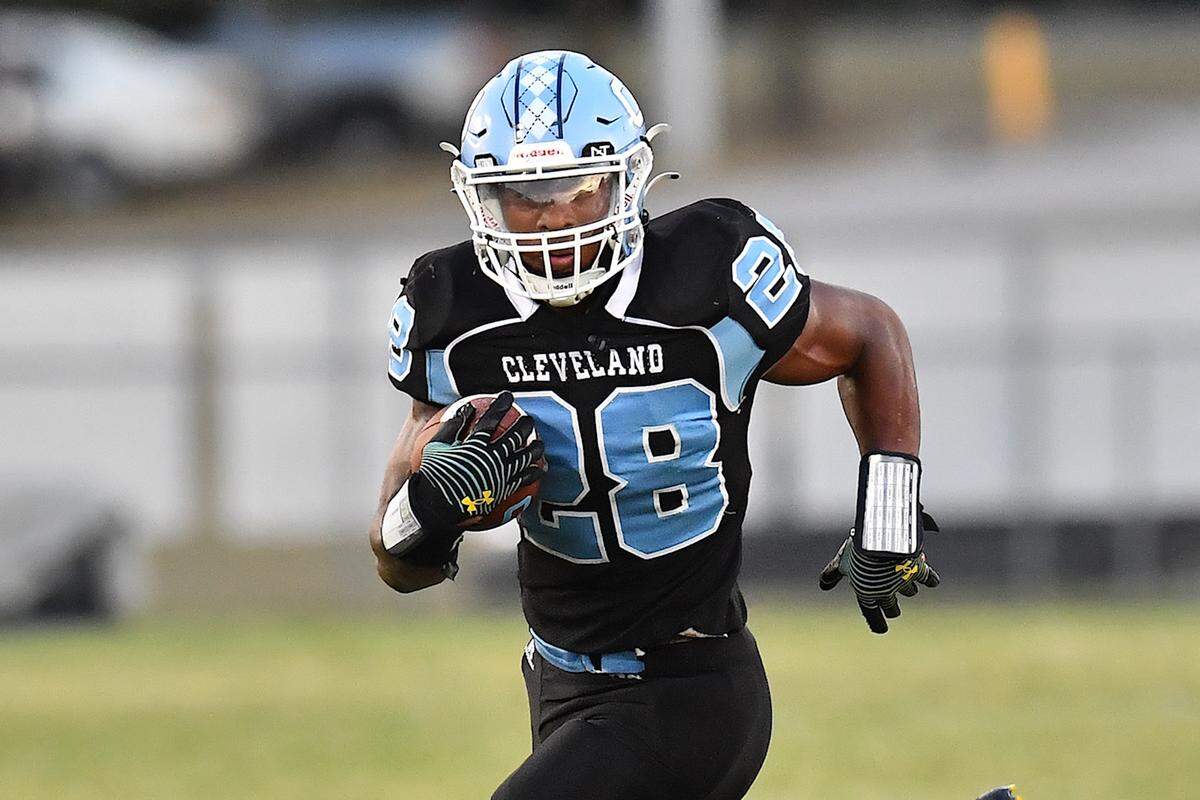
Championship pursuits began this year in May following an unprecedented spring regular season and playoffs. Several Cleveland players sustained injuries in the state final. Omarion Hampton — a North Carolina commit — missed last season’s second half. A return to normal routines has helped the team stay healthy.
“We’ve been fortunate enough to get ahead in a lot of our games,” Riley said, “and be able to rest some of the starters. I think that will serve us well going forward.”
Cleveland has seven sophomore starters. Riley added they are in unique positions after remote teaching and learning and an non-traditional spring weight training regimen.
Wright, a certified strength and conditioning specialist, facilitated Cardinal Gibbons’ weight training adjustments. He helped them navigate the short turnaround between seasons.
“We tried to not come in at a peak within our strength program, just so we could try and find a little bit of a break in there,” Wright said. “It’s gone better than I anticipated.”
Wright acknowledged he and Liedy have a keener awareness for managing carries of NCHSAA single game rushing yardage record holder Donovan Shepard. The senior accumulated 539 yards on 19 carries through the first the quarters in an October 22 win at Athens Drive.
“At the end,” Riley said, “the teams standing are going to be the ones that are lucky with the injury bug.”
What is the ‘new normal?’
Traditional handshake lines — a proud tradition of good sportsmanship among student-athletes — are no longer. Some schools have played fewer games than others. Some players had to miss some of their teams’ most important games. At some games, crowds — particularly early in the season — were limited.
Robinson acknowledged no one ever thought foregoing things like the traditional handshake line would be normal. But, with safety and the ability to play in mind, coaches had to take things day by day and, in some cases, hour by hour.
In the end, everything the coaches and administrators did this season was with the players’ and communities’ safety in mind, like proactive conditioning and recovery protocols for student-athletes, some of whom could still possibly play six state playoffs games this fall, up from a possible four last spring with the altered scheduling.
And, there is the return to four state titles in lieu of eight to consider, a wrinkle the NCHSAA has added for the first time in nearly two decades.
With playoff games now at the forefront, players, fans and coaches have returned to what many might dub the “new normal.”
But those who’ve navigated the past two seasons know the process was anything but normal. They’ve successfully staged two regular-season campaigns, and are about to play through a second set of playoff brackets, all in one calendar year.
Even before this Friday’s first-round playoff games, the fact that teams played at all was a win-win situation.
“We never thought that would be possible,” Robinson admitted. “We proved to everyone it is possible.”