Battle of the baselines: CMS limits access for independent sports media
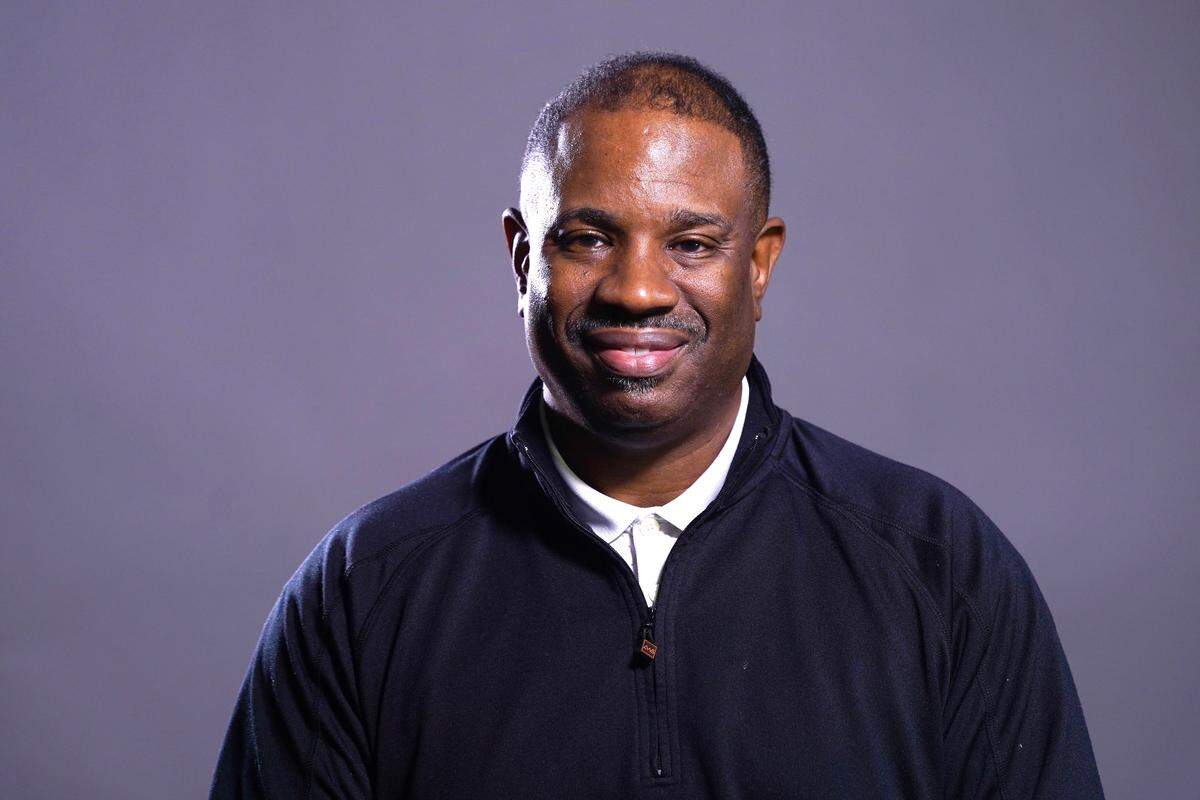
In 2020, Adrian Addie, a former basketball star at Hopewell High School, rang the bell in an uptown Charlotte hospital, ending a three-year battle against non-Hodgkin lymphoma.
He went back to his apartment and stretched out on his mattress, which was on the floor. With cancer in the rearview mirror, Addie, now 34, was trying to figure out what he wanted to do. His last job was at Amazon, which didn’t suit him, but he had been doing photography as a side gig. And shooting pictures and videos was something he loved.
A self-taught artist, Addie decided he would marry his love of photography and sports, and he started an Instagram page, @shotmakersclub, and began offering his services to local high school sports teams.
Back then, his equipment was a jet black gimbal and an iPhone, his studio a basketball court.

“I wasn’t built for that 9 to 5 thing,” he said.
When he started, it wasn’t hard for Addie to get access to local high school games to shoot content and start building an audience, but as more players and parents became interested in having videos and photos of themselves to share on social media — and as content creators began to get paid to do so — the field quickly got crowded.
In the past few years, the sidelines on local high school football fields have become overwhelmed by content creators — ditto the baselines on basketball courts. In response to a record number of requests from — let’s call them “independent media” people — that sometimes created crowds of photographers 2-3 deep on basketball baselines this winter, Charlotte-Mecklenburg Schools adjusted its policy as to who the district will allow to cover its events.
The district began to put strict limits on independent media, or freelancers, and Addie, like many of his fellow content creators, felt they were being singled out.
“We get overlooked as independent media outlets,” Addie said on The Observer’s streaming Talking Preps show. “Of course, there are several, quote, unquote, kids or younger people, who walk around with a camera. Some of them are for real. Some of them I don’t even know. But as far as just not approving independent journalists, especially ones who do it full-time, it’s not fair. I provide a service that parents, coaches, (athletic directors) want.
“It doesn’t make sense.”
In the old days, fans sat in the stands and photographers had special seating and access to take pictures and videos. Today, those lines are blurred. Event organizers say it’s not always easy to distinguish legitimate independent guys from people who just want to get in free — or make a quick buck.
It’s a new-age problem, according to Brandon Moree, director of media relations for the N.C. High School Athletic Association.
“And,” Moree said, “it’s not going away.”
What do Charlotte’s pro and college teams do?
For now, the independent media issue is largely one for high schools.
The Carolina Panthers, via a spokesperson, told The Observer they do not credential freelancers, and there are strict NFL rules around use of game footage as well strict limits on the number of media allowed on the sidelines during games.
The Panthers have a similar policy for non-game day activities as well, such as press conferences, where freelancers are generally not given access. The team says that media access typically goes to traditional outlets like newspapers and TV stations.

Davidson College has a contract photographer who has exclusive rights to the schools’ players and events, according to Joey Beeler, Davidson’s associate athletic director for communications. The school grants access to traditional media outlets, including the school paper, and Beeler said it “has been awhile” since he’s been asked by a content creator for access.
Joe Templin, director of strategic communications at UNC Charlotte, said the school’s policy is to generally not approve media access requests unless they come from a “verifiable news/media/website outlet that has shown consistent coverage, either of our team or a comparable product.”
Templin said Charlotte doesn’t consider an Instagram page to qualify as a news outlet, but said the school has granted access, on a case-by-case basis, to non-traditional media, generally to less high-profile games.
“Still,” Templin wrote to The Observer via email, “despite being denied every time, we still had a few people requesting credentials for every home football game that we would never credential, such as high school students with a photography Instagram page.”
Charlotte FC soccer embraces ‘new media’
Of all the Division I and pro teams The Observer spoke with, the Charlotte FC soccer team policy around independent media was the most progressive.
The FC will not credential anyone under 18, but has worked with some independent media people in the past, though it employs a thorough review of the contractor’s content beforehand as well as after games. The team also utilizes its developmental soccer team as a testing ground of sorts for some independent media sources it may choose to work with.

“What we’ve found is some (non-traditional media folks) that want to cover the team take it seriously,” said Woody Wilder, the FC’s director of communications. “We’ve seen great growth from some of these content creators since they started, and it’s added value to the club. We’ve been able to create an environment to give opportunity to some of these outlets to cover the team.”
Wilder said that some of the independent media is very knowledgeable about the sport and a few have started news websites and podcasts around the pro team.
“And one thing I’ve found,” Wilder said, “is that these content creators and ‘fan media’, ask really good questions. They can hold you to the fire because they are in the know. They know what’s going on inside the club, inside the fanbase. They are an educated news base.
“That’s not to say our traditional base isn’t. We are very lucky as a club to have an engaged media market who cares about this team and covers its daily to very high degree. But, sometimes for legacy media, a reporter may get an assignment for a story, and they don’t really know what’s going on.... Having those other outlets there can help.”
Is the high school policy good enough?
Moree, the NCHSAA spokesperson, said the association issues year-long credentials that require a background check and a requirement the applicant works for a traditional media outlet. If the person does not, he or she must provide two letters of recommendation from an NCHSAA member school.
Most systems will honor those passes, but in a market with so high-level high school athletes like Charlotte — and dozens of people who want to film the college stars of tomorrow — it can become overwhelming.
“We have a wide state with a lot of different communities,” Moree said. “And while West Wilkes High School may have one reporter they see every home game, West Charlotte may see 15 or 30 on a Friday night, more for a football game. So a policy that works for one county may not work for another.”
Earlier this month, CMS seemed to recognize this dichotomy.
Following a sold-out basketball game between West Charlotte and North Mecklenburg — that included some post-game pushing and shoving as well as an independent media person nearly clipping a North Meck player attempting a post-game dunk — the district made some changes.
CMS changes it policy, gets strict
In early February, Charlotte-Mecklenburg Schools said it was updating “its Winter Sports Security Expectations to ensure a safe and orderly environment for our student‑athletes, staff, and spectators.”

The new policy requires:
— Local media reporters and photographers must have an NCHSAA media credential and submit a media request to the home athletic director 48 hours before a game.
— Only media approved in advance get entry into the event and sideline access.
— Independent photographers, content creators, or bloggers working for profit for student‑athletes do not receive complimentary entry or field access.
— Media passes for any event will be limited to no more than six. Additional media members who purchase tickets are welcome to attend but must remain seated in the stands.
— And last, “for safety reasons, all approved media will be directed to a designated staging area during the game, and filming or photography from the baseline will not be permitted.”
Addie is not a fan, particularly of being blocked from the baseline at games, an angle that gives the kind of camera shots his audience craves.
“I see a lot of issues when it comes to granting access with CMS and the NCHSAA media protocols,” he said. “It doesn’t make sense.”
So where do we go from here?
When he was athletic director at Chambers five years ago, Montis Lash became a bit of a pioneer in social media in North Carolina, building a type of brand that many other schools began to follow. He taught Chambers students how to shoot and edit photos and videos and how to make social media graphics. He had them shooting games and practices.
Lash thinks there are safety issues with allowing too many media members entry into games, and he acknowledges that many young people simply use the camera for free entry and sideline access.

“Not everybody needs to be able to show up with a camera and monetize it,” said Lash, now coaching and working at Westwood (SC) High School, “it does a disservice in today’s media.”
He said, one issue, for schools is when they hire their own social media team and other independent media come to games and beat them to the punch.
“It’s troublesome to any program,” he said. “You can pull up to a game with a media pass and record content and put it on the internet 10 minutes after the game, and the person you pay thousands of dollars to in order to do content, they’re already lost that traction, and in this day and age you’re paying for traction.”
Lash favors individual school systems vetting independent media access and offering that access on a first-come, first-served basis. He doesn’t like CMS’ limit of six media representativesl.
He thinks athletic directors know which games have more room to allow more media in, and which don’t, particularly in a district like CMS, where a lot of tickets are sold in advance online. .
Addie said he has more than 100 clients that pay $250 to more than $7,000 for assignments, and he’s shot events in Florida, Georgia and Tennessee. And not just sports; he said he shot a funeral last week.
Addie agrees with Lash’s ideas around access, and thinks schools, inside of Charlotte and out, need to cut down on the extra people that sometimes accompany independent media to games. That, he said, would cut down on crowding issues.
But ultimately, he said, a consistent policy is needed.
“I feel like sometimes they group us together,” Addie said of independent media. “And it does hurt someone like me. There’s a couple other guys who are serious, and even some of the younger kids. But I think there needs to be a reevaluation with how they handle the process, who’s vetted, and then whatever the agreement is between CMS and the NCHSAA, they need to figure that out. I mean, our pass holds no weight. We get there. We flash our pass. They don’t care about it. So it’s like, ‘What’s the point of the pass?’”
This story was originally published February 23, 2026 at 5:30 AM with the headline "Battle of the baselines: CMS limits access for independent sports media."