
For a brief time, Chapel Hill was the center of the pro sports world
During the Second World War, Franklin Street in downtown Chapel Hill was teaming with Olympic athletes, world-champion boxers and wrestlers, professional football players and college basketball stars wearing military khakis.
An entourage of Major League ballplayers, training to become pilots, frequented the soda counter at Sutton’s Drugstore and Village Theater matinees. They made a lifelong impression on kids like Carl Reynolds “Renny” Randolph, now 87, of Durham.
For nearly four years, the U.S. Navy commandeered much of the UNC campus for a V-5 Naval Aviation Cadet Training Pre-Flight School and its V-12 program. Marine Corps, Army and ROTC units marched through campus, where hundreds of women served in the United States Naval Reserve and as volunteers in the Hospital Corps. Military linguists trained interpreters in classrooms. French cadets training under American officers lived in college dormitories, including President Charles de Gaulle’s son, Philippe, now 98, who rose to the rank of admiral in the French Navy.
Most of the young midshipmen, nicknamed “Boots,” were attached to Navy Pre-Flight. Before trainees got behind the controls of war planes and lighter-than-air blimps, they had to graduate from one of the world’s fiercest physical ground courses on the UNC campus. Sports competition was the backbone of this training. Swimming and survival courses with 40-mile hikes through pine forests surrounding campus were crucial to pilots making carrier landings in the Pacific.
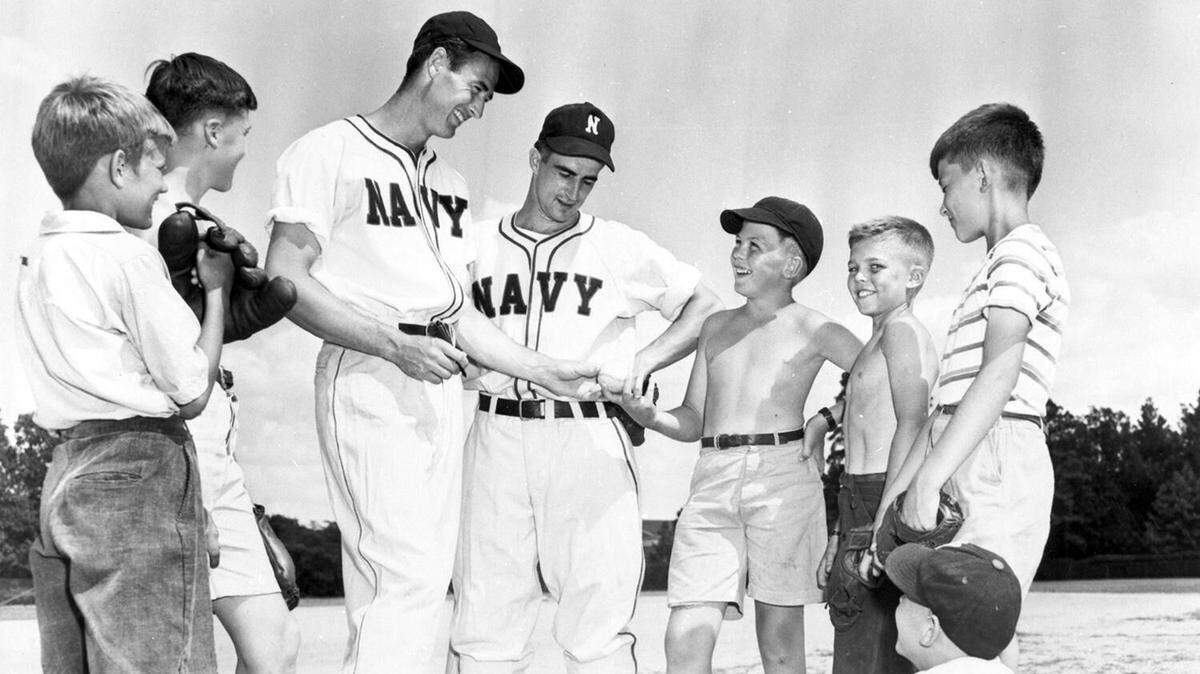
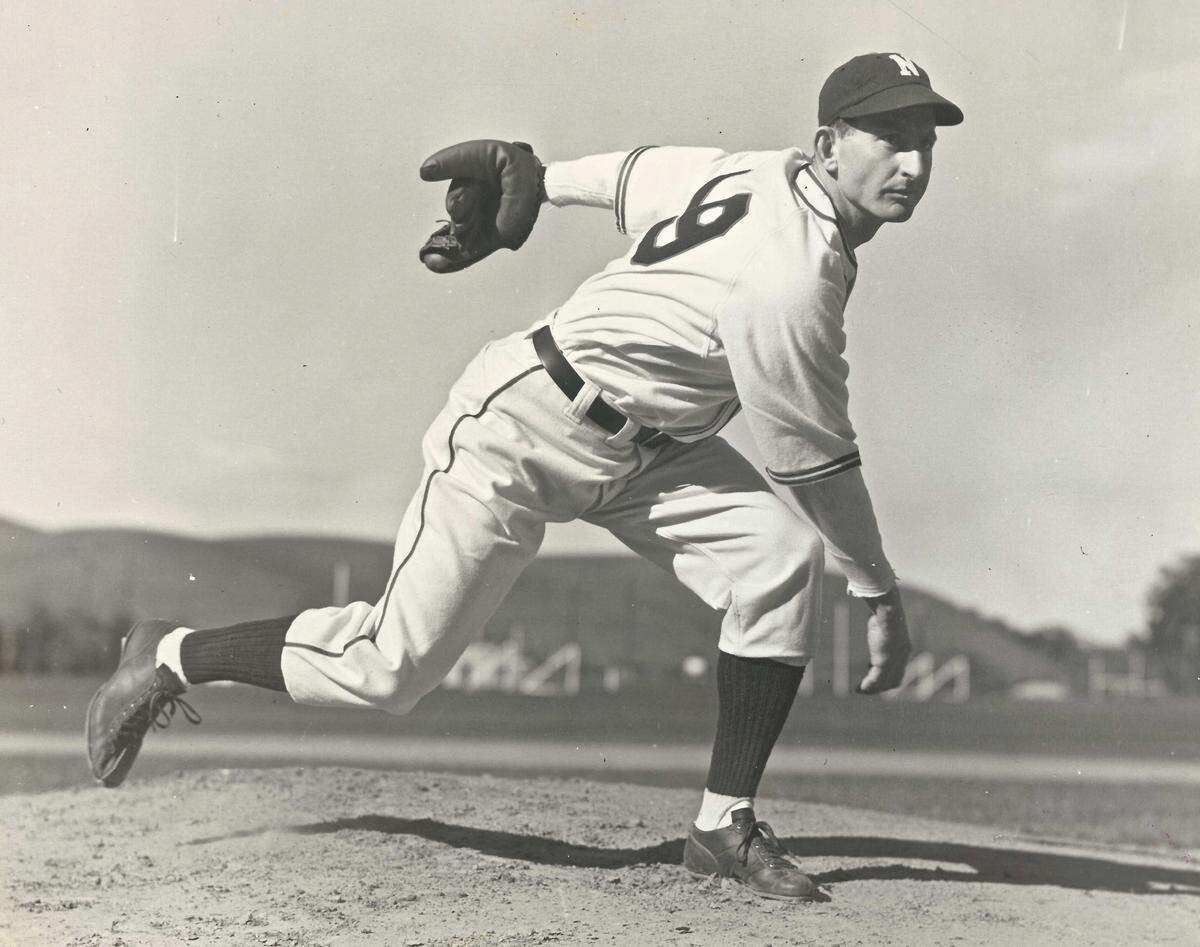
Renny grew up in Chapel Hill, where his family lived in a bungalow on Ransom Street, near the Carolina Inn. When war infiltrated the campus, young Renny served as a batboy to North Carolina’s first and only Major-League caliber ballclub when the campus welcomed Boston Red Sox outfielder and future Hall of Famer Ted Williams for three months of training.
Other Major League stars whose spikes dug into the old Emerson ballfield included Red Sox shortstop Johnny Pesky, Detroit Tigers Hall of Famer Charlie Gehringer and Mount Olive’s Ray Scarborough and Raleigh’s Dusty Cooke, who each played for the Boston Red Sox and the New York Yankees during their careers.
Though adults and military personnel had to be cleared through security posts, according to Renny, kids roamed freely around campus. Often barefooted, they rode their bicycles from training fields to boxing rings to sweat-soaked gyms, getting a front-row seat to an extraordinary sports-for-war training course.
During the war, Renny’s father Philip Randolph worked as a civilian for the government in Raleigh. For 20 years, his mother Alma went on annual buying trips to New York when she ran The Little Shop, the posh clothier next to Varley’s Men’s Shop and Julian’s.
According to Renny, sports is in his family’s blood. His father was a fullback on the 1920 North Carolina football team where he gained a reputation for bucking the line, earning his nickname “Goat Randolph.” Renny followed in his footsteps as co-captain of the soccer team at UNC. He played football with his Alpha Tau Omega fraternity brothers before he graduated in 1954.
The Sporting News “In the Service” Portrait
Renny (standing, second from right in black pants with no shirt, in the main photo with this story) still resembles the former batboy with deep-set dimples in this classic portrait with “Navy Juniors,” who hauled water and bats for celebrity players like Williams, left, and Pesky.
The Raleigh News & Observer’s editor and publisher Josephus Daniels, former Secretary of the Navy during WWI, helped lure Navy Pre-Flight to Chapel Hill in the early 1940s. “Kidd” Brewer, a name synonymous with Duke and Appalachian football and some colorful state politics, was the base publicist. Legendary newsman Orville Campbell, who helped launch Andy Griffith’s career, was an editor at the Pre-Flight station newspaper that put kids to work with athletes in photo-ops to boost recruiting and morale.
This cartoon-like Batboy pose landed in the Armed Forces section of The Sporting News on July 11, 1943. It’s also on the cover of a scrapbook given to Renny by his family on his birthday a few years ago.
Today, the original film slide is housed in the Louis Round Wilson Library Collection on the UNC campus. Repositories like the National Baseball Hall of Fame Museum in Cooperstown also house this portrait, because it represents a by-gone era when hundreds of Major League ballplayers, and thousands of professional athletes, paused their athletic careers to volunteer in the military.
In 1941, Ted Williams had a .406 batting average with Boston, a mark that hasn’t been approached since, vaulting him into baseball immortality. In 1942, he won the American League Triple Crown. At the peak of the hitter’s career he put down his bat to become a Marine combat pilot, serving in World War II and the Korean War.
Renny remembers the “Splendid Splinter” as a towering, clean-cut fellow who was friendly with kids who looked up to him. “Williams was the best hitter in the world, right there in Chapel Hill. I was overwhelmed to be a part of that team,” he said.
Renny’s son Randy Randolph, who resides in Deltaville, Virginia, says his father was a mischievous kid, who had the run of the town when it was a village. “When Woollen Gym replaced wooden backboards with Plexiglass, my father was the first one to make layups on the basketball court,” he said.
Pre-Flight basketball gained the reputation as a scoring-machine. Athletic officers — including UNC’s legendary basketball coach Frank McGuire, who won the NCAA 1957 national championship, John Wooden, UCLA’s future “Wizard of Westwood” and West Virginia’s Dyke Raese — drilled cadets on the hardwoods in Woollen Gymnasium. In December 1943, the Navy pilots dashed out on the court in light-blue satin warmups. Before 2,000 fans they handed the Duke Blue Devils one of their worst defeats in years, beating them 58-39.
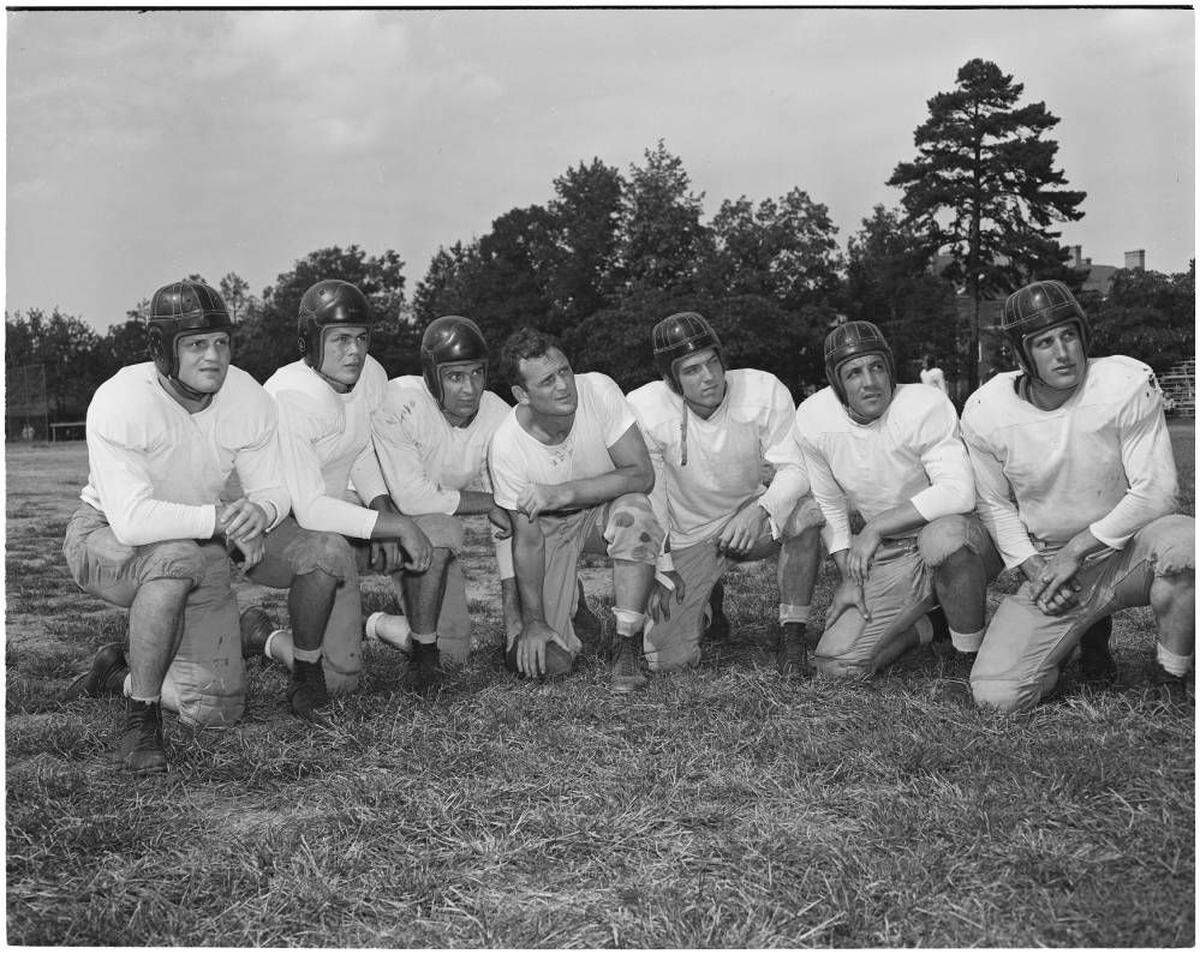
Pre-Flight football coaches included Paul “Bear” Bryant, Notre Dame’s “Four Horseman” Jim Crowley, eventual Ole Miss coach Johnny Vaught and former Baylor coach Frank Kimbrough. In 1944, the Navy’s Cloudbuster Eleven were listed as the number two team in the first AP poll of the season for upsetting the Cherry Point Marines, Annapolis, and Duke University in three consecutive wins, followed by a 13-13 tie with the Virginia Cavaliers.
Pre-Flight Memorabilia
The Pre-Flight base closed in the fall of 1945. A few wartime monuments stand today. Kessing Outdoor Pool, where pool deck tiles are designed into emblems of Navy anchors, honored the base’s first skipper, Commander Oliver Owen “O.O.” Kessing. Navy Hall, which served as base headquarters and the publicity office, now serves as the Naval Armory.
The Louis Round Wilson Library is the gatekeeper of this history, housing thousands of sleek LIFE-magazine quality images in its archives. This summer the library plans to feature an exhibition on North Carolina baseball called “From Moonlight to Mudcats: Inside Baseball in the Tar Heel State.”
The exhibit will feature Navy Pre-Flight artifacts such as autographed baseballs, athletic programs, linen postcards and letters written by cadets. After the war, the Navy donated sports equipment such as jerseys, bats and gloves to schools like Broughton High School and orphanages across the state. If you have Pre-Flight memorabilia or images you are interested in donating or loaning an item to the library for the exhibit, please contact curators at wilsonlibrary@unc.edu.
Anne R. Keene is the author of The Cloudbuster Nine: The Untold Story of Ted Williams and the Baseball Team That Helped Win WWII. www.annerkeene.com
This story was originally published February 27, 2020 at 6:00 AM.