At age 72, Dom Capers looks back — and forward — as he rejoins the Carolina Panthers
Here he is, at age 72, the first head coach the Carolina Panthers ever had and now an assistant coach for the very same team.
“It’s like déjà vu here,” Dom Capers said Wednesday in Bank of America Stadium, inside a place that is as familiar to him as the house you grew up in would be to you.
Capers has been around the NFL and back since he led the Panthers to the NFC Championship game in 1996, won every “Coach of the Year” honor there was and then got fired for the first time in his life in 1998 after the Panthers went 4-12. He took another turn as a head coach in Houston. He won a Super Bowl as a defensive coordinator in Green Bay. He mourned when his two best players at Carolina — Sam Mills and Kevin Greene — died, and vowed never to take his own life for granted.
Now Capers is a senior defensive assistant for the Panthers, which means he helps out new Panthers head coach Frank Reich (who Capers made Carolina’s first-ever quarterback in 1995 before benching him after three games) and new defensive coordinator Ejiro Evero (a Capers protégé, and likely a future NFL head coach).
Capers is no longer the boss with a streak of meticulousness so wide that, while growing up in Buffalo, Ohio, he would edge front lawns with a fork to make sure they looked exactly right. He’s a worker bee, and he’s OK with that. He’s made plenty of money. He and his wife, Karen, could have long ago retired to a beach. But he’d rather have fall Sunday afternoons to look forward to, a thrill he has never tired of even after 36 years in the NFL.
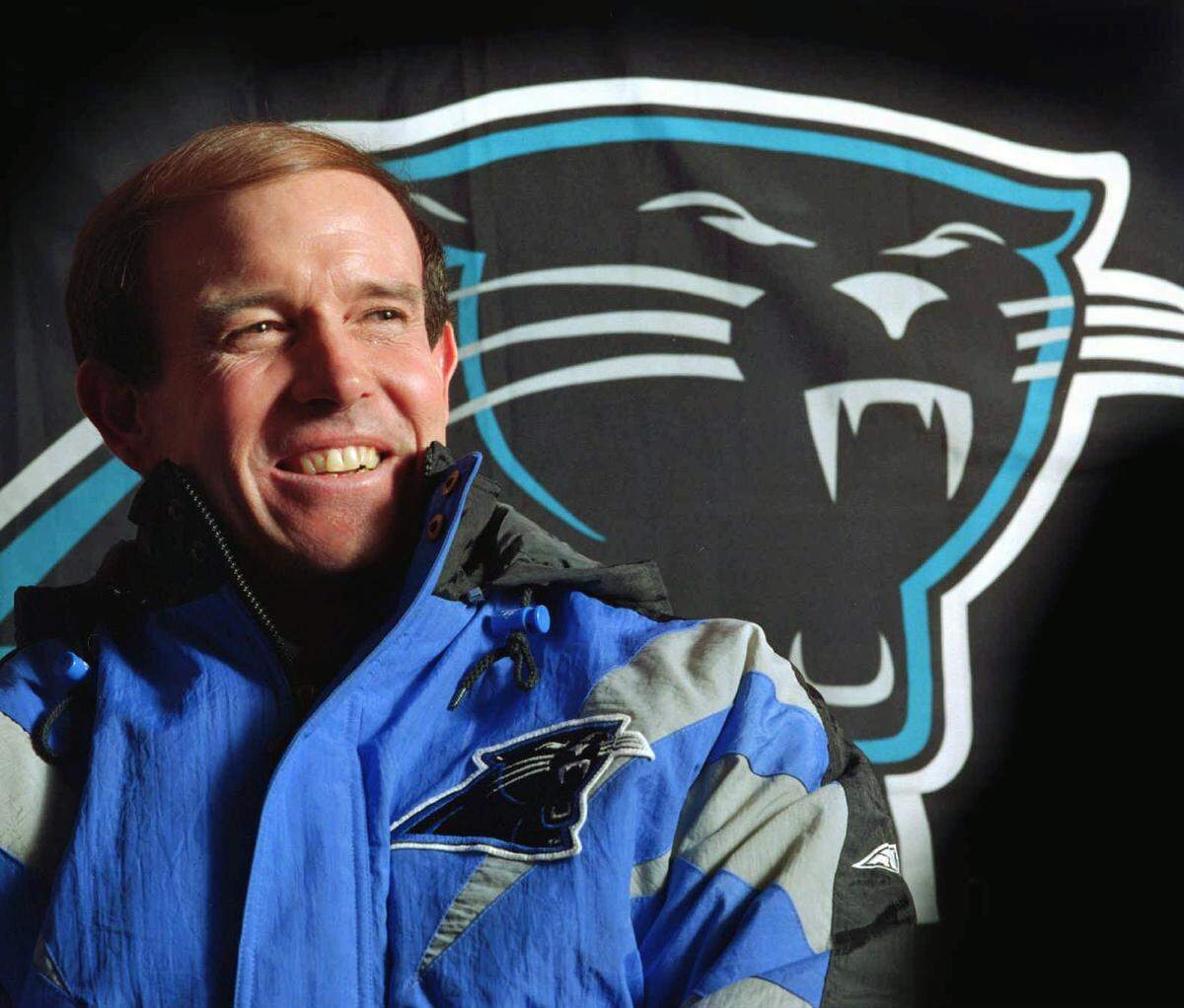
As Capers told me once in 1996, while we were talking about the 100-hour weeks he put in and the 3-4 days a week he spent sleeping at what was then known as Ericsson Stadium: “People look at me and say, ‘Hey, get a life!’ ”
But back then, just like right now, Capers has exactly the life that he wants.
‘Not a sentimental hire’
Capers has marveled at Charlotte’s expanded skyline since he’s returned. And he’s been tempted to go find “The Cell” in the stadium. That’s what his old room with the queen-sized bed and hunter-green comforter, deep inside the bowels of the stadium, was nicknamed by Carolina players and staff in the 1990s.
Capers is about as straight an arrow as you’ll ever meet. But he used to joke that the barren room, which had no windows and was decorated in a style best described as Early American Cinderblock, would be good practice for his living arrangements if he ever wound up in a minimum-security prison.
Yet Capers hasn’t actually peeked inside what used to be “The Cell” yet. The room has since been repurposed into an office. Capers doesn’t want to appear like he’s snooping around, hunting for bits of nostalgia.
And this “back to the future” stuff — it only goes so far, with him and with Reich.
Said Reich this week when discussing Capers’ hiring: “I’m not overly sentimental, but that is kind of special to me. But let me just say this. Anybody who knows Dom Capers knows that this is not a sentimental hire. This is not a sentimental hire. Not even close. This guy is still vibrant with football, passion, experience and knowledge.”
Evero, who interviewed for all five NFL head-coach openings over the past two months, runs the 3-4 base system that Capers helped popularize in Pittsburgh in the early 1990s. The Steelers defense was then nicknamed “Blitzburgh,” and Capers ran the same defense at Carolina in the mid-1990s.
So Capers will mostly be a mentor to Evero, as he was for Evero last season with the Denver Broncos, when Evero was a first-time defensive coordinator. In Charlotte, Evero will try to improve a Carolina defense that is already good, but isn’t yet great.
Evero first got to know Capers in 2016, when Capers was the defensive coordinator at Green Bay and Evero was his quality control coach.
“I was doing all the grunt work,” Evero said with a smile.
Now the roles have reversed. Evero is the boss. Capers isn’t getting anybody coffee, but he’s basically there to help make Evero and the Panthers look good.
Said Evero of his relationship with Capers: “It’s a friendship and it’s a collaboration. He’s a dear friend … I tell everybody this is not my defense. It’s me, the coaches and especially Dom’s influence, the players — we’re all putting this thing together. We’re collaborating to make the best defense possible. And Dom is definitely a huge part.”
As for whether the 42-year-old Evero helps keep Capers young, Evero laughed: “Dom stays plenty young by himself.”
What has changed for Capers, and what hasn’t
As he did as a head coach in Charlotte, Capers still works out every day. He said a daily dose of the treadmill is as innate to his life as “brushing my teeth.” His voice remains deep and robust, a baritone that could narrate a nature documentary. He magically has more hair now than he did when he was first hired in Charlotte in 1995. And yes, he’s heard your jokes about that for years and mostly just laughs them off.
Capers has never minded laughing at himself. He has long told the story of his first date with Karen Grupp, a flight attendant whom he met on a plane in 1992. Capers asked her out by the end of the flight and a few days later she flew to Pittsburgh to meet him, where he was working for the Steelers at the time.
Capers was supposed to pick her up at the Pittsburgh airport at 5 p.m. But at 4:30 p.m., head coach Bill Cowher walks into Capers’ office, anxious to discuss the defense.
In depth.
Capers didn’t feel like he could tell the head coach he had to go on a date. So they talked as long as Cowher wanted to talk. Capers finally got to the airport at 7 p.m., mortified at how tardy he was.
“Here it’s the first time we’ve ever gone out, and I’m two hours late,” Capers told me in 1996. “I figure, ‘Hey, if she sticks around, she knows exactly what she’s getting into.’ ”
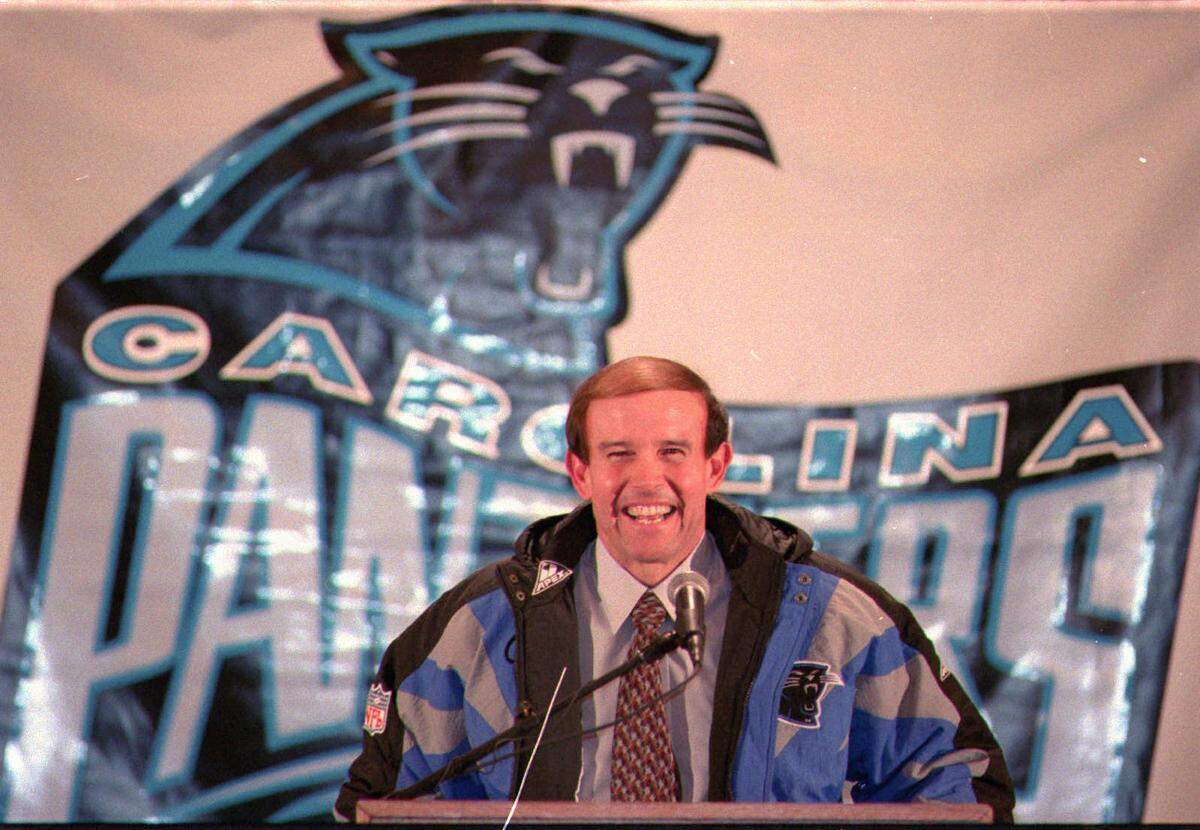
Karen stuck around, and even kept her job as a flight attendant when Capers was the Panthers’ head coach because she liked it and she didn’t want to sit alone in an empty house. She and Dom Capers will likely buy a townhome or condo near the stadium soon.
They had a 5,000-square foot home at Lake Norman the first time around, but while grinding as the Panthers coach, Capers once saw it in daylight for only four hours the entire month of November.
The summit of 1996
After Joe Gibbs turned down the Carolina job, the Panthers decided they wanted Capers so badly in 1995 that they contacted him improperly under NFL rules at the time, before Pittsburgh’s 1994 season had concluded. Carolina lost a second- and sixth-round draft pick for that transgression and was also fined $150,000. But the Panthers got their man, and almost everything worked out swimmingly for the team’s first two NFL seasons.
“Winning 20 games those first two years is something that I’ll never forget,” Capers said.
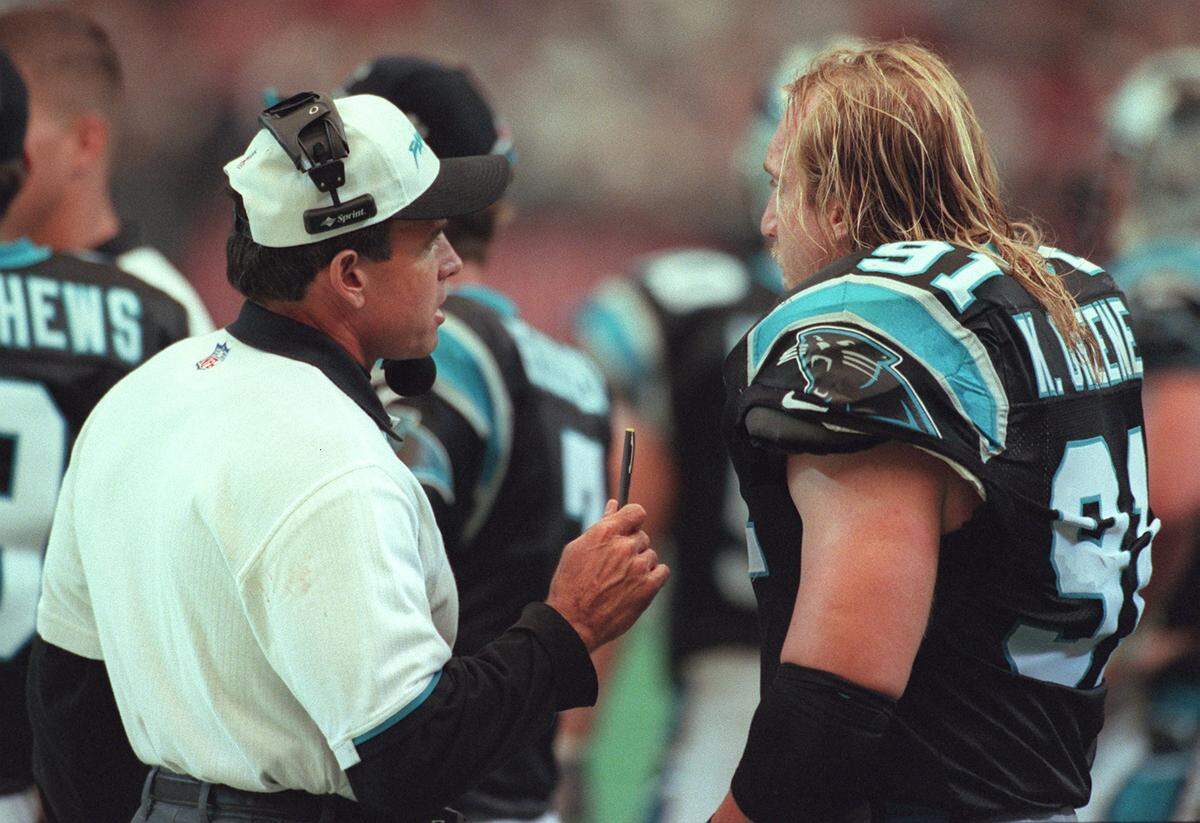
Reich didn’t hold a grudge and would hire Capers 28 years later, but the QB was disappointed in 1995 when Capers benched him following Carolina’s 0-3 start. The move paid off, though, as the Panthers went 7-4 over their final 11 games behind rookie Kerry Collins and a stingy defense while playing home games at Clemson.
Capers’ obsessions with the tiniest details became legendary. He could tell you on June 13th what he would be doing at 2:17 p.m. on December 13th, because he had already mapped out his and the team’s entire football season schedule to the minute.
He didn’t like the schedule to be altered. Once, a film projector broke down and a meeting had to be dismissed, and the even-keeled Capers got about as mad as anyone had ever seen him get. And in October 1995, Capers found himself alone in a meeting room at the stadium, wondering whether all his assistant coaches had quit because no one had shown up for a scheduled meeting.
The O.J. Simpson “not guilty” verdict was being announced and the assistants were all watching it live on TV in another room. To Capers, Simpson had stopped mattering in his world the moment he hung up his cleats.
This sort of single-minded focus all seemed to work for Capers as a head coach, for a while. But Year Two, in 1996, was the highlight.
“We had tremendous momentum going into the second year,” Capers said. “We opened up a brand new stadium, won every game at home and beat the defending Super Bowl champion Dallas Cowboys in the playoffs. I’ll never forget going in the locker room after that win and standing there, and there are no players coming in. I couldn’t figure out what was going on.”
The players had decided to celebrate outside. As fans ringed the front row of the stadium, the players took a lap around the field, high-fiving everyone they could. It was an organic moment that would serve as the summit of Capers’ tenure.
From there, Carolina lost to a stacked Green Bay team, 30-13, in the NFC Championship game; went 7-9 in 1997 and then disintegrated to 4-12 in 1998, with Capers getting fired.
“When you put your heart and soul into something, it sets you back a little bit,” Capers said.
A messy ending with Kerry Collins
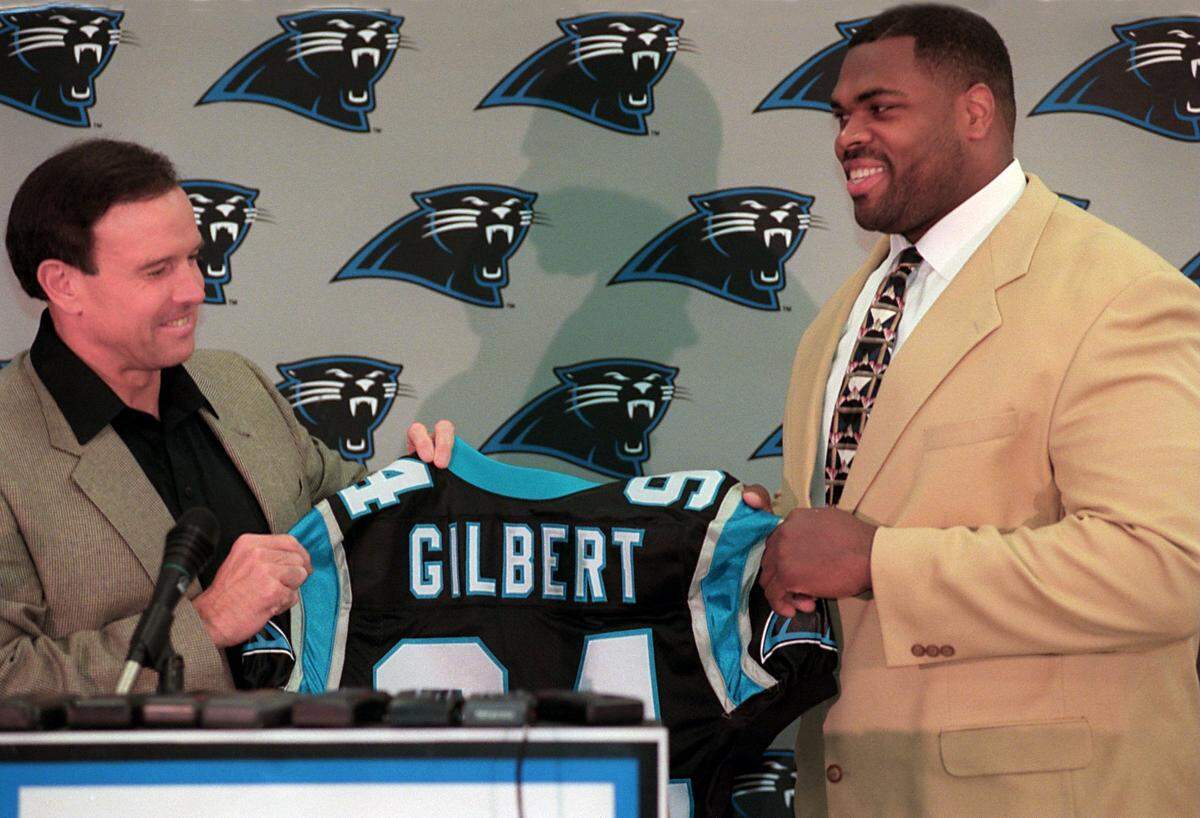
Lots of things went wrong those last two years of Capers’ tenure. Carolina used a No. 1 draft pick on a moody but talented wide receiver named Rae Carruth in 1997; Greene left the team for a year after a salary dispute; the defense seemed to get old all at once and wasn’t helped by a massively miscalculated trade for Sean Gilbert.
But the most controversial was the parting with Collins, who had a big arm and played well at times but who also had showed flashes of immaturity (the most notable when he used a racial slur in the presence of teammates). The Panthers released Collins in October 1998. This happened after Carolina got beaten by 28 points at Atlanta, dropping them to 0-4. Collins — as Capers would tell it — told the coach shortly after that blowout loss that his heart wasn’t in the game anymore.
Collins told me in an interview years later that he had numerous “personal problems” at the time, many of them caused by his frequent drinking and partying, and that he just wanted to “escape.” He was thinking more like getting pulled from the starting lineup, the way he explained it. However, he has always disputed that he ever said his heart wasn’t in football anymore.
It was a messy ending. Carolina got nothing by releasing the No. 5 overall pick — a player who was only 25 years old at the time and played the game’s most valuable position.
New Orleans picked Collins up that year, started him for a few games and then released him, and shortly after that he went to alcohol rehab. From there, Collins resurrected his life and career and ended up with a 17-year NFL run, highlighted by a trip (and loss) to a Super Bowl while quarterbacking the New York Giants.
When I asked Capers about Collins this week and whether he regretted anything about the incident, he said: “That wasn’t the ideal situation, the way it ended here. But I respect Kerry because you measure a man by how he bounces back. And he bounced back and had a great career. And so, we all have some things we might want to change. But, to me, it’s how you respond to those things.”
‘Why are you still doing this?’
Capers bounced back, too. Here he is again, 25 years later, still coaching the game he loves.
“I’ve had a lot of people ask me: ‘Why are you still doing this?’ ” he said. “I do it because I enjoy it. In 1996, we had a lot of national media in here. Some guy asked me, ‘What do you want to be doing when you’re 72 years old?’ And I looked at him and I said, ‘I want to be coaching.’ ”
This incident may be apocryphal. Capers said in his press conference Wednesday that I would no doubt remember the moment, but I don’t. What matters, though, is that Capers believes it happened. Maybe it did. Certainly, he’s meant to lead men and develop coaches.
“God willing, here I am, still coaching,” Capers said. “I enjoy the competitiveness, the Xs and Os. And still, I don’t think there’s anything that matches Sunday afternoon for three hours. You put in all that work during the week and there’s no in-between. You either feel real good or you don’t feel very good at all. And I don’t know what you find to match that.”
This story was originally published February 24, 2023 at 6:00 AM with the headline "At age 72, Dom Capers looks back — and forward — as he rejoins the Carolina Panthers."