How the Canes turned anticipation and execution into one of the NHL’s best penalty kills
.JPG "Los Angeles Kings’ Adrian Kempe (9) looks to shoot the puck over a sliding Carolina Hurricanes’ Jesperi Kotkaniemi (82) during the third period of an NHL hockey game in Raleigh, N.C., Saturday, Dec. 18, 2021. (AP Photo/Karl B DeBlaker)")
Penalty killing in hockey is dirty work. There’s nothing glamorous, just a lot of grit and grind: mucking in the corners, clogging the slot, stepping — or diving — in front of rocket shots from the point.
And only one team in the NHL has done it better this season than the Carolina Hurricanes, who have killed off 28 consecutive power plays in the past nine games. Carolina stood at 90.0 percent through Sunday’s games, just behind the Pittsburgh Penguins’ 90.4 percent. (To be fair, the Canes have been shorthanded 120 times, second-most in the NHL, while the Penguins have only been short 83 times, third-least.)
The Canes’ penalty killing is built on anticipation and execution, putting stress on opponents’ zone entries and winning defensive-zone draws. It’s the pressure game head coach Rod Brind’Amour prefers. Call it an extension of the Canes’ five-on-five play, only shorthanded.
“I think everybody’s philosophy on the penalty kill is pretty much the same,” Brind’Amour said before Saturday’s game against the Florida Panthers. “You’re trying to take away the time and the space from the good players, and obviously you have a plan for when that doesn’t happen.
“But at the end of the day it’s no different than five on five. You’ve got to outwork the power-play guys and you definitely have to sacrifice and get in front of shots. You have to be willing to do that, right? There’s a lot to it but at the end of the day it’s about trying to pressure as much as you can.”
.JPG "RedWingsHurricanesHockey (10).JPG")
Forcing teams to force plays
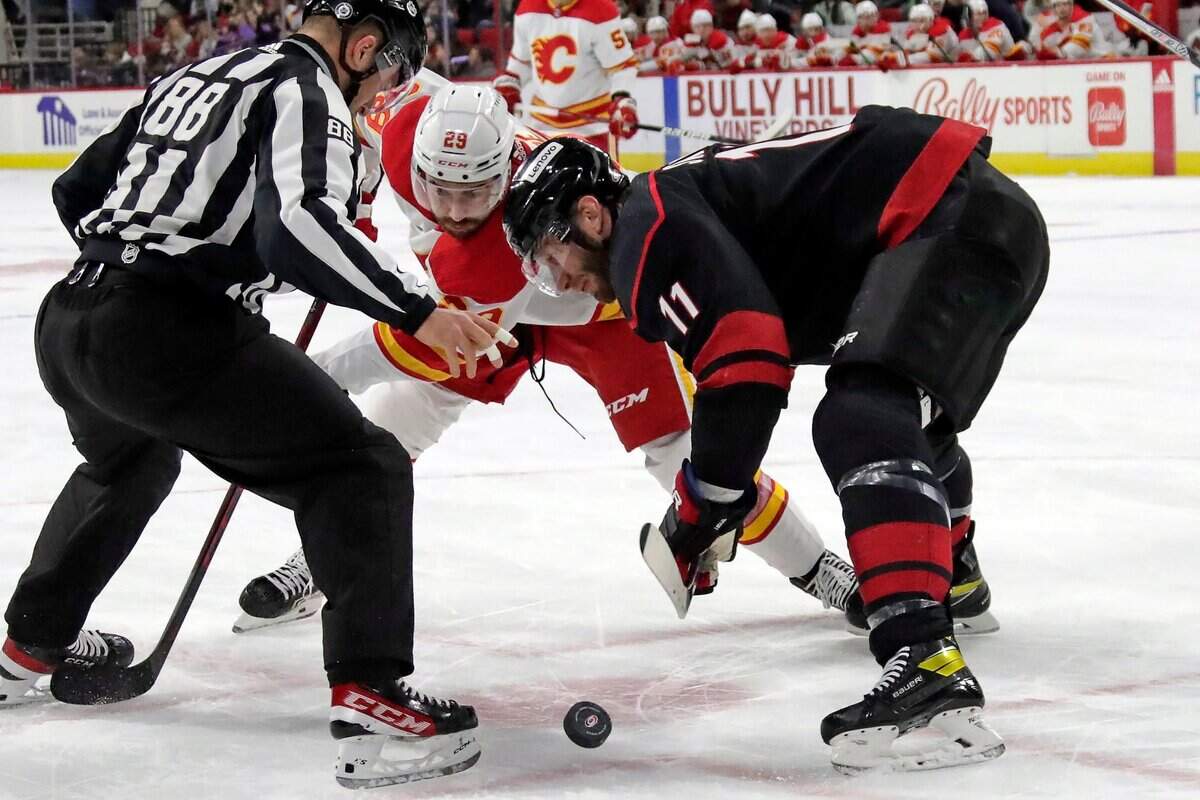
After the Canes killed off all four Calgary power plays in Friday’s 6-3 win at PNC Arena, Flames coach Darryl Sutter mentioned Carolina’s aggressiveness and the disruption, saying, “You’re trying to force plays a little bit instead of getting pucks to the net.”
A night later, the Canes and Panthers were tied 3-3 in the third period of a hard-fought game at PNC Arena when Canes captain Jordan Staal was whistled for roughing with 5:29 left in regulation.
Angry Canes fans rained down their feelings from the stands, showering officials with displeasure. So, too, did Brind’Amour, who pulled down his mask for a few choice words with the officials from behind the bench.
But with one of their best and biggest penalty killers in the penalty box, the Canes went back to work. The Canes’ pressure on the kill forced Panthers forward Frank Vatrano into an interference penalty against defenseman Jaccob Slavin with seven seconds left in the Florida power play.
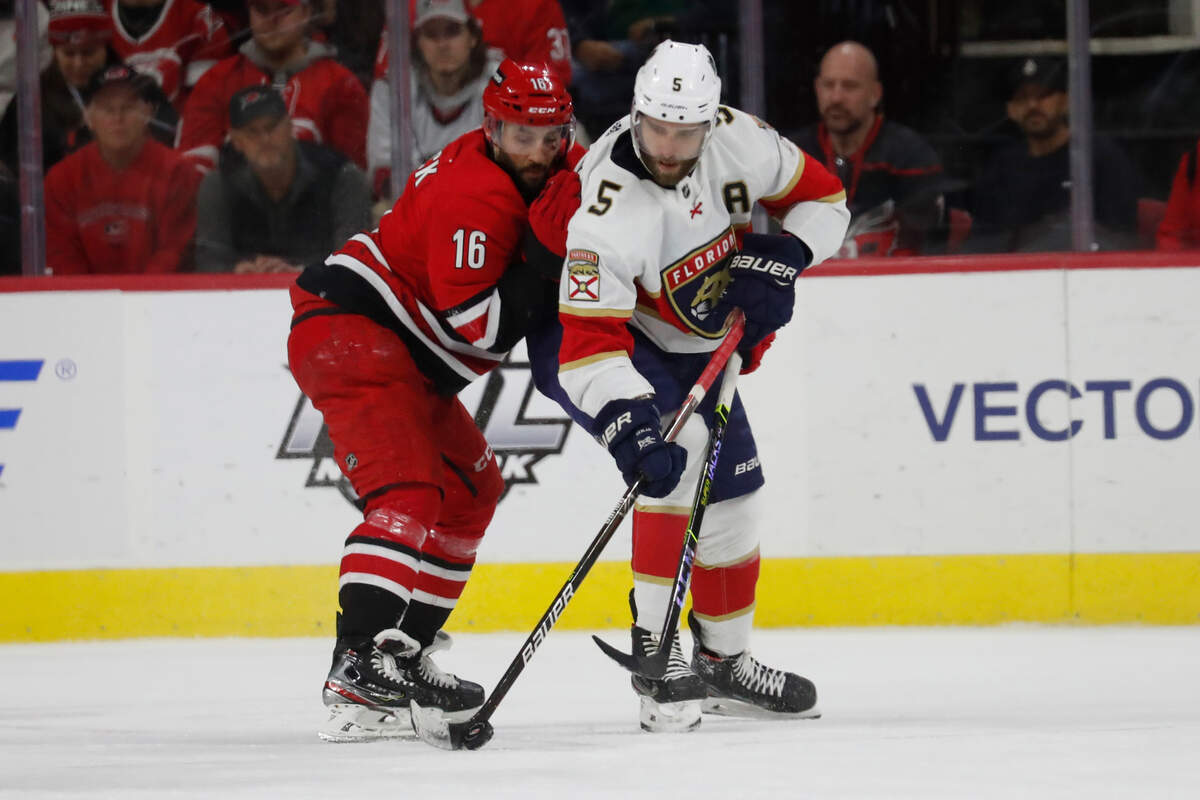
The Canes did not allow a shot on goal before the Vatrano penalty as Vincent Trocheck blocked an Aaron Ekblad shot. They did not win the game — Anthony Duclair’s overtime goal decided it for Florida — but came away with a point.
The last power-play goal against the Canes came Dec. 7, when the Winnipeg’s Pierre-Luc Dubois scored in the Jets’ 4-2 loss. The Canes then were 5-for-5 on the kill two days later in a 2-1 win at Calgary, beginning their streak.
“You need to outwork the other guys but at the same time you’re outnumbered,” Canes defenseman Ian Cole said Monday. “Running around like chickens with your heads cut off doesn’t necessarily do it because you’re down a man. I think it has to be a mix of smart reads, good anticipation and then, yes, outwork them, too.
“It’s a matter of keeping your head down and doing he right things over and over and over again. Doing the right things over and over and over again will get the job done, and I think that’s what you’re seeing recently.”
The right personnel
The list of players who have been used on the Canes’ kill this season is a long one. Among the defensemen: Brett Pesce, Slavin, Brady Skjei and Cole. Among the forwards: Jesper Fast and Steven Lorentz have joined Staal, Trocheck, Sebastian Aho and Teuvo Teravainen, and Martin Necas has gotten a look at times to take advantage of his speed and quickness.
On the Staal penalty, the Canes started the kill with Lorentz and Fast, Pesce and Cole. Earlier in the third period, after an interference penalty against Pesce, the kill began with Staal and Trocheck, Cole and Slavin.
“Everyone seems to be on the same page, working hard and getting in lanes so they don’t get Grade-A shooting lanes,” Skjei said.
Brind’Amour has credited Tim Gleason, in his first season as an assistant coach, on his work with the Canes penalty killers. Gleason did the dirty work and sacrificed his body on the kill often as a former NHL defenseman who played more than 500 games with the Hurricanes.
Gleason replaced Dean Chynoweth, who implemented the penalty-killing system Brind’Amour wanted, which included using Aho and Teravainen shorthanded, taking advantage of the Finns’ quick instincts and craftiness since they work well off each other.
Aho was a one-man killer on one of the Flames power plays, swiping the puck and skating around with it, eluding Calgary players in pursuit.
Since the 2018-19 season, Brind’Amour’s first as head coach, the Canes have the best overall penalty-killing percentage in the league (87.9). This season, the Canes have killed off 108 of 120 power plays.
“Tim’s been great,” Brind’Amour said of Gleason. “I don’t think we’ve changed a lot. There’s no reason to change. We were doing a pretty good job with it. But he’s put in his little flair on how he wants it done and done a great job.”
Don’t ask Gleason to disclose any of his tweaks, though. He’ll just grin and say, “It’s the system and guys have bought into it,” as he did Monday, although noting the use of top skill players on the kill is more a recent trend in the NHL than “back in the day.”
Whether he wants to talk about them or not, though, Brind-Amour’s system and Gleason’s tweaks are working. Just as the rest of the league.
This story was originally published January 11, 2022 at 8:00 AM.