What was Brad Marchand chirping about to the Canes, Coyotes when he lit up Twitter?
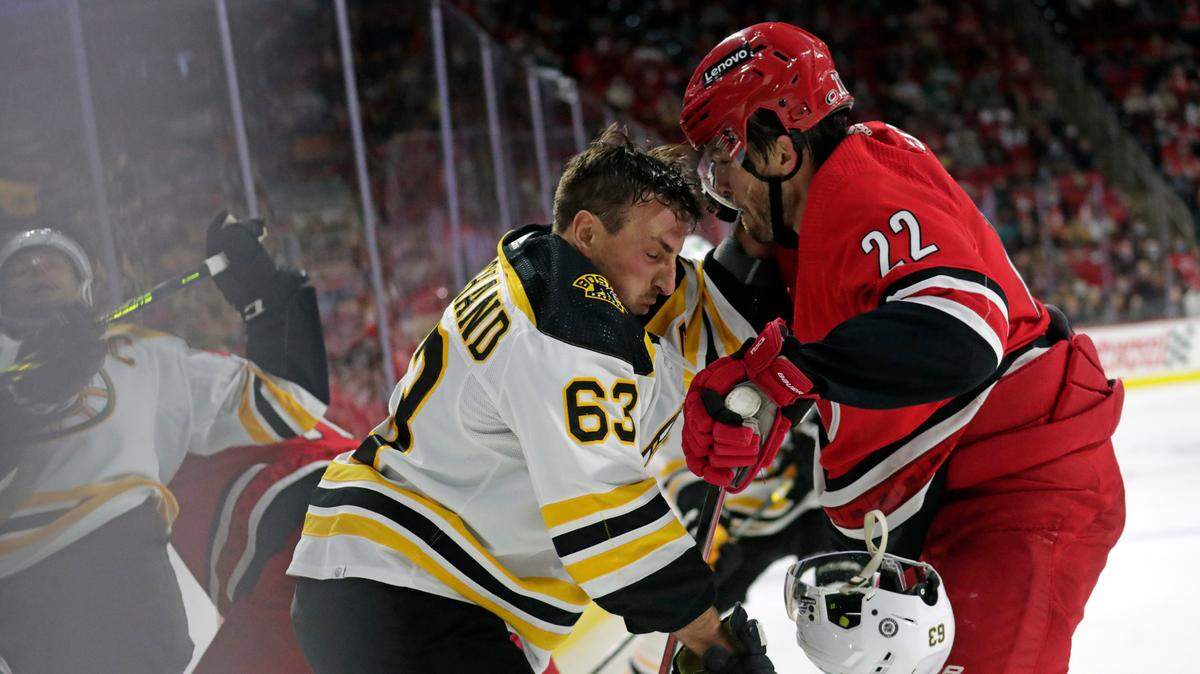
Brad Marchand doesn’t hold back, does he?
The mercurial Boston Bruins winger recently started a social-media hailstorm with his war of words with the Carolina Hurricanes.
Then, he turned his sights on the Arizona Coyotes.
At issue? How much money comes out of his paycheck.
Piqued after a 7-1 loss to Carolina on Jan. 18 and some post-game gloating on Twitter by the Hurricanes, the Bruins forward tweeted: “You’re still the reason we pay 20 percent in escrow.”
Commenting last week on the Coyotes’ potential plans to temporarily play their games at a 5,000-seat arena at Arizona State, Marchand tweeted: “Well ... the only way they get 5,000 fans at their games now is if they give 4,500 away for free so wouldn’t change much.”
Marchand doesn’t let up — on the ice and or off it. And the Coyotes have averaged 11,703 fans in 21 home games this season.
But what does that have to do with his paycheck?
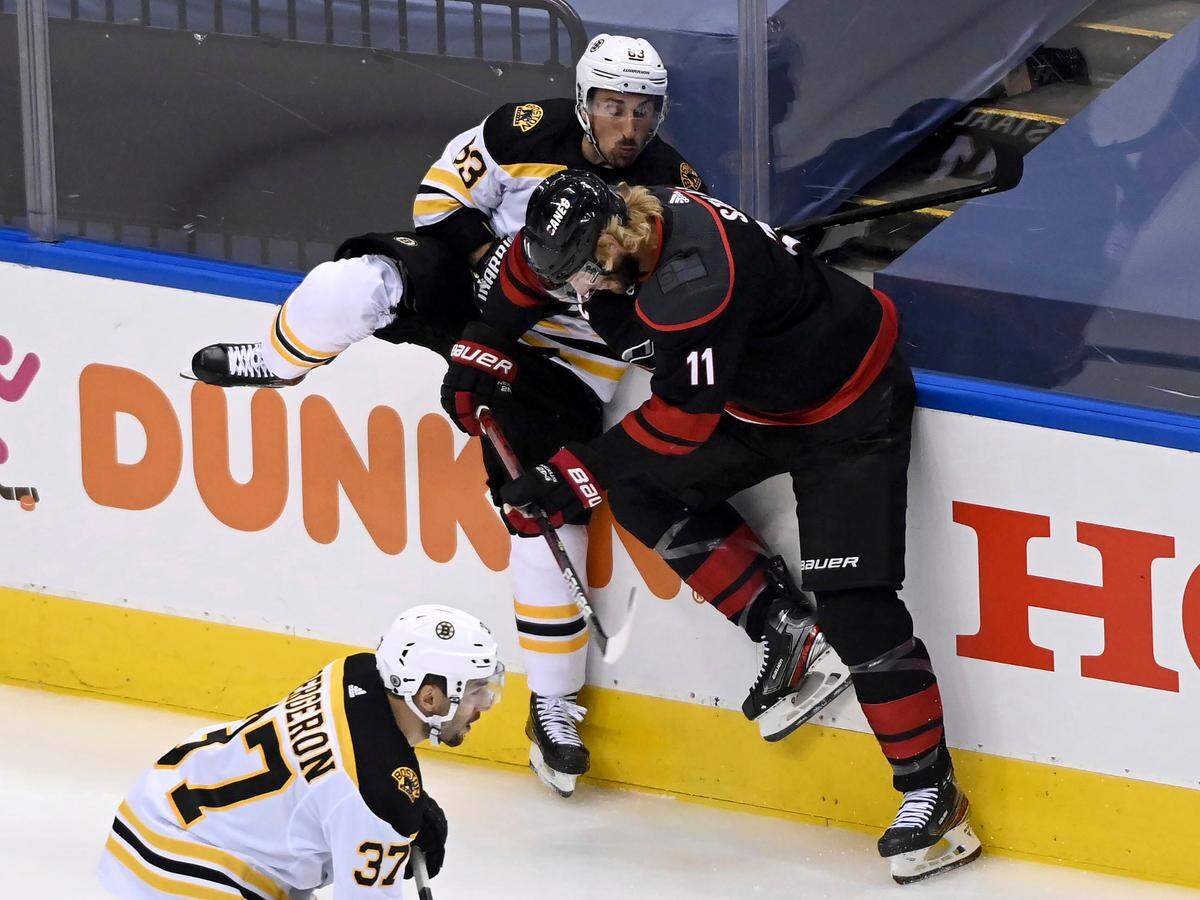
Creating the NHL escrow account
Coming out of the 2004-05 lockout, in a provision agreed to by the owners and players’ association, the players and owners split what’s called “hockey related revenue,” or all of the money the league takes in off the game itself, off of ticket sales, concessions, merchandise, etc. The amount is set annually based on estimates some 16 months ahead of time.
Since no one can accurately predict full league revenue that far in advance, the league withholds a certain amount of money from the players’ portion of the 50/50 split until that year’s revenue numbers are available. If the league’s total revenue doesn’t match the total of the players’ salaries, a percentage of the players’ escrow is taken to attain the 50/50 share, and the remainder returned to the players.
The number has remained pretty steady in the years since the lockout. Over the past 10 years, the average escrow worked out to about 9.5 percent of the players’ salaries.
Last year, that ballooned to 20 percent.
So, when Marchand went off on the Canes, he was blaming them, in part, for the escrow number being so high.
Is it the Canes’ fault?
No.
The pandemic, which caused NHL revenues to tumble, is the biggest reason for the current high escrow total.
After COVID-19 forced the league shutdown, followed by a modified return to play, the NHL and NHLPA worked together on a new CBA, and negotiated a cap on the amount of escrow players would have to pay over the following six seasons.
Given expected post-pandemic revenue shortfalls, the sides agreed to a steep escrow amount early, but one that would eventually taper to far less than the 10-year average.
The 2020-21 escrow number was set at 20 percent. This year, the number was capped at 18 percent (it’s actually 17.2). In 2022-23, it’s capped at 10 percent, and then 6 percent in the subsequent three seasons.
So the escrow is not still 20 percent, as Marchand tweeted. It was last year, but is scheduled to decline rapidly beginning next year.
Is escrow the only deduction for players?
Also no.
Escrow is just part of what the players have taken from their salaries each year. They also have to pay federal, state and local taxes like everyone else. They pay their agents. They pay NHLPA dues.
They’ve also paid when they’re on the road playing games. Most states that have major-league teams have had a “duty day” tax — usually referred to as a “Jock Tax” — that have players paying state income taxes on the amount of days they’re working in those states.
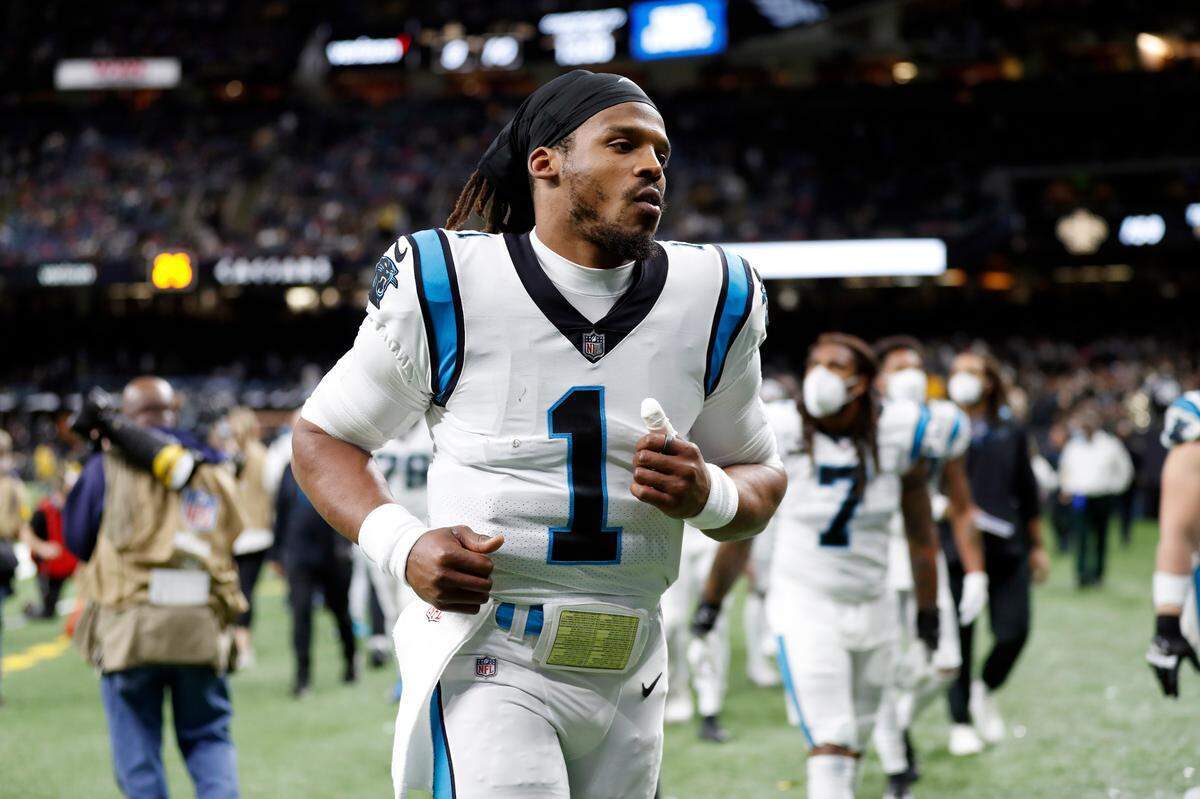
While the “Jock Tax” might sound minimal, consider that in 2016, Carolina Panthers quarterback Cam Newton owed California an estimated $137,000 in taxes as a non-California resident, according to a SportsIllustrated.com report. Newton, then paid $20 million, spent time in California — which had a 13.3 percent state income tax rate — preparing and playing in the Super Bowl in Santa Clara and later regular-season games against the Raiders (then in Oakland) and Los Angeles Rams in the 2016 season.
There are some states, including Florida and Texas, that have no state income tax. That can make teams in those states more appealing when it comes to negotiating a salary — think goalie Sergei Bobrovsky of the Florida Panthers, who is making $10 million a year. There also is no “Jock Tax” for visiting teams.
Players’ escrow amounts differ from league to league — it typically has been about 10 percent in the NBA, for example. In the 2018-19 NHL season, escrow withholding was 12.9 percent. Of that total, 3.25 percent was returned to the players.
A numbers game
Marchand was right about the 20 percent escrow figure. There was a 20 percent salary escrow for the 2020-21 season that was shortened to 56 regular-season games because of the pandemic and played in 2021. Many teams were severely limited in attendance and league revenues suffered, keeping the salary-cap ceiling at $81.5 million.
NHL revenue dipped to an estimated $2.9 billion for 2020-21, according to Forbes magazine. Revenue projections for 2021-22 are an estimated $5 billion, commissioner Gary Bettman said recently.
But back to Marchand’s claim about the Canes ...
According to the recent NHL franchise valuations in Forbes, the Hurricanes were ranked 27th in the league with a $550 million valuation in 2021. The Bruins, in contrast, were fifth at $1.3 billion. One of the NHL’s Original Six franchises, the Bruins generate more annual hockey revenue than the Canes.
(The Coyotes, struggling financially the past decade, have a $400 million valuation by Forbes, last in the NHL.)
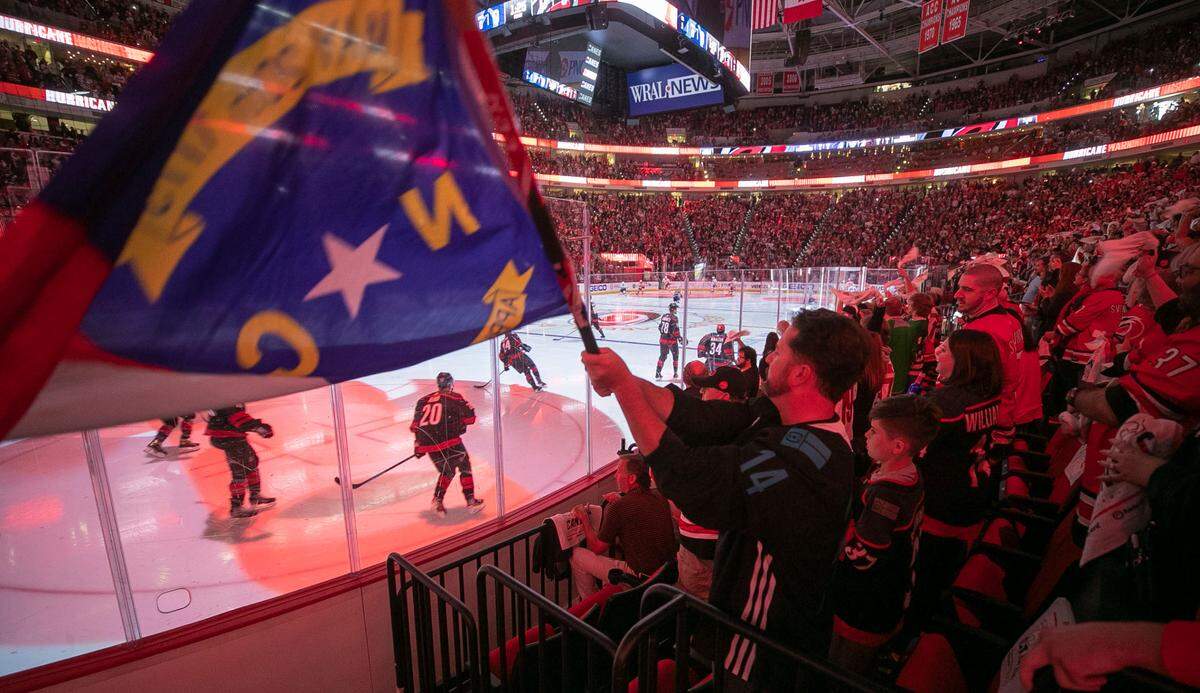
Through 21 home games this season, the Canes have averaged 16,855 fans and rank 17th in the NHL, just ahead of the New York Rangers. The Bruins are No. 7 at 17,850, which is 100 percent of capacity.
Meanwhile, Marchand is paid $6.125 million per year by the Bruins, meaning his escrow total was about $1.2 million in 2021 and approximately $1.05 million this season at the 17.2 percent rate. He and his family live in Boston, where ostensibly he pays the appropriate state and local taxes.
It’s no fun to have that much garnished from a paycheck, no matter how much you make. But as salty as he is, blaming the Canes for the amount of escrow he owes is a bit of an overstep.
At least the Bruins don’t have another game in Raleigh this season, so Marchand can’t complain about paying a North Carolina “Jock Tax,” too.