How the Hurricanes’ penalty killing has killed the Devils so far in the playoffs
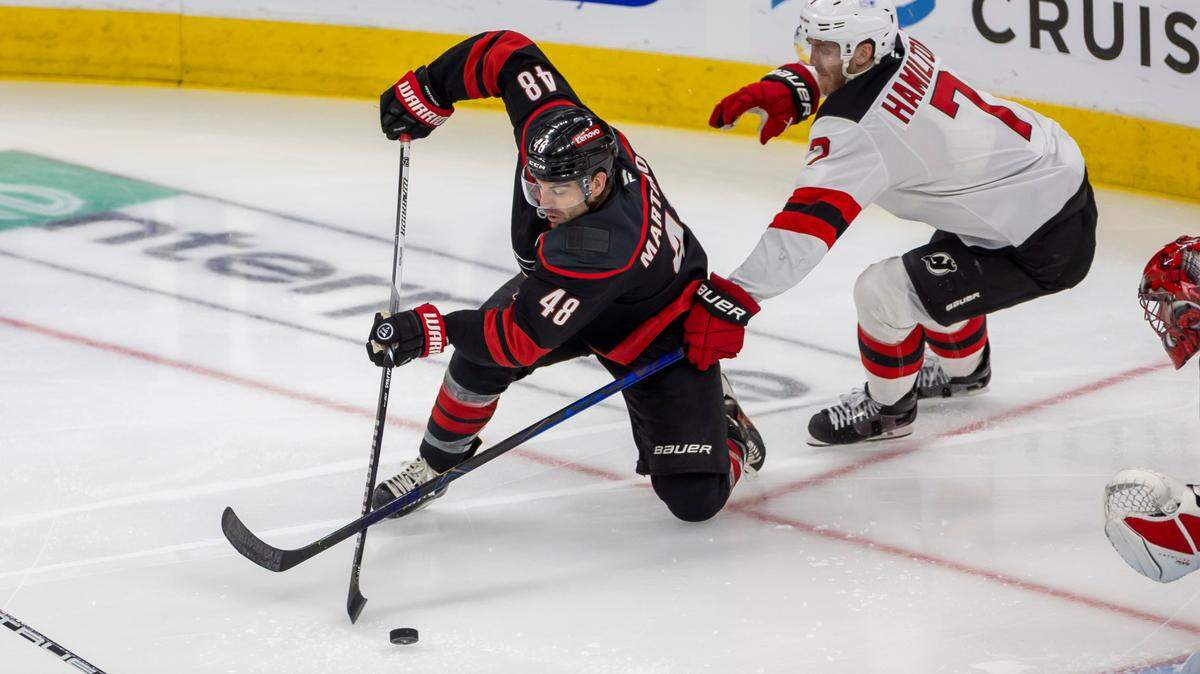
What goes into being a good penalty-killing team?
Is it more about execution or it is effort? Is or more about being quick and aggressive, or does pride — an unwillingness to give up a goal shorthanded and knowing you’re good in doing that — also play a big part in it?
“All of the above,” Carolina Hurricanes forward Jordan Martinook said Tuesday.
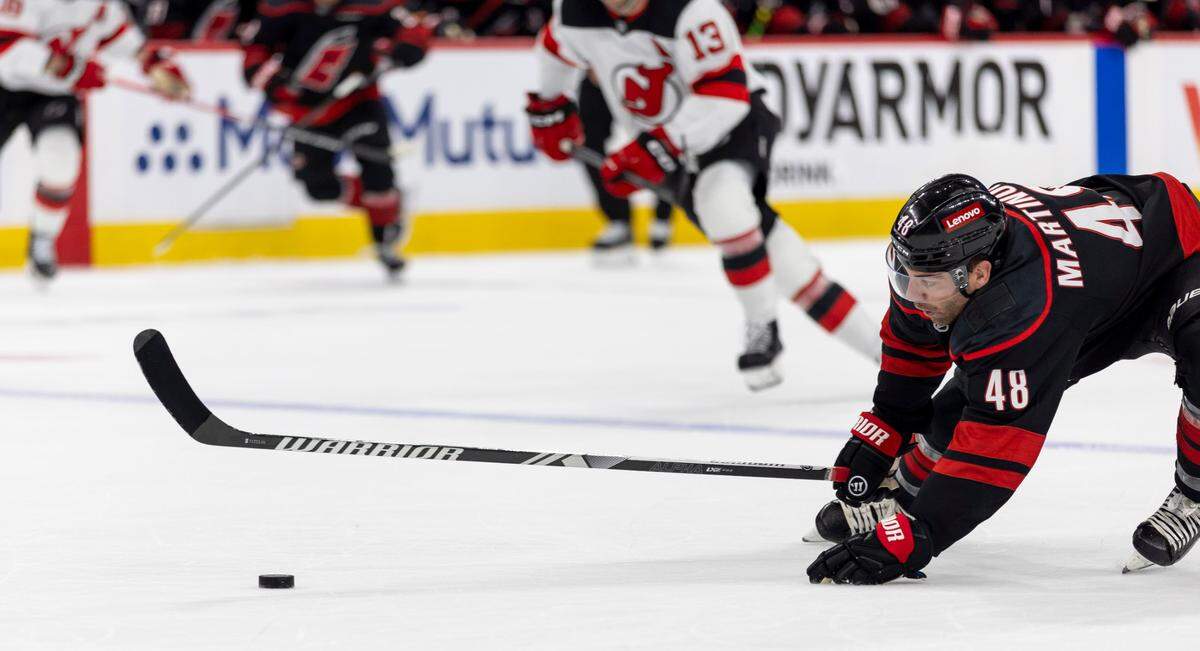
The Hurricanes had just beaten the New Jersey Devils 3-1 in Game 2 of their Stanley Cup playoff matchup, snatching a 2-0 lead in the series after two wins at home.
The Devils were 0-for-3 on the power play. Not only that, New Jersey allowed a shorthanded goal — to Martinook — that proved to be the winning goal in a game Devils coach Sheldon Keefe believed his team could have won.
Could have. But didn’t.
All of that could change with the best-of-seven series going to New Jersey for the next two games. But in the first two games, the Canes have had the better of it.
The Devils have struggled in their five-on-five play, but were counting on their power play to make a difference in the first-round series. New Jersey was third in power-play percentage in the NHL (28.2 %) and was relying on it to provide offense against the Hurricanes.
One problem: The Canes were No. 1 in penalty-killing this season and now have stopped all five Devils power plays. Carolina got a power-play goal from Logan Stankoven in its 4-1 win in Game 1-- the Devils were second on the kill in the NHL -- now the shorthanded strike from Martinook.
“It’s something we preach all the time and talk about a lot. You’ve got to win that special teams battle,” Canes coach Rod Brind’Amour said Tuesday.
The Devils had seven power-play shots Tuesday but were 0-for-7 as goalie Frederik Andersen did his job in net and the guys in front of him did the rest. In the third period, after Canes captain Jordan Staal was called for tripping, the Devils had four shots on goal and another two were blocked as Carolina maintained a 2-1 lead.
“I thought our guys had a lot of fight and fought all game and competed at a high level,” Keefe said. “I liked a lot about our game, but obviously special teams wound up being the difference again.
“We knew coming into this series that the power play has been our edge all season long, and it was going to be a real challenge going up against this penalty kill and it needed to be a big factor in the series. In a lot of ways it’s been the story in the first two games.”
Canes assistant coach Tim Gleason heads up the penalty killing units and has said he wants his guys taking on a “pack of wolves” mentality.
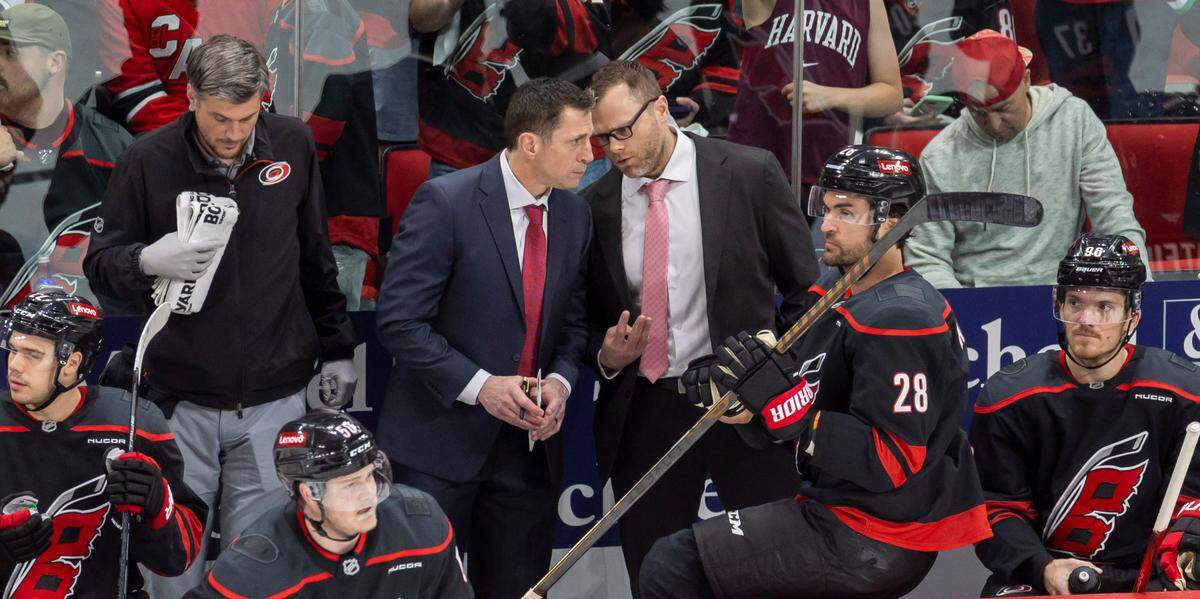
“It starts with ‘Gleasy.’ He cares about it just as much as us,” Martinook said. “It feels like he’s in the fight with you and when your coach is like that you want to play hard for that.”
The Canes don’t just look to stop or block shots, but also to pressure the puck and create shorthanded opportunities.
“Every team is looking to attack nowadays,” Brind’Amour said. “They’re thinking ‘go.’”
Sebastian Aho and Seth Jarvis have been effective doing that, and Jarvis had five shorthanded goals in the regular season. Martinook and Staal also have had their shorthanded chances, and forward Eric Robinson has done his part on the PK.
“We have partners out there but you try to be a cohesive unit and just outwork the power play,” Martinook said. “When you know that you’re going over the boards to outwork that team, then usually good things happen. And then you have to sell out and do things that maybe are uncomfortable but you know you’re doing for the team.
“It’s anything you can do. If I can block it and get it out, that’s what I’m going to do. And everybody is out there trying the same thing. There’s a lot of plays out there where there’s some desperation.”
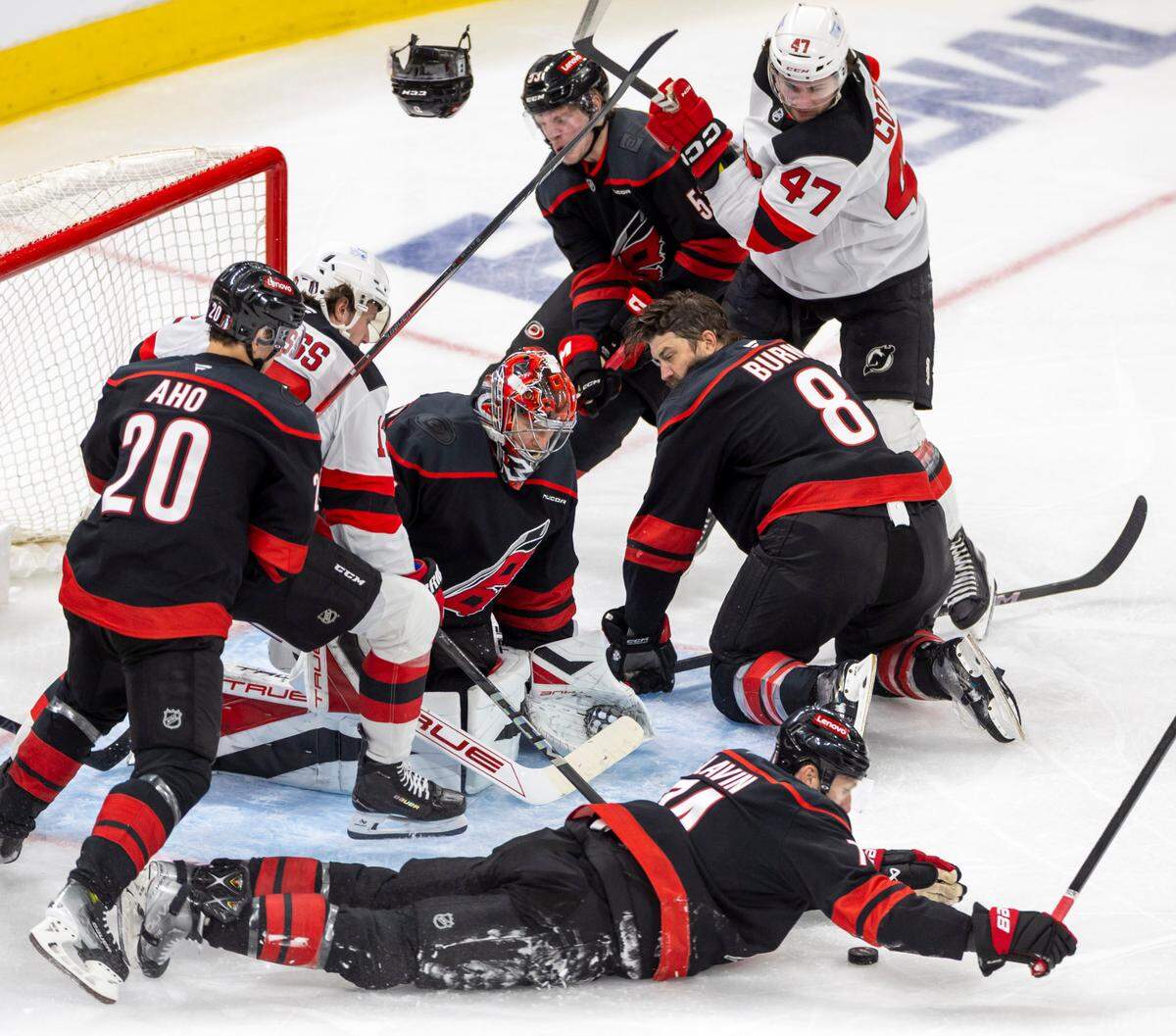
On the back end, defensemen Jaccob Slavin and Brent Burns team up well, Slavin using his hand/eye coordination, quick stick and anticipation to make plays. Dmitry Orlov and Jalen Chatfield also get shorthanded time, and it was Orlov’s fight to win the puck after a faceoff in the Devils zone that was able to spring Martinook for his shorthanded score.
“It’s their pressure, sticks, length,” Keefe said of the Canes penalty killers. “So many of the penalty killers have been working together I don’t know how many years now. They have a great scheme and they execute it very well. They have great defensive habits and instincts.”
This story was originally published April 23, 2025 at 7:00 AM.