What the bleep? Why TV audio kept cutting out during Canes championship rally.
AI-generated summary reviewed by our newsroom.
- TV stations repeatedly cut rally audio to avoid airing player profanity during the parade.
- Networks would likely have used 30 second to 1 minute delays to anticipate flubs.
- The FCC bans indecent and profane language from 6 a.m. to 10 p.m., raising fines.
For many fans watching the championship rally from the comfort of their homes over the weekend, the rowdy exultations of Hurricanes players were punctuated by seconds of silence.
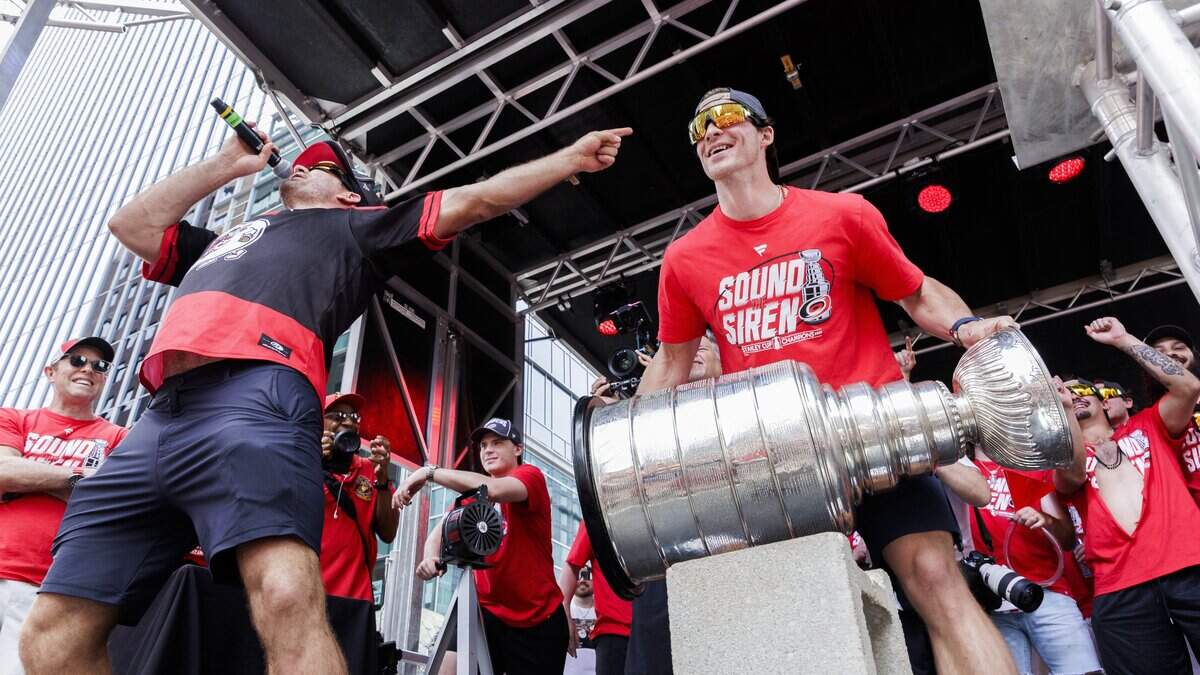
Players on Saturday took turns yelling into a microphone in front of a boisterous crowd at City Plaza, firing up a sea of thousands with speeches sprinkled with f-bombs.
For TV stations broadcasting the celebrations live, those swear-heavy remarks meant periodically bleeping out the players by repeatedly cutting the audio.
And viewers weren’t particularly happy.
“I got so mad so much was cut out!” wrote one Reddit user. “It could have been delayed for the language. Whatever!”
“Are the pearl clutchers passing out yet?” wrote another.
For many Caniacs, the choice to cut the swears was a strange one — interrupting insights from Hurricanes players about how they managed to shepherd their team to its first Stanley Cup victory in 20 years.
But for the media, it was just journalists avoiding a potentially pricey misstep.
“You have players and coaches — some of them have been drinking — you have officials speaking in the emotion of the moment,” said Israel Balderas, a First Amendment attorney and media law professor at Elon University. “TV stations don’t control what those players are going to say, but the stations are still responsible for what goes out over its broadcast signal.”
Cutting audio is common for broadcast outlets streaming a live, unscripted event, said Balderas, and networks would have likely implemented a delay of 30-seconds to one minute to anticipate flubs, swears or obscenity.
The cuts occurred sporadically, sometimes as often as every minute. Players like Taylor Hall, Sebastian Aho and (a repeat offender) Jordan Martinook would grab the mic and let celebratory expletives fly.
And the cuts are all thanks to the watchful eye of the FCC, Balderas said, which prohibits “obscene, indecent and profane content from being broadcast on radio or TV,” according to the agency’s website.
Indecent and profane language are specifically prohibited from 6 a.m. to 10 p.m. — when children are more likely to be watching — giving late-night shows more leniency but putting live broadcasts like the Canes’ mid-day parade and rally under broader restrictions.
Balderas said penalties are based on how many instances of profanities occurred and the time of day they were broadcast, with fines potentially reaching into the millions. With the added cost of hiring an attorney to appeal the penalty to the FCC, Balderas said the solution is simple: “Bleep first and ask questions later.”
“That’s why viewers sometimes heard more silence than speech, and that was frustrating to them,” he said. “It’s not always elegant. But from the station’s perspective, it’s risk management.”
ABC11 — The News & Observer’s newsgathering partner — and CBS17 did not return requests for comment for this story. WRAL declined to comment.
Stations aren’t necessarily bound by law to bleep every curse word, Balderas said, as the FCC doesn’t keep a list of penalty-prone words. It’s the context of the profanity that matters most, with swears during peak daytime hours carrying the greatest risks.
“That could lead to a warning, a fine or other enforcement consequences,” he said. “So even if a station ultimately wins the argument, the process itself is a headache. That’s why many broadcasters are conservative with live profanity.”
Balderas said the risk is heightened amid the FCC’s recent crackdown on local ABC affiliates. The agency in April ordered eight Disney-owned stations across the country — including Raleigh’s WTVD ABC11 — to file early license renewals, which FCC Chair Brendan Carr said was a product of his investigation into Disney’s DEI initiatives.
That comes on the heels of Carr’s criticism of comments made on “Jimmy Kimmel Live!” and an investigation into “The View” after he said they failed to provide equal time to political candidates.
Those moves have had a “chilling effect” across the country, Balderas said, with local stations likely being “overly cautious,” resulting in the stop-and-start pace of the rally coverage viewers saw last weekend.
“They overcorrected,” he said of the bleeps. “And rightly so.”
This story was originally published June 23, 2026 at 12:36 PM.