A basketball player protest at the tournament would be the NCAA’s worst nightmare
The NCAA suddenly has a huge problem. It traced the call and it’s coming from inside the house.
On the eve of the NCAA tournament, the very large straw that stirs the NCAA’s entire drink, several players -- representing 15 of the 68 teams -- took to social media to protest the NCAA’s foot-dragging on letting athletes capitalize on their name, image and likeness with the hashtag #NotNCAAProperty.
They are on the verge of conjuring the NCAA’s worst nightmare, collective action among basketball players to disrupt the tournament.
Whether the online protest spills over into first-round games Friday and Saturday remains to be seen, but it’s the most organized basketball players have ever been going into the tournament, and it follows on the work of football players from across the country who launched a similar campaign over the summer. The two conferences with the most vocal and involved players -- the Big Ten and Pac-12 -- ended up being the most cautious in their return to play.
As for basketball, Wisconsin’s visionary Nigel Hayes tried to organize a boycott of an ACC-Big Ten Challenge game against Syracuse four years ago that never got anywhere, and athlete-rights advocates have always said a strike or other labor action at the NCAA tournament -- the Final Four especially -- would hit the NCAA right where it hurts the most.
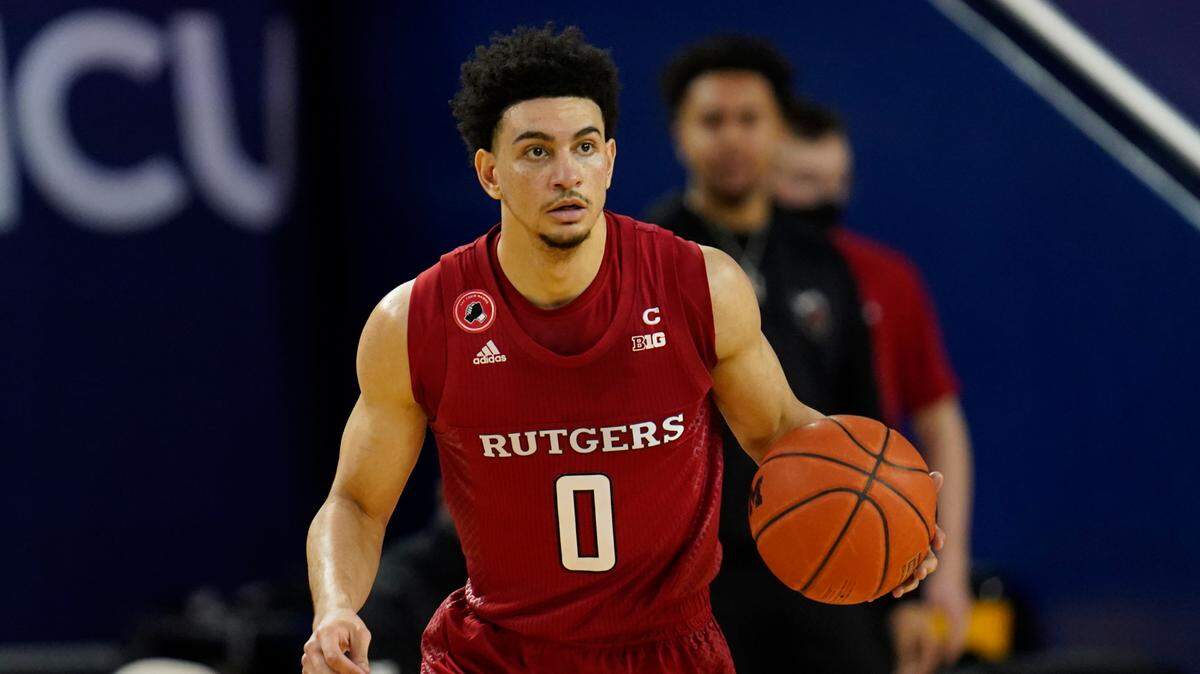
The new effort is led by outspoken Rutgers guard Geo Baker, who over the course of his career has never been shy to question who actually benefits from the collegiate system, and Iowa guard Jordan Bohannon, who in 2019 held an NCAA-branded March Madness rug hostage in hopes of securing reform. (He was allowed to keep it after posting a scripted apology.)
“The argument is simple,” Baker tweeted. “We deserve an opportunity to create money from our name, image, and likeness. If you don’t agree with that statement, then you are saying that you believe that I, a human being, should be owned by something else.”
One of the most notable advocates for college athletes is supporting them. National College Players Association executive director Ramogi Huma most notably helped Northwestern football players attempt to form a union in 2015 when current ACC commissioner Jim Phillips was athletic director there.
Their demands include allowing athletes to activate their NIL rights by July 1, a meeting with NCAA president Mark Emmert, meetings with state and federal lawmakers and a favorable ruling from the Supreme Court in the Alston v. NCAA case, which has the potential to greatly limit or greatly expand the NCAA’s power.
The NCAA has been dragging its feet on NIL reform for years, even as its hand is being forced by legislation in California, Florida and elsewhere. As an organization, the NCAA seems paralyzed, unable to find any way forward. It’s important to remember that the NCAA is not a government agency; it is composed of the schools and run by the presidents, and they’re clearly going to go into the new NIL era kicking and screaming.
It’s not hard to figure out why, and it’s not the very vocal concern over recruiting inducements, as if fancy facilities aren’t steering players toward richer schools now. It’s money. If players can sign their own endorsement deals and sell ads on their social media accounts, some of that money may go to them instead. In other words, the athletes who generate these gargantuan sums of money for colleges may actually get some of it, instead of it being pumped into inflated coaching salaries and overstuffed football facilities.
Denying the money created to those who create it is the essence of the NCAA system. Football and men’s basketball players, who are predominantly Black, bring in billions of dollars, but can’t even start their own YouTube channel without losing their eligibility. And it wouldn’t just be them: female athletes with large social-media followings, especially but not only gymnasts, stand to make millions.
That’s why various states have passed legislation forbidding the NCAA from restricting the economic rights of college athletes while the NCAA wrings its hands about “guardrails” and hopes for a Hail Mary in the courts.
North Carolina is not among them, but North Carolina state Sen. Wiley Nickel (D-Wake) has been pushing a North Carolina version for some time; he and two other state senators introduced a new NIL bill Thursday that was timed to coincide with the start of the NCAA tournament, exactly the kind of thing the protesting athletes want nationally.
“I’m very proud of the student athletes who are standing up for equality against an unjust system where the NCAA and universities reap huge profits off their hard work,” Nickel said in an email to The News & Observer. “The #NotNCAAProperty movement is at the core of my bill to allow college student-athletes in North Carolina to profit off the use of their name, image and likeness.”
While all three sponsors of the bill are Democrats, Nickel said he hoped his bill would draw bipartisan support. Former U.S. Rep. Mark Walker, a Greensboro Republican, was a strong advocate of athlete rights during his time in Congress.
What we saw Wednesday night may be the beginning of something or it may not. The Supreme Court isn’t going to be swayed by the players’ demand that it rule their way, although an amicus curiae brief supporting the Alston plaintiffs by former NCAA executives -- including Mark Lewis, who used to be in charge of the NCAA tournament -- might carry more weight.
As we saw in football, the players have the power. The games cannot go on without them. Perhaps merely the threat of their action can be the push the NCAA needs to face the inevitable.
This story was originally published March 18, 2021 at 3:13 PM.