For Duke’s 1968 team, Saint Peters’ NCAA tournament upsets are nothing new
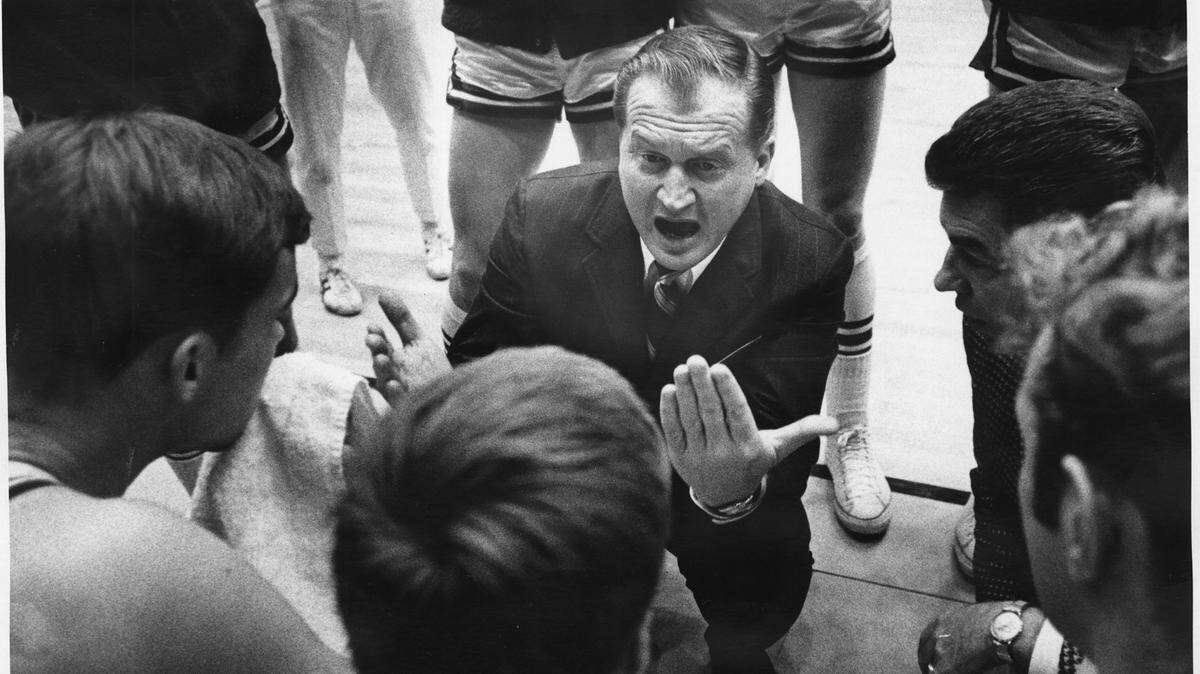
Mike Lewis knew exactly what it was like to be in Kentucky’s position two weeks ago, as few people can. The last time Saint Peter’s pulled off an upset like that, it ended Lewis’ Duke career. He wasn’t sad to see it happen again.
“I never did like Kentucky and I was ambivalent about Saint Peter’s,” the former Duke star said. “I’ll tell you what, they did a great job to knock off someone who was obviously heavily favored. I thought it was pretty impressive.”
He and his teammates would certainly know what that’s like.
“It was wild,” said Steve Vandenberg, another member of that team. “I keep telling people, ‘When this tournament’s over, let me tell you my Saint Peter’s story.’”
In 1968, the “Run Baby Run” Peacocks’ 100-71 second-round NIT upset of top-seeded Duke — ranked 6th going into the ACC tournament and Vic Bubas’ last really good team — made headlines not only in New York but across the country.
“St. Peter’s showed the largest crowd ever to attend a basketball game in New York how to fast break for 40 minutes in glass slippers,” the UPI wrote in a story published from coast to coast.
Only 10 days earlier, Duke’s NCAA tournament hopes had evaporated in the historic and infamous 12-10 loss to N.C. State in the ACC semifinals in Charlotte, when Norm Sloan had his center dribble the ball at midcourt for 14 minutes at one point and only six points were scored in the first half.
In less than two weeks, Duke went from one extreme to the other. And lost both.
“We were kicking everybody’s butt,” Vandenberg said. “We were great. We were on fire. And N.C. State did that to us.”
Battling with UNC for ACC supremacy
Duke was only two years removed from the Final Four, where it had lost to Kentucky, and the primary challenger to Dean Smith’s embryonic dynasty in Chapel Hill. Led by Larry Miller and Rusty Clark, UNC had gone to the Final Four a year earlier — Smith’s first — and added Charlie Scott in 1968. Still, the Blue Devils finished a game behind the Tar Heels in the standings, even after a triple-overtime win over UNC in Durham to close out the regular season, and had hopes of doing that again in the ACC tournament, the first played in Charlotte.
The Blue Devils had a strong roster, including Lewis, a first-team all-ACC pick and future NBA player from Montana, and C.B. Claiborne, Duke’s first Black basketball player. But Bubas’ willingness to play Sloan’s passive game cost the Blue Devils that chance. In the days when only the conference champion made the NCAA tournament, North Carolina ended up going from the East Regional at Reynolds Coliseum to a national-championship loss to UCLA.
Duke was NIT-bound despite being ranked as high as sixth going into the conference tournament — and even that was a recent change in ACC policy. Duke had been the first ACC runner-up to go to the NIT in 1967 and lost in its first game to eventual winner Southern Illinois, led by Walt Frazier, which had just beaten Saint Peter’s in the first round. This time around, the Blue Devils had never really recovered from the State loss.
“We didn’t want to be there,” Lewis said. “I hate to say that as an athlete and a competitor. When you grow every fiber of your body and your mind to winning that tourney, everything after that is a little bit of a letdown. It’s hard to get back to that level. It’ll always sound like sour grapes if I say something bad about Saint Peter’s. They just beat us. They outplayed us. What the hell. We were bigger on paper, a much better team, but they had more points. They had a bunch more.”
The entire NIT was played in New York back then, and the Duke team — minus Bubas and assistants Chuck Daly and Tom Carmody, who stayed behind at the Statler Hilton — flew back home on Eastern Airlines for two days after opening the tournament with an easy 16-point win over Oklahoma State.
‘I always thought Saint Peter’s was a church’
Bubas joked before the next game that he “always thought St. Peter’s was a church.” And Saint Peter’s was no powerhouse, but the Jersey City commuter campus was the best of the small Catholic schools in the New York area at the time (Seton Hall was in that group back then, before the Big East) and won the short-lived Metropolitan Collegiate conference for the second of three straight years, with no NCAA auto-bid to be had while St. John’s, an independent with a much higher profile, made the field.
Duke was the highest-ranked team not in the NCAA field and therefore favored to win the NIT, especially against a much smaller team with a relentless, fast-paced offense. Surely that wouldn’t work as well against Duke’s seasoned ACC stars. There were 19,500 fans at Madison Square Garden to find out. Before the game, Tom Schwester wrote “Run Baby Run” on a chalkboard in Saint Peter’s dressing room. A slogan was born.
And maybe, if Duke had taken care of business, no one would remember. But the game was a disaster for the Blue Devils: Lewis picked up four fouls in the first half, played only seven minutes and scored only three points. Another key player, Joe Kennedy, also had four fouls in the first half. (Bubas said, “I didn’t see all the calls the way the officials did.” The Durham Sun, after quoting him, took pains to note that both officials were from Long Island.)
“I was a senior,” Lewis said. “I knew how to play with fouls. I shouldn’t have gotten in that position. I don’t care how bad the officials were. I don’t care how bad they wanted a New York-area team to stay in the tournament. It doesn’t make a difference.”
At least, for Lewis, it’s something different to talk about. Both the 12-10 game and the 1966 Final Four — where Texas Western’s all-Black starting lineup beat Kentucky — have their own positions in ACC and American history, respectively. Saint Peter’s, until two weeks ago, did not merit a mention as it lost to Kansas in the semifinals and Notre Dame in the third-place game, and proceeded to recede from the college basketball radar for four decades.
Run Baby Run redux
The Big East rose, the Catholic schools it left behind assumed second-tier status and Saint Peter’s was a footnote until two weeks ago, when it did the same thing to Kentucky and Murray State it had done to Marshall and Duke in 1968.
One of the members of that 1968 team, the eventual CEO of the testing giant Labcorp, Tom Mac Mahon, donated $5 million to the university to renovate its arena in return for naming rights. It’s not named after himself or any company. It’s named after his teammates: Run Baby Run Arena.
“Last week they made fun of us,” Peacocks star Elnardo Webster, who died this week, said in 1968. “No one knew where St. Peter’s was. Now they know.”
Then everyone forgot again until this week, except for the team that lost to Saint Peter’s 54 years ago.
Never miss a Luke DeCock column. Sign up at tinyurl.com/lukeslatest to have them delivered directly to your email inbox as soon as they post.
This story was originally published March 24, 2022 at 5:08 PM.