UNC basketball’s journey to Final Four was as much about revolution as it was evolution
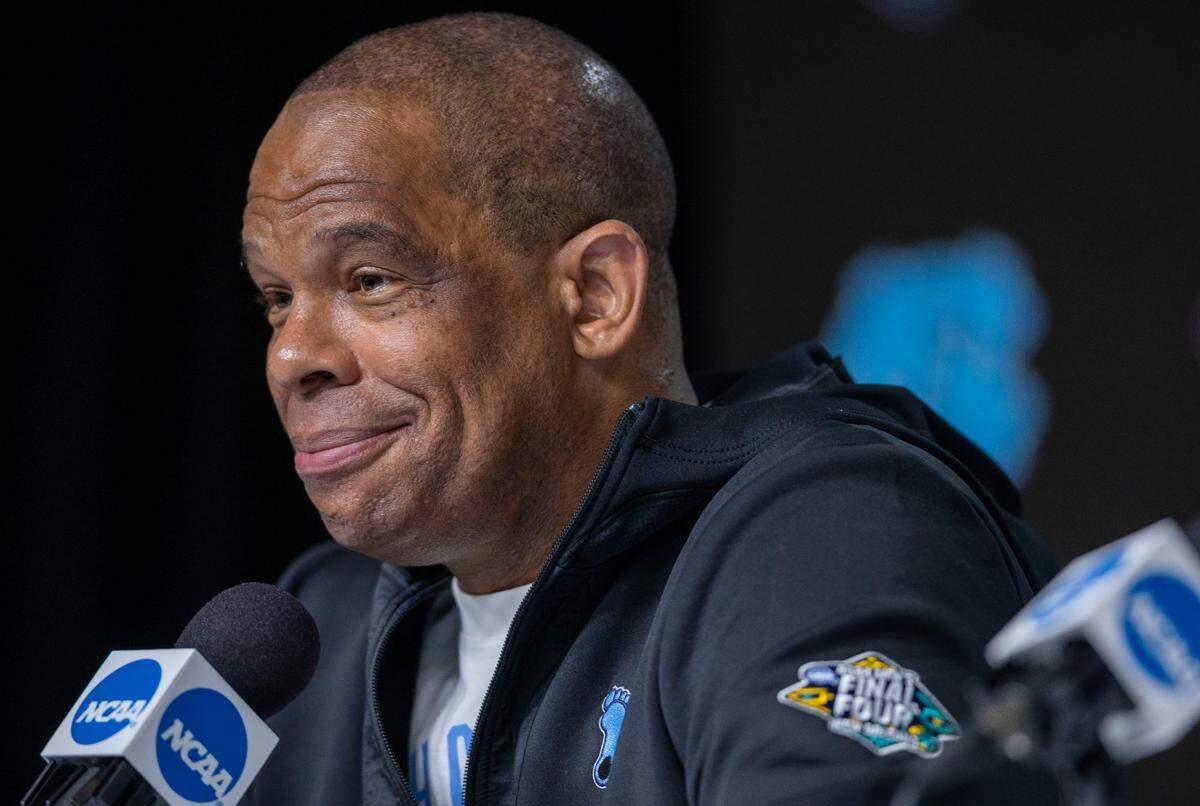
Brady Manek didn’t hesitate to make fun of his coach, given the opportunity, even sitting to Hubert Davis’ left on the Final Four’s elevated podium in one of those curious rituals of this event. Davis had just talked about his excitement for Saturday’s game against Duke, using several of the catchphrases his players have come to lovingly mock.
Most of them, actually, according to Manek.
“He’s got these little sayings,” Manek said. “He’s always saying — he’s said about four of them in that statement, about ‘live action,’ and ‘play today.’”
Davis leaned back in his chair, cocked his head back and indulged in a deep belly laugh, both amused and knowing, simultaneously. He looked a man very much at ease in the moment, one he could never have expected a month ago, let alone a year ago.
It was a year ago Friday that Roy Williams threw the North Carolina program into disarray with his not-entirely unexpected but still stunning decision to retire, and in many of the intervening 365 days, from Williams’ teary press conference to Davis’ smiling face in New Orleans, a program that has charted a generally steady course for 60 years found itself on uncertain ground.
“I didn’t want him to go,” Davis said. “I had been his assistant coach for nine years and I was in a really good place. I enjoyed working for him. I enjoyed being one of his assistants. And I knew how passionate he was, not only about coaching, but coaching at the University of North Carolina. So when he officially retired, that was a day of sadness for me.”
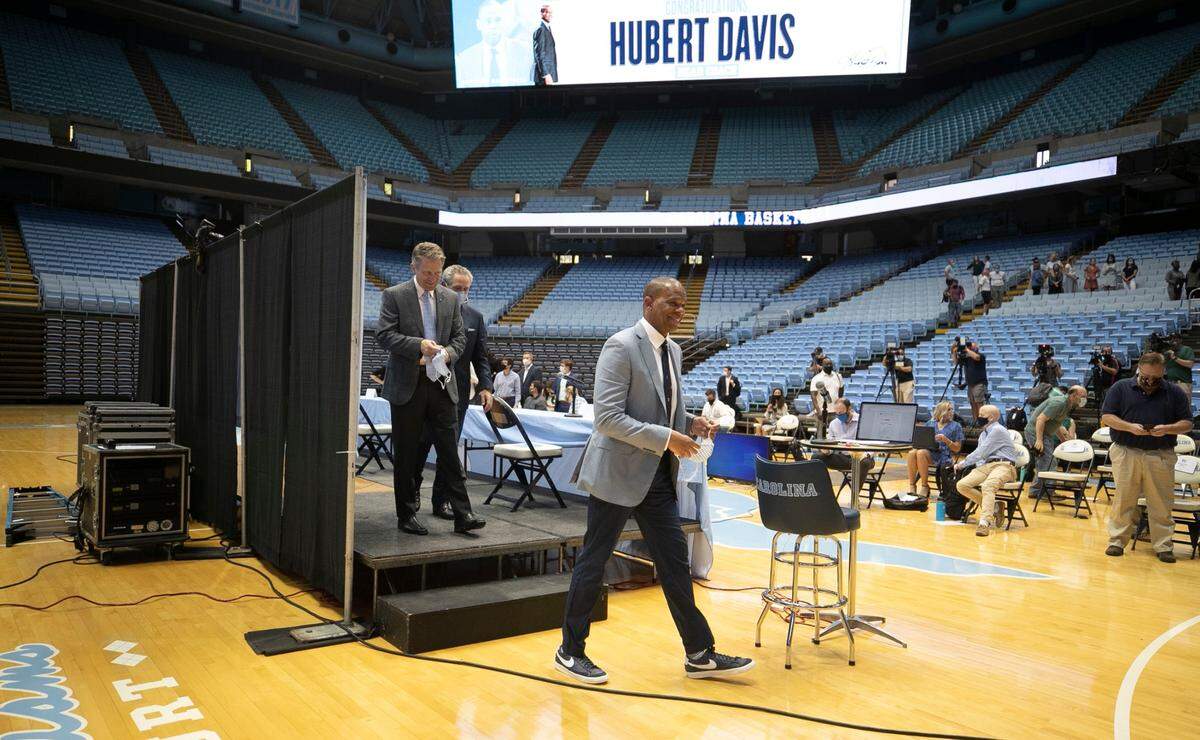
North Carolina took only four days to settle on Davis as Williams’ successor, staying within the Carolina family rather than going outside it for a bigger name, or more experienced coach. There was immediate roster turmoil, as Davis unsuccessfully tried to convince Walker Kessler not to transfer, and successfully added Manek and Dawson Garcia and Justin McKoy.
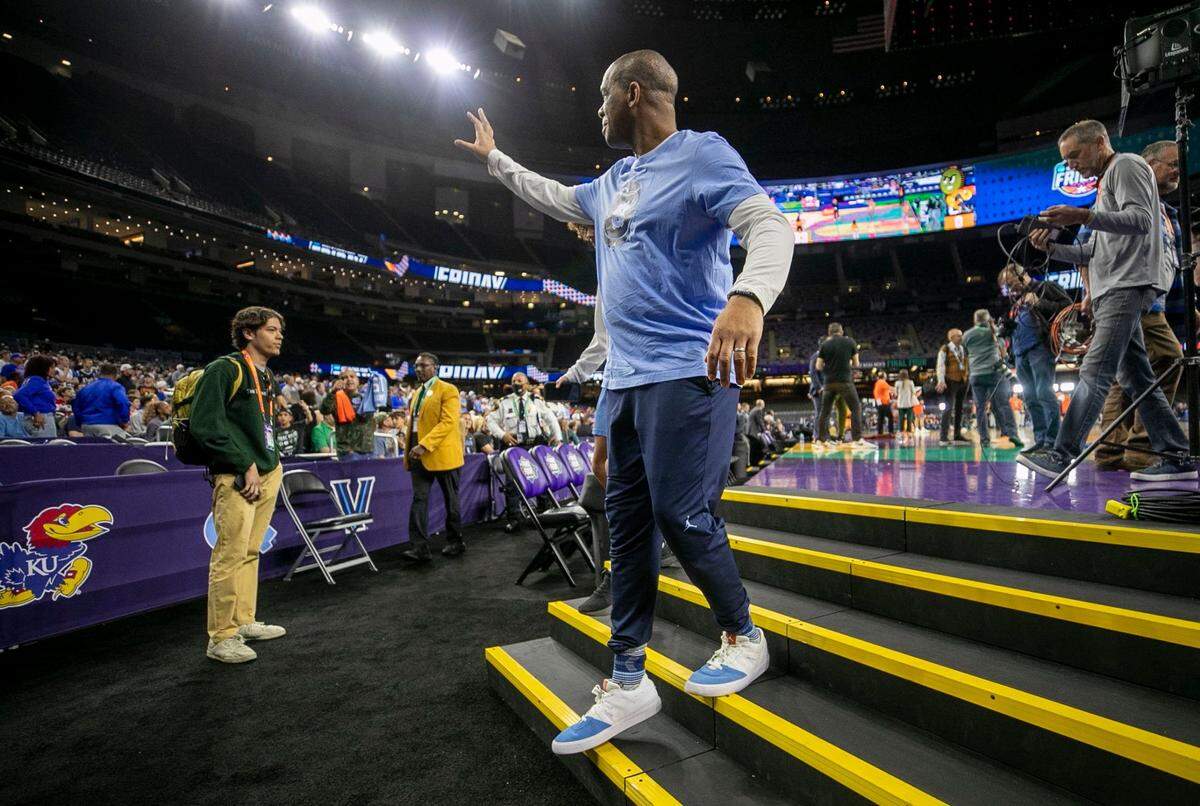
The season got off to a rocky start, with blowout losses to Tennessee and Kentucky, and after losses at Miami and Wake Forest, the Tar Heels were a mediocre 12-6, 4-3 in the ACC. Garcia left the team and went home, leaving an already short bench even shorter. The pressure, internally and externally, was fierce.
And yet there Davis was in New Orleans, happy and smiling next to Manek and Armando Bacot, architect and benefactor alike of UNC’s turnaround, putting the Tar Heels in a position to once again disrupt the Mike Krzyzewski farewell tour — having ruined his big night in Cameron — and deliver what could potentially be the all-time rivalry blow by playing for a national title while Duke flies home.
What a long, strange year it has been, from the coaching transition to the basketball struggles to the belief-bestowing win in Durham to Davis pointing to Williams in the stands in Philadelphia as the Tar Heels secured this trip. The rematch with Duke, in their first Final Four since the 2017 national championship, became an improbable ending to their year of change and evolution.
“He’s under immense scrutiny,” Krzyzewski said Friday. “And they got knocked back a number of times. I just thought he always had poise and he has great humility. And it worked together. And he had a belief in his players and in what he was doing. …
“He’s run his own race. He hasn’t tried to be Dean Smith or Roy or anybody else. He’s been himself in that culture. But he knows that culture. He’s worked in it and he’s played in it. And now he’s adapting who he is into that culture. And I think that’s a great way for a culture to grow.”
Davis said Friday he had never, in his life, been asked to interview for a job before — drafted into the NBA, invited to join ESPN, recruited by Williams to become part of his staff. It was the first of many firsts for Davis, who wasted no time setting his own course once he got the job.
North Carolina basketball has, of course, endured the test of time, but it had been five years since the Tar Heels had made a regional final, the program’s longest drought since the ‘70s. There was a sense of, if not impending doom, at least concern over missing the NCAA tournament in 2020 and going out in the first round in 2021, underlined by Williams’ lament that he could no longer reach his players.
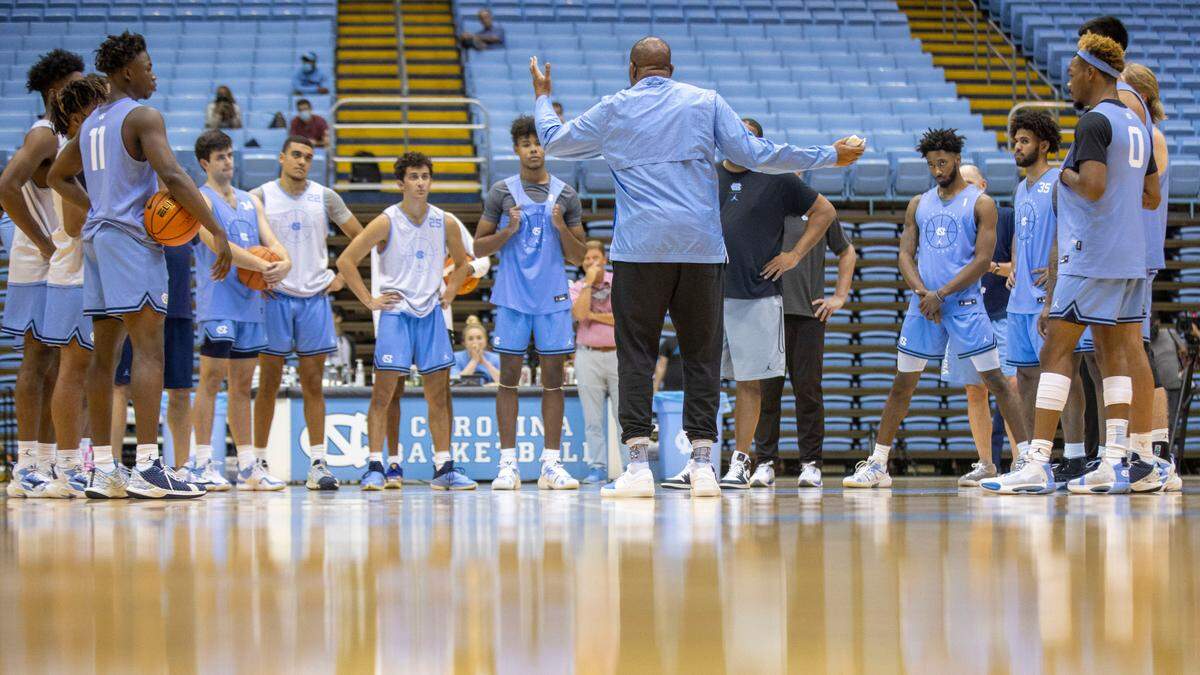
It’s a different program now than the one Williams left behind, even if the roster is generally the same. Davis changed things on and off the court, dipping deeply into the transfer portal, retooling the staff with other members of the Carolina family, moving away from Williams’ two-big orthodoxy, playing a much shorter bench.
“He revolutionized Carolina basketball,” Bacot said.
Davis has managed to coax evolution and revolution from the program without losing touch with its roots, even if this extravagant conclusion to the season was beyond anyone’s dreams — except, perhaps, his. Before the season, he put a picture of the Superdome in each player’s locker, a priming of the mental pump that even now sounds more fanciful than prophetic.
When North Carolina took the court for practice Thursday, he told his players to all bring their phones with them, the diametric opposite of his usual warning to “turn down the noise.” He wanted them to document the moment, to see what he saw, to take a moment to realize just how far they had come in a year. All of them.
Never miss a Luke DeCock column. Sign up at tinyurl.com/lukeslatest to have them delivered directly to your email inbox as soon as they post.
This story was originally published April 1, 2022 at 5:28 PM.