From NCAA’s perspective, prospective House settlement would be better than nothing
In the coming days after Monday’s important final hearing, it is hard to imagine federal Judge Claudia Wilken rejecting the House settlement with the NCAA. After all, she’s spent five years of her own life shepherding this case through negotiations and, eventually, away from trial.
But even Wilken will have to acknowledge there are serious issues with the settlement, which many objectors will be allowed to voice at Monday’s hearing in San Francisco.
Chief among them: The formula for distributing $2.7 billion in back damages, which will go mostly to football and men’s basketball players; the imposition of a de facto salary cap and roster limits on future athletes who are not party to the lawsuit; and whether sharing revenue with athletes could potentially violate Title IX if the initial $20.5 million per year isn’t distributed equally.
These are legitimate concerns about a settlement which veers far afield from the original lawsuit, which was basically seeking retroactive name, image and likeness payments from players who were prohibited by the NCAA from profiting from them as well as a share of broadcast revenue. The NCAA saw the opportunity, by settling, to reshape the don’t-call-it-pay-for-play landscape to more of its liking, and by negotiating with the House plaintiffs instead of having to collectively bargain with its own athletes.
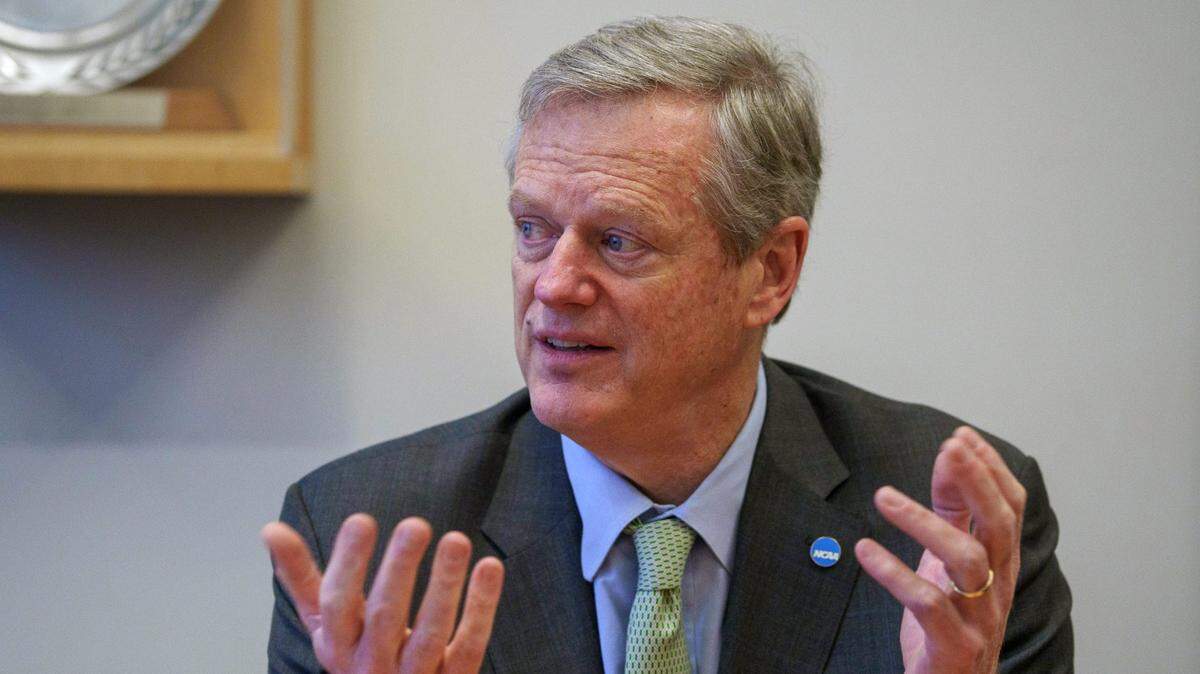
Which is one reason why NCAA president Charlie Baker is hoping Wilken approves the settlement as quickly as possible, even if he doesn’t think it’ll be at Monday’s hearing.
“Let’s set it up and see how it goes,” Baker said Saturday at the Final Four. “It’s going to be far better than what we have now. I’m virtually certain.”
The NCAA is already setting up processes to administer the House settlement if it takes effect as scheduled on July 1, working with Deloitte to create a “clearinghouse” for future NIL deals to ensure they are of “fair-market value,” whatever that means. It also asked schools to declare whether they were opting into the revenue-sharing portion of House on March 1, before the deal was even settled, forcing an immediate reckoning with this potential era.
“I still want it to be an academically, educationally based program, so even though there will be compensation associated with participation, we’re not going to lose sight of the integration with the academy,” North Carolina athletic director Bubba Cunningham said in the aftermath of Bill Belichick’s hiring as football coach. “I know that’s a little bit nuanced, but I really feel strongly about that, and we want great students that can compete academically and athletically, but they’re going to be compensated.”
It’s easy to see the Deloitte operation as the NCAA’s way to maintain plausible denial that it isn’t paying players, because any deal it rejects is going to lead to a very quick antitrust lawsuit. But there’s also a sense within the NCAA that no one really knows what anyone is paying anyone, and even that clarity is worth the effort when combined with the data on revenue-sharing.
“At a minimum, what we’re going to get out of this is two processes, both of which will have real elements to them around submission of information and approval,” Baker said. “And over time, it will make it possible to aggregate that data and be able to say on the institutional side, ‘This is how much people spend on football, so much people spend on basketball. There’s so much people spend on women’s basketball, baseball, softball.’ We can’t do that now.”
Despite all this preparation, there’s still a chance Wilken could send the settlement back for renegotiation, and a strong legal argument that perhaps she should. The Biden and Trump administrations issued contradictory Title IX guidance on either side of the election, but a settlement whose implementation is subject to political whims seems vulnerable at the least.
And then there are all the athletes who weren’t consulted in the process. In a professional league, terms of employment are negotiated between league and union, a quid pro quo that allows things that would normally be antitrust violations, like a draft or salary cap. But the House settlement will impose 10 years of what are essentially employment conditions on current and future athletes with no say in the matter.
More than 70 objections were filed with Wilken, and more than 300 current or former athletes have opted out, preserving the right to file their own lawsuits. Fourteen objectors will be allowed to speak Monday, including lawyers representing other athletes, the Department of Justice, former National Basketball Players Association director Michele Roberts and LSU gymnast Livvy Dunne — one of the athletes who has profited the most from the ability to monetize her NIL.
The NCAA is desperate for certainty, whatever form that might take. Baker basically embraced the idea that a flawed settlement was better than no settlement at all — “It’ll be rocky and bumpy because it’s the biggest change in 40 years,” he said — but it’s all up to Wilken now.
Never miss a Luke DeCock column. Sign up at www.newsobserver.com/newsletters to have them delivered directly to your email inbox as soon as they post.
Luke DeCock’s Latest: Never miss a column on the Canes, ACC or other Triangle sports
This story was originally published April 6, 2025 at 12:19 PM.