NC State great David Thompson talks racism, glory days and whether he can still dunk
Former N.C. State basketball star David Thompson — who may have had the greatest college career in ACC hoops history — has long been associated with double numbers.
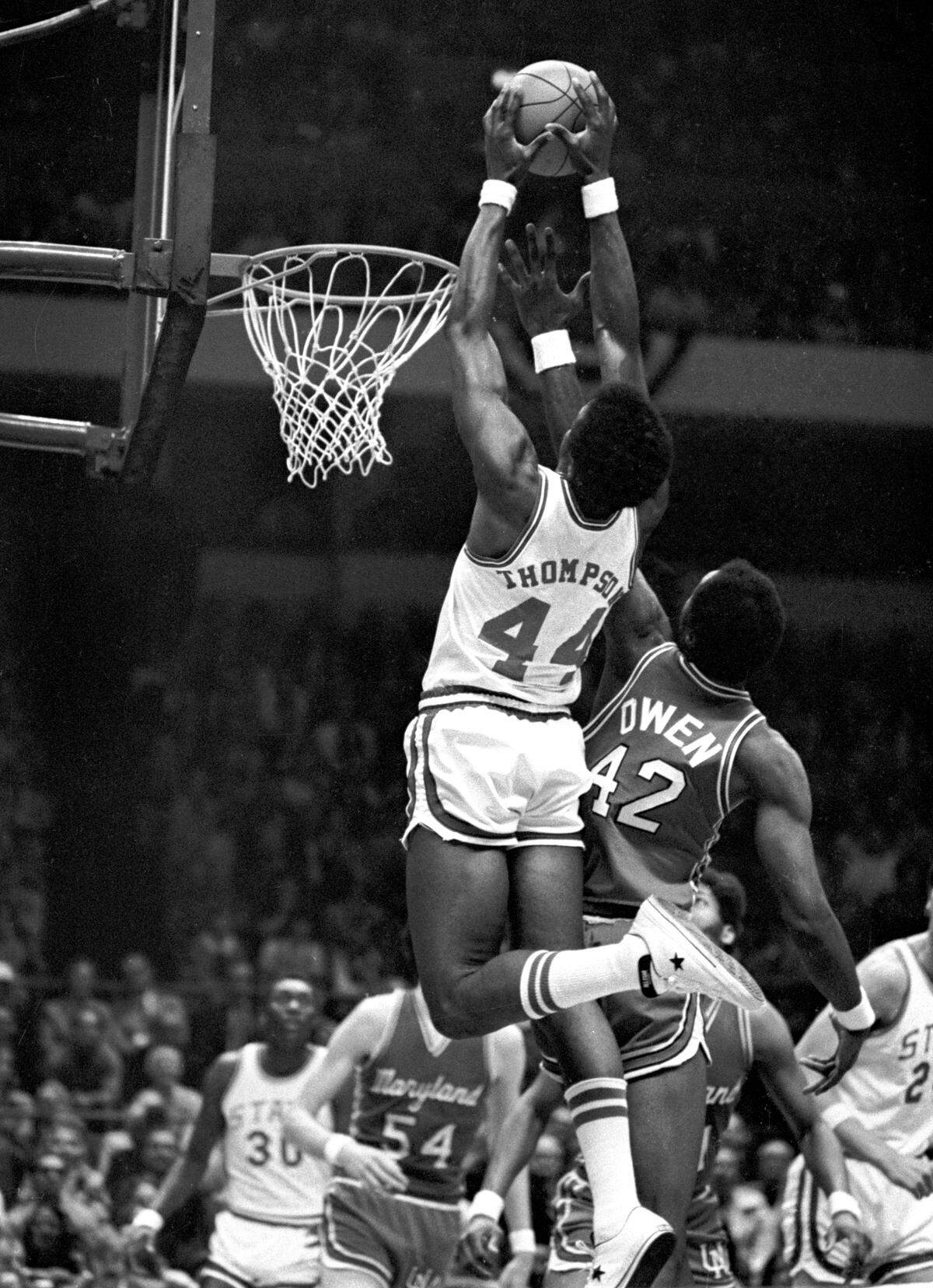
Thompson wore the number 44 with the Wolfpack while leading the 1974 N.C. State team to the national championship. For most of his ABA and NBA career, Thompson wore 33.
Another double number is about to come up for the longtime Charlotte resident nicknamed “Skywalker.” Thompson’s birthday is Monday. He will be 66.
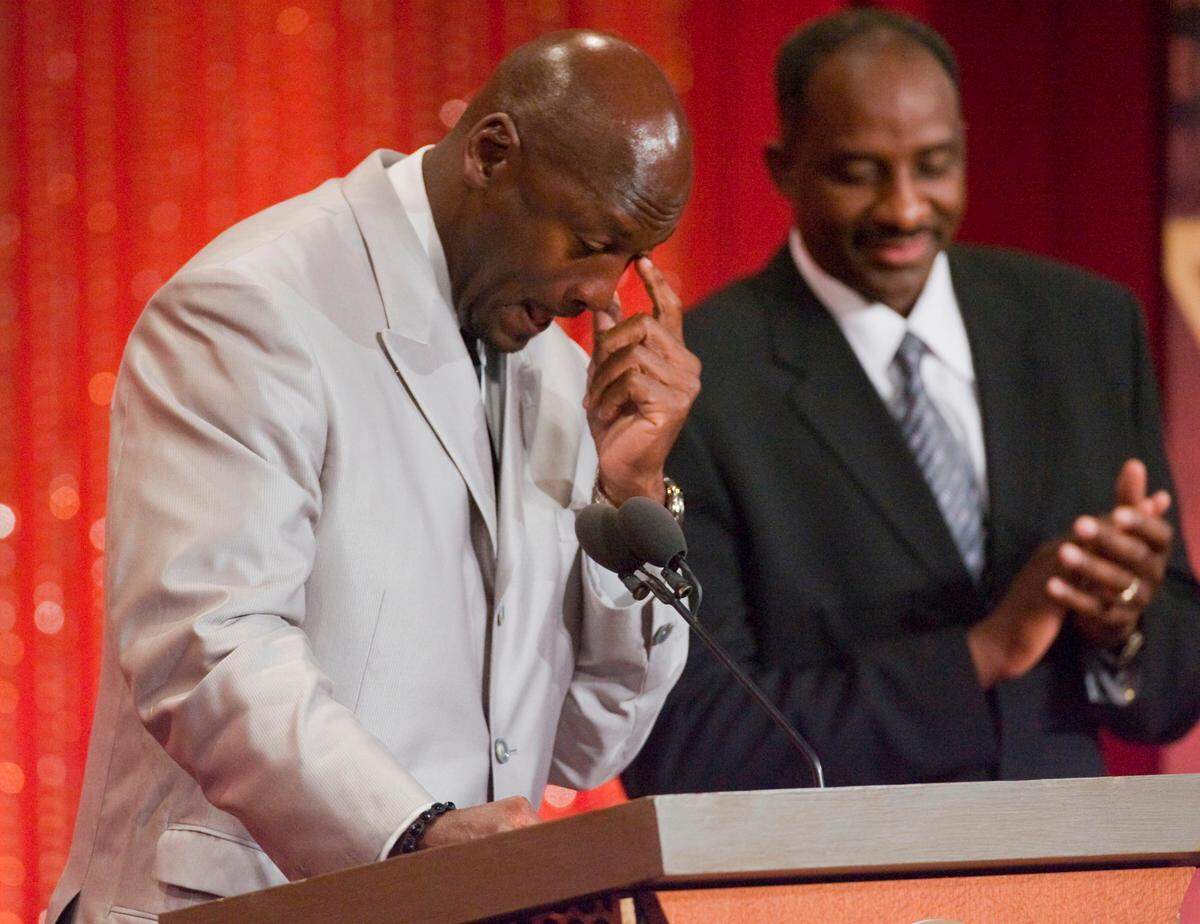
Thompson “was Michael Jordan before there was a Michael Jordan,” as coach Larry Brown once put it. Thompson was inducted into the Naismith Memorial Basketball Hall of Fame in 1996, then was Jordan’s surprise presenter in 2009 when Jordan entered the hall.
In our exclusive interview this week, Thompson and I talked about his starry career with the Wolfpack, the occasional racism he experienced growing up in rural North Carolina, how his pro career was undone by twin addictions and whether he can still dunk a basketball. This Q&A has been edited for clarity and brevity.
Scott Fowler: Let’s start with a dunk question. You had a 44-inch vertical leap, and in an interview a dozen years ago you told me you could still dunk on a regulation goal. As you approach your 66th birthday, is that still the case?
David Thompson: When I got past 60 — definitely at age 61, maybe at 62 — I could still dunk when I wanted to. But I’ve had a knee replacement, and I’m probably going to need another one. So I don’t try to dunk now.
The doctors have told me not to attempt it, and I’m trying to preserve whatever I’ve got left. (Pauses) Actually, I probably could still dunk if I wanted to. But I don’t want to chance it.
SF: You grew up in a rural area near Shelby in the 1960s, the youngest of 11 children in a home that didn’t have indoor plumbing until you were in junior high. Did you experience racism there?
DT: Yes. At times, it was very difficult. People would call you names and throw rocks at your house.
SF: Why would people throw rocks at your house?
DT: Just because you’re Black, living out in the country.
SF: Was your school integrated?
DT: Not until high school. I went to a segregated school, called Green Bethel in Boiling Springs, N.C., through the eighth grade. Then I went to Crest High, which was integrated — probably 70 percent white and 30 percent Black at the time.
I had grown up Christian, taught to love your neighbor as yourself and treat everyone the way you want to be treated. I was friends with all the different races on our basketball team and I think that helped make the transition of desegregation at Crest a lot easier.
SF: Charlie Scott — your basketball idol growing up and later your pro teammate — has told me a number of stories about the racism he experienced while playing in road arenas as UNC’s first Black scholarship basketball player. You played just a few years later at N.C. State. What was your experience like in that regard?
DT: Sometimes they would call you names at Clemson and other places like that. But probably not as much as Charlie experienced. He was the first (at UNC), so he got it the worst. And Al Heartley (N.C. State’s first Black basketball player) — I’m sure he got it a little tougher than we did.
SF: What do you think of the “Black Lives Matter” movement?
DT: I’m all for peaceful protests. I think it’s good that people are now realizing the problem with police brutality. I’m all about equality. I think the most important thing is not only that there are Black people involved in it, but you’re getting people of all races, creeds and colors involved.
SF: What are your thoughts on the Confederate flag?
DT: The Confederate flag is offensive to a lot of people. For me, a Confederate flag has always been a symbol of hate.
I’m not for hate, I’m for love. Love everybody. And if you’ve got something that’s going to cause a lot of pain for a segment of society, it’s got to go. So I agree with NASCAR 100 percent for backing Bubba (Wallace) that way and banning the flag.
David Thompson’s reading list
SF: What have you been doing over the past four months since COVID-19 shut a lot of the world down?
DT: Well, I’ve been reading a little bit more than usual. Some biographies, some political books. I read Bill Walton’s book and a book from Jim Pomeranz about our 1973-74 season at State.
I just started on “The Room Where It Happened,” John Bolton’s memoir of his time in the White House. I’ve pulled out some old CDs, too. I think Stevie Wonder is great, and there’s this song on an album he did in 1974 called “Heaven is 10 Zillion Light Years Away.” Find that one. It’s a very inspirational song that is apropos today.
We also have a group text for all the guys on the 1974 N.C. State team, and we text each other almost every day. I love those guys like brothers. We still lean on each other.
SF: How is your relationship with N.C. State these days and what do you think about the direction of the basketball program?
DT: I occasionally talk to (N.C. State head coach) Kevin Keatts. He checks in on me sometimes, which is real nice of him. I support what he’s doing. He’s been doing a good job. All the guys support him.
SF: How is your own family doing?
DT: My daughter Erika is a teacher over at Calvary Church in the preschool. She lives with me right now and helps me out with things. My youngest daughter Brooke, whose birthday is the same day as mine, is a psychology professor at Gardner-Webb. She’s married to Patrick Young, who’s a professor at Wingate. They met in graduate school down at Florida State. They have two young sons.
The art of the jump
SF: At your peak, what was the highest you could jump in relation to the backboard?
DT: If you put a quarter on top of the backboard, I could get up there high enough to tip it off. But that part some people say about me also leaving two dimes and a nickel up there and also making change for the quarter? That’s not true.
SF: Was that sort of leaping easy or did you have to be thoroughly warmed up?
DT: I could come out, bounce a couple of times, take off and jump. (Laughs) When you’re young, you can do those things. I did work on jumping, though. I wore ankle weights in practice. I had access to the weight room at Gardner-Webb, which was near where we lived. I did toe raises and leg extensions.
SF: Were you able to palm a basketball?
DT: No. I couldn’t ever palm it, so I cupped the ball.
SF: And cupping the ball was the impetus for your tomahawk dunk?
DT: Yeah, it made a lot easier to hold on to. My fingers aren’t long like Dr. J (Julius Erving). I couldn’t really palm the ball like Julius or Michael Jordan or some of those guys.
SF: How did you compare to Zion Williamson as a dunker?
DT: Zion is more of a power dunker. He’s got the bulk and the size and the weight, and he can really get up high.
I probably could maneuver more in the air. But Zion is awesome. I really like him. Plus he plays for my cousin’s team (Alvin Gentry, Thompson’s cousin, is the head coach of the New Orleans Pelicans).
Alvin and I grew up together. We sang in the church choir together. We were like brothers at one point.
SF: Dunking wasn’t allowed during your college basketball seasons due to what was then informally known as the “Lew Alcindor rule.” But tell me about the one dunk that you performed in college anyway.
DT: It was my last home game at Reynolds Coliseum in 1975. Prior to the game, they retired my jersey. It was very emotional. Big crowd.
We were up by about 20 with about five minutes left in the game. I got on a breakaway and I decided to give the fans something to remember. I did a tomahawk windmill dunk. The crowd went crazy. I got a technical and a standing ovation and Coach (Norm) Sloan took me out of the game at that point. So that was a great way to end my last home game at Reynolds.
Michael Jordan and Thompson
SF: In 2009, Michael Jordan had to pick a previous hall of famer to give his presentation speech when he went into the hall and he chose you. Were you surprised?
DT: Yes and no. I knew how Michael felt about me and how I was an inspiration for him in his career. But there were so many other North Carolina guys in the hall of fame, and I went to North Carolina State. So it was a little bit surprising that he picked me. I was very happy about it and was really honored to be a part of his day.
SF: What did you think of “The Last Dance” documentary?
DT: Loved it. The two best players I’ve ever seen play were Michael and Dr. J when he was in the ABA. People didn’t see much of the ABA version of Dr. J, but he was awesome.
I was glad that the young generation got the chance to really see Michael in his prime in that series. Because people forget how good you were. In 1974, we had a great group of guys who did some great things, but a lot of people don’t remember that. Fame is fleeting.
SF: What was the best highlight of your career, whether in college or pro?
DT: When we won the championship at North Carolina State. That run over three weeks in 1974 — that was special and those memories will last a lifetime. Once you go through something like that with your teammates, you become lifelong friends.
SF: In basketball terms, what was your biggest regret?
DT: The very next year, when I was a senior and came back hoping that we would repeat. In the ACC tournament semifinal, against Maryland, I got cramps. We won that one anyway but had to play Carolina in the final.
I wasn’t 100 percent, we lost that game, and that was really tough. To lose your last game ever as a collegian to North Carolina — that didn’t sit too well with me after we had dominated them throughout most of my career.
SF: In 2003, nearly 30 years later, you earned your sociology degree from N.C. State. Why was that important to you at that time in your life?
DT: My daughters were pushing me — they were getting on me. And so they motivated me. I wanted to try to get my degree before they did. We all ended up graduating at about the same time.
‘Knocked down on my knees’
SF: I was rereading parts of “Skywalker,” your 2003 autobiography, before this interview. You write very honestly there about your twin addictions while a pro basketball player — alcohol and cocaine — and how they shortened your NBA career. How long have you been sober?
DT: It will be 32 years on December 13th.
SF: You write about declaring bankruptcy, going to jail, serving multiple stints in rehab and wrecking your knee in a scuffle at the Studio 54 disco in 1983. Where did it start to go wrong?
DT: I don’t really dwell on the past. You learn, you grow, you live.
It took all of that for me to get knocked down on my knees to look up to God. If things hadn’t happened the way they did, I wouldn’t be where I am today spiritually and as a father. My life has changed, and I’ve been able to make a positive impact on other people’s lives with my testimony.
SF: You auctioned off a lot of your memorabilia in 2012, including your 1974 N.C. State national championship ring (it sold for $44,427). Explain why you did that.
DT: The stuff was just collecting dust in storage. And I could use the money — my wife was sick (Cathy Thompson, who was married to David for 37 years, died in 2016). It was a big help.
I still have a lot of things. I didn’t sell my hall of fame ring. I’m the only one to win the MVP of both the NBA and the ABA all-star game and I have both of those trophies. The auction house still calls me, but I haven’t done it since.
SF: Anything else you’d like to tell people?
DT: I wish everybody peace and love. And, hopefully, we’ll get through this coronavirus fairly quickly and everything can get back to semi-normal. I’m praying for everybody.
This story is part of Observer columnist Scott Fowler’s occasional series of Q&As with prominent sports figures who have deep North Carolina connections. In 2020, the series has also included interviews with Jake Delhomme, Jeff Gordon, Dell Curry, Jordan Gross, Matt Doherty, Paul Finebaum and Jay Bilas — all of which are available at CharlotteObserver.com.
This story was originally published July 12, 2020 at 7:47 AM with the headline "NC State great David Thompson talks racism, glory days and whether he can still dunk."