Fired Hornets announcer John Focke hopes you learn 2 lessons from his N-word mistake
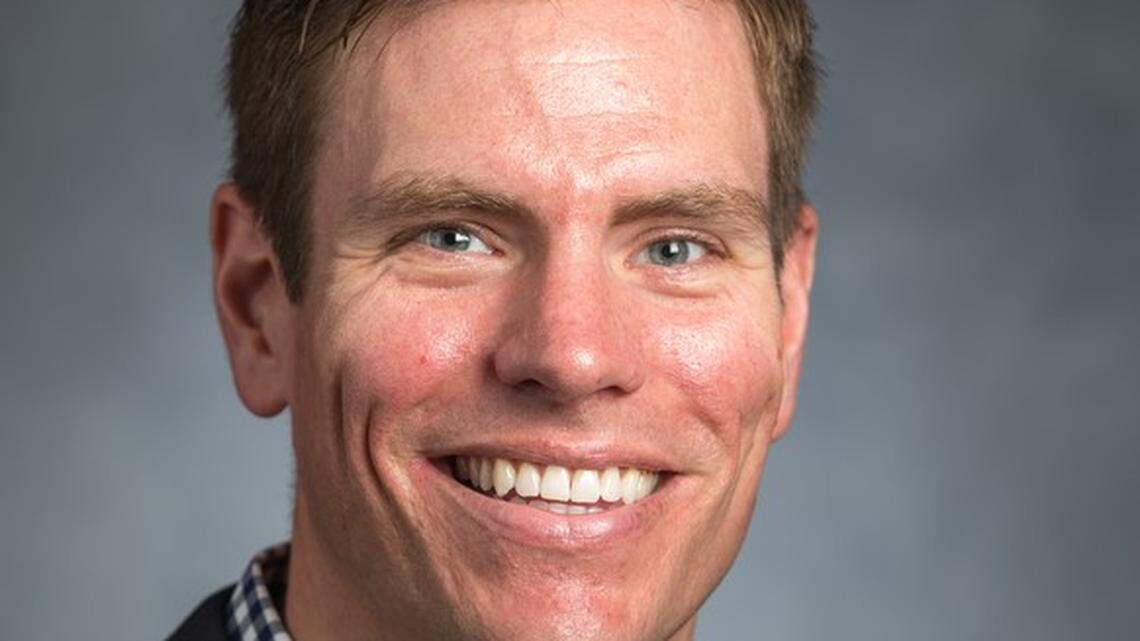
Former Charlotte Hornets radio announcer John Focke said Friday in an exclusive interview that he hopes people will learn two lessons from the horrible mistake he made.
In a world where speed is king, they aren’t lessons you’ll necessarily want to hear. They sound sort of boring and basic. But they might save your own job one day, and Focke would like to think he helped someone do that down the line.
“Don’t be in a hurry,” Focke told The Charlotte Observer on Friday in his first interview since being fired. “Whatever it is you are trying to get out there — don’t be in a hurry! And proofread it. Those are the two things I would impart to people. I was in a hurry. I didn’t go back and read it.”
And, for that, Focke lost the job he had dreamed of for 30 years.
Focke used the N-word on Twitter Aug. 17th, mistyping the plural form of the racial slur instead of the word “Nuggets” while trying to send an otherwise innocuous tweet about a Utah Jazz-Denver Nuggets NBA playoff game.
The Hornets first suspended Focke (pronounced FOH-kee) indefinitely. Then they investigated the incident for two weeks. Then they fired him Thursday.
Focke’s firing, based on my own probe of the situation, was all about that one tweet. There were apparently no other smoking guns hidden in Focke’s phone, on his social media accounts, or anywhere else.
But ultimately, the Hornets decided as an organization that the one horrific tweet was enough.
Focke took the high road when I spoke with him by phone Friday, repeatedly thanking the Hornets for the opportunity to become an NBA radio play-by-play announcer — albeit for just one season. He said he had wanted to broadcast NBA games since he was nine years old, and 31 years later, he had gotten to realize it.
“I love the NBA and have ever since I was a little kid,” Focke said. “I just recall watching the Bulls-Pistons in the Eastern Conference Finals. I was around nine years old. It opened with (TV announcer) Marv Albert, kind of setting the stage. I just remember thinking, ‘Marv’s got the best job, man. He’s courtside!’ And that was the one moment that I remember saying, ‘That’s what I want to do.’”
Albert’s example would be a nice one for Focke to follow once again. Albert recovered from getting fired after a lurid sex scandal in 1997, one that drew national headlines. Albert eventually made a comeback, returning to the highest levels of broadcasting.
Focke? He doesn’t know whether his own career will recover or not. I asked him Friday if he thought his mistake had been career-ending.
“I hope not,” Focke said. “But I can’t tell you I’m going to jump right into something on the Tuesday after the holiday weekend. Obviously, it’s going to be a process. However it goes, it goes.”
What the tweet said
Focke’s dream went down the drain on Aug. 17th. He was sitting at his kitchen table in Charlotte, barely watching the Jazz-Nuggets game while working on his Hornets podcast.
As the game heated up, he got interested. He tried to type a tweet on his iPhone that read: “Shot making in this Jazz-Nuggets game is awesome! Murray and Mitchell going back and forth what a game!”
Instead, he substituted the N-word right behind the word “Jazz.”
I’m not excusing what Focke did. He screwed up. It was really bad. And he’s in the communications business.
But look down at your own phone screen. The “u” is next to the “i.” The “t” is next to the “r.” The other five letters of those two words are exactly the same. I can see how it happened.
Now you might wonder why a man whose last name can be so easily mis-typed into a harsh profanity — that takes only two keystrokes, too — would make a mistake like that.
Focke has wondered that, too. He was under no obligation to tweet about the Jazz-Nuggets game. He didn’t need to rush. He didn’t need to send that tweet at all.
Yet he thought to himself at the time that he better do it fast before his tweet seemed out of date; when the two teams started missing several shots in a row, say, instead of making them.
Such a concern seems so silly now. He knows that.
Focke deleted the tweet once he realized what he had done, but of course it had been screen-shotted.
Focke issued an apology via Twitter about six hours later, which read: “Earlier today I made a horrific error while attempting to tweet about the Denver-Utah game. I don’t know how I mistyped, I had (and have) no intention of ever using that word. I take full responsibility for my actions. I have been sick to my stomach about it ever since. I’m truly sorry that this happened and I apologize to those I offended.”
I won’t belabor this point because I made it in a previous column, but Focke is adamant that this wasn’t an “auto correct” nor a “predictive text” sort of error. He simply mistyped.
Focke also reiterated in our interview Friday that the “N” word has never been part of his vocabulary and he was happy to hand over his phone to the Hornets for them to look into because he knew there was nothing else awful lurking in there.
“There was nothing to hide,” Focke said. “No paper trail. Nothing like that.”
Focke is white. The majority of NBA players are Black. I asked two communications experts — one white, one Black — after the initial tweet if they would fire Focke given these circumstances.
Both said Focke should keep his job — if the Hornets’ investigation uncovered no other instances of misconduct.
The Hornets disagreed. Contacted Friday, the team declined comment beyond its statement Thursday, which said Focke “will not return as the team’s radio broadcaster due to a violation of the organization’s social media policy.”
The Denver N-word incident
In Denver, Colorado, a similar incident unfolded over the past two weeks with a different result.
On Aug. 23rd, Denver radio personality Darren McKee made the exact mistake Focke did, trying to tweet the word “Nuggets” and instead writing the N-word. McKee, who is white, was also horrified by his mistake. He also apologized on social media. However, McKee — who it is worth noting was employed by an independent radio station, not by an NBA team — kept his job. He is now back on the air, hosting his drive-time show.
Focke said he “hadn’t dwelled” on the McKee incident one way or the other. “I was kind of in my own situation, just trying to handle that,” he said.
Focke grew up in Minnesota, rising slowly through the broadcast ranks. Before the Hornets, he had worked his way up into doing a lot of broadcast work for the NBA’s Timberwolves and the WNBA’s Lynx. He and his wife moved to Charlotte in June 2019 once he accepted the Hornets job.
Now, Focke said, he’s not sure if he will stay in Charlotte or move.
“There’s a lot to process,” he said.
I asked him if there was anything else he wanted to say. Focke said there was one more thing, something he wanted to say to the Hornets.
“It was an unbelievable opportunity,” Focke said. “And I just can’t thank them enough for it.”
This story was originally published September 4, 2020 at 2:47 PM with the headline "Fired Hornets announcer John Focke hopes you learn 2 lessons from his N-word mistake."