
Fermentation takes off in Triangle home kitchens
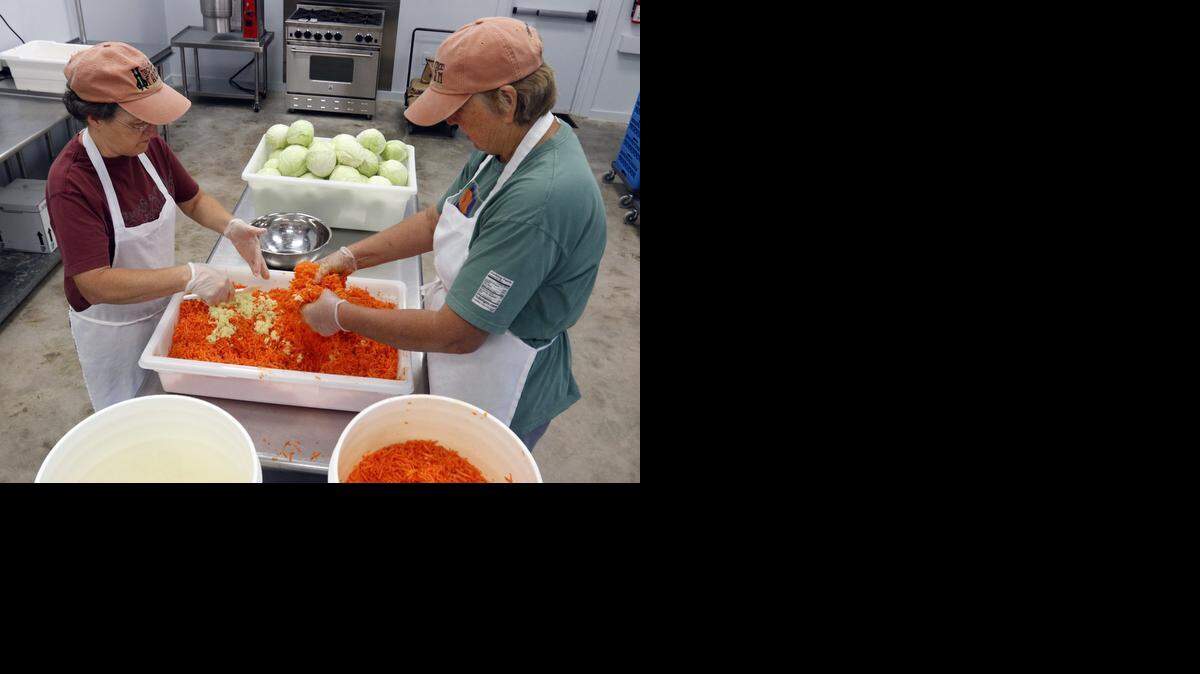
In homes all across North Carolina, home-brewed beer is bubbling in garages, homemade vinegar is aging in closets, and Mason jars packed with salted vegetables are gurgling away on kitchen countertops.
More and more, people are experimenting with fermentation, making sauerkraut, kimchi, pickles, kombucha, even hot sauce.
One of them is Doug Webb, 62, of Chapel Hill, who took a fermentation class last year through the continuing education program at Pittsboro-based Central Carolina Community College. For Webb, who has always loved sauerkraut and wanted to make his own, the class was a revelation.
“I learned that it’s pretty dang-gum easy,” Webb said.
Americans have been taught to fear bacteria and that no prepared food should be left out at room temperature – two keys to the fermentation process. Lost over the decades, however, is the knowledge that fermentation is a safe way to preserve foods. And it produces some of our most popular foods, including ketchup, sourdough bread and yogurt.
Shanna Carlan of Gastonia grew up on a farm with her grandparents, who routinely made sauerkraut and salt-brined pickles. Carlan, who teaches food preservation and fermentation classes at the Whispering Hope Farm in Gastonia, said, “It’s just not a part of our food culture anymore, which is sad.”
Sandor Katz, the country’s foremost fermentation evangelist, has written two books – “Wild Fermentation” and the best-selling “The Art of Fermentation” – that have responded to and help boost the popularity of fermenting foods at home. He sees the resurgence as part of broader food trend.
“I think people are getting interested in larger questions: Where does my food come from? And how is my food produced?” Katz said.
In response, many people are making a point of buying North Carolina produce. By extension, they want to preserve that food and control what goes into those jars. First, we saw canning come back in favor with Jarden, the company that makes Ball canning supplies, reporting increased sales since 2008 with some percentage growth in some years in the double digits.
Now, home cooks are venturing into fermentation. Microbiologist Fred Breidt, who studies pickled and fermented foods for a federal agricultural research lab at N.C. State University, says the process is safe and dates back more than 10,000 years.
Fermentation creates an environment in which the good bacteria beat out the bad. Breidt is quoted in Katz’s book, “Art of Fermentation,” as saying, “Risky is not a word I would use to describe fermenting vegetables. It is one of the oldest and safest technologies we have.”
Breidt (pronounced “bright”) sees other reasons for the interest in eating and making fermented foods: the amazing flavors and the recent research about the need to eat good bacteria to improve the health of our guts.
Another sign of the growing popularity of fermented foods is the transformation of Hillsborough’s Two Chicks Farm. Audrey Lin and Debbie Donnald started the farm in 2009 to grow produce to sell at Triangle-area farmers markets. Being unwilling to let unsold vegetables end up in the compost pile, they started making pepper jelly. Then Lin took a fermentation class with Katz in Tennessee and now sells a complete line of sauerkraut, kimchi and pickles.
Last summer, the women decided to stop selling produce and now sell only their “farm-to-jar” goods at the four farmers markets they serve. Their production has grown so much that this year they had to move into a new kitchen and upgrade from a closet-size fermentation room to one that is 2,000 square feet.
More recently, Lin said she gets more customers asking how to ferment their own vegetables. And they are not only asking questions: Customers want the women to teach classes. “People are asking us all the time,” Donnald said. “There is a thirst for knowledge.”
This story was originally published October 14, 2014 at 9:19 PM with the headline "Fermentation takes off in Triangle home kitchens."