
Apartment boom poised to reshape Raleigh, Durham downtowns
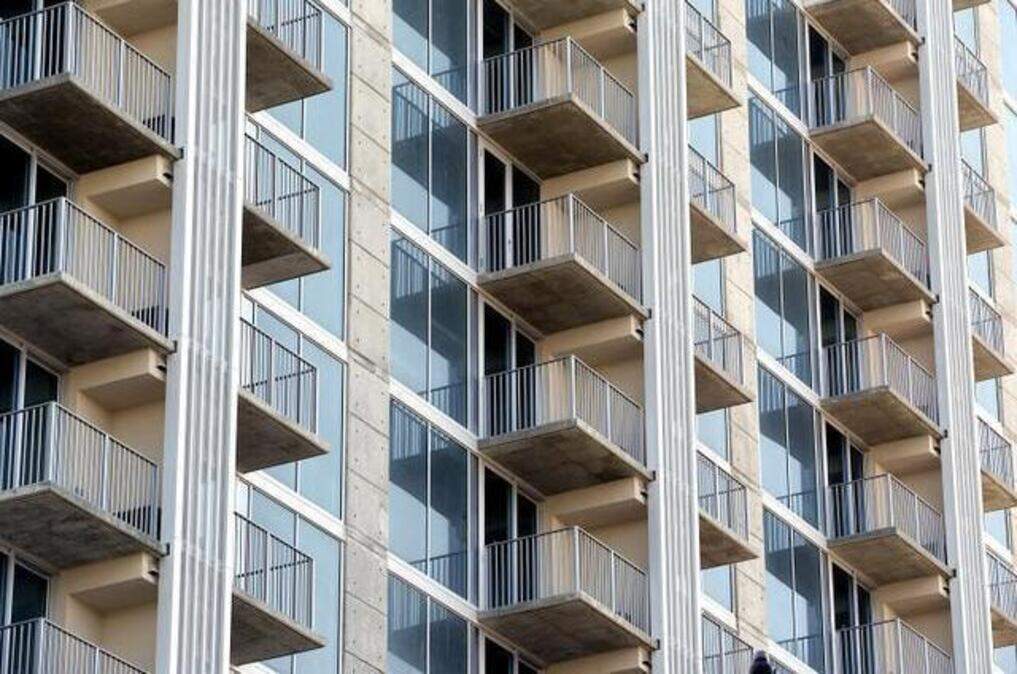
When SkyHouse, the 23-story luxury apartment building, opens in downtown Raleigh next month, Daniel Creech will be among the first tenants to enjoy its sweeping views.
Creech, who started work as a software test engineer for Citrix Systems seven months ago, has been commuting to work while living with his parents in Clayton.
“Two days after I began that commute, I needed someplace to go,” says Creech, who will be paying about $1,100 a month for a sixth floor studio apartment in SkyHouse. “To go from 30 minutes down to like 10 minutes walking is a pretty big factor.”
Creech, 25, is the type of renter whom apartment developers in downtown Raleigh and downtown Durham are counting on to fill up the hundreds of new units they are building.
In Raleigh, the number of high-end apartment units within a mile of downtown will double to nearly 3,000 during the next two years. In Durham, a wave of new apartment communities in downtown and along Ninth Street is expected to more than double the population, which is now about 1,500.
The opening of these projects, and the influx of so many new residents, promises to usher in downtown redevelopment activity in the Triangle. It also has the potential to reshape the growth patterns for a region that until now has been known more for its sprawling subdivisions than its urban living.
“The demand is hard to measure, but the potential is enormous,” says Gregg Sandreuter, a Cary developer who is behind SkyHouse as well as two other apartment projects in downtown Raleigh.
For longtime Triangle residents who recall the days when the region’s downtowns were wastelands after 5 p.m., the explosion in apartment construction can be jarring. Up until now, much of the downtown revitalization here has been driven by bars and restaurants.
Downtown boosters in both Durham and Raleigh are counting on these apartment communities to provide the critical mass needed to attract varied businesses.
“The face of retail in downtown is going to change,” says Geoff Durham, president of Downtown Durham Inc. “I think it’s going to further strengthen the market for the bars and the restaurants. ... But all these residents are going to clamor for more services so things like gyms and dry cleaners and day care are going to go along with the need for a grocery store.”
Despite the revitalization that’s taken place in recent years, residents who’ve wanted to live close to the burgeoning downtown nightlife scenes have had few options – and most of them required lots of cash or a hefty mortgage.
“In the 1990s we had nothing, then we had condos, then we had the Great Recession and finally we’re getting apartments,” says Sandreuter, noting that Raleigh has far fewer downtown apartments than other mid-tier cities such as Austin, Texas, and Memphis and Nashville in Tennessee.
Pent-up demand
The enthusiasm of developers such as Sandreuter is in part being driven by the enormous success of recent rental projects – particularly West Village in Durham and Devon Seven12 (formerly 712 Tucker) and Hue in downtown Raleigh. Demand for those units has been exceptionally strong, allowing their owners to raise rents at a healthy clip.
Developers point out that while apartment construction has surged in recent years, the Triangle has continued to add residents. Despite all the new inventory, the average number of apartments per person has remained relatively stable. The pent-up demand for more urban living options, as well as demographic trends and shifting attitudes about home ownership, have all combined to expand the pool of potential renters.
“Millennials and baby boomers both are showing a demand, and not just in this market, to live where they can walk,” says Allan Lynch, vice president with Thalhimer’s multifamily adviser group in Raleigh.
Lynch, 35, is among them. When he and his wife relocated to Raleigh from Midtown Atlanta two years ago, they wanted a place where they wouldn’t have to get in their cars on the weekend. They ended up renting an apartment at St. Mary’s Square at St. Mary’s and Johnson streets near Raleigh’s Glenwood South area.
The quality of the apartments now being built downtown are also a far cry from earlier generations of rental housing. The units often come with amenities and finishes typically found in a condominium, such as stainless steel appliances and granite countertops. SkyHouse, with its floor-to-ceiling windows and rooftop saline pool, represents the arrival of a type of high-rise apartment living that has not previously existed in the Triangle.
That luxury, as well as a central location, comes at a price. Most of the new apartment communities will charge rents north of $1,000 a month for a studio or one-bedroom apartment from 500 square feet to 700 square feet. In the Triangle, that is comparable to a monthly mortgage payment for a starter home, particularly with interest rates at historic lows.
The new projects, which don’t include any affordable housing component, also won’t do anything to alleviate concerns that the revitalization taking place in downtown Durham and Raleigh is pricing out poorer residents.
Choosing to rent
The rents reflect the fact that apartment developers expect many of their tenants will be people who can afford to buy a house.
“We call it renter-by-choice,” says Brendon Sullivan, vice president of acquisitions for Berkshire Group, a Boston-based investor who focuses on multifamily properties.
Berkshire recently acquired both the Crescent Cameron Village apartments in Raleigh and the Crescent Ninth Street apartments near downtown Durham.
“I think if you look at the income profiles of many of the people living in both Cameron Village and Ninth Street, they clearly have the capacity to own if they wanted to,” Sullivan said. “But I think renting gives them the flexibility to be transient if they want to move for jobs or whatever.”
At Cameron Village, he said, the company has been renting to more empty nesters than it expected.
Still, the main driver of demand for the new apartment inventory is expected to be young, single workers such as Daniel Creech. SkyHouse helped lure Creech in by offering him one month free rent. Through his employer, Citrix, Creech was also able to have a $300 application fee waived.
The arrangement is an indication of just how heavily the new complexes in Raleigh are likely to market to employees of fast-growing companies such as Red Hat and Citrix. In Durham, the communities will likely rely on employees of Duke University. But employees of those companies and the university alone will be unable to fill all the units being built, which means the longer-term health of the downtown apartment markets will be tied to Durham and Raleigh’s ability to attract more high-paying employers.
The downtown office markets in Durham and Raleigh now have the lowest vacancy rates in the Triangle, but several new office buildings are either under construction or in the planning stages. Once fully leased, these projects will add hundreds of jobs downtown, and a certain percentage of those employees are likely to want to live within walking distance of their offices.
As for Creech, he’s eager to ditch the 30-minute commute in favor of a short walk across downtown to Citrix’s new headquarters in the Warehouse District. He has no plans to give up on being a renter anytime soon.
“Probably not at this point,” he said when asked whether he would consider buying a house. “You never know if something comes up and you have to move to some other part of the country.”
Bracken: 919-829-4548;
Twitter: @brackendavid
Rents a moving target
Apartment rents in the Triangle have been rising for several years, although the pace of those increases has slowed in recent quarters as more new units have come on the market.
Rents, on average, were about 13 percent higher in downtown Raleigh and Durham compared with the entire Triangle in the fourth quarter of 2013, according to MPF Research, which analyzes apartment data in 100 U.S. metro markets. The average rent in downtown Durham was $1,078, compared with $1,074 in downtown Raleigh and $949 in the Triangle.
Most developers expect the downtown markets could see several quarters of rent decreases as projects open and compete for tenants.
For renters eager to compare and contrast the increased options that will soon be available, be prepared to get quoted a variety of prices – even from the same complex depending on what day you visit.
Nearly all the new apartment complexes will use a daily pricing model that is similar to the way airlines price their airfares. That means the price of a unit can fluctuate day to day as a mathematical model gauges demand based on the number of visits to a property – even if those visitors don’t rent a unit – in an effort to charge the maximum amount possible.
Staff writer David Bracken
This story was originally published March 28, 2015 at 4:00 PM with the headline "Apartment boom poised to reshape Raleigh, Durham downtowns."