
Red wolf effort in NC should expand to other states, consultant says
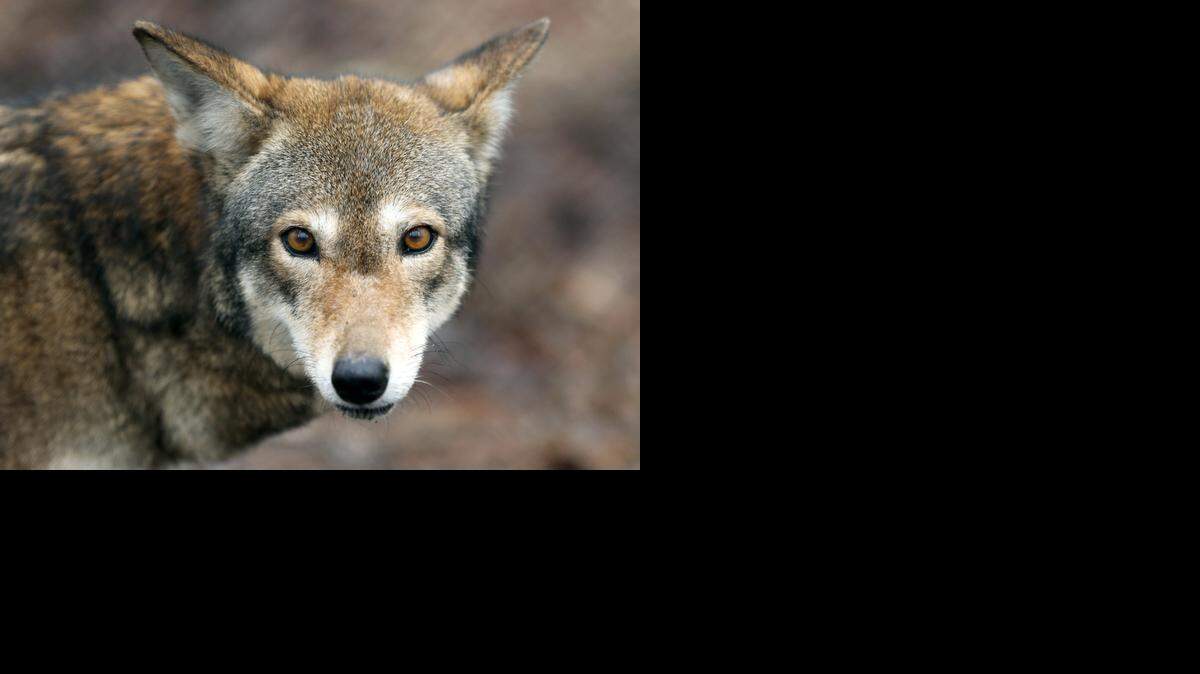
A new independent review calls for extensive changes to rescue the federal government’s struggling, unpopular Red Wolf Recovery Program in five Eastern North Carolina counties.
The U.S. Fish and Wildlife Service is faulted for creating “an atmosphere of distrust” among landowners, and for a weak understanding of the causes behind a perilous decline in recent years of the world’s only wild population of endangered red wolves – now estimated at 112 animals.
The Fish and Wildlife Service established the program in the Alligator River National Wildlife Refuge in 1987, starting with eight red wolves that had been born in captivity.
In a 171-page evaluation commissioned last summer by the Fish and Wildlife Service and released Thursday, the nonprofit Wildlife Management Institute calls the effort an initial success but recommends improvements in science, management and public relations:
Fish and Wildlife officials appear to have made a good start with a “placeholder” program that sterilizes coyotes while leaving them in place to keep out other coyotes that would breed with wolves. But the agency has not analyzed the program to determine how effective it will be, and it has not evaluated alternatives.
“WMI expected greater oversight and support for a landmark recovery program involving one of the most imperiled canids in the world,” the report said. Fish and Wildlife recently shifted oversight of the red wolf effort to its Ecological Services program.
“It’s clear to us that wolves don’t recognize landowner boundaries,” Steve Williams, president of the Wildlife Management Institute, told reporters. “The idea that wolves would stay on federal land doesn’t make sense and isn’t what’s happening today.”
Distrust has intensified
U.S. District Judge Terrence W. Boyle last week approved a plan to ban the nighttime hunting of coyotes in the five-county Red Wolf Recovery Area (Dare, Hyde, Tyrrell, Beaufort and Washington counties) to reduce the accidental shootings of red wolves – which resemble coyotes. The agreement settled a lawsuit filed by conservation groups who blamed the N.C. Wildlife Resources Commission for endangering the wolves by promoting the hunting of coyotes.
After Boyle temporarily halted all coyote hunting in the five counties last May, the Wildlife Resources Commission asked the Fish and Wildlife Service to re-evaluate its effort to restore the endangered wolves. The commission has promoted trapping and hunting in recent years to reduce coyote attacks on livestock and pets. Across the state, hunters killed 27,000 coyotes last year.
“The lack of public awareness and support efforts has led to an atmosphere of distrust within some segments of the community,” the Wildlife Management Institute report said. “This level of distrust has intensified as a result of the recent court injunction on coyote hunting.”
The report was criticized by Tara Zuardo, attorney for the Animal Welfare Institute, one of the conservation groups that sued the Wildlife Resources Commission to curtail coyote hunting.
“The report emphasizes individual property concerns over red wolf recovery, and fails to emphasize the vast local and national public support that the program has received, as well as the important ecological role that the red wolf plays as a keystone species,” Zuardo said by email.
Leopold Miranda, Fish and Wildlife’s assistant southeast regional director for ecological services, said the agency will consider the report and announce its decision about the future of the red wolf program in early 2015.
“We have a lot of work in front of us, and I also want to note here that we appreciate all of the public engagement this process has generated,” Miranda said in a news release.
Charlotte Observer reporter Bruce Henderson contributed.
This story was originally published November 20, 2014 at 1:39 PM with the headline "Red wolf effort in NC should expand to other states, consultant says."