
In Chatham and Lee counties, opposition rises against coal ash disposal plan
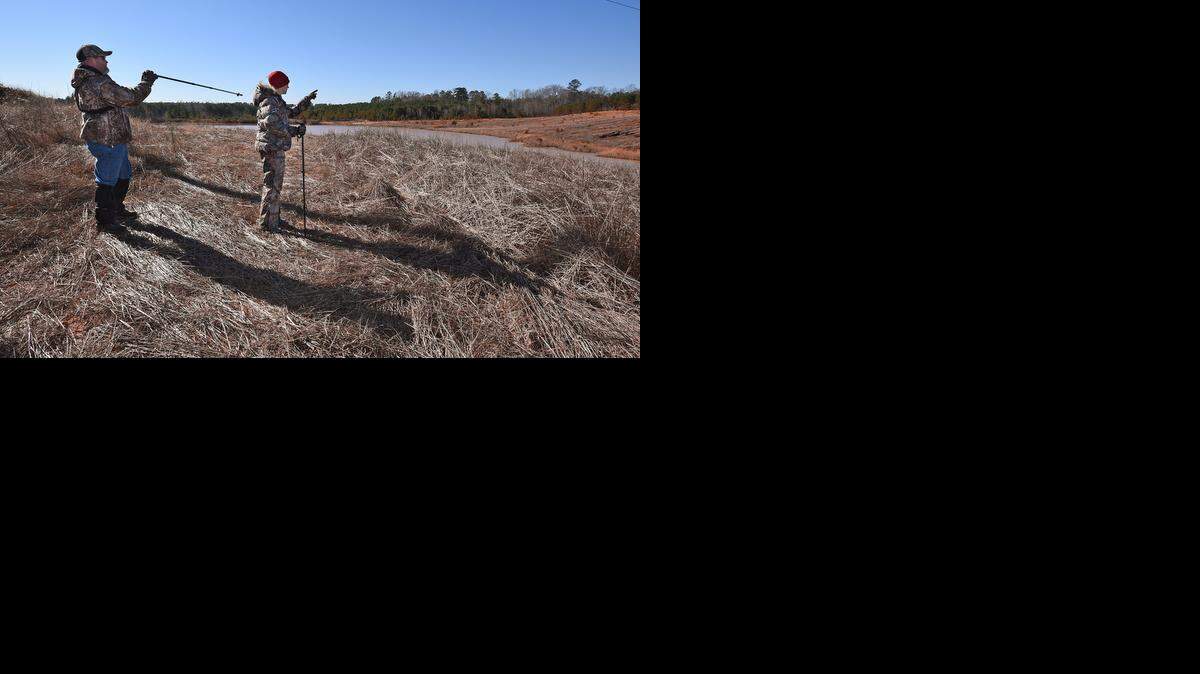
Fifteen miles apart, in Lee and Chatham counties near the geographic center of the state, lie two giant holes in the earth in which Duke Energy Progress and its millions of electric customers might hope to bury their troubles.
Along with some of the surrounding terrain, these maws, created by decades of digging clay and shale for bricks, would be graded, lined with plastic and filled with coal ash residue that has to be moved to prevent the contamination of ground and surface waters elsewhere in the state. Excavating the material, moving it and encapsulating it in former open mines is a grand-scale experiment that could change the landscape of two North Carolina counties in more ways than one.
As the state Department of Environment and Natural Resources considers permit applications for the two projects that eventually could rise several stories from the red, clay soil, opposition is building, too. The boards of commissioners in both counties have adopted resolutions opposing the coal ash dumps, and residents are consulting with lawyers and environmentalists to see what actions they can take to stop or stall the plans.
Duke Energy Progress and Charah Inc., a Kentucky-based waste handler that will own and operate the fill sites, say they will use proven techniques and technologies to fix two problems at once. Moving the ash from unlined basins where it has accumulated for generations reduces its risk for contaminating surface and groundwater, and placing it in the former mining sites, where it will be capped and planted over, will turn scarred earth into land newly desirable for industrial development.
But opponents say not enough is known about how the coal ash will behave in this kind of long-term storage, and the risk that the fill sites might leak or otherwise fail will create a stigma for the two counties that could discourage future growth. While they would like to see the projects halted and environmental studies required, they say Lee and Chatham counties at least should be compensated for bearing the risk of a problem that belongs to everyone who has enjoyed the benefit of a century of low-cost, coal-generated power.
“This is a statewide problem,” Nick Wood, an organizer for NC Warn, a nonprofit energy-industry watchdog, told a group of people gathered at the volunteer fire department in Moncure on Thursday night to discuss strategy. “We need a statewide solution.”
Duke spokesman Jeff Brooks said: “It’s a complex problem, and there is no easy solution.”
The law does not mention host fees, which are typically charged for tonnage at landfills, and in meetings, company officials said they did not intend to pay fees. When asked Friday about the possibility of compensating the counties, Brooks said, “We’re hoping to find ways to alleviate their concerns and make this a project that will benefit the communities as well as our customers.”
Brooks said Duke expects to pay up to $350 million for the first phase of coal ash removal from its first four sites. That includes what it will pay Charah to move ash to Lee and Chatham counties.
Major property purchases
The U.S. Environmental Protection Agency says ash is piled at decommissioned power plants across the country and that the U.S. generates about 140 millions tons of additional coal waste each year.
Coal ash contains substances such as arsenic, mercury, lead, cadmium, chromium and selenium. Exposure to high levels of some of these can increase the risk of cancer, neurological effects and other health problems.
Coal ash is often reused in other materials such as cement, composite wood, vinyl flooring, even bowling balls.
State legislators started considering the regulation of coal ash last year after a February spill at Duke’s Dan River Power Station near Eden sent 30,000 to 39,000 tons of ash up to 70 miles downstream. State and federal officials still are assessing that damage and preparing a report on how to mitigate it.
Gov. Pat McCrory issued an executive order requiring Duke to submit a plan for closing its coal ash basins across the state. Later, the General Assembly approved a law allowing coal ash to be used as “structural fill” in former mines. Operators of the sites must encapsulate the ash in dense soil and plastic, and collect the water that runs off or filters through, but the rules are less strict than for landfills.
The sites in Lee and Chatham would be the first built under the new law and would let Duke Energy begin excavating ash from its top-priority sites. Ash would be brought to Lee and Chatham from Duke’s Riverbend plant, near Charlotte, and the Sutton plant in Wilmington.
Duke announced the plan on Nov. 12. The next day, Charah purchased the two old mines in Lee and Chatham, both from General Shale, which had dug clay and shale at them for the once-booming brick industry.
Property tax records indicate the company paid $3.5 million for the Lee County site, known as the Colon Mine or the Sanford Brick mine. Charah bought about 408 acres there, and plans to pile coal ash on up to 118 acres. The property sits off Colon Road about 5 miles north of Sanford, just east of U.S. 1.
The Chatham County site is known as the Brickhaven Mine. It sits outside the community of Moncure in the southeastern part of the county. Records show Charah paid $11.85 million for the 333.55-acre property.
Neither site is visible from major nearby roads, but viewed through Google Earth satellite photos, each stands out, a slash of red against the sea of green forest and farm land. Single-family homes are scattered nearby.
Homeowners worry
Most longtime Lee County residents seem to know someone once employed in the brick industry. But unless they worked the kilns or in the pits themselves, they might not have seen the Colon Mine when it was active, from 1972 until the collapse of the housing market cut the demand for brick.
Stacy McBryde saw it. She moved to the area in the mid-1980s and spent much of her childhood playing in the woods on her family’s property and on adjacent land owned by a series of brick-making companies.
About five years ago, General Shale left the site. It took most of the machinery away. The brick plant was torn down.
The deep pit was allowed to fill with water. Locals have been known to fish in it and a dozen others on the property. Local Boy Scout troops have camped on the General Shale land, which also includes stands of pine trees, a network of narrow dirt roads, and shallower digs where the natural contours of the earth have been scraped off and carried away, leaving what looks like sprawling parking lots.
The Brickhaven Mine in Chatham County looks similar, except its deepest pit, also filled with water, is much larger than the one at Colon Mine – big enough to put Moncure in, as local residents say. Charah says the water-filled pits at both sites would be drained, filled with dirt and then lined according to the state’s requirements before being filled with coal ash. Shallow mines would be graded, lined and filled.
The Chatham County site has a capacity of 12 million tons of coal ash, according to Charah’s permit application.
Looking at Charah’s plans for the Colon Mine in Lee County, McBryde and her husband, Gray, can’t say whether they’d be able to see the ash pile as it rises on the former mine site.
But the company has asked to bring in as much as 8 million tons of coal ash over five years, most of it by rail on tracks that border the site.
One set of tracks runs so close behind the McBrydes’ house that Stacy and her daughters stood in the backyard and watched the animals when the circus train came by last year. She worries about coal ash spilling from the train cars or running onto her land from the ash pile when it rains.
Scott Sewell, CEO for Charah, said the company has hauled coal ash by rail and truck for years under a zero-dust policy. According to the company’s permit applications, runoff water from each site will be collected in lined ponds, and water that leaches through the coal ash before the dumps are sealed will be collected and hauled to a local treatment plant for disposal.
McBryde wonders whether she could ever sell her house with a coal ash dump a quarter-mile away. “I’ve got a lot invested here,” said McBryde, 33. “I don’t want to lose it.”
A decision this summer
Lee County Manager John Crumpton said the county’s biggest problem with the fill is perception.
“There is a stigma attached to it,” he said after commissioners passed a resolution saying they didn’t want their community to become “the coal ash capital of North Carolina.” Though the EPA issued a long-awaited ruling this month that said coal ash is not hazardous waste, “The public thinks its bad,” Crumpton said. “How do you overcome that?”
Crumpton questions Charah’s assertion that it is reclaiming an old mine – restoring it to a more normal elevation so it can be used for something else – when Lee County’s mapping specialist says Charah would be putting more than 70 percent of the fill it brings to the Colon Mine site on land that was never mined.
“That’s not reclamation,” Crumpton said. “That’s landfill.”
Charah’s CEO said Friday that the county’s mapping specialist is overestimating the amount of fill that would go over unmined land.
Charlie Horne, Crumpton’s counterpart in Chatham County, said residents are frustrated that Duke Energy waited so long to fix the coal ash problem. Now that the company is in urgent need, he said, it should consider creative incentives for the counties where it seeks relief. For example, he said, Chatham County students could use a magnet school for science and math.
DENR spokesman Jamie Kritzer said Friday that the state is still reviewing Charah’s applications. Once they’re complete, the department will have 90 days to issue a draft permit decision. A public comment period of 30 to 60 days will follow that. A final decision could be issued this summer.
Charah and Duke officials continue to meet with groups who have questions about the plan.
“We know it will take a lot of effort on our part to demonstrate that we can be trusted in this and we will do the right thing,” said Brooks, the Duke spokesman.
While the Lee and Chatham county mines may seem obscure, Wood, of NC Warn, reminded the people gathered Thursday that there are dozens of such mines across Piedmont North Carolina, none of which have been subjected to environmental scrutiny as long-term coal ash storage sites.
There is so much coal ash to be disposed of, he said, “If we let them do it here, they’re going to do it everywhere else.”
This story was originally published January 10, 2015 at 8:11 PM with the headline "In Chatham and Lee counties, opposition rises against coal ash disposal plan."