
Tar Heel: CASA CEO Debra King finds homes for mentally ill, homeless
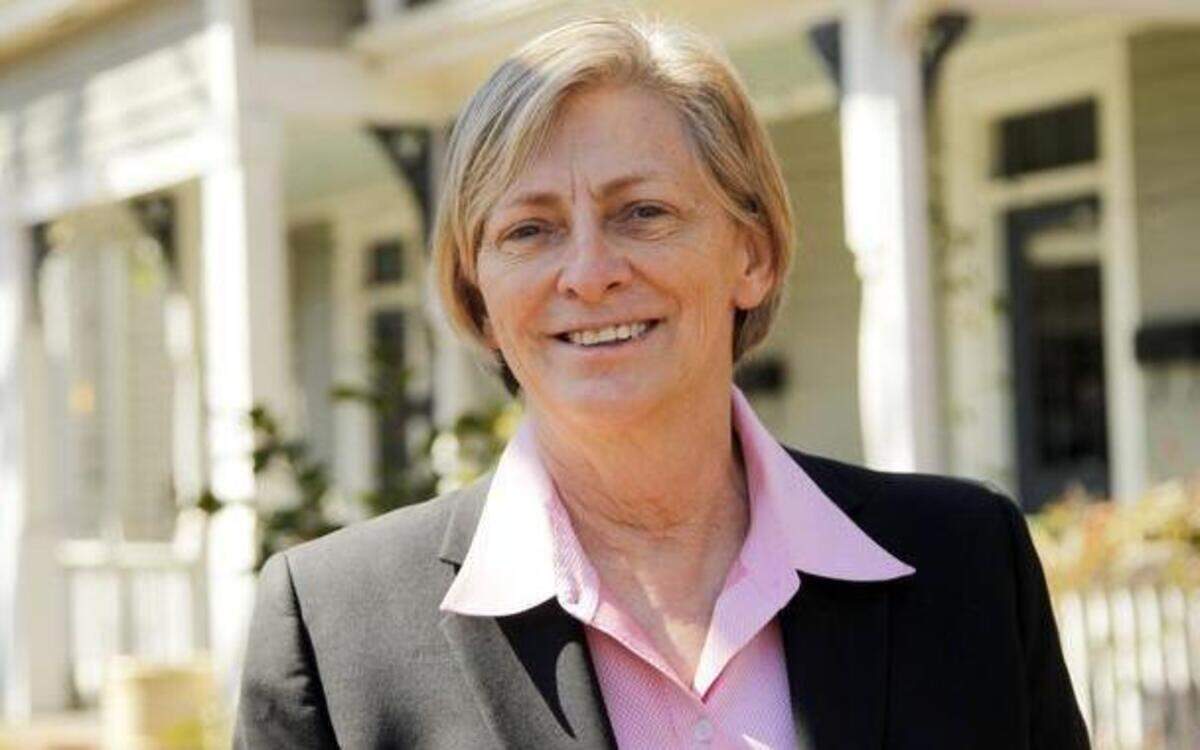
Debra King is most happy when the work she’s done for two decades goes unnoticed.
Like the woman known in her community for her daily walks and friendly smile, not her history of mental illness. Or when no one realizes that the men who helped a neighbor escape from a fire had once been homeless.
King is the longtime director of CASA, which builds and manages affordable housing for people who suffer from mental health issues, disabilities or homelessness. Recently, the nonprofit developer has also started creating housing for homeless veterans.
CASA tenants pay about 30 percent of their income, usually less than $200 a month, to live in apartments spread throughout Triangle neighborhoods. They also receive in-home health care and other services.
CASA works on the premise that a stable home is as powerful as any medication in keeping vulnerable people from lapsing into crises. For King, the program is most successful when its participants are no longer defined by the problems they face.
“The greatest gift we can give people is the chance to be who they are without those labels,” says King. “Housing is so critical to who we are. If you lack that, how can you be OK?”
King has overseen CASA’s growth from a handful of apartments on the Dorothea Dix campus to 340 units around the Triangle. Next month, CASA will open 10 new apartments in Raleigh for veterans with disabilities, adding to a complex it built in 2013 and another that opened in Durham in December.
King hopes to see more growth in the coming years, noting that there are 600 people – veterans and non-veterans – on the group’s waiting list.
It’s a job that brings its share of conflict, whether from tenants failing to meet their obligations or neighbors leery of new CASA projects – an almost inevitable conflict when the goal is to scatter affordable housing across the city rather than cluster it in particular areas. Yet the Duplin County native has been effective at navigating these tricky situations, says Alexander Denson, a retired judge who was on CASA’s founding board.
“She’s the most compassionate person I think I’ve ever known and one of the most capable,” Denson says. “She combines that innate compassion with the ability to get the work done.”
Family inspiration
King grew up near Beulaville, on a small farm that provided food for her family. Her father worked as a truck driver and a jailer, and her mother as a baker in a school cafeteria.
She lived next door to her paternal grandparents in a community where neighbors often gathered to help one another do big projects, from curing tobacco to constructing buildings.
King also learned early lessons about mental illness from an uncle who had played minor league baseball but returned from military service in Korea with persistent mental health problems. Her family was able to help him live on his own, and King says he taught her to fish and drive a boat.
“He was this person in my life who had time, who taught me some of the things that I love the most,” she says. “A lot of people would look at him and not realize all the gifts he had. They would just see someone who didn’t work.”
She was the first in her family to earn a college degree. She majored in journalism at UNC-Chapel Hill but balked at the low pay she was offered at a small town newspaper after graduation. Instead, she headed to Raleigh, where she worked as a medical transcriptionist before getting a job in hotel sales.
She later sold computers, and eventually became a sales manager for a software firm. But after a few years she found herself re-evaluating her career choices.
“I started looking at my life and trying to figure out what I really wanted to do,” she says.
She quit her full-time job and took two part-time jobs with nonprofits; one was an environmental group and the other was Orange-Person-Chatham Mental Health, where she was a grant writer. One of the first grants she landed was for a housing project for people with mental illnesses.
As part of the group’s tiny staff, she was charged with helping bring the project to fruition, and her new career in housing was born.
Around the same time, Wake County’s mental health agency was looking for ways to provide stable homes for its clients. CASA was founded to do that in 1992, and in 1995, King became its second CEO.
“They realized that so many of the people that they were trying to treat for behavioral or mental health issues had been homeless,” she says. “And they couldn’t help them if they’re in crisis all the time.”
At the time, it was a forward-thinking idea; hospitals and group homes were still the main sources of housing for people with mental illnesses. CASA’s goal was to instead create affordable housing in existing communities where residents would have access to public transportation, nearby shopping and other amenities.
When she started, CASA was renting about 15 apartments it had bought using grant money.
“We had nowhere to go but up,” she says.
CASA wanted to buy a property next door to its current office on Jones Street, but without a proven track record, the group couldn’t get a loan. The owner worked out a deal, and CASA was soon growing at a steady clip.
Good community partner
Most of CASA’s housing units range from duplexes to small apartment complexes that are meant to be permanent housing, though some successful tenants will move to larger places or buy their own homes.
Most CASA tenants don’t have cars, so finding affordable housing near bus lines and key amenities is crucial. The latest housing complex for disabled veterans is within walking distance to the VA clinic off Sunnybrook Drive in Raleigh.
More than 60 percent of the group’s $3.2 million budget comes from rental income, the rest from government grants and private donations.
Increasingly, CASA’s approach is seen as a cost-saving measure, cutting down on countless visits to emergency rooms and jails.
Realizing that many of her tenants were idle, she helped create a program that employs residents doing landscaping at CASA properties to help keep them impeccably maintained. It’s part of her strategy to deal with neighbors who worry about having such housing in their midst.
“If we stick out in a community, it better be because we look better than everything around us,” she says. “We want to be a good community partner.”
CASA looks for properties near bus lines in safe neighborhoods. In some cases, as in the Greer Street area of Durham, the refurbished apartments can aid an area’s revitalization.
Her advocacy goes beyond her day job. King served on a governor-appointed council focused on housing and poverty, and speaks regularly to policymakers and others about homelessness and mental illness. As chair of Wake County’s Partnership to End Homelessness, she helped find a site to feed homeless people in the wake of controversy over restricting the practice in Moore Square.
King says her goal is to help people look beyond the problem of homelessness to see the people whose lives can be, and are, changed by having a home.
One example are the two men who rescued their neighbor from a house fire at a Garner Road quadriplex a few Christmases ago. News reports at the time didn’t mention their connection to CASA, which made King all the more proud of her tenants.
“Just having an address doesn’t make you have character or values,” she says. By that same token, she adds, “If a person is experiencing homelessness, that doesn’t define them.”
Know someone who should be Tar Heel of the Week?
Contact us at tarheel@newsobserver.com or find Tar Heel of the Week on Facebook.
Debra K. King
Born: March 1959, Duplin County
Residence: Raleigh
Career: CEO, CASA (Community Alternatives for Supportive Abodes)
Awards: William C. Bass Award, Better Homes for N.C., 2007; inducted into the YWCA Academy of Women, 2007
Education: B.A., journalism, UNC-Chapel Hill
Family: Partner and two sons
Fun Fact: King says the CASA kitchen is always stocked with peanut butter and bread – for years her go-to dinner when she was working late to meet a grant application deadline.
This story was originally published March 21, 2015 at 4:00 PM with the headline "Tar Heel: CASA CEO Debra King finds homes for mentally ill, homeless."