
Part of the family: NCCU joins group behind Duke-based nuclear lab
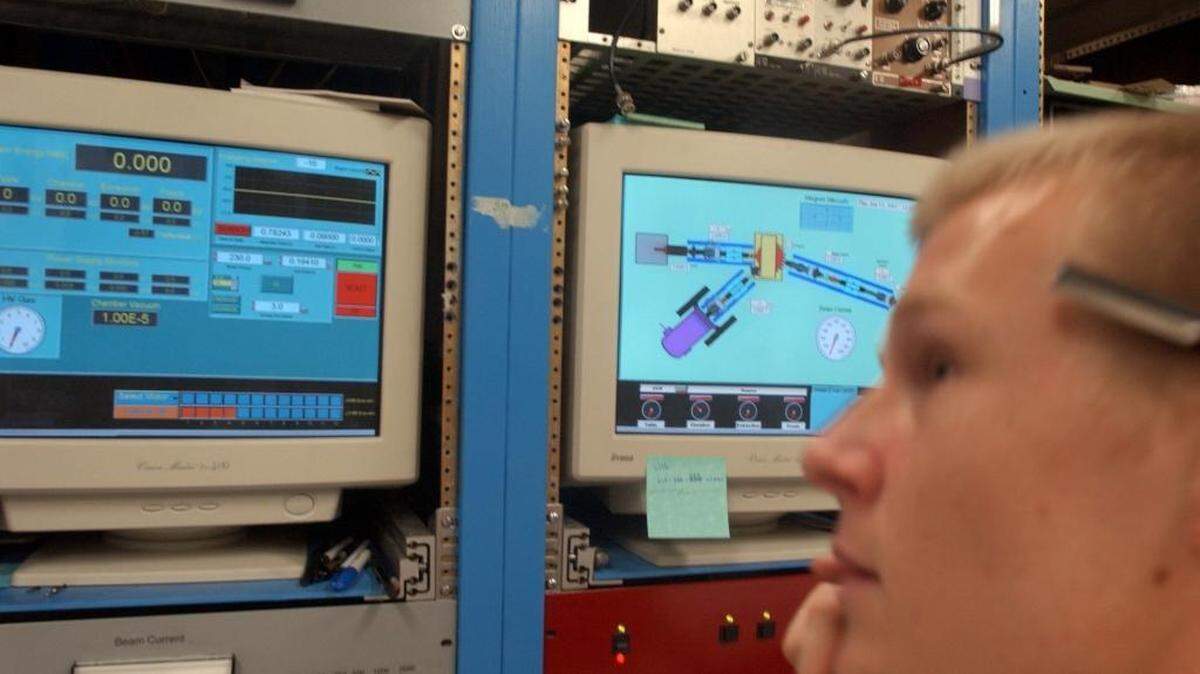
For more than 50 years, the group that’s run a bevy of nuclear-physics particle accelerators on the Duke University campus had just three schools: Duke, UNC-Chapel Hill and N.C. State University.
On Monday, the trio became a quartet, adding N.C. Central University to the consortium that operates the Triangle Universities Nuclear Laboratory (TUNL).
The move was more than three years in the making, coming at the initial suggestion of Duke professor and former lab director Calvin Howell.
Adding NCCU should help the lab compete for talent and fits in Central’s drive to expand a research footprint that already includes some high-profile biomedical programs, Howell said after the provosts of the four universities signed the paperwork to ratify the move.
The addition grew out of existing collaborations, a point that NCCU math and physics professor Mohammad Ahmed echoed later.
“The thing we put on the table was our students, our faculty and our broadening of the intellectual capacity of TUNL,” Ahmed said, adding that NCCU’s presence also should mean the lab “inherently has more resources” via the research grants that professors who work there secure to fund their projects.
Howell’s successor as lab director, UNC-CH physics professor Art Champagne, said NCCU has had a presence at the lab for “a very long time” now. NCCU professors lead research there into how protons and neutrons link up, and are likewise “instrumental” in its work on the properties of neutrinos, Champagne said.
Including NCCU is “formalizing something that’s existed for many years,” Champagne said.
Ahmed said the group of math and physics professors at NCCU linked with TUNL includes himself, Diane Markoff, Benjamin Crowe and Caesar Jackson. He and Markoff have grants from the U.S. Department of Energy and the National Science Foundation funding their work there.
It’s possible the effort on Central’s end could eventually expand to include faculty from other departments, as the nuclear lab’s research tools also lend themselves to work in the biomedical arena, he said.
Participants also noted the lab’s role in helping train the country’s nuclear-physics talent pipeline.
Nationally, about 70 people a year get doctorates in experimental nuclear physics, and the TUNL lab usually accounts for five or six of them. Graduates have gone on not just to university faculty posts, but to staff jobs in the Sandia and Los Alamos national nuclear laboratories and to private-sector companies like Intel.
TUNL has also welcomed undergraduates into the fold, and NCCU students are among those who’ve done research there.
Duke provost Sally Kornbluth noted that the ties between TUNL and N.C. Central developed from the ground up.
“It’s impossible to top-down invent these things,” she said, adding that Duke’s interested in working with NCCU on other fronts. “You really have to recognize the things that are growing organically and then formalize the understanding.”
Expanding the consortium fits with the desire that the Triangle “continue to be a destination for science and scientists,” Kornbluth said.
Ray Gronberg: 919-419-6648, @rcgronberg
This story was originally published January 30, 2018 at 3:23 PM with the headline "Part of the family: NCCU joins group behind Duke-based nuclear lab."