
Chapel Hill teacher Patti Wagner brings help to area where it's needed most
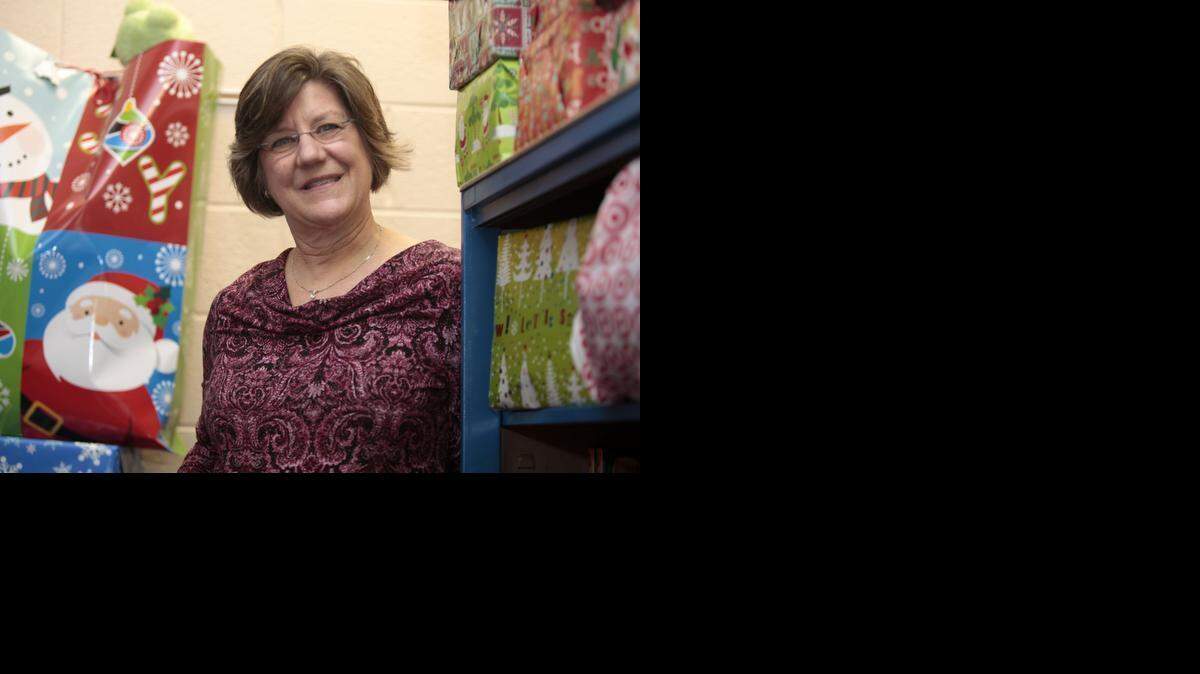
This week, Patti Wagner will make her annual six-hour journey to a remote Appalachian community, bearing more than 300 wrapped shoe boxes and other gifts for children there.
It’s a trip that has proven perilous in the past, involving narrow roads with sheer drops and a mile-long tunnel not wide enough for two cars. Once, a blizzard stranded her for days at a remote motel, where she slept on the floor.
But Wagner, a teacher at St. Thomas More School, never doubted she’d be back.
“Even after all that, I couldn’t wait to go back again,” she says. “If you could see how happy these kids are when I show up, it’s all worth it.”
The boxes of toys and supplies have become more important in the eight years since Wagner started bringing toys to the tiny West Virginia community of Dingess as its economy, already poor, has worsened. In August, the last of three mines in the area closed.
But the annual collection has also been a boon to the students of St. Thomas More, a Catholic school. Cathy Elmore, who also works at the school, says her own two children think all year about presents for the boxes. This year, her youngest decided to use some money given to her by an aunt for the shoebox gifts.
“Patti is so dedicated and so moved by the plight of this community,” Elmore says. “What she’s done at St. Thomas More is to teach our children empathy and compassion for those that are less fortunate than they are.”
Roots in West Virginia
Wagner, 63, was born in Connecticut, where her father was finishing his Ph.D. in chemistry at Yale University. She spent much of her youth in West Virginia, where he worked for Union Carbide.
At the time, however, she had no inkling of the poverty that lurked in many of the communities that surrounded her.
“When I lived there I had no clue,” she says. “Where we lived there were country clubs and big houses. I knew there was poverty, but I didn’t know the extent.”
She had also spent several summers in Appalachia when her children were teenagers, working with them in a summer program that brings high school students to do house projects in needy areas.
The Appalachia Service Project brought her mainly to Kentucky, but only miles from Dingess, where she helped put insulation in houses and hang cedar siding.
On those trips, she and her children encountered poverty they’d never known existed – homes built of wood and nails scavenged from junkyards, people digging trenches for outhouses, extension cords stretching between houses sharing electricity.
“It’s poverty beyond your wildest imagination,” she says. “There are things you can’t believe until you see it.”
She would go on to live in West Virginia on and off over the years, and also lived in the Triangle several times before settling here nine years ago.
In her first stint here, she attended Meredith College and met her husband. Once they married, the couple moved to upstate New York, where she finished her teaching degree.
Later, they would live in France for three years, in addition to West Virginia, Pennsylvania and North Carolina.
Wagner returned to the area, where her son and parents live, after her husband died nine years ago.
She also returned to St. Thomas More, where she had taught kindergarten before and now teaches second grade.
Help from kids
Wagner had started collecting shoe boxes full of toys and supplies when she was teaching in Pennsylvania, delivering them to nearby coal-mining communities. When she returned to St. Thomas More, she started looking for a community to help.
“It’s a good hands-on project for kids,” she says. “It’s something they can understand and enjoy.”
Local groups she called said their needs were mostly met; one social worker urged Wager to “go where you’re needed most,” she recalls. So she turned to some people she knew from the Appalachian Service Project, and a string of calls finally led her to the pastor of a Dingess church.
“It was so deep in the mountains, most agencies can’t get there,” she says. “And the need is so great, they need more than they can provide.”
Dingess was the site of the massive explosion five years ago that killed dozens of miners. With the closure of the last area coal mine, Wagner says only about half of the households have anyone working even part time, usually at a service job.
The first year, the school provided 83 boxes to children from the church. The next year, the effort expanded to include a local orphanage. When they had enough people, they started to provide the whole elementary school with boxes.
This year, each child in the school, along with each of his or her siblings, will receive a shoebox. In addition, about 30 children identified as the “poorest of the poor” will receive large gift bags with coats, shoes, clothes and other needed items.
Some of Wagner’s former students have continued to bring in shoeboxes even after they’ve gone on to middle school.
“It’s just become kind of a tradition,” she says.
But the trip to the remote area has tested Wagner’s mettle.
“It’s just this pocket of homes off Mud Fork Road,” she says. “One you start up the mountain, there aren’t any signs. You just have to pray you’re on the right road.”
One year, after delivering the gifts, she got caught in a blizzard. She sat in her borrowed truck for five hours until she could be towed to an area motel, which turned out to be full. She slept in the lobby one night, and eventually got a room.
One morning, she woke up early and left before the roads were blocked by skidding cars, driving carefully back to North Carolina.
On another trip, she tried a new route that included a trip through the Dingess Tunnel. Made for trains, the tunnel, nearly a mile long, had been converted for vehicles.
Wagner was warned at a nearby store not to take the steep, winding road to Dingess that goes through the tunnel. But if she did, they said, she’d better check carefully for headlights before entering.
The road wound along the side of a mountain with a sheer drop beside it, with barely room for another car to come in the other direction.
In a way, the trip fits in with the quiet resolve with which Wagner has faced several of her biggest challenges, from living in a foreign country where she didn’t know the language to seeing her husband through two stem-cell transplants before losing him to cancer.
“If I have to do something, I can do anything,” she says. “God gives you strength.”
Know someone who should be Tar Heel of the Week? Contact us at tarheel@newsobserver.com or find Tar Heel of the Week on Facebook.
This story was originally published December 6, 2014 at 5:00 PM with the headline "Chapel Hill teacher Patti Wagner brings help to area where it's needed most."