
William Peace University president to retire after tumultuous tenure
Debra Townsley, who engineered big change and a coed campus at William Peace University, will step down next year after a tumultuous tenure.
In an email to the campus community Monday, Townsley, 60, said she would retire June 30, after five years at the helm of the private university in downtown Raleigh.
“As a change agent, I know that you come in to carry out the mission of the Board, then pass the baton to the next leader to continue to move the institution forward,” her announcement said.
She said trustees offered her an extension on her five-year contract, which runs out in June. She declined, she said, because she had originally planned to stay for only five years.
Townsley wants to pursue other interests and spend more time with her two young grandchildren, she said in an interview Monday in her office. “We’re positioned well for the future, and the next person will take it from here.”
The university’s dramatic change was not easy, she conceded, “but I will say I’m really proud of what we’ve accomplished in really a pretty short period of time.”
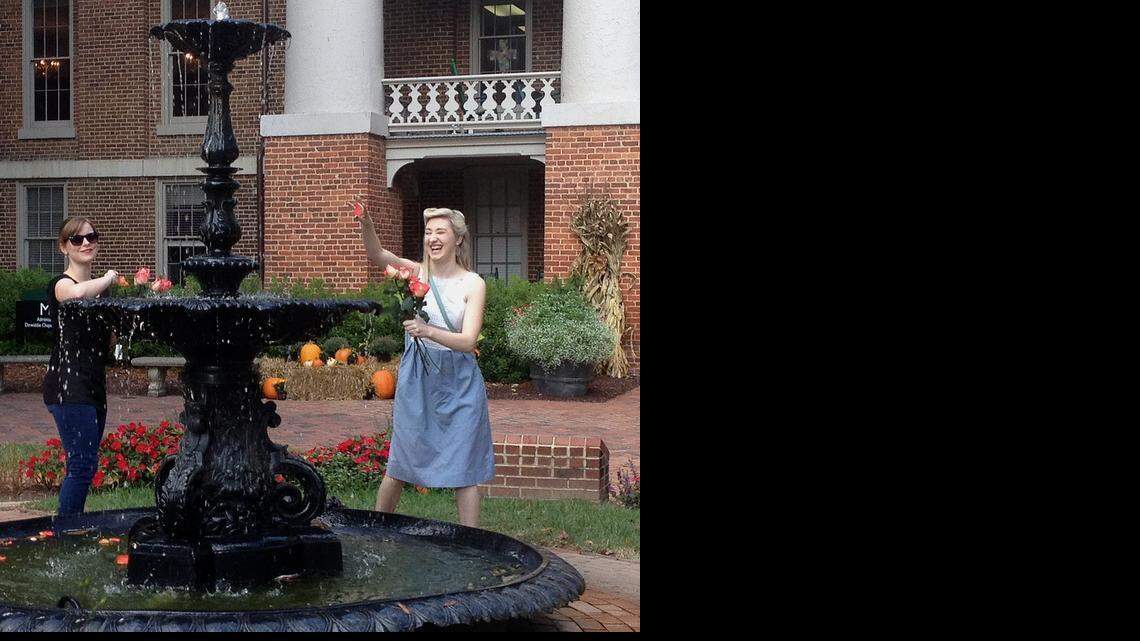
She oversaw the transformation of Peace College, a former women’s college, to the renamed William Peace University. The decision to admit men as full-time students in 2012 sparked a furor among alumnae and some students, who staged protests outside the campus gates. On Monday, some of Townsley’s critics gathered outside the main building to throw roses in the fountain and celebrate Peace traditions.
“I think this is the best thing that’s happened to the institution in a decade,” said Maigan Kennedy, a former student who left WPU last year in her senior year. “I can’t wait to see the positive changes that are made after her departure.”
Townsley’s tenure was marked by growth in the student body, but also by a substantial downsizing of the full-time faculty. Several academic departments were dropped, and faculty buyouts and staff turnover came in waves. New market-driven programs were added in video game design and musical theater.
In 2013, the university invested nearly two-thirds of its $33 million endowment to buy the nearby Seaboard Station retail center, which drew questions from donors about what they viewed as a financial gamble.
Faculty complaints
And earlier this year, a majority of faculty sent an eight-page letter to trustees declaring no confidence in Townsley. The letter said the new Peace was “driven by mediocrity, suspicion and fear, a university desperate for tuition dollars but entirely unwilling to provide students with the support and encouragement they need to complete their degrees.”
Professors cited a number of deficiencies, including lax handling of student transcripts, declining graduation rates, and campus buildings with malfunctioning heat and spider infestations.
Throughout, Townsley had the support of trustees despite a drumbeat of criticism. Her total compensation was $452,887 in 2012-13, according to the university’s tax documents.
Trustee Chairwoman Beth Chadwick Cherry said in a statement Monday that it was Townsley’s decision to leave.
“We are extremely pleased with the job she has done leading William Peace University, and we look forward to working with her over the next eight months as she continues to build an even stronger institution,” Cherry said. “The school is far better positioned today and is a better place from her service.”
Townsley cited specific improvements Monday, including an updated curriculum, upgraded technology, new labs and sprinkler systems, and a renovated dining hall. Men’s NCAA Division III sports were added.
‘Great investment’
The acquisition of Seaboard, she said, was a smart financial move. The retail space is 100 percent occupied, she added.
“Seaboard really gives us an alternative revenue source for the long term, which is extremely helpful to institutions now,” Townsley said. “That has turned out to be a really great investment.”
The school lowered tuition when it began to admit male students. Enrollment has jumped 47 percent since 2010, according to figures released Monday by the university. The growth meant that some students moved to Wolf Creek Apartments, an off-campus complex. The male population has steadily increased, Townsley said, from one-third of the 2012 class to 37 percent this year.
Julie Pierce, a first-year student from Goldsboro, considered Salem College, an all-female school, but chose WPU in the end. “I think it was a smart choice to admit men to increase our financial standing and support,” she said. “Plus the sports are great. It gives us a little more oomph to our student life.”
‘I love her for it’
Nathan Oates, a first-year student from Fuquay-Varina, said the university’s small and nurturing setting was exactly what he wanted. Though Townsley has been on the receiving end of anger about the coed change, Oates said: “I love her for it.”
Others are happy about the upcoming change in leadership at William Peace.
“We alumnae have been waiting for this announcement for a long time,” said Miriam Dorsey of Raleigh, who was part of a group set on preserving the Peace College legacy. “During her tenure, Debra Townsley has managed to alienate the staff, faculty, students, alumnae and contributors. No one can run a university that way. We alumnae look forward to working with the Board of Trustees in healing the constituency of the school because Peace has been so important to us through the years.”
Townsley likes to point out that all higher education has changed through the years. Peace alumnae tell her of the days when they had to wear hats, gloves and dresses to chapel. They had house mothers and curfews.
“Your memories can never be taken away,” she said. “For every class the memories are their memories, but that doesn’t change what an institution did for you, it doesn’t change your network of friends from your college. It doesn’t change the school. It just is keeping up with the times. ...
“Things are always changing. That’s how an organization stays successful. It adapts to the needs and wants of its students today. But that never changes an alumna’s experience from when she was here. It just means a school is ensuring its survival for the long run.”
This story was originally published October 13, 2014 at 12:59 PM with the headline "William Peace University president to retire after tumultuous tenure."