
McCrory says he wants plan to help NC cities patch budgets
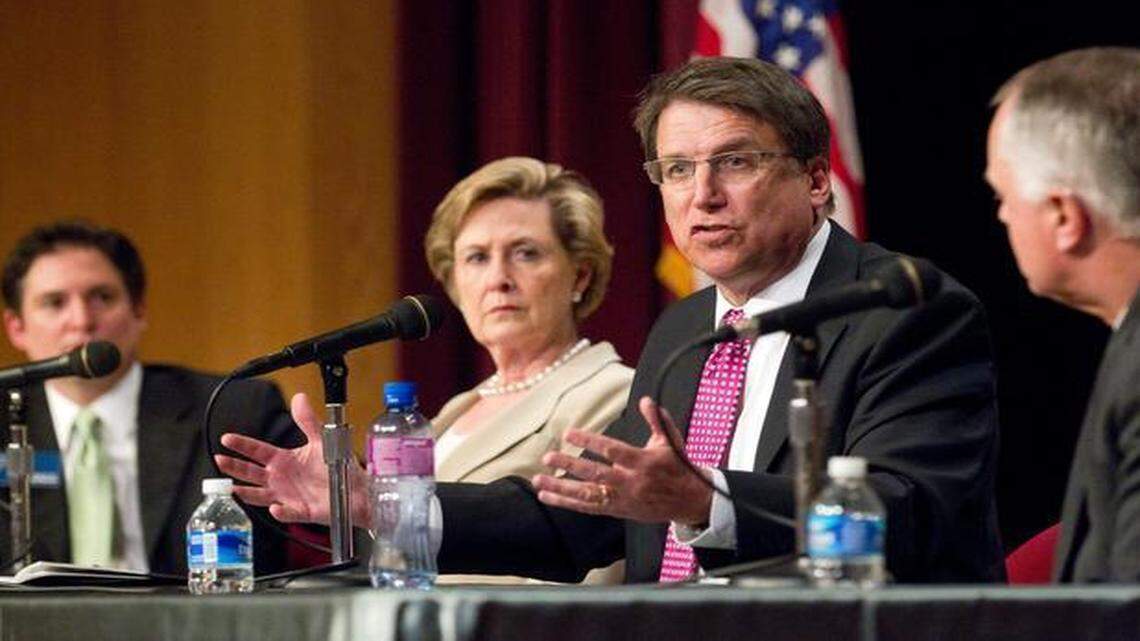
Gov. Pat McCrory addressed a range of tensions among state legislators and local officials on Wednesday afternoon, and the governor – a former mayor – said he was urging elected officials to “stay within our lanes.”
The governor seemed to directly speak to two bills now under consideration in the legislature that would alter how voters choose county commissioners in Wake County and City Council members in Greensboro. Both bills are backed by Republicans with the expectation they would help Republicans in future elections.
“We have some legislators who also want to be mayor and city councilmen...,” McCrory told an auditorium full of mayors and city council members from across the state at the N.C. Museum of History. “...If someone wants to change the form of government in one of your cities, then go run for city council, for mayor.”
McCrory, a Republican, won loud applause.
The governor addressed more than 100 members of the N.C. League of Municipalities who convened in Raleigh on Wednesday in a coordinated annual effort to highlight concerns of local governments.
Many officials in cities are still trying to patch holes in their budgets that are a result of changes made by the state legislature last year. They’re also watching closely for any impact from a plan being developed to send more sales-tax revenue to rural areas.
McCrory said he “wholeheartedly” rejected the idea of the sales-tax bill.
A separate change last year cut cities’ ability to levy a privilege tax on companies. It has left a collective budget gap of $62 million for the municipalities this year, according to legislative staff.
Municipal officials are beginning to draw up budgets that have to be approved in June. Uncertainty over future revenues makes that hard.
“It’s becoming more and more difficult for us to plan our budgets when we don’t know what’s coming around the corner,” said Huntersville Mayor Jill Swain, who chairs the N.C. Metro Mayors Coalition.
Oxford Mayor Jackie Sergent, a registered Democrat, argued that the old system allowed the city of 8,500 to draw a higher amount of revenue from its Walmart. Her town stands to lose about $200,000 per year without the taxes.
“I beg you to give these kind of considerations in the discussion,” she said.
McCrory promised to try to replace the lost privilege tax revenue. He said he was working on ideas.
It’s not clear how far that might go in the legislature. House Speaker Tim Moore and Senate leader Phil Berger also met with local officials, and didn’t promise any replacement of the privilege tax.
“We want to hear your perspective, but we want you to understand that there are in some instances other perspectives,” Berger said.
Any makeup money would probably come in a larger bill dealing with taxes, Moore said. The body’s finance committee chairs are talking about the idea, he said.
“I can’t say where the caucus, where the House stands on it right now,” Moore said.
Both he and Berger urged local leaders to lobby their local legislators.
The divergence of urban and rural counties also was a topic of discussion. Roughly half of the state’s counties are shrinking, even as the urban areas boom.
“We’ve been lost,” said Larry Summers, a commissioner from the town of Oriental in Pamlico County, lamenting his area’s lack of transportation funding and highways.
At one point, Moore said that the proposed reallocation of sales tax dollars to rural areas could help those smaller towns.
“I do not know where the caucus stands, because that’s one of those issues that there are winners and losers. My area may very well benefit, because I represent a rural district,” the speaker said.
Mayor Dan Wilcox, a Carolina Beach Republican, says he likes some of the changes that have come with Republicans in charge – but only some.
“We’re getting more time with them,” he said. But, he added: “We’re getting less funding.”
Jim Morrill of the Charlotte Observer contributed.
Kenney: 919-829-4870;
Twitter: @KenneyNC
This story was originally published March 18, 2015 at 7:30 PM with the headline "McCrory says he wants plan to help NC cities patch budgets."