
NC Commerce Secretary Decker heads to Japan amid uncertainty on job recruitment
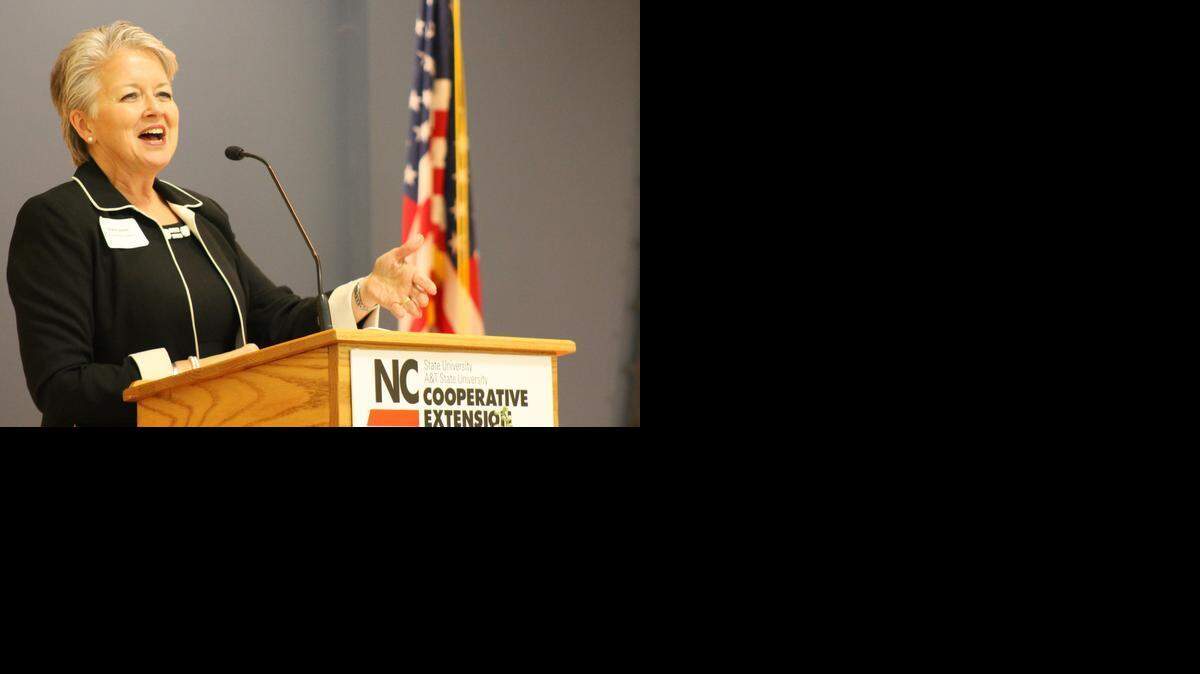
North Carolina Commerce Secretary Sharon Decker is leading a delegation of North Carolinians in Japan this week, with an emphasis on recruiting visits with companies she hopes will add jobs in the state.
It’s Decker’s first overseas trade mission and it begins days after Gov. Pat McCrory rejected calls from a range of interests who wanted him to convene a special session of the legislature to focus on shoring up economic incentive offerings.
One of the state’s main grant-based incentive pools, the Job Development Investment Grants program, or JDIG, is running out of its $22.5 million allocation that is available through June. And lawmakers refused to create a separate $20 million “closing fund” at the end of this year’s legislative session. That fund would have been controlled by Decker for landing deals that bring at least 500 jobs in poorer counties and more than 1,200 jobs in the most prosperous areas of the state.
McCrory said late Friday that there hasn’t been agreement on making any further changes but that he would bring lawmakers back to Raleigh “if a major job recruitment effort develops and it requires legislative support.”
Decker’s visit to Japan coincides with a conference in Tokyo later this week among leaders from the southeastern U.S. and Japanese business and government officials. Decker is the highest-ranking government official from North Carolina on this week’s visit.
She said in an interview the incentives uncertainty “absolutely” isn’t helpful as she recruits Japanese companies in direct competition with neighboring and other southeast states. Governors in those states have more authority to award incentives than is allowed under North Carolina law.
Decker said the circumstance is not ideal but “it’s not going to deter our effort.”
“I would rather have been going knowing I had all of my tools in place and we were aggressively moving forward,” she said. “I don’t have all my tools in place, but I’m still aggressively moving forward. I know that I’ve got the support of the legislature for economic development and if push comes to shove, we will get support.”
Decker said North Carolina remains a great “product” and still can compete against all others.
A growing partnership
Japan is an important trading partner with North Carolina, and Decker’s agenda reflects it. She plans to conduct at least four economic development meetings with undisclosed companies as well as meet with importers and exporters of agriculture products. On Monday, a national holiday in Japan, she plans to tour retail operations that trade in North Carolina goods.
Decker said she has multiple active recruitment efforts underway and she expects to be able one day to point back to this week’s trip as an important part of landing jobs.
Japanese business interests have shown an increasing interest in North Carolina, according to the Office of the Consulate General of Japan in Atlanta. Examples:
The level of North Carolina’s export trade with Japan trails only Canada, Mexico and China. North Carolina companies exported about $1.6 billion in goods to Japan last year, much of it in chemicals, food, tobacco, machinery, and computers and other electronics, according to the U.S. Department of Commerce.
Imports from Japan to North Carolina were about $2.7 billion in 2013, most of that in machinery, vehicles and chemicals.
The Japanese Consul General in Atlanta, Kazuo Sunaga, said in an interview that there is more opportunity for growth in trade between Japan and North Carolina.
His region also includes Alabama, Georgia, South Carolina and Virginia.
“All these five states are very active in inviting the foreign investment, including Japanese manufacturers,” Sunaga said. “One of the things that North Carolina has as an advantage is you have good universities and research institutes, particularly in the Research Triangle and in Charlotte.”
He said Japanese companies especially want good engineers from top schools and that North Carolina is viewed as a leader in high-tech industries.
“They want to invest in North Carolina,” he said. “Japanese companies are always looking at and comparing the many parameters when making decisions – the price of land, the price of labor, incentives, proximity to markets and proximity to American companies in research.”
He said companies that seek only lower labor costs generally choose other states in the Southeast.
Three key areas
Decker said her focus in Japan is especially on the auto industry, aviation and agriculture, which she said are important for making jobs gains in North Carolina.
“Those three are critically important for our growth and Japan is an important piece of that, truly important,” she said.
She said her scheduled meetings are with “active” and “future” jobs projects.
Decker said some meetings will be with “existing companies already invested in the state that have significant potential to grow and others are with companies we’d like to get in North Carolina.”
“The whole visit is focused around active recruiting – and relationship building that would lead to recruitment,” Decker said.
She declined to name specific companies.
This story was originally published September 14, 2014 at 4:46 PM with the headline "NC Commerce Secretary Decker heads to Japan amid uncertainty on job recruitment."