
NC Senate revenue change could prompt local sales tax increases
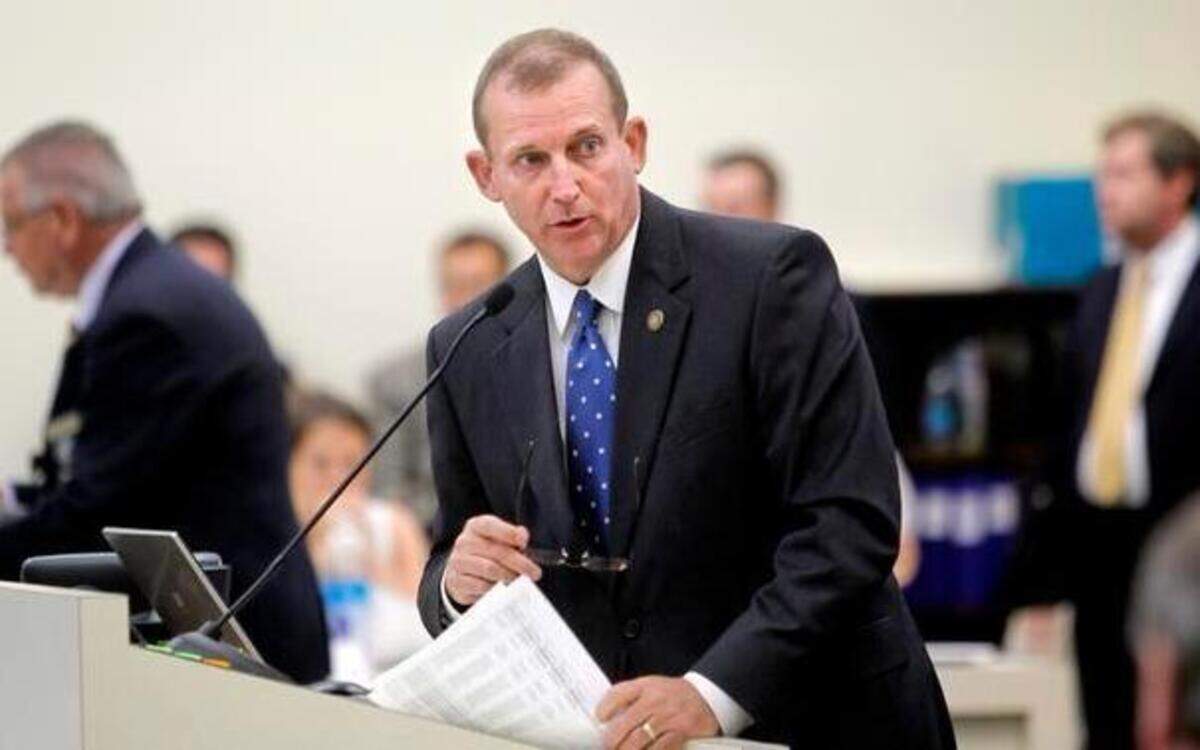
A Senate sales tax revenue redistribution plan made public this week would cost Durham and Wake counties millions by the summer of 2019, but county commissioners would get a new tool to make up the difference: They could raise their sales tax rate without voter approval.
Senate Bill 369 has support from Republican leaders and would change how the state parcels out a portion of taxes collected when people buy clothing, building materials and other goods. Instead of basing each county’s share largely on where sales occur – the current system – the bill would change to a population-based distribution. Shopping destinations such as Wake, Durham and Mecklenburg counties would get less revenue, while rural counties would see big gains.
The bill’s sponsor, Senate Majority Leader Harry Brown of Jacksonville, has said the proposal would address the problem of “two North Carolinas – one that is booming and one that is busting.”
County commissioners in Wake and Durham criticized the plan Tuesday, saying it would force them to raise taxes or cut services. “It will impact the budget, and it’s something for us to really be concerned about,” Durham County commissioners Chairman Michael Page said. “They don’t realize the pressure they’re putting on counties.”
Among Triangle counties, Durham would be hit hardest, with revenues dropping 9.2 percent from fiscal year 2013-2014 to fiscal year 2018-2019, when the change is fully implemented. That means Durham would receive $4.22 million less than it took in last year – while the county is expected to see continued growth in residents and sales.
Senate Majority Leader Harry Brown’s proposal would leave Durham commissioners with a choice: cut government spending or raise either the property tax or sales tax. Under the legislation, county commissioners could enact a quarter-cent sales tax increase without a ballot referendum – as long as voters haven’t defeated a tax hike proposal there in the past five years. Brown says it’s an option to make up for lost revenue.
“When county commissioners are faced with possibly raising property taxes …, I think they should have the ability to (raise sales taxes),” he said Tuesday.
County commissioners aren’t thrilled by that choice. “I would just prefer not to be put in a situation to have to raise sales tax when right now we’re happy with the way things are,” Wake County Commissioner Sig Hutchinson said.
That provision of Brown’s bill was also criticized by the conservative group Americans For Prosperity, which doesn’t want tax increases to be easier.
“Voters should have a choice in their own taxation when it is practical,” AFP state director Donald Bryson said. “Historically, referendums have worked in North Carolina, and there is no reason to oppose that method.”
The Senate proposal would eliminate a process that allows residents to petition for the repeal of a local sales tax. Only the extra quarter-cent could be repealed through a petition, because the rest would be converted to a state-level tax. Bryson says that’s bad policy. “This bill takes away that power from voters, and that is a frightening thing,” he said.
A negative effect
The full impact of the Senate proposal on county and city budgets is unclear. Brown’s office said figures aren’t yet available that compare future revenues under current law to projections under the bill. Brown also said he won’t have projected revenue changes for cities and towns until later this week.
Data distributed by the bill sponsors compares sales tax distributions last year – fiscal year 2013-14 – to projected totals for fiscal year 2018-19.
The projection assumes the state’s overall sales tax collections will increase by 3.5 percent each year. Projected county revenues for 2018-19 under the current law aren’t included.
The Senate’s projections show revenues would be flat for Wake County over that five-year span. Under current law, the county would have been expected to see revenue growth.
By fiscal year 2018-19, under the 3.5 percent growth rate, the proposed plan would leave Wake County about $27 million short of the status quo for that year.
But given Wake’s rapid growth, assistant county manager Johnna Rogers says its revenues typically grow faster than the statewide rate. Wake’s growth rate has been about 2 to 3 percentage points higher.
“Flatlining really has a negative impact on us,” Hutchinson said.
Most cities would likely see their share grow or shrink proportionately with their county – as long as the county is distributing revenues based on population. Current law allows county commissioners to choose how they calculate the share of sales tax revenue that goes to cities and towns. They can base it on population or on property tax collections.
The Senate bill would end that choice and mandate population-based distribution. That could hurt beach towns that have a low year-round population but a large amount of expensive real estate. Many of North Carolina’s beach towns are located in counties that would get less revenue under the Senate plan.
Brown has said he expected the bill would see bipartisan support and bipartisan opposition. So far though, only one Democrat has signed on as a co-sponsor: Sen. Ben Clark of Hoke County, where sales tax revenues would more than double. The other 11 co-sponsors are Republicans whose districts would gain revenue under the plan.
The bill will go to the Senate Finance Committee in the coming weeks. Wake County Commissioner John Burns said he hopes county leaders will get a say as the plan moves forward.
“The urban-rural divide needs to be crossed, not exacerbated,” he said. “I’m looking forward to working with the legislature in resolving the issue.”
Campbell: 919-829-4698;
Twitter: @RaleighReporter
This story was originally published March 24, 2015 at 8:22 PM with the headline "NC Senate revenue change could prompt local sales tax increases."