
A firm development for crabmeat
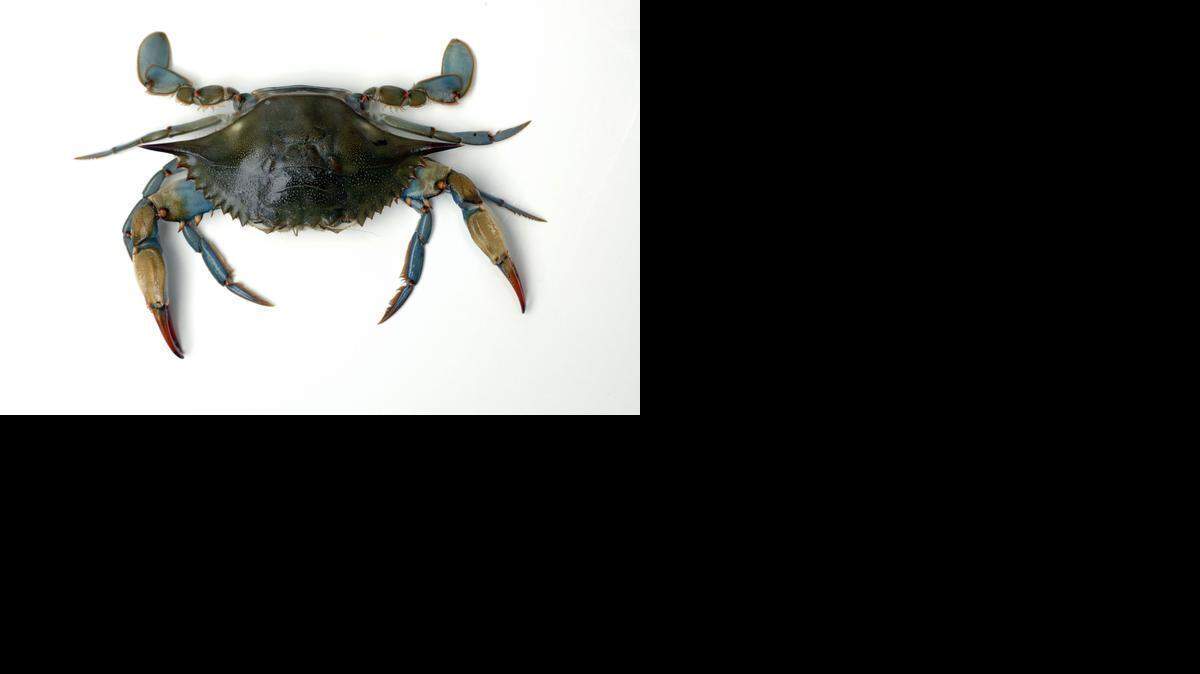
Growing up on Roanoke Island, Gabe Dough was familiar with the delightful taste of the succulent blue crabs caught all along the Outer Banks.
But he also knew that unless he was willing to take a crab pot out to Albemarle Sound, a meal of the tasty shellfish would take a big bite out of his food budget. The high cost – nowadays more than $30 a pound for steamed lump crab – is largely related to the meat’s delicacy. The meat must be cooked and then extracted by hand in a labor-intensive process that drives up costs and limits its use to a few high profile dishes.
As a geology major at East Carolina University, Dough undertook a research project involving pheromones and remote sensing by blue crabs. His work along the coast helped him see the potential in developing a more efficient process that would allow coveted crabmeat to be used more widely.
“The crab’s physiology makes getting to the meat difficult,” Dough said. “Unlike other meat proteins that now may come fresh or frozen, that hasn’t happened for the crab because the exoskeleton prevents it from being butchered before it is cooked.”
In other words, raw crab isn’t as firm as other meats until it’s cooked; but cooking the entire in-shell crab makes it hard to extract the edible contents.
Thinking about this problem led him to the development of a new “cold-structured” product – branded as Succulent Crab – in which fresh crabmeat is processed to achieve a more rigid structure without changing the taste.
Here’s how it works: An enzyme is added to the extracted crabmeat that gives it a firmer consistency so it can be handled like other meats.
Instead of the current method of steaming a crab, then picking out the usable claw and shoulder meat, while the viscous parts of the crab are tossed away, Dough’s process allows all the crabmeat to be employed in a variety of ways, similar to scallops or fish.
More affordable, accessible
Marty Hackney, director of the East Carolina University Entrepreneurial Initiative, describes Dough as “a smart Eastern North Carolinian who is taking resources from Eastern North Carolina, maximizing them and turning it into a business model to share with the world.”
Hackney met Dough when he came to ECU to work on his master of business administration degree and she talked with Dough about his interest in developing his idea into a business.
By 2006, his idea was ready, but applying for patents and seeking additional funding slowed everything down. A loan for $30,000 came through from the N.C. Biotechnology Center in 2010 and patents for his process were finally awarded in 2012, Dough said.
With everything now in place, his company, Shure Foods, based in Greenville, has begun marketing the new product to chefs and commercial kitchens.
Shure Foods corporate chef Freddy Ortega demonstrates uses for Succulent Crab on a video on the company website (www.shurefoods.com).
He calls the product “very, very exciting” for chefs who will now be able to use crabmeat more freely, because of the lower cost, and in more creative ways, such as in soups, on pizzas or as a garnish.
“It gives you something you haven’t been able to get before, which is the flavor being able to percolate with other flavors,” Ortega said.
Hackney said the benefits of Dough’s product extend well beyond the kitchen by bolstering one of the state’s largest seafood markets. More than 30 million pounds of blue crabs are harvested here annually, largely from the Pamlico and Albemarle sounds.
“This means that more of the population will find crab affordable and accessible, but it will not stretch the resources or harm the environment,” she said.
This story was originally published March 29, 2015 at 3:00 PM.