
Forget it, Hawley: AI data centers will go orbital if they have to | Opinion
When Festus, Missouri, ousted half its incumbent City Council members last week, $6 billion were at stake, as suddenly plans for a new data center to be built for an unknown technology company were in doubt. Big money and big time politicians were already involved — tens of thousands of dollars had been spent on the campaign by unions set to benefit from construction and Gov. Mike Kehoe had already made calls to back the artificial intelligence infrastructure project.
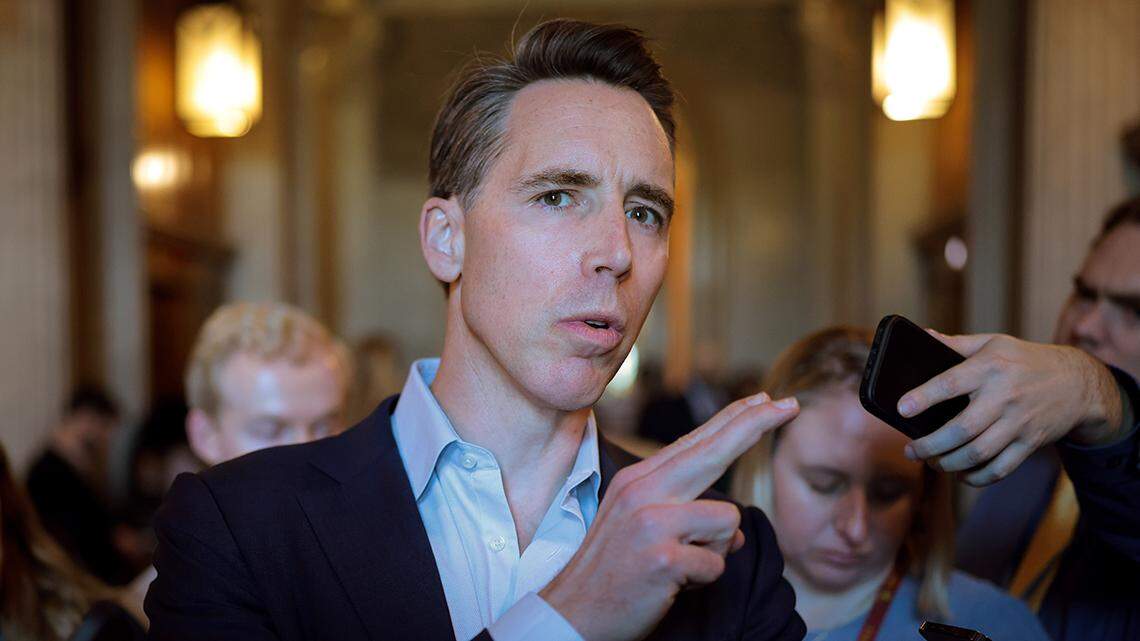
Now Sen. Josh Hawley is weighing in on X. “Working people are trying to send a message — protect us, not the corporations,” he wrote Tuesday, as the little town south of St. Louis started to make waves with a Politico article in Washington, D.C. Such sentiments about the hulking, ugly AI engines are popping up all over the country from California to Maine, including in elections around Kansas City.
What’s at stake is a new technology that is moving so fast and threatens to change so much fueled by an endless supply of Wall Street and Silicon Valley cash. It will reshape everything, from how our neighborhoods and cities look and are powered, to how we work and our kids learn, to relations among nations, the velocity of war and the frontiers of science, with the capability to hurt and heal in equal measure.
What spurred the election in a small Missouri town and has grabbed attention in financial, technological and political capitals around the world is fear. Festus has it. Kehoe is fighting it. Hawley plans to ride it.
The future is here in a way that will make the winds of industrialization, globalization and the tech revolution seem like the soft breeze foreshadowing a prairie thunderstorm.
I get the fear. AI is coming for me as surely as it is the next guy.
And there is little reason to trust the tech giants who are thrusting this upon us. Just look at the damage that smartphones and social media have done before most Americans could even wake up to the threat aimed at their kids.
Let’s talk about responsibility. AI companies across the board unleashed their “product” upon the world before it (they?) could even tell the difference between solid realities and digital fantasies. If their AI will lie to us, which of the other Ten Commandments is it able to break? Indeed, there are already lawsuits over AI talking teens into killing themselves, complete with advice on how.
For all the depth with which I feel the fear of what the AI revolution means for me and my family, there is one thing I’ve learned since I covered the early days of the internet and the much-feared Y2K glitch. Eventually, I just had to sit there on the National Mall the night of Dec. 31, 1999, and wait to see if the sky fell. It didn’t.
The future is coming whether we like it or not.
The trick will be to get as many people on board with the opportunities of AI as quickly as possible. For those who are overcome by the vastness and velocity of the change, we’ll have to work together to pick them up off the floor and put them back on their feet with as little damage as possible.
As we move through this, we have to remember that for all that past revolutions reduced to rubble, when the earthquake passed, life was immeasurably better.
Think of the billions of people that industrialization, capitalism and globalization have rescued from abject poverty around the globe over the last two centuries.
Remember the fact that you can go out and buy a global variety of food and drink within a half hour of your house, and for a day’s wage assemble a feast that no king or emperor could have achieved hundreds of years ago.
Pat your pocket and consider that you have access to more information in your pants than Einstein had in all the libraries of his day combined. You have more computing power than the first men to walk on the moon had in their spaceship. You can communicate with more people, more quickly, than the Pentagon could in coordinating American armies at the height of World War II.
If you want to get on board with Josh Hawley and the angry voters of Festus, go ahead. It might make you feel better. You might stop a data center or two.
But remember this: The giant companies and the billionaires who have brought us to the brink of the age of AI are already working through the plans and technology to put their data centers with all the power they need in orbit. They don’t need Festus or Kansas City.
With or without us, their future is coming. Instead of fighting to keep the past, we should work to make sure we have a place in the future.
David Mastio is a columnist for The Kansas City Star and McClatchy.
This story was originally published April 15, 2026 at 12:52 PM with the headline "Forget it, Hawley: AI data centers will go orbital if they have to | Opinion."
