
From US perspective, Juncker good choice to lead EU
Winston Churchill said, “To each there comes in their lifetime a special moment when they are figuratively tapped on the shoulder and offered the chance to do a very special thing, unique to them and fitted to their talents.”
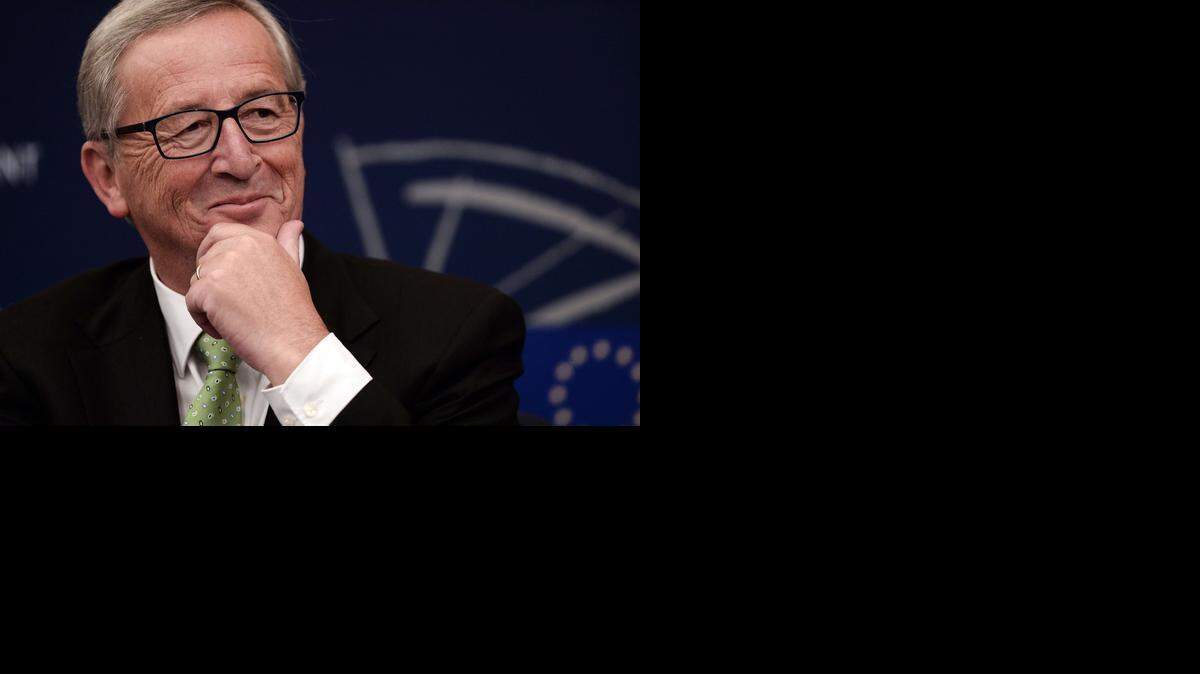
The “special moment” of Churchill’s ascent to prime minister in the early, critical days of World War II could just as well apply to the selection this summer of former Luxembourg Prime Minister Jean Claude Juncker to become president of the EU Commission, the executive of the most powerful and influential branch of the European Union.
The commission governs the EU. It has the authority to establish EU priorities, propose legislation, set and implement policy, enforce EU law and represent the EU outside of Europe negotiating agreements with trading partners. These responsibilities are carried out by the president through a Cabinet of 27 hand-picked commissioners who head up the commission’s agencies during the president’s five-year term.
The United States should welcome the change in EU leadership. The commission’s U.S. portfolio will be an important part of Juncker’s priorities from the start. As commission president, Juncker inherits three key U.S. files for which resolution in the next 12 to 18 months is imperative: cooperation on privacy law compliance under current and proposed EU rules, ongoing trade negotiations and the effect of EU policy on taxing the digital economy, a sector dominated in Europe by Silicon Valley companies.
A Juncker presidency will be good for U.S.-EU relations because Juncker brings unprecedented competency to govern the EU and its relations to its trading partners, a strong leadership style and Atlanticist credentials nurtured in his home country, Luxembourg.
Juncker’s European credentials also are unmatched. He was selected president in the first instance on the basis of his ability to lead the commission on intra-EU issues over the next five years. As Europeans well know, Juncker is a certified Europhile. He served as prime minister of Luxembourg, one of the founding members of the EU, during the greatest period of change in the European Union (1996-2013). His was a significant voice for greater EU political and economic union during his premiership, including the adaption of the euro as the common currency and the expansion of the EU over that time from nine to 28 member states.
Juncker is an international leader with cultural intelligence. He is fluent in English, German and French. He knows and relishes the different cultural political styles of his peers in Europe. Juncker has had other leadership roles related to his qualifications to lead the EU. As president of the eurozone group for two four-year terms, he coordinated monetary policy with the finance ministers of the eurozone countries. Luxembourg was a nonpermanent member of the U.N. Security Council under his premiership.
He is known in Europe for his ability to speak intelligently and without notes on topics varying from European monetary policy to solutions for youth unemployment in his home country. Like other European leaders of his generation (and to his credit), he is a private man and shuns publicity. He seems to thrive on working in small groups of experts and poring over the details of economic reports. He combines this curiosity with a dry wit to disarm friends and foes alike. Yet in addition to these soft skills, he has a steely disposition he does not hesitate to bare when he considers it helpful to carry out his agenda. His experience as the leader of Luxembourg, a small but significant country, has prepared him well to deal with a world of giants.
Less well-known outside of Luxembourg are Juncker’s Atlanticist credentials. Juncker’s Luxembourg, longer than any other U.S. ally on the European continent, has maintained a consistently stable relationship to the U.S. government.
Today, Luxembourg is the last of the Western European countries where the national government remains actively involved in commemorating the sacrifice of the United States in its liberation in World War II. It generates a lot of goodwill between citizens of both countries. The bilateral cultural ties forged by a massive 19th immigration of Luxembourgers to the U.S. Midwest are regularly celebrated in both countries. It is no wonder that U.S. executives who come to work for U.S. groups in Luxembourg are pleasantly surprised to discover this genuine cultural affinity.
Juncker’s presidency is timed nicely with the 2016 U.S. election cycle, meaning 2015 will be a good year to progress the U.S. issues on his agenda. The EU Commission presidency is indeed a special moment in Juncker’s impressive career. Churchill would have envied Juncker the honor of leading Europe and the opportunity for improving relations with the U.S. now.
Rick Minor, a lawyer and native of Rocky Mount, was an adviser to the Luxembourg government when Jean Claude Juncker was prime minister. Juncker’s five-year term as EU President begins Nov. 1.
This story was originally published October 24, 2014 at 6:20 PM with the headline "From US perspective, Juncker good choice to lead EU ."