
‘Must teach more’ bill an attack on UNC professors
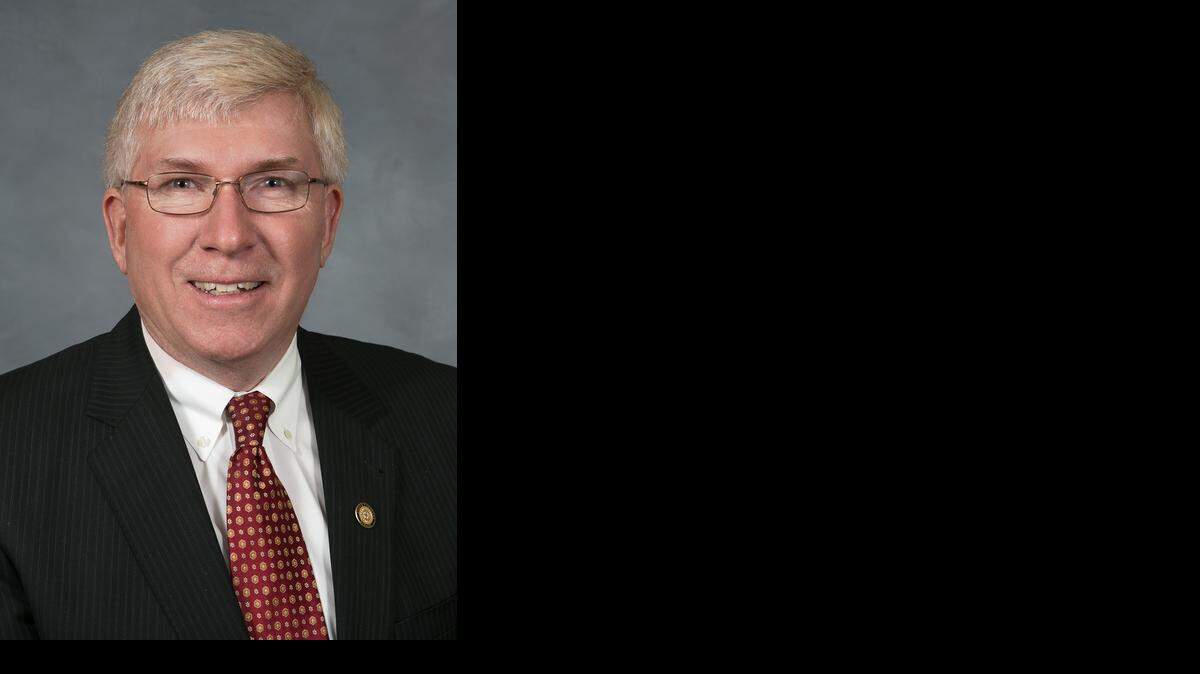
Do college professors teach too little? State Sen. Tom McInnis believes the answer is yes. He recently filed Senate Bill 593, which would require all professors in the UNC system to “teach a minimum of eight courses per academic year.” Its title claims that it would “improve the quality of instruction” at public universities.
The bill would, in fact, have exactly the opposite effect. True, some professors at UNC schools already teach eight courses a year. But the problem lies not only in the bill’s specific recommendations, but also in its underlying assumption: that college professors “really” work only when they’re in the classroom. This way of thinking threatens the quality of higher education that has long been available to North Carolinians – at least those who can’t afford private or out-of-state tuition. What McInnis is hawking as an improvement is, in truth, an attempt to dismantle one of our state’s most important public services.
Professors are valuable to society because they have something to teach. Compared with other professions that demand advanced degrees (earning a Ph.D., which most academic jobs require, can take seven or more years), professors are not highly paid. What draws them to their profession are a passion for learning and a desire to pass their knowledge down to new generations. For students to learn from professors inside the classroom, professors need to keep learning outside the classroom. Knowledge isn’t a dead body of facts; it is very much alive, and only constant nourishment can sustain it.
Practically speaking, professors need time to prepare engaging lectures and stimulating discussions. They need to master new topics, keep abreast of the latest developments in their fields and discover new teaching methods. The fund of knowledge requires more than an initial investment. To avoid running dry, it must be regularly replenished.
In addition to needing time to keep their teaching fresh, professors must also be able to engage in research. Some question the value of scholarly work lacking the immediate social impact provided by, say, engineering or medicine. Yet not all the goods we value as a society can be quantified. We build art museums, preserve historic buildings and keep genealogical records because their worth is immeasurable. Professors devote themselves to studying great works of literature, long vanished societies and perplexing mathematical problems for similar reasons. Without universities, such pursuits, which reflect a profoundly human desire for knowledge that can’t be justified by the bottom line, would soon wither away and perish.
At the same time, scholarly research helps us to understand – and think critically about –
Just as important, research can produce the kind of critical perspectives on society that are vital to a democracy’s health. McInnis and his friends in Raleigh would do well to recall the role played by professors in shaping modern conservatism: What would that movement be without the Universities of Vienna and Chicago, which nurtured thinkers like Friedrich Hayek and Milton Friedman?
Furthermore, when professors are not teaching students in the classroom, they’re often teaching them outside the classroom. Students need help with assignments, advice on schedules and chances to catch up when they fall behind. More than anything, students have to be able to talk to their professors: The epiphanies that occur in informal conversations can shape a career, even a life.
The existence of public institutions like UNC cannot be taken for granted. The quality and reputation of our system are directly tied to the research opportunities it provides. Were SB593 ever passed, it wouldn’t result in top scholars teaching more. It would trigger a mass exodus of respected professors from our state. Would this “improve the quality of instruction” in North Carolina?
After gutting the state’s public school system, legislators are turning their sights to the state’s public universities. They aren’t just attacking professors; they’re also threatening the kind of opportunities that only a public university can provide our residents. North Carolinians must tell their elected representatives that they won’t allow short-sighted and misleading arguments to cheat them out of the higher education they deserve.
Dr. Michael C. Behrent, an associate professor at Appalachian State University, writes on behalf of the N.C. State Conference of the Association of American University Professors.
This story was originally published April 6, 2015 at 4:44 PM with the headline "‘Must teach more’ bill an attack on UNC professors."