
NCAA President Mark Emmert, UNC AD Bubba Cunningham differ on Wainstein report
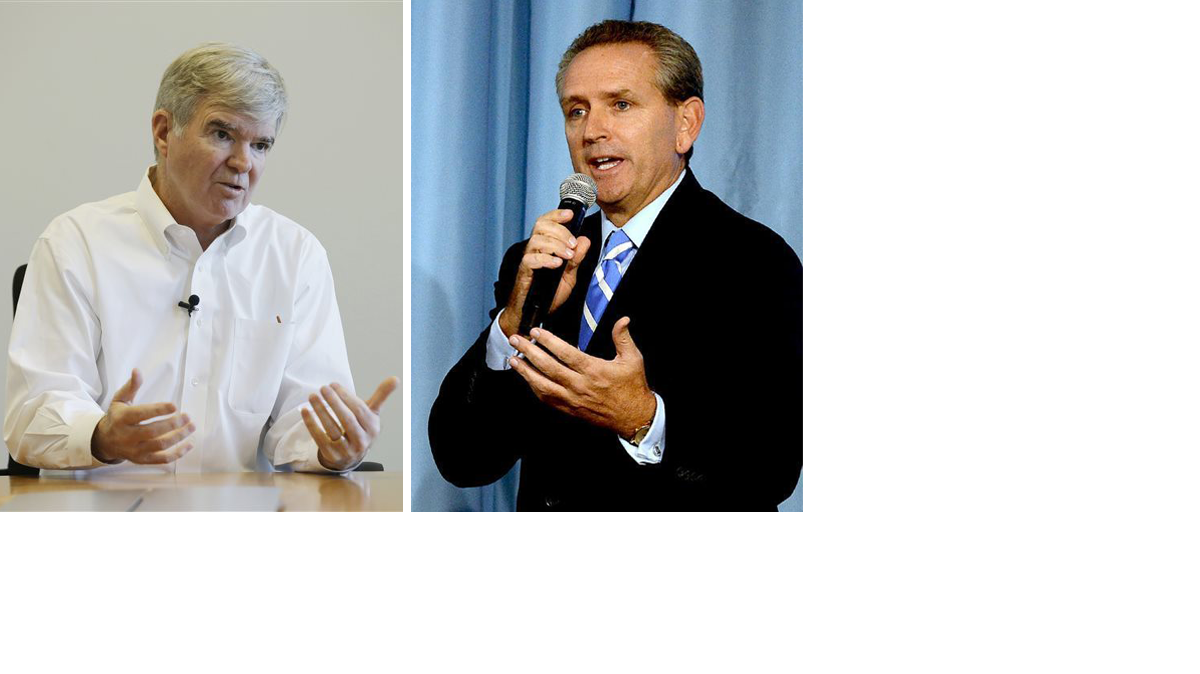
NCAA President Mark Emmert said this week that the conclusions of the Wainstein investigation at North Carolina were “deeply troubling.” Days earlier, Bubba Cunningham, the UNC athletics director, offered a softer stance.
Cunningham in an interview Friday on 99.9 The Fan said a bit of time had helped add some perspective – for him, at least – on the findings by Kenneth Wainstein, a former U.S. Justice Department official, which concluded that over a span of nearly 20 years, hundreds of athletes were directed to bogus paper classes, resulting in inflated grades, in the African and Afro-American Studies Department at UNC.
“It would be the equivalent of three student-athletes per team per year over that period of time,” Cunningham said, referencing the 18-year period in which athletes and nonathletes alike used bogus classes to boost their GPAs. “So as bad as it was, as long as it was, it’s really starting to sink in that there was maybe one, two, three classes for somebody – so that might be six or nine hours out of 120 that it takes to graduate. So it’s shocking, but as you have a little more time to look at it, it’s not quite as bad as I was thinking it was 48 hours ago.”
Emmert disagreed, it seems, based on his comments earlier this week during an interview with The Associated Press. Emmert has received plenty of criticism during his tenure for, among other things, the NCAA’s difficult-to-define enforcement process. He has received criticism, too, for the NCAA’s inaction on the UNC academic fraud case, which has been publicized for years.
The NCAA reopened its investigation into UNC in June. It had been waiting for the results of the Wainstein investigation, which is expected to play a significant role in the NCAA’s own investigation.
“Just based on the Wainstein report, this is a case that potentially strikes at the heart of what higher education is about,” Emmert told The Associated Press on Monday. “Universities are supposed to take absolutely most seriously the education of their students, right?
“I mean that’s why they exist; that’s their function in life. If the Wainstein report is accurate, then there was severe, severe compromising of all those issues, so it’s deeply troubling. It’s absolutely disturbing that we find ourselves here right now.”
A few days earlier, before Emmert’s interview with the AP, Cunningham said during his radio interview that while the paper class scheme was “bad,” it shouldn’t have tainted a student’s overall academic experience.
“If I go to any college in the country, and nine of my 120 hours were bad, that shouldn’t ruin my entire experience at the university,” he said. “I got shortchanged, maybe, but that doesn’t minimize the issue. The issue is bad, I get that. But the whole place isn’t going to fall down because of what occurred.”
One of the key questions for the NCAA to decide is how the bogus AFAM courses helped keep athletes eligible. If an athlete was eligible solely because of a grade in one of the paper classes, his eligibility could be called into question.
And in that scenario vacating victories – or even championships – could become a possibility.
“If those classes weren’t available, what would they have taken and what would the grade have been?” Cunningham said. “And that becomes a challenging question, in hindsight.”
Cunningham said he had “a lot more questions today than I ever have.” Some of them could be related to how the NCAA might decide to act.
“I wouldn’t speculate on any sanctions,” he said. “There’s nothing new in the report that we haven’t seen before with a few exceptions – more than a few exceptions. The scope, certainly, would definitely be one.”
Emmert didn’t talk possible sanctions this week. Clearly, though, the Wainstein report provided him with a more damning picture of what happened at UNC than he was expecting.
“When you look at what we all know today, the Wainstein report, and just based upon that I look at these facts, like everyone, and I find them shocking,” Emmert said.
This story was originally published October 28, 2014 at 3:17 PM with the headline "NCAA President Mark Emmert, UNC AD Bubba Cunningham differ on Wainstein report."