
As ‘scary’ number of young people die from opioids, NCCU play seeks solutions, compassion
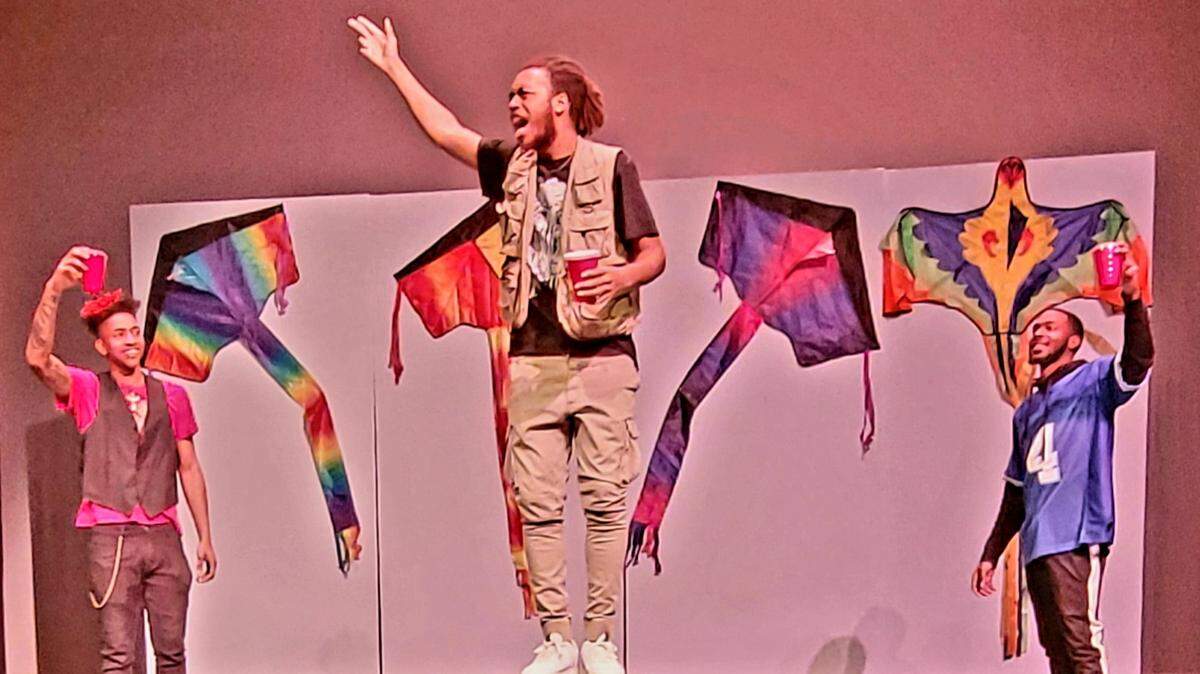
When contemplating her next theatrical project to direct, Stephanie Howard couldn’t help but notice the alarming rate that young North Carolinians are dying of opioid overdoses.
“The amount of people that were dying, that became very scary for me,” Howard said.
As chair of North Carolina Central University’s theatre department, she thought addressing the issue on stage would help create dialogue and spark tough conversations about a problem that shows no signs of slowing down.
This weekend, she will direct the debut of “Kites,” an ethnodrama by local playwright and artist Dasan Ahanu. In a blend of dance, music, PSAs, monologues and conversation, NCCU students will tell the stories of multiple individuals who develop life-altering addictions to opioids.
Admission to the three presentations Oct. 14-16 in Durham are free.
“Kites” is the latest in an ongoing partnership between NCCU and Duke’s Clinical Translational Science Institute (CTSI). For the past four years, CTSI has helped fund the creation of medical ethnodramas at NCCU, plays that seek to highlight the disparities in illness and healthcare among Black people.
“We have to have a hard conversation about our medical system,” Howard said.
Overdose deaths increased by 44% for Black people from 2019 to 2020, a higher increase than any other racial group, according to the Centers from Disease Control and Prevention. For young Black people, that divide widened even further in recent years. Overdose deaths in Black people ages 15-24 increased by 86% in 2020.
After previously tackling cervical cancer and the COVID-19 pandemic, this year, Howard’s team was honored to address the widespread issue of opioid addiction. She hopes the intimacy of this production will open doors of conversation about addiction in the community.
“The stage gives equity to everyone’s story being told,” Howard said.
At the conclusion of every performance, audience members will hear from panelists who have struggled with addiction themselves as well as experts in dealing with addiction. Resources for those battling substance use disorder will be available as well.
We spoke with Howard this week about the production. Here are excerpts.
Q: How do you interpret the play’s title “Kites?”
A: “The title ‘Kites’ is twofold. First, it’s about the highs that a drugs bring to the user. And second, it’s about the freedom a drug addict can get after handling their addiction.”
Q: What is your favorite moment in the show?
A: “I have a couple that I really love. I love the beginning of the show when we see all the characters, and they begin to tell snippets of their story.”
Q: What’s the one thing you hope audiences take away from this performance?
A: “Compassion. My hope is they get compassion and to be a non-judging person when dealing with someone with an addiction. It’s not the person talking to you always, it’s the drugs. So I want people to get compassion and a change in attitude to be non-judgmental.
“I just want you to be able to relate. That’s all I want. Sometimes it doesn’t dawn on you at the moment, but you don’t have to look far to find a connection, even if it’s second or third degree removed.”
Q: In researching this production and the effects of the opioid crisis on the Black community, what is your hope for how we continue to tackle this widespread issue?
A: “I hope we find a solution. I want us to be able to find resources and deal with people one on one.”
If you go
Oct. 14 and 15: Performances are at 6 p.m. at NCCU Farrison-Newton Communications Building, 501 E. Lawson St., Durham.
Oct. 16: A reception is at 4 p.m., followed by the play at 5 p.m. at Hayti Heritage Center, 804 Old Fayetteville St., Durham.
Addiction resources
Evidence-based programs are available nationwide through the Centers for Disease Control and Prevention or Shatterproof, an organization fighting the opioid crisis. Shatterproof offers a “quality treatment locator” designed to connect patients with care.
Local resources for those affected by substance use disorder are available through the N.C. Department of Health and Human Services or Alliance for Action through Wake County. More resources are slated to become available in Wake County in the coming years through the recent approval of funds from the National Opioid Settlement, the News & Observer reported.
Additionally, Orange County recently announced NarCan, a rapid overdose reversal medication, is now available 24 hours a day in a vending machine in the lobby of the Orange County Detention Center at 1200 U.S. 70 West in Hillsborough, the N&O previously reported.
This story was originally published October 13, 2022 at 2:06 PM.