NC public radio & TV stations lost federal funding last year. How are they now?

AI-generated summary reviewed by our newsroom.
- Congress rescinded $1.1 billion from CPB, which provided grants to public broadcasters.
- PBS North Carolina, WNCU and Blue Ridge Public Radio seek funding from donors.
- Broadcasters provide free, educational content, and help with public safety.
WNCU general manager Lackisha Sykes Freeman heard talk of cutting federal funding for public broadcasters every year. But in the end, elected representatives on both sides of the aisle would greenlight funding for television and radio stations like hers across the country.
That’s how it was for decades.
But last summer, Congress passed a rescission bill that clawed back $1.1 billion in funding for the Corporation for Public Broadcasting, the bygone nonprofit that awarded grants to public broadcasters nationwide for more than 50 years.
“No matter how much you brace for bad news, it’s still like, wow, it’s real, it’s here,” Sykes Freeman said.
WNCU received about $400,000 from the CPB each year. PBS North Carolina received about $4.8 million annually. Blue Ridge Public Radio, which serves Western North Carolina, relied on CPB grants worth around $330,000 each year.
Regardless of how much CPB funding contributed to stations’ budgets, the funding was not a one-time loss. Now North Carolina public broadcasters are figuring out how to continue offering free content for everyone in the state without the grants.
WNCU finding new ways to generate revenue

Around August, WNCU — the jazz-focused station housed at N.C. Central University — kicked off an emergency fund campaign. The goal was $400,000, the amount of CPB funding it typically received. By the end of the year, the station raised around $76,000, Sykes Freeman said.
“The unfortunate part is, we realize that the messaging of saying that ‘Federal funding has gone away,’ eventually, that’s going to become a thing of the past,” Sykes Freeman said.
WNCU is looking for various sources of funding.
The station has reiterated to its audience that listener support, even more important now, makes WNCU’s work possible. Sykes Freeman has been meeting with loyal donors and trying to grow the network of supporters. The station is also searching for corporate sponsors for its digital content.

People at WNCU are optimistic and hopeful that the station will find a way to survive, Sykes Freeman said, but challenges remain. In its 30-plus years, the station has never had to operate without CPB funding, which accounted for around 15% of its annual budget.
Each year, WNCU provides hands-on training to dozens of N.C. Central students, who learn about creating podcasts and video, writing news stories and producing. That educational mission is top of mind for Sykes Freeman as she works to keep the station going.
“I also look towards the future in preparing that next generation because somebody has to take my seat,” she said.
How PBS North Carolina is managing with a smaller workforce
Like WNCU, PBS North Carolina has an educational goal, providing free, informational content to every person in the state who wants it.

PBS North Carolina also plays a role in public safety. Its towers help keep emergency management and the State Highway Patrol connected, especially during disasters.
“It’s a very quiet part of what we do,” said PBS North Carolina CEO David Crabtree. “You never think about it until something goes wrong, until there is a break in it, and then it becomes very serious.”
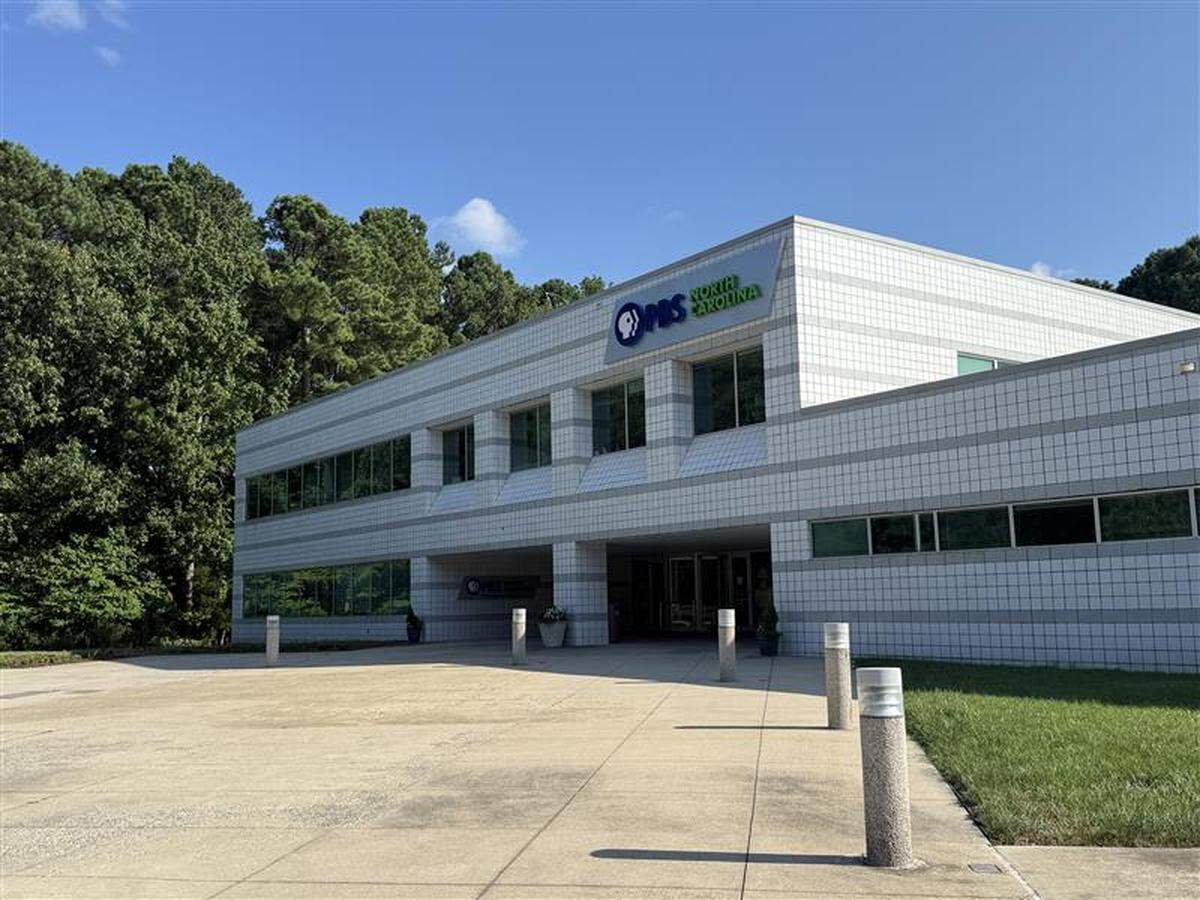
When PBS North Carolina lost its CPB funding, which accounted for about 15% of its annual budget, it reduced its workforce. Sixteen vacant positions were eliminated. Five people left voluntarily, 32 involuntarily.
Combined, that represented around one-third of the broadcaster’s workforce, with content and production, marketing and creative, engineering, education, development and finance departments affected.
Fewer staff meant some people took on heavier workloads, Crabtree said. In some cases, added responsibilities proved to be too much, and work was redistributed.
But as of publication, PBS North Carolina doesn’t anticipate future staff reductions.
“As I’m trying to assure the staff, since that major reduction in force happened, we made it,” Crabtree said. “We have survived it.”
PBS North Carolina saw an uptick in donations following the funding cuts, Crabtree said, as did other public broadcasters.
But the question of how to maintain that support remains. Crabtree wants to create a plan to make the broadcaster self-sufficient, but that will take years.
In the meantime, PBS North Carolina is trying to keep up its production with fewer resources. For example, projects that previously took a week to complete must now be finished in a couple of days. Programs originally planned to include eight episodes may now end up being six.
“For the people who remain, who are still here, are in my 40-plus-year career in broadcasting, are some of the most dedicated people, and honest, and people with integrity I’ve ever worked with,” Crabtree said. “And because of that, as we move forward, I think you’ll see more of the quality programming that you’re used to seeing here on PBS and PBS North Carolina.”
What Blue Ridge Public Radio is doing
Like PBS North Carolina, Blue Ridge Public Radio has stepped up during emergency situations.
In 2024, the remnants of Hurricane Helene swept through Western North Carolina, causing widespread, prolonged power outages. Many people lost water for weeks.
Communities needed information about where to get and give help, but they couldn’t find that information by turning on their TV or searching the web.
They could, however, listen to Blue Ridge Public Radio’s broadcasts, including daily briefings from county officials in English and Spanish. They could also subscribe to receive texts with news headlines to get a bird’s-eye view whenever they had cell service.

“Anytime they found something that they felt like the public needed, they found a way to give it to the public,” said Blue Ridge Public Radio CEO and general manager Ele Ellis, who wasn’t working at the station at the time.
Before the rescission bill passed, Blue Ridge Public Radio encouraged listeners to urge their representatives not to vote for it. Once it passed, the Asheville-based station began a nearly six-month fundraising drive to make up for the lost CPB funding, which accounted for around 6% of its annual budget.
They called it the “Be the Lifeline” campaign.
“Listener after listener after listener reached out to us and said that we were their lifeline during the aftermath of Hurricane Helene,” Ellis said.
Supporters gave the $330,000 that Blue Ridge Public Radio needed, but that amount covers just one year of lost funding.

Moving forward, the station is leaning on sustainers — listeners who donate a set amount monthly over the long-term — which will help the station budget. Blue Ridge Public Radio also hired a grant writer and will continue to fundraise on and off the air.
A side effect of the funding cuts is that Blue Ridge Public Radio staff are using time that could be spent in any number of ways to fundraise, pulling them away from their regular duties, or adding on to them.
“For me, it’s really, really disheartening for the government to say that the work that I spent my entire life doing is not worth having,” Ellis said.
But Ellis is hopeful about the future, she said — hopeful that listeners will continue to respond when the station shares what it needs, and hopeful that the station will continue to give listeners what they want and need.

Impact of federal funding cuts
It’s not just news that public broadcasters provide. WNCU has robust jazz programming. Blue Ridge Public Radio has a classical station. PBS North Carolina delivers stories about the people and places who are having an impact on the state.
These stations, and others throughout North Carolina and the country, offer news, music, information and entertainment on a variety of platforms, for free.
“There’s not really anybody else doing that anymore,” Ellis said. “You have to pay for all of your subscriptions. You have to pay for so many things in the world. All you have to do is turn it to 88.1, and you will get the news today in Asheville.”