What are Mecklenburg County Latino voters’ top concerns? It might surprise you.
READ MORE
Where’s the representation?
In Mecklenburg County, Hispanic people make up more than 14% of the population. But just three out of more than 100 political candidates are Hispanic or Latino. Check out our special report below.
Expand All
Hispanic representation in Meck County isn’t reflecting population growth trends. Why?
What are Mecklenburg County Latino voters’ top concerns? It might surprise you.
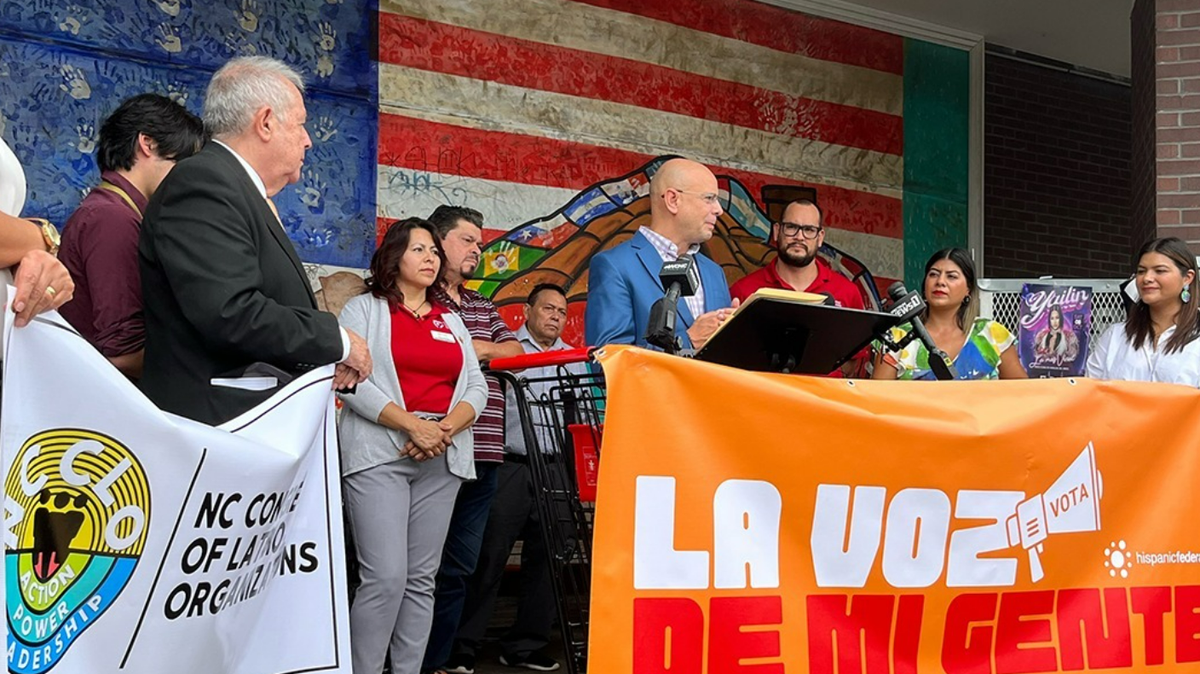
Hispanic Federation is mobilizing Latino voters in NC. Its goal? A record turnout
How changes to the census reveal Charlotte is much more Latino than we thought
Latinos running for office face roadblocks — even in blue parts of NC
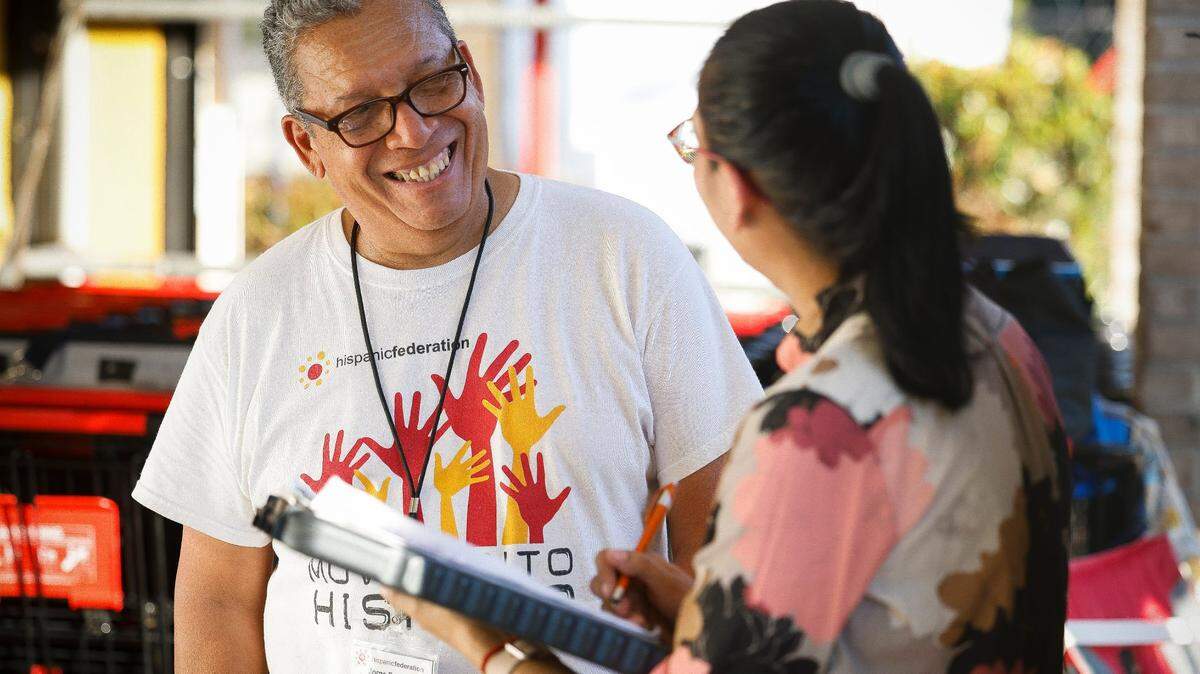
Jorge Pedroza scanned the parking lot. As customers approached Compare Foods he used a combination of Spanish and English to ask them one thing: Are you registered to vote?
The supermarket chain on North Sharon Amity Road is frequented by many Latinos in east Charlotte, Pedroza, a canvasser with the Hispanic Federation, says. Owners of the chain allowed the organization to set up a tent and register voters as part of its statewide efforts to mobilize Latino voters.
To date, nearly 160,000 Latinos call Mecklenburg County home. During the past decade Hispanics and Latinos accounted for one of the largest population growth countywide of an ethnic group, according to the 2020 census.
The rapidly growing demographic — including a vibrant business community, college students, first generation Americans, and many who have been here for decades — has the potential of becoming a persuasive voting force.
However, the group has a broad array of interests and concerns — which are not always heard. Among the biggest factors affecting this community is the lack of engagement and available data, which generally leads to myths and misconceptions about what is important to them as voters.
“One of the biggest misconceptions is that immigration is all that members of the Latino community care about,” says Daniel Alvarez, a 23-year-old UNC Charlotte student. “That’s important, but education, the economy, I care about all of these things.”
Another misconception about Latino voters is that “we all care about the same thing,” Pedroza said.
Their interests vary and depend on whether members of this population identify as naturalized citizens, first-second- or third-generation Americans, older versus younger voters, married, single, families, professionals or students.
In Charlotte and Mecklenburg County, Hispanic or Latino representation in government leaves plenty to be desired.
Three candidates who are Latinos, Jorge Millares, Gina Navarrete and Gabe Cartagena, were unsuccessful in their bids for City Council in 2019. To date, Charlotte has never had a Hispanic City Council member.
Susan Rodriguez-McDowell, who is seeking reelection, first won a seat on the Mecklenburg Board of County Commissioners in 2018 — and believes she was one of just two Hispanic or Latino elected officials in the entire state at the time. Dan Ramirez, who died in 2014, was elected to the Mecklenburg County Board of Commissioners in 2002 and again in 2006.
Diverse interests
Pedroza, 65, came to America from Colombia at the tail end of the civil rights movement, but the era that reshaped the country left a lasting impact on him. Growing up in New York City during that period motivated him to be politically active, and teachers pushed him and his classmates to stay involved.
Since living in Charlotte for nearly three years, what’s important to him is seeing Latinos become more politically active, he said. His canvassing work is a part of the “La voz de Mi Gente” campaign by the Hispanic Federation.
The job has given him the opportunity to chat with several potential Latino voters in Charlotte. Two issues continue to surface: jobs and the economy, with the latter more frequently, he said.
Through community outreach efforts around the state, a common thread from Latino voters is that political parties do little outreach, says Frederick Velez, the national civic engagement director with Hispanic Federation told the Charlotte Observer.
Many who are in their mid-20s — the median age of most Latinos in North Carolina and one of the youngest Latinos populations in the country — feel they do not get engaged in a way that makes sense for the community.
Often they are asked about the same topic — immigration. They feel the engagement does not capture the group’s diversity of thought and true opinions, Velez said.
“Don’t get us wrong, immigration is a topic that is very important to the Latino community in North Carolina, but it’s more important to some people and less important to others,” Velez said.
With engagement efforts, Velez says the nonprofit wants to be as culturally appropriate as possible. Velez said. “I don’t want to say simple because it’s not simple.”
For example, persons of Puerto Rican descent, like Velez — who are American citizens — may not base their entire vote on what an elected official thinks of immigration, he said. Similarly, second generation Latinos may be more concerned about issues like the rising costs of housing.
A community of Colombians who have lived in the city for decades may be more interested in pocketbook issues — gas prices, food prices or housing costs, he said. But in a rural county with mixed-status families a subject like immigration could be more important.
“There needs to be nuance,” Velez said. “It’s something that we’re trying to get people to understand.”
Also, more representation in elected positions is needed, which could help to better address the Latino community’s needs, according to Alvarez, a UNCC student. He attended the Camino Celebre Art & Cultura on Sept. 15, where organizers released a new study highlighting the strengths and needs of Latinos in Mecklenburg County.
Alvarez appreciated Camino’s efforts to also connect with Latinos in culturally appropriate ways such as the study being presented in Spanish with English translation. The Latin American diaspora’s diverse culture was also on display with a Guatemalan art exhibit, live music, and Latino cuisines like enchiladas.
“(Latinos are) going to trust that and they’re going to engage in that,” Alvarez said.
Wendy Mateo-Pascual, who co-founded Camino Community Center in 2004, said much of her work centers around getting Latinos involved in civics and politics.
There is a perception among many people that Latinos solely work construction jobs, but most of whom Mateo-Pascual works with are business owners, she said. A high percentage are college graduates. Latino voters are U.S. citizens and share many of the same concerns as other citizens, she added.
“We care about job opportunities, access to health care, education, and housing,” Mateo-Pascual said. “Immigration is what people think is the top, but it’s probably number five or six.”
Accurately assessing trends and interests of Latino voters on a large scale is difficult due to how little information there is, according to Chris Cooper, a political science professor at Western Carolina University. He specializes in Southern politics and elections.
Cooper said there are not enough surveys or large enough numbers of Latino or Hispanic voters responding to them currently.
“That is a real problem and it makes it harder to make generalizations.”
This lack of data also affects political parties and their outreach efforts as well, he said.
Growing population
Mateo-Pascual has watched the Latino population grow in numbers and diversity since she first came to Charlotte in 2003.
“It is a mix between first generation immigrants and second generation people who have moved here,” Mateo-Pascual, who is Dominican, said. “In the last five to 10 years we’ve seen the South American community — Venezuela, Colombia, Peru — grow a lot in the city.”
David Ortigoza, associate pastor at St. Andrew’s United Methodist Church, said observing the community’s growth motivated him to ensure more Latinos are politically engaged.
Ortigoza, who is Brazilian, helps lead the cross-cultural ministry at his church in south Charlotte. Access to health care, affordable housing and gun violence are some topics important to him and others he speaks with.
“Gun violence rose to be a top three issue for Latinos in many battleground states after the shooting in Uvalde,” Ortigoza, 65, said. “For Latino voters a key question for this election is who will protect me and my family?”
North Carolina’s young Latino population also affects voter turnout because younger voters are more likely to sit out of elections.
In the 2020 presidential election, Hispanic or Latino voter turnout was at 59%, according to the North Carolina Board of Elections. Non-Hispanic or -Latino voters turnout came in at 77%. The state doesn’t breakdown turnout ethnicity within a county.
“The Latino vote has certainly been increasing in North Carolina, but it’s still a relatively small proportion of the electorate,” Cooper said.
As of mid-September, in Mecklenburg County there are currently 42,690 registered Hispanic voters, as per the state board of elections. But the numbers could be higher as ethnicity is not a required field on voter registration forms, Patrick Gannon, spokesperson for North Carolina board of elections, says.
According to the Pew Research Center, during the 2004 presidential election, in North Carolina there was 10,000 registered Hispanic or Latino voters. That number swelled to over 220,000 by the 2020 presidential election.
Cooper said as a rate of increase, it’s moving pretty quickly, but the raw number of people who actually show up and vote has remained low. He added, as younger Latinos grow up, the expectation is more of them will vote.
“With all that said, it’s got nowhere to go but up,” he said.
Elizabeth Pascual, a 15-year-old Charlottean, is a member of the growing young Latino population in Mecklenburg County who will become a future voter. Pascual was in attendance with her mother for the Camino event that kicked off Hispanic Heritage month on Sept. 15.
“Honestly, what I worry about most and want is for my family to be safe,” she said.
Fighting against stereotypes was very important to her as a first generation American. But a difference between a first generation American and their parents is that often the youth are more concerned about fighting stereotypes, whereas their parents are concerned more about providing, she said.
“But we don’t want them to be judged for what they aren’t,” Pascual said.
This story was originally published September 30, 2022 at 6:00 AM with the headline "What are Mecklenburg County Latino voters’ top concerns? It might surprise you.."