Try these 10+ practical ways to save money on your grocery and food bills
READ MORE
Looking for more tips on saving money?
The News & Observer’s service journalism team is putting together a free
with tips to cut costs across several categories. We’ll be adding new stories often.
Expand All
With inflation rising, we’re all looking for ways to save a little money and keep our budgets in check.
The News & Observer’s service journalism team is putting together a free Money-Saving Series with tips to cut costs across several categories. In this installment, we’re offering up tips for saving money on groceries.
If you have some tips that we missed, you can email us at ask@newsobserver.com or fill out the form below. We’ll update this story with good tips we get from readers.
1. Save on staples (and more): Buy generic brands
This is a big one that we hope you’re already doing: buy generic!
We all have a few ride-or-die brands we can’t skimp on (we’re looking at you, Duke’s mayo and Oreo cookies) but for most things, you won’t be able to tell the difference if you get the store brand. This is especially true when buying basics like pasta, rice, dried beans, canned vegetables/tomatoes/beans, frozen vegetables, sugar, butter, oatmeal, mustard, spices and more.
Plus, in many cases, the generic-labeled items are produced by the same manufacturers that make your favorite brands, according to ShelfCooking.com. The markup in the price pays for the advertising. ShelfCooking estimates you can save at least $20 a week on your groceries by switching to generic brands.
2. Cheaper prices at Aldi, Lidl (and sometimes, Trader Joe’s)
If you’re comfortable with generic and store brand items, then German chains Aldi and Lidl are a grocery-shopping mecca. These chains specialize in store brand items, but will have some name brand items too, when available. And the stuff is super cheap — even cheaper than generic items sold at most larger stores. (The exception would be Walmart, which has comparable pricing on generics).
Aldi and Lidl also have great prices on perishables like fresh meat, bread, produce and more.
Trader Joe’s is also worth checking out. They only offer TJ-branded items, and some of their stuff is very affordable. (It’s my go-to for frozen items like sweet peas, tiny Brussels sprouts and fruit.) But if you get fancy, the prices aren’t so great, so watch out.
3. Save on coffee: Get reusable K-Cups
The price of coffee has increased substantially in the past year, and one way to save there is to ditch the disposable K-Cups.
Get a pack of reusable K-Cup filters (you can find tons of options on Amazon — a quick search found a 6-pack for $9 and a 12-pack for $13 — but you can also buy them at Walmart or Target) and fill them with your favorite coffee. It only takes a couple of seconds to scoop the coffee to the pod, and they’re easy to hand-wash, or you can run them through the dishwasher.
This can cut your coffee costs in half (!) — and it’s so much better for the environment.
4. Save on vegetables: Buy in season, buy frozen
When buying fresh vegetables, always try to buy things that are in season, because the prices will be lower.
But also consider buying frozen vegetables (generic! generic! generic!) whenever they fit your menu. There are a few good reasons for this:
- Frozen vegetables are just as healthy as fresh ones (and there are even studies that have found frozen vegetables to have more nutrients than fresh vegetables, because they are frozen at peak ripeness).
- Frozen vegetables won’t rot in your crisper, so you eliminate waste.
- You can stock up when they are on sale (again, go generic!) and you will always have a green vegetable option without wasting time (and gas) making an extra trip to the store or farmers market for something fresh.
5. Save by buying in bulk (and then freeze)
Buying in bulk is a great way to save at the grocery store, but the key is being able to efficiently store and use what you don’t consume immediately.
Things to keep in mind:
- Whenever you’re buying fresh meat, see if the store offers the same meat in a bulk or “family size” package. The price per pound is almost always less. Use what you need for that meal and then divide and freeze the rest.
- When you find a great sale on meat, do the same. Scan the grocery store fliers each week to see their big sale items.
- If you have a Costco, Sam’s Club or BJ’s Wholesale membership, you are already familiar with buying in bulk. But also keep in mind that sometimes grocery stores beat the prices with a weekly sale item.
Freezer tips:
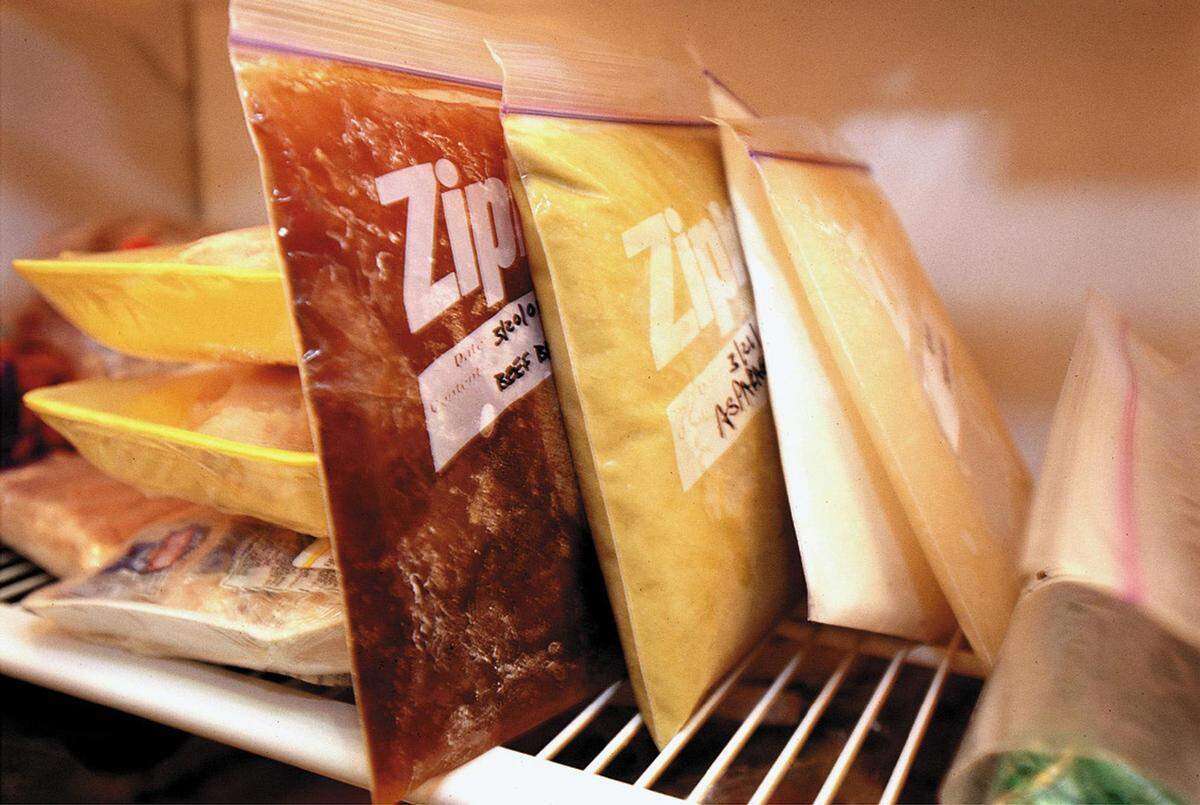
- Wrap the meat tightly in plastic wrap or foil (a Masterclass on freezing meat also recommends freezer paper), then put in an air-tight, zip-top freezer bag.
- Label the package with the type of meat, the weight amount (a rough estimate) and the date.
- If you have a food vacuum-sealer, use it! They suck out the air and keep the meat from freezer burn, extending its life in the freezer.
- Every couple of months, inventory what you have in the freezer and make a plan to use it before it gets too old.
6. Shop grocery sales and focus on loss leaders
Typically, the items printed on the front and back pages of the weekly grocery sales flier are the “loss leaders,” which means those are the items the store is willing to lose money on to lure you into the store in hopes that you’ll also buy some more expensive items while there.
TasteOfHome.com says that popular loss leaders are milk and eggs, because those are items people buy regularly. There are also lots of seasonal loss leaders, like hot dog and hamburger buns around the Fourth of July and turkeys at Thanksgiving.
If it’s an especially great deal, buy the store limit and keep on hand — as long as you can use it all before it goes bad.
7. Save and transform leftovers
Leftovers rule. Especially when you have enough for a second dinner or lunch.
But even when you have small portions of vegetables or meat that are too small to use at another meal, don’t throw them out. Freeze them and then when you have enough “scraps” saved up, use them for a soup or stew.
I like to freeze them individually so that I can label everything, but I’ve seen others use one large zip-top plastic bag that they just keep adding to. This works fine if you’re going to make your soup or stew relatively soon.
8. Regrow vegetables from scraps
I’ve done this — with varying success — and it’s very rewarding when it works.
RuralSprouts.com has a list of 20 food items that you can “grow from scraps,” ranging from potatoes and onions to lettuce, celery and mint.
I’ve had great success doing this with green onions/scallions. Use the green part of the onion and then stick the white part with the roots into water (a shot glass or short, skinny jar works great) and green shoots will appear within days. Just keep snipping off the green part and the onion will keep growing for a while. (Change the water frequently.) Rural Sprouts says you can also plant those onion nubs in your garden.
I’ve had less success with the romaine lettuce (the bottom always rots before new leaves sprout), but it’s worth a try.
Here’s what Rural Sprouts recommends for other vegetables:
Potatoes: When potatoes start to get old and grow roots in the eyes, cut the potato into sections and plant in good soil with the eye/roots facing up.
Celery: Cut off the bottom of the celery and place it in a shallow container with a little warm water in the bottom. Place the bowl in a sunny and relatively warm spot. New celery shoots will grow from the top of the base, just like with onions.
Carrots: Place the tops of carrots in a shallow dish of water and once green leaves start to sprout on top, you can plant them in the ground and they should continue to regrow.
See all of the tips at ruralsprout.com/regrow-vegetables — including how to grow vegetables from the seeds of produce (like peppers, pumpkins and strawberries).
9. Use coupons — both paper and digital
Clipping coupons from the Sunday paper has always been a good way to save on groceries and some grocery stores will even double the coupon discount, up to a point. (Although sometimes, even with a coupon, the generic brand is cheaper!)
But you aren’t limited to paper coupons these days. Most grocery chains now offer electronic coupons that you can “clip” or save online or through a mobile app, tied to your customer loyalty account. You “clip” the coupons you want to use before you go to the store and then when you check out, the discounts are automatically deducted from your total. (Always check your receipt before leaving the store to make sure this happened, and if it didn’t, head to customer service.)
Tip: Don’t buy something you aren’t likely to use, just because you have a coupon. It’s not a good deal if you don’t use it.
10. Meal-planning saves money
Planning out meals is a great way to save money on groceries because it requires you to adopt some smart shopping habits: planning and list-making. It also ensures that you have meals on hand and you aren’t tempted to order takeout or eat lunch out.
Here are some tips:
- Plan your week’s meals ahead of time, using that week’s grocery sale flier to choose discounted ingredients.
- CookSmarts.com also recommends doing an inventory of your pantry to see what items you have on hand that you can use. They also recommend prioritizing the use of ingredients on hand in order of perishability.
- Make your shopping list before you go to the store, and stick to the list.
- Prep and pack lunches the night before, in case you’re too rushed to put it together in the morning.
- The PennyHoarder.com has great tips (read them all) but I really like this: have some emergency meals in your freezer.
11. Eat more meatless meals
Eating more vegetarian meals is healthier, better for the environment and it saves money.
If you’re a dedicated meat eater, start by picking a couple of meals (or days of the week) when you’ll eat meatless meals.
But what can you eat? There are tons of great recipes out there for high protein grain bowls, pasta entrees, super filling salads and more. Just google “meatless meals” or “vegetarian recipes” and pick some easy ones that sound good.
Share your money-saving tips with us
Have a tip for saving money? Share it with us in the form below, or try accessing the form here.
We might use your tips in a future story.
This story was originally published June 16, 2022 at 2:19 PM.