At-Home Red Light Therapy Is Changing Healing and Beauty Routines, Here's How to Pick the Right Device
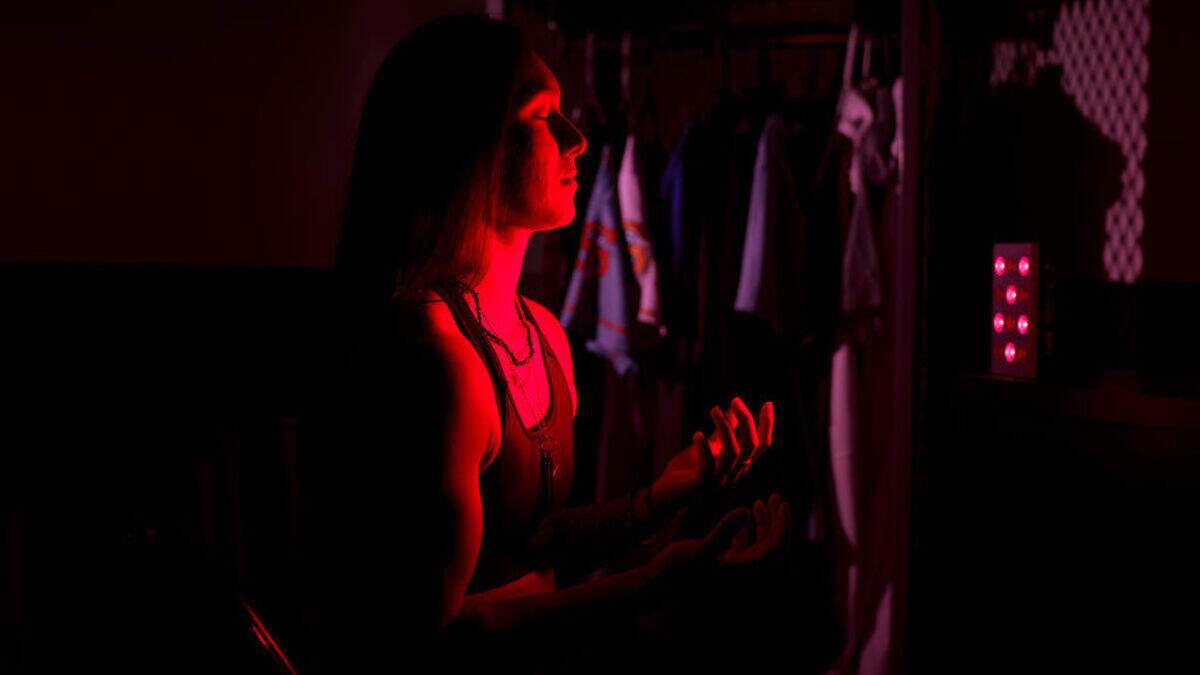
Red light therapy isn’t a clinic-only treatment anymore. Masks, panels, caps and wands now promise smoother skin, fuller hair and faster recovery from your bathroom counter and the price spread runs from under $200 to more than $3,000. The catch is that the wrong category, the wrong wavelength or the wrong routine can mean months of use with nothing to show for it.
Here’s what actually works in 2026, what to spend and how to skip the dupes flooding social feeds.
What Red Light Therapy Is and How It Works
Red light therapy uses specific wavelengths of light to stimulate cells. For skin and anti-aging, flexible LED masks rely on 633nm red and 830nm near-infrared. For body recovery, joints and full-body wellness, panels combine 660nm red with 850nm near-infrared. For hair regrowth, low-level laser therapy caps and helmets work in the 650-680nm range. Targeted wands and pens handle small zones like under-eyes, blemishes and scars.
The credibility anchor for hair users is a 12-month low-level laser therapy trial by Shin et al., published in Dermatologic Therapy, which found 85 percent of users were satisfied with at-home laser therapy for androgenetic alopecia, with gains holding steady through week 48.
Which Type of Red Light Device Fits Your Goal
This is where most shoppers go wrong. A face mask won’t regrow hair. A scalp cap won’t firm jawlines. A wand can’t cover your back or knees.
- Face and anti-aging, use a flexible LED mask with 633nm and 830nm.
- Scalp and hair, use a low-level laser therapy cap or helmet, 3 to 4 times weekly, for at least 6 to 12 months.
- Body, joints and recovery, use a panel with 660nm and 850nm.
- Spot treatment, use a wand or pen.
Pick the category first. Then pick the device.
What an At-Home Red Light Therapy Device Costs
Prices have spread out, and the gap between entry and pro tiers is now wider than the gap between most mid-tier devices and their professional counterparts.
- Entry, $100 to $250: the Hooga HG300 panel starts around $149 to $200. The Solawave wand sits near $169.
- Mid, $300 to $500: the Therabody TheraFace Mask is cut to $380 from $650. The Omnilux Contour Face is $395. Dr. Dennis Gross SpectraLite runs $455. The CurrentBody Skin Series 2 mask is $469.99.
- Premium, $500 to $1,300: PlatinumLED BIOMAX 300 is $659. The CurrentBody Full Body LED Panel is $1,099.99. Hooga PRO1500 is $1,199.
- Pro, $1,500 and up: Joovv Solo 3.0 is $1,699. Hooga PRO4500 is $3,099.
Where to Buy A Red Light Device Without Getting Scammed
Stick with brand websites such as Omnilux, CurrentBody, Hooga, PlatinumLED and Therabody. Established retailers including Sephora, Ulta and Nordstrom carry CurrentBody, Therabody and Dr. Dennis Gross. On Amazon, only buy when the device is sold and shipped by the brand or an authorized seller.
Skip TikTok Shop dupes that don’t publish wavelength or irradiance specs. A 2026 Cureus analysis of 132 viral red light therapy posts, with a combined 47.5 million reach, found just 8.3 percent cited peer-reviewed evidence. If a seller can’t tell you the wavelength and the irradiance, the device isn’t worth your money.
When and How Often to Use Your Red Light Device for Real Results
Frequency matters more than session length. Aim for 3 to 5 sessions per week, 10 to 20 minutes each. For hair caps, run 3 to 4 sessions weekly for at least 6 months before judging results.
Timing matters too. Morning or daytime sessions support your circadian rhythm. Red light is mitochondrially stimulating, so late-night use can disrupt sleep. For panels, sit about 6 inches away, which is the published standard for irradiance readings.
The most common mistake is the biphasic dose response. More minutes doesn’t mean more results. Push past the recommended window and you can flip into redness, dryness or reduced cellular response. Apply to clean, dry skin, and skip retinol on the same session when using a mask.
Buy for your goal, follow the protocol and give it at least 8 to 12 weeks before deciding whether your device is doing its job.
This article was created by content specialists using various tools, including AI.