
The Rise of Board Game Nights — Why Young Adults Are Ditching Bars for Chess and Mahjong
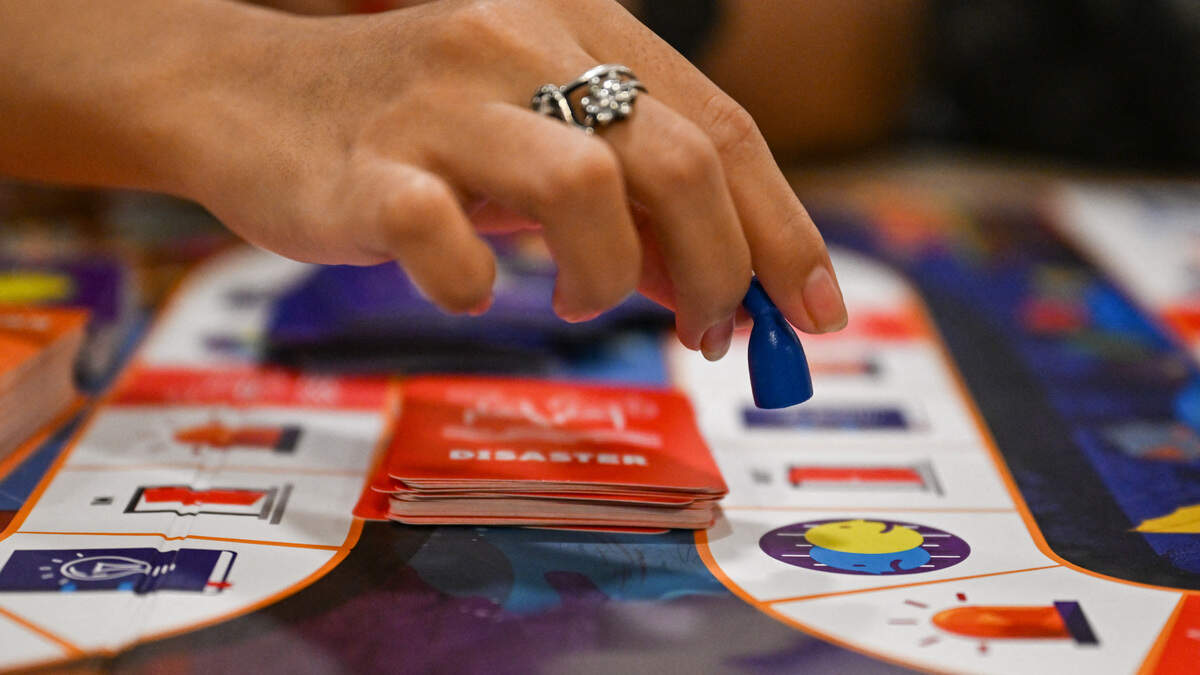
Board games are pulling young adults out of bars and away from their phones, with chess clubs, backgammon meetups and mahjong nights surging as millennials and Gen Z look for in-person hangouts that don’t require alcohol or athleticism.
Why are millennials and Gen Z choosing board games over bars?
Board games are filling a gap that drinking culture and gym-based hangouts have left behind. Millennials and Gen Z want face-to-face connection without alcohol, sweat or pressure to perform, and old-fashioned game nights deliver exactly that.
“A running club sounds like absolute torture to me. I have found that it’s easier to connect with someone when I’m not trying to catch my breath or covered in sweat,” Victoria Newton, host of the Knightcap Chess Club in Austin, Texas, told The New York Times. Organizers say games once stashed in grandparents’ attics, including chess, backgammon and mahjong, are pulling twentysomethings and thirtysomethings into low-key social spaces a few nights a week.
How big is the board game comeback right now?
Board game events organized through Partiful quadrupled in the past year, the company told The New York Times. Board-game-related groups on Meetup grew roughly 10% each year from 2021 through 2023.
The pandemic kicked off the boom, but the momentum has stuck. Award-winning tabletop designer Geoff Engelstein argues the appeal runs deeper than a passing trend. “Games go back thousands and thousands of years. The earliest tombs that they’ve found have dice in them. They very rarely find any kind of archaeological excavation without some kind of game playing. It’s really just part of the human experience,” Engelstein told The New York Times.
What does the loneliness epidemic have to do with the rise of game nights?
The loneliness epidemic is a major driver. Time spent in person with friends dropped from 30 hours a month in 2003 to 10 hours a month in 2020, according to the U.S. Surgeon General’s advisory, with the steepest decline among people ages 15 to 24.
Post-pandemic, that yearning for in-person connection is colliding with another generational shift. Millennials introduced the idea of a digital detox, and Gen Z has pushed it further, fighting back against what’s commonly called brain rot. Increased platform use trains the brain to crave constant dopamine hits, and a generation raised with phones in hand is actively swapping doomscrolling for tactile hobbies like pickleball, running clubs and game nights.
Are young adults really drinking less than older generations?
Yes. Young adults are drinking less than in prior decades, according to Gallup polling, and they are more likely than older generations to view alcohol as a health risk.
“It is becoming clear that, for whatever reasons, today’s younger generations are just less interested in alcohol and are more likely than older generations to see it as risky for their health and to participate in periods of abstinence like Dry January,” George F. Koob of the National Institute on Alcohol Abuse and Alcoholism said in a statement to Time. Sybil Marsh, a physician specializing in family medicine and addiction, told Time the cultural meaning of drinking has changed. “There was a time where drinking some alcohol was a badge of maturity and was sophisticated. But now, it’s only one out of a whole range of ways that people can relax or show sophistication and so on.”
Do board games offer any mental health or cognitive benefits?
Cognitively stimulating hobbies are linked to stronger brain function. A study in the Journal of Cognitive Enhancement found that older adults with mild cognitive impairment who took part in mentally engaging activities showed better memory, attention and processing speed than peers who did not.
The research focused on older adults, but the underlying logic resonates with younger players too. Board games demand sustained focus, strategy and back-and-forth conversation, the opposite of passive scrolling. For a generation tired of dopamine-driven apps, a few hours over a chess board offer slower entertainment with built-in social contact and zero pressure to drink.
This article was created by content specialists using various tools, including AI.
.jpeg)