How mobile dog grooming went from a niche convenience to one of the fastest-growing areas in pet care
Americans spent $158 billion on their pets in 2025, a 3.7% jump from the year before, and that number is expected to climb to $165 billion in 2026, according to the APPA.
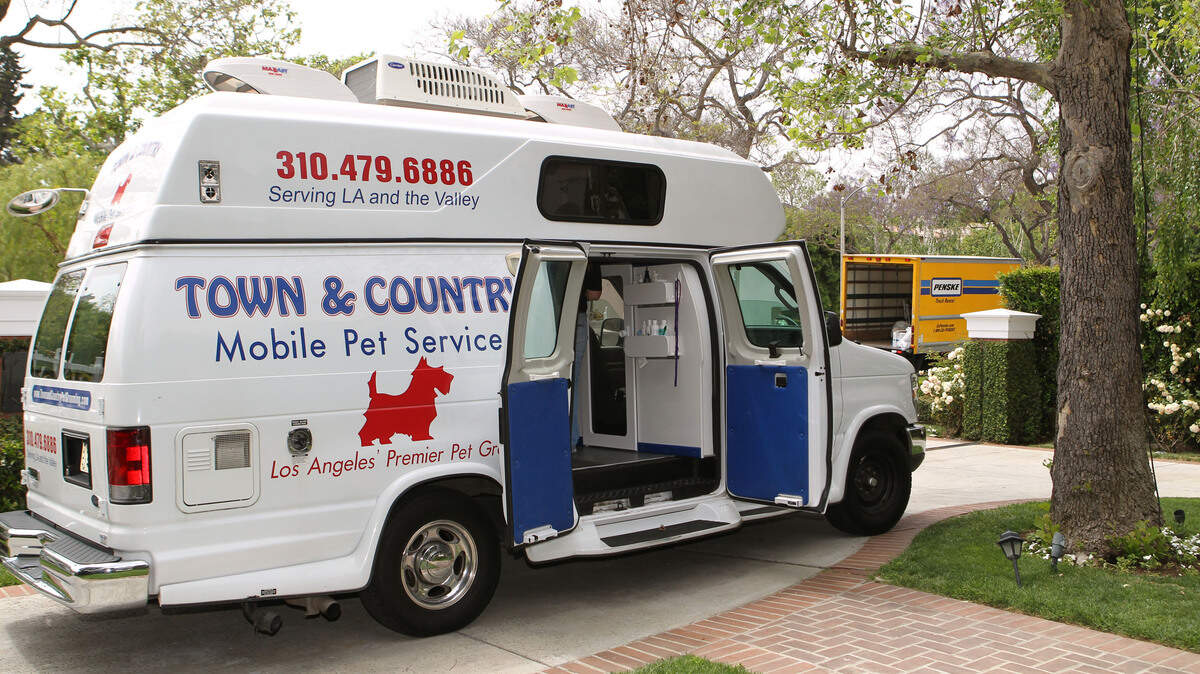
A growing share of that spending is going toward mobile dog grooming, a service that sends a fully outfitted grooming van to your home instead of requiring a trip to a salon. With dog ownership growing every year, the demand for convenient and stress-free grooming options is accelerating fast.
Why regular dog grooming matters
Keeping a dog groomed goes well beyond appearance. Routine sessions prevent painful matting, help detect skin infections and lumps early and control parasites like fleas. The ASPCA treats grooming as a pillar of preventive care.
“Grooming is as important as bringing your pet to the vet for regular checkups,” says Lauren Lakritz, an Animal Care Technician in the ASPCA’s Animal Recovery Center (ARC). “It’s maintaining the well-being of your animal.”
For breeds with long, curly or double coats, skipping sessions can lead to mats that pull on the skin, trap moisture and create the conditions for infection.
What’s driving the shift to mobile dog grooming
Several forces are converging to push more owners toward mobile pet grooming.
The APPA reported that dog ownership grew from 51% of U.S. households in 2024 to 53% in 2025, an increase of about 4 million homes. Most of those households have two working adults, leaving little room in the week for salon logistics.
Owners are also waking up to the stress the traditional grooming routine inflicts on many dogs. Car rides, unfamiliar environments, kennel waits and proximity to other animals can all trigger fear responses. Research has shown that 84% of dogs exhibit fear and anxiety in everyday situations.
Meanwhile, the mobile dog grooming service experience has dramatically improved. Modern vans feature climate-controlled cabins, hot water systems, hydraulic tubs, high-velocity dryers and professional grooming tables. The gap between what a mobile dog salon offers and what a storefront provides has decreased significantly over the past decade.
What a mobile grooming appointment includes
A standard mobile session covers:
- Bath with breed-appropriate or skin-sensitive shampoo
- Blow-dry and thorough brush-out
- Haircut or trim tailored to breed standards and owner preference
- Nail clipping and filing
- Ear cleaning
- Eye area cleaning
- Anal gland expression (on request)
The groomer parks at your home, your dog enters the van and the appointment lasts roughly 60 to 90 minutes based on size, coat type and the services selected. Your dog returns to your door finished, with no drop-off or pickup required.
How much mobile dog grooming costs in 2026
Mobile dog wash & grooming runs 15 to 40% above traditional salon pricing. Here’s what full-groom appointments typically look like by size in 2026:
- Small dogs (under 20 lbs, such as Yorkies, Chihuahuas and Shih Tzus): $65 to $100
- Medium dogs (20 to 50 lbs, such as Beagles, Cocker Spaniels and Bulldogs): $100 to $130
- Large dogs (50 to 80 lbs, such as Golden Retrievers, Goldendoodles and Huskies): $120 to $160
- Giant breeds (80+ lbs, such as Great Danes, Bernese Mountain Dogs and Newfoundlands): $150 to $180+
These figures assume a dog in reasonable coat condition on a regular 4- to 8-week grooming cycle. Heavy matting can add $15 to $50 to any visit. Double-coated and curly breeds require more time and product, which also raises the cost. And in metro areas like New York and San Francisco, pricing runs 20 to 40% above the national average.
When mobile dog groomers are worth the premium
The extra cost delivers real value in a number of specific scenarios.
Anxious or car-averse dogs. If your dog trembles during car rides or panics at the sight of a grooming salon, mobile eliminates the biggest stressors.
Multi-dog households. Coordinating salon drop-offs and pickups for two or more dogs can consume half a day. A mobile groomer handles them back-to-back at your curb.
Senior dogs or dogs with health issues. Older dogs dealing with arthritis, limited mobility or chronic conditions benefit from skipping the physical strain of travel.
Reactive or aggressive dogs. The ASPCA reports that as many as 60 to 70% of pet dogs bark threateningly at strangers or behave unfriendly around them. A one-on-one van session removes that trigger entirely.
Puppies in their first grooming experiences. A calm, low-stimulus introduction sets the foundation for stress-free grooming for years to come.
Remote or suburban owners. If the nearest reputable salon is a 30-plus-minute drive each way, a driveway appointment saves over an hour of travel per session.
Owners with unpredictable schedules. Shift workers, parents of young children and caregivers often find that a driveway appointment is the only kind that reliably fits.
Large and giant breed owners. Physically loading a 100-lb dog into a vehicle is a challenge on its own, and mobile service eliminates it.
Not every dog or owner needs the upgrade. If your dog thrives at the salon, enjoys car rides, gets excited around other dogs and has a groomer they trust, the premium buys convenience you may not actually need. Owners who live near a quality shop and have flexible schedules may find the traditional route works just fine.
The future of the mobile dog grooming industry
The global mobile pet care market was valued at $0.86 billion in 2025, is expected to hit $0.91 billion in 2026 and is projected to reach $1.38 billion by 2034, per Fortune Business Insights.
Subscription grooming plans are picking up steam, giving both operators and owners more predictable pricing and scheduling. Franchise models are carrying the mobile format into new regions faster than solo operators can expand on their own.
Regulation is the industry’s biggest unresolved question. No U.S. state currently requires a license to groom dogs professionally. As the market grows and high-profile incidents draw public attention, legislative pressure is likely to build.
This article was created by content specialists using various tools, including AI.