Triangle tech scene lags behind when it comes to representing the area’s diversity
READ MORE
Measuring Tech in the Triangle
A News & Observer analysis of local economic indicators for the region’s tech economy.
Expand All

Venture capital back to normal levels in the Triangle after Epic’s monumental raise
When it comes to NC’s tech talent, the Triangle’s educated workforce is a draw
Startups are breaking records in NC. But are younger companies being ignored?
As the Triangle’s entrepreneurial ecosystem matures, more businesses are started
Triangle tech scene lags behind when it comes to representing the area’s diversity
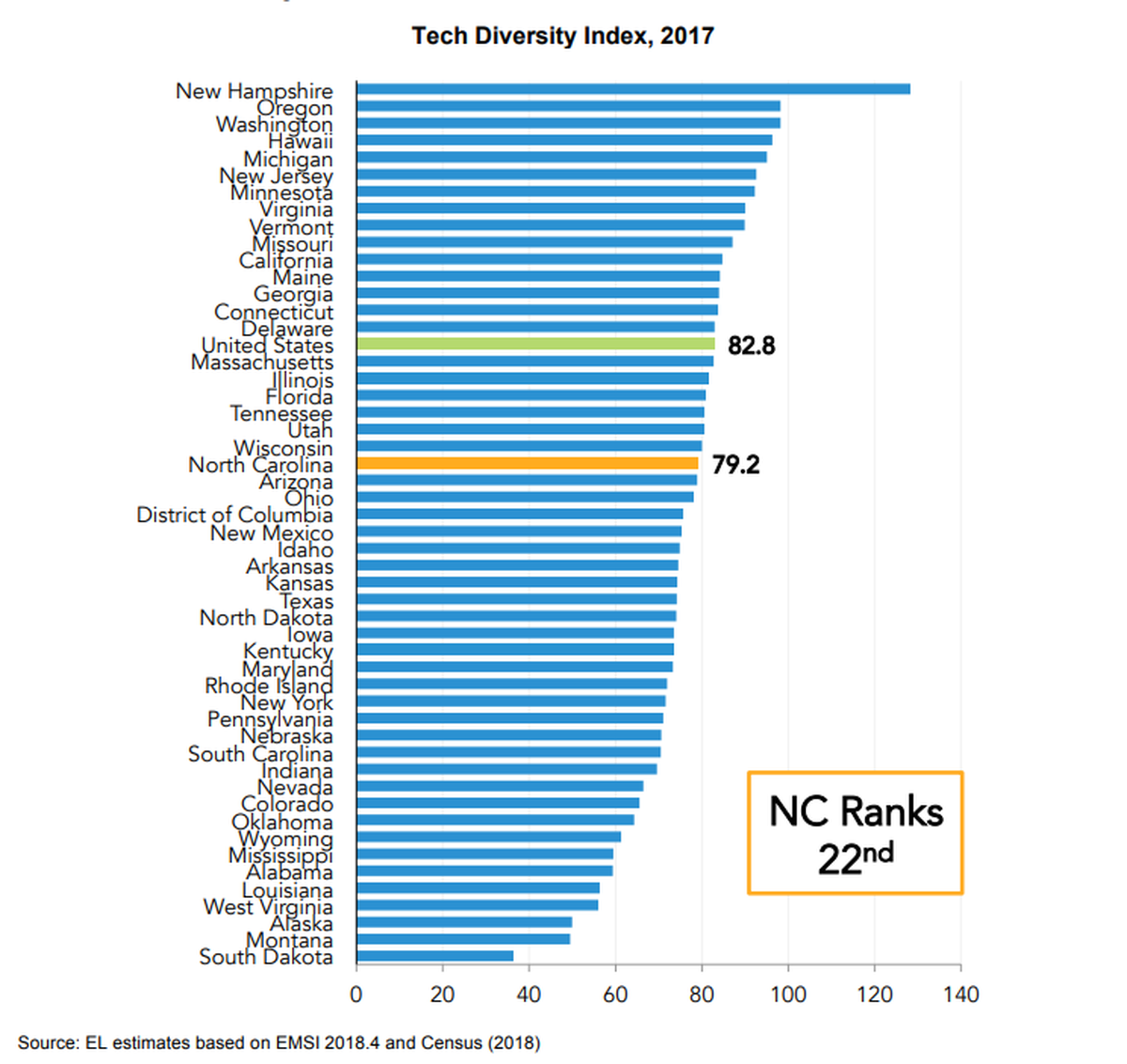
While North Carolina is one of the most diverse states, its technology industry lags behind much of the country when it comes to representation.
North Carolina’s tech industry, taken as a whole, ranked 22nd among all states measured by the percentage of tech workers identifying as people of color compared to the makeup of the state’s overall population, according to figures from the NC Tech Association.
NC Tech, an advocacy group, created a diversity index that gave a state a score of 100 if its tech workforce was exactly representative of the makeup of its population. North Carolina’s tech diversity index was 79.2, lower than the U.S. average of 82.8.
However, North Carolina did better than its peers in other measurements of representation. The state ranked No. 2 in the percentage of women (35.5%) working in the technology field, trailing only Washington, D.C., according to the same study from N.C. Tech.
That is not to say that North Carolina is doing well at that measurement — as both women and people of color still face struggles, whether it comes to getting capital or advanced jobs in the tech industry.
“To be fair, being the best-of among mediocre performers is not something to brag about,” said Brooks Raiford, president and CEO of NC Tech. “Everyone is doing not great.”
This story is the final part of a News & Observer reporting project aimed at monitoring the health of the Triangle’s tech ecosystem. In a survey sent to dozens of people in the local tech industry, the N&O asked what measuring points matter the most for the ongoing success of the region. We’ve be reporting on individual indicators in recent weeks, and plan to revisit all of them regularly going forward.
One key aspect many flagged about the Triangle’s tech scene was diversity. With technology-based jobs playing an important role in the future economy of the Triangle, many said, the industry needs to be broad based and diverse to make sure the region grows more equitably and represents all of the people who live here.
Moving from talk to results
Dee McDougal, senior vice president of diversity and inclusion at Pacific Western Bank, said more than ever the Triangle region is willing to talk about a lack of inclusion in its tech space. But the challenge of improving those statistics remains, she said.
“How do we move beyond beyond the buzzwords of diversity, equity and inclusion to actual movement and creating change?” she said. “That’s the part that’s a little uncomfortable.”
There are plenty of events and talks about diversity in the Triangle, McDougal noted, including Black Wall Street Homecoming in Durham, an annual gathering of black entrepreneurs and investors that she helped start five years ago. But in her opinion, there hasn’t been enough of a connection between people doing work on the issue and the companies that are hiring.
Donald Thompson, the CEO of digital marketing agency Walk West and a local angel investor, said the Triangle has to be careful that equity doesn’t remain a trendy topic at conferences but absent in practice.
“North Carolina, in many ways, is a microcosm of our society,” Thompson said. “There has never been a better time to be an entrepreneur or a person of color or a female.”
But “we are still in the first phase, where it is partly cool to talk about equity,” he added. “We have to transition to make it the outcomes that matter.”
For now, he said, the industry remains too reliant on access to a network that is often lacking women or people of color, he said.
A gap in funding
Perhaps nowhere can that lack of access be seen more than in which startups receive money from investors.
Just 1% of all venture-capital-backed startups were led by a black founder, and women-founded startups received less than 10% of all investments, the venture capital tracker Crunchbase reported.
In the Southeast, only 5% of founders getting money from angel investors were nonwhite compared to a nationwide average of 11.5%, WRAL reported. The numbers for women-led startups were also below the national average — 15% in the Southeast compared to 21% nationally.

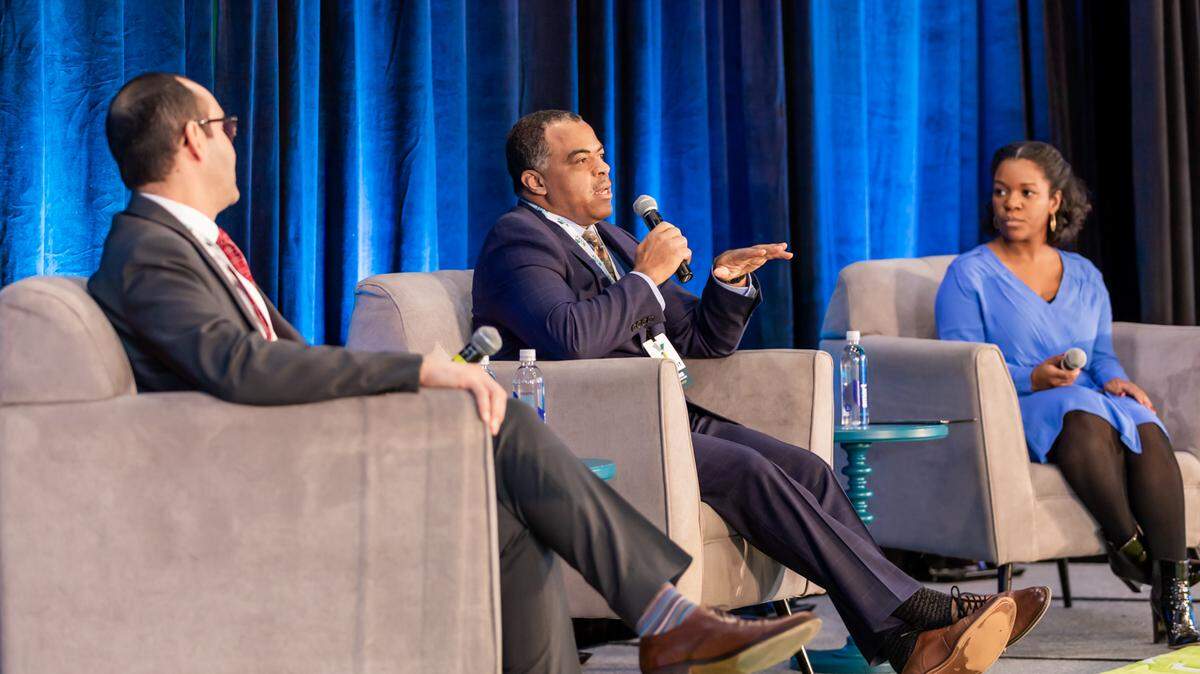
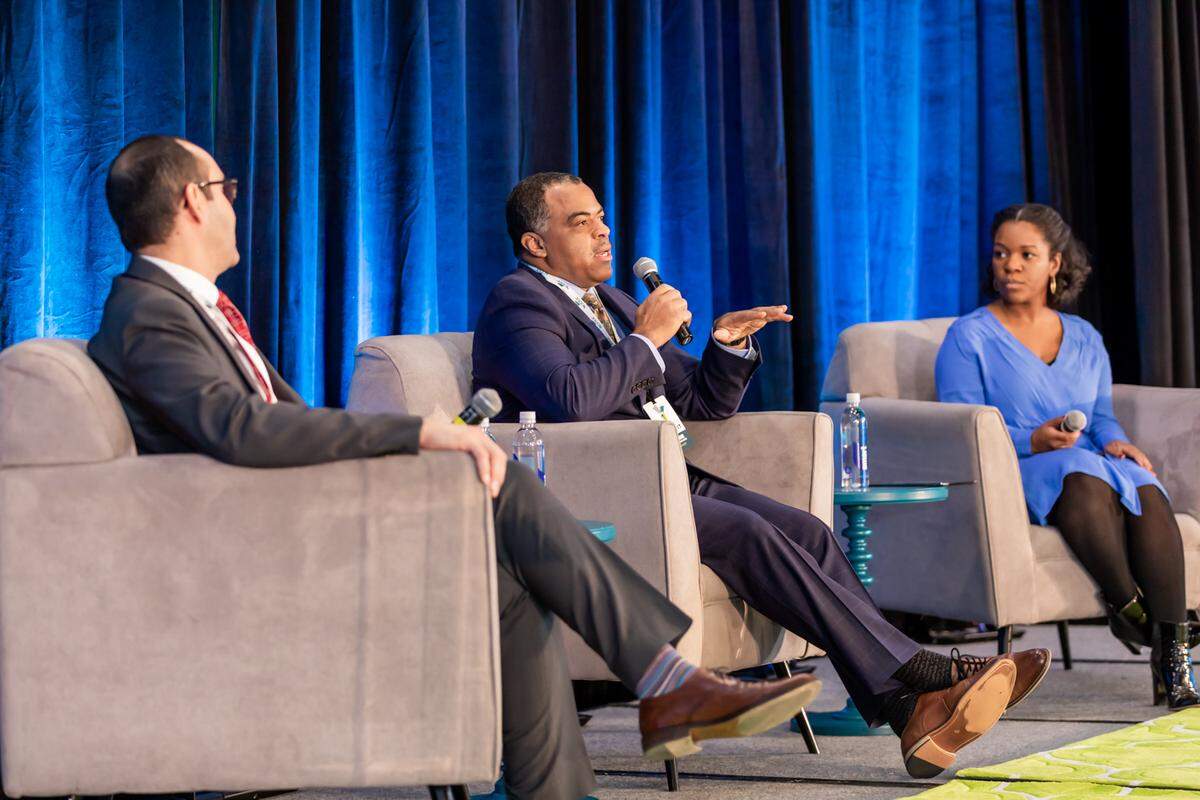
Darrin Redus, of the Cincinnati Chamber of Commerce, recently told attendees at the NC IDEA Ecosystem Summit in Raleigh that funding disparities exist because the world of venture capital is still segregated. “If you go to any venture capital networking event, just look at the nature of the room,” he said, noting you won’t see many brown, black or female faces.
He cautioned that while companies and organizations are increasingly investing in initiatives to address inequality, they need to be patient about their outcomes. Networking, after all, is just one of a host of barriers that minority entrepreneurs have to face.
“Disparities and conditions that took centuries to create will not change overnight,” he said.
A word-of-mouth business
Thompson agreed with that, saying, “Ultimately the angel network and venture capital space is a word-of-mouth business.” If you don’t have a champion or someone to give you a warm introduction to an investor, he said, the odds will be against you.
As an African-American angel investor, Thompson said he’s tried to become a bridge for many black entrepreneurs.
One problem, he said, is that many African-Americans of means don’t get invited to local investor networks or haven’t been educated about how to be an investor. That makes it hard to create a culture where black doctors, executives and lawyers with money believe angel investing is a viable option for them.
“You don’t have to have [an investing] pedigree to write a $10,000 or $20,000 check in a company you believe in,” he said.
Additionally, he hopes that one day some of the larger investment firms in the area will commit to meeting and investing in a certain percentage of companies whose founders are people of color and women.
“You need the people with the money to decide that it matters,” he said.
Jalen Hatton, an entrepreneur who recently became community manager at the coworking provider Loading Dock’s Prince Hall location, said a greater diversity of investment options would be helpful for diverse founders, noting he was only aware of a couple African-American angel investors in the Triangle.
Through his role at Loading Dock, Hatton hopes to make finding those options easier for people from diverse backgrounds.
The different coworking communities across the Triangle have become important drivers of entrepreneurship over the last decade, creating tight-nit clusters of startups that feed off each other and spawn valuable connections. But it can be difficult sometimes for people from diverse backgrounds to break into those communities, Hatton believes.
He thinks the Prince Hall coworking location — the first on the eastern side of downtown Raleigh and in a traditionally African-American neighborhood — could create a hub where people from Southeast Raleigh and students from the three universities on that side of town — Shaw, Saint Augustine’s and Peace — can enmesh with the established startup community.
“Just saying you are a member of [one of the coworking communities],” he said, “or just the fact a director of community knows you are trying to do a deal or get funding can help.”
This story was produced with financial support from a coalition of partners led by Innovate Raleigh as part of an independent journalism fellowship program. The N&O maintains full editorial control of the work. Learn more; go to bit.ly/newsinnovate
This story was originally published December 4, 2019 at 7:30 AM.