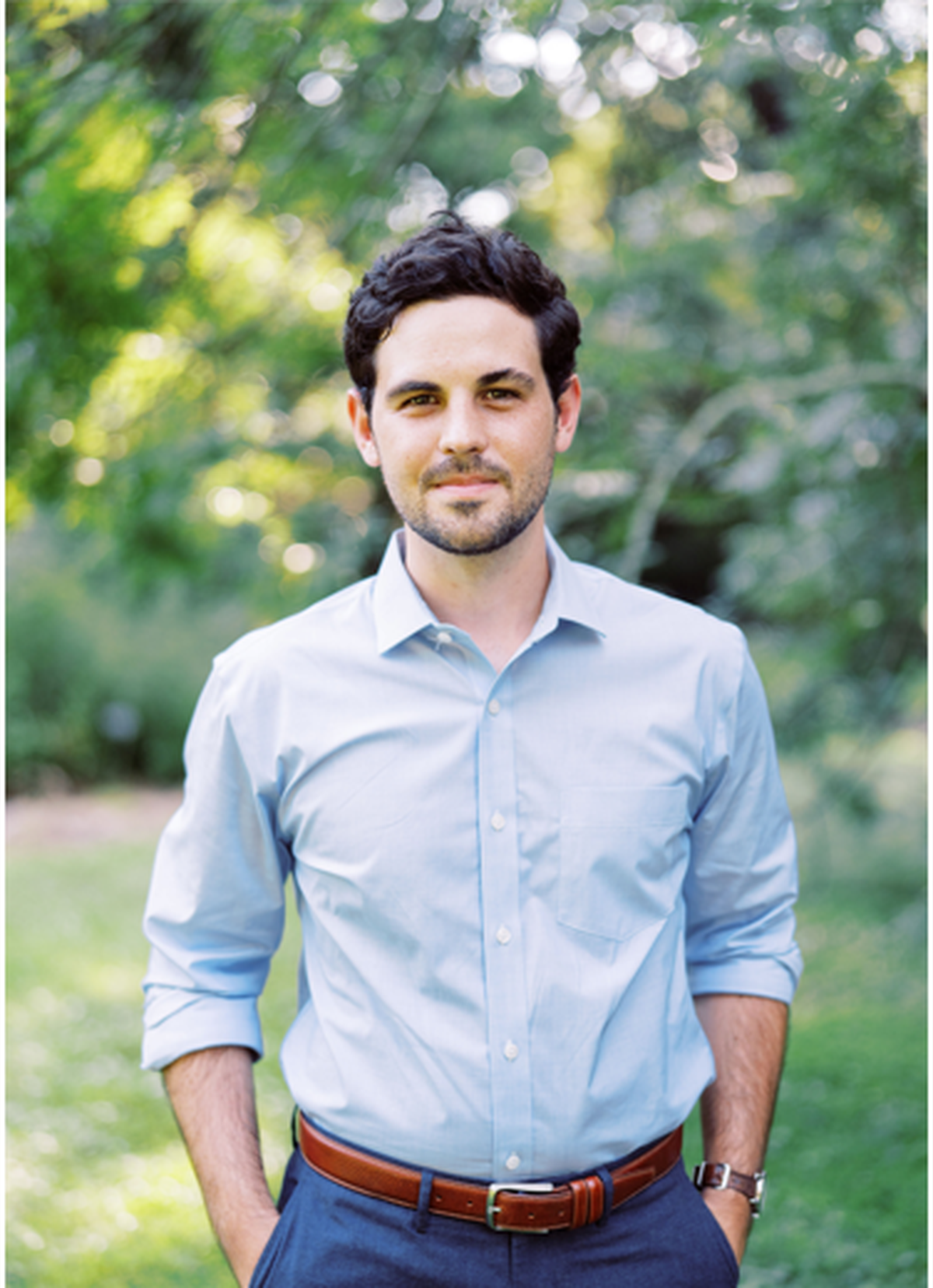
With potential vaccine manufacturing under way, RTP company prepares for Trump’s visit
From Martin Meeson’s perspective, Operation Warp Speed, the federal effort to get COVID-19 vaccines and treatments to the public as quickly as possible, is living up to its name.
As CEO of Fujifilm Diosynth, a Japanese contract drug manufacturer with a large presence in Research Triangle Park, Meeson is leading a partnership between Fufjifilm and the biotech company Novavax to manufacture one of the more promising vaccine candidates for the novel coronavirus.
The partnership is already moving swiftly, and on Monday, President Donald Trump will visit Fujifilm’s facility in RTP to see its progress.
In early July, the federal government announced a $1.6 billion agreement with Novavax as part of Operation Warp Speed to demonstrate commercial-scale manufacturing of a possible vaccine.
The drug the companies are manufacturing has not yet been shown to stop the novel coronavirus; the government is investing in several vaccine candidates, hoping that one of them will prove to be effective.
Because of its agreement with Novavax and Fujifilm, the government will own 100 million doses of the potential vaccine, which would allow it to be distributed more quickly if it successfully makes it through clinical trials.
To gain approval, vaccines must go through three stages of clinical testing. Novavax started its Phase 1 clinical trial in May, and hopes to report data from that in the first week of August. Phase 2 would begin shortly thereafter.
Novavax has been in business for 33 years, but has yet to bring a product to market, The New York Times reported.
Fujifilm has already begun manufacturing the main component for the protein-based vaccine candidate, named NVX-CoV2373.
“I think this will certainly be the quickest I’ve ever seen us (do) it,” Meeson said of the manufacturing effort in a phone interview with The News & Observer.
He said between the efforts of his own company and that of Novavax, the partnership has the “ability to do what would normally take months ... in just weeks.”
The batches of the vaccine created in North Carolina would be used in the Phase 3 trial, which would include up to 30,000 subjects, the company said in a release. If the candidate gets through the first two trial phases, Phase 3 is expected to begin in the fall.
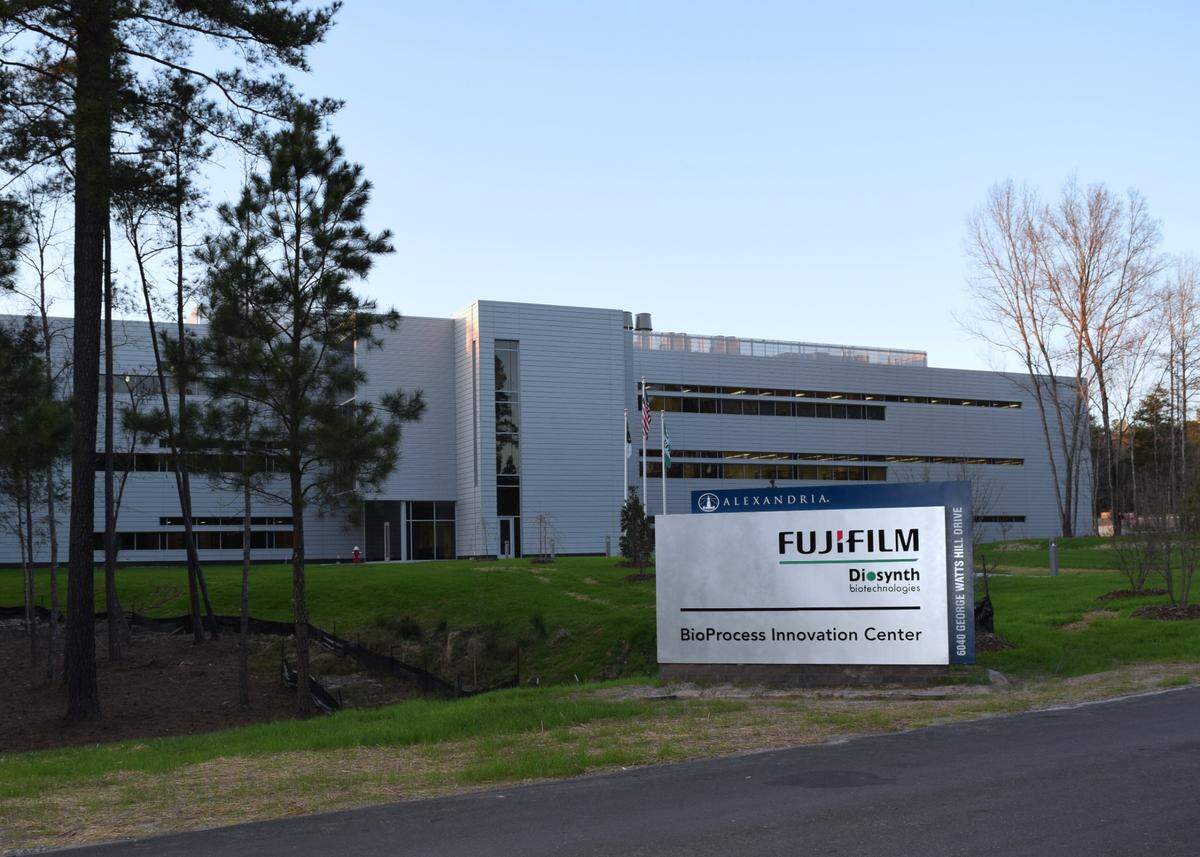
Trump’s 10th trip to NC
Trump’s visit to the Fujifilm facility will mark his 10th trip to North Carolina as president.
It will be his first visit to the state since he moved the bulk of the Republican National Convention from Charlotte to Jacksonville, Florida. However, the president announced Thursday that he is canceling the Jacksonville portion of the convention due to safety issues caused by the coronavirus pandemic.
Peter Navarro, the administration’s Defense Production Act policy coordinator, said Friday that the purpose of the trip is “for the President to see up close the amazing work scientists and engineers are doing in the Research Triangle Park.”
Navarro said he would accompany Trump on the trip. He touted the FujiFilm facility in Morrisville as “impressive.”
“We’re going to be visiting a number of other vaccine-related sites over the course of the vaccine development, but this is a beautiful site to behold really,” Navarro said. “And we thought that in terms of the President being able to see firsthand just what the supply chain and manufacturing process looks like, this is really a poster child for excellence and sophistication.”
The Fujifilm Diosynth manufacturing facility dates back to 1996, though it has operated under several different names. Its current iteration didn’t come into being until 2011, when Fujifilm acquired Diosynth RTP, then a subsidiary of Merck, in 2011.
Today, the company employs a little more than 500 people there. It will add around 50 to 60 positions because of the partnership.
Meeson said the company is already working to provide an interesting tour for the president.
“It is quite an exciting experience to have the President of the United States visiting,” Meeson said. “We’ve been told he is very interested.”
The visit comes as the United States surpassed 4 million coronavirus cases Thursday and more than 143,000 people in the country have died. In North Carolina, there have been more than 106,000 cases since March and more than 1,700 people have died.
Meeson said the overall situation is motivating workers at the facility, but he was clear that the team was more than ready for the task.
“When you get a chance to work on ... something that could really have a large impact on the pandemic that’s affecting us all,” he said, “it’s just really exciting to be able to do that. We are obviously very motivated to make sure that we can work on that.”
“But we’ve been making medicines all this time,” he said, “and our clients are relying on us to get things ready for clinical trials.”
Trump announced Operation Warp Speed in April, a public-private venture to deliver 300 million doses of a COVID-19 vaccine by January 2021. The administration is pushing for the production of vaccines as they work their way through clinical trials — not waiting until one is approved — so that the vaccine will be ready for distribution almost immediately after finishing clinical trials.
”We cannot afford to lose even one day,” Navarro said of the effort.
Some of the vaccines — Novavax’s included — might not pass through clinical trials, and at least five companies are in the “vaccine horse race,” according to Navarro.
A biotech hub
The president’s visit also highlights just how significant a manufacturing hub the Research Triangle has become for medicine. The area has long been a source of advanced manufacturing, but it has continued to attract new companies here thanks to local training programs and the state’s recruitment effort.
In recent years, Durham County has landed a series of pharmaceutical manufacturing jobs thanks to incentives from the state.
Merck is adding around 400 manufacturing jobs in Durham. Another company, AveXis, plans to bring manufacturing jobs to Durham. Corning, which makes materials used in pharmaceutical manufacturing, will create more than 300 jobs as well.
And this year, Eli Lilly promised to create 460 manufacturing jobs in Durham, and a biotech startup called GRAIL plans to add 400 jobs.
“This area of North Carolina is very strong” in advanced manufacturing, Meeson said, noting the investments that local companies and governments have made to support training.
“It’s kind of created this space where people are coming together, we’re getting people training (and) people are getting some really good jobs.”
This story was produced with financial support from a coalition of partners led by Innovate Raleigh as part of an independent journalism fellowship program. The N&O maintains full editorial control of the work. Learn more; go to bit.ly/newsinnovate
This story was originally published July 24, 2020 at 3:02 PM.