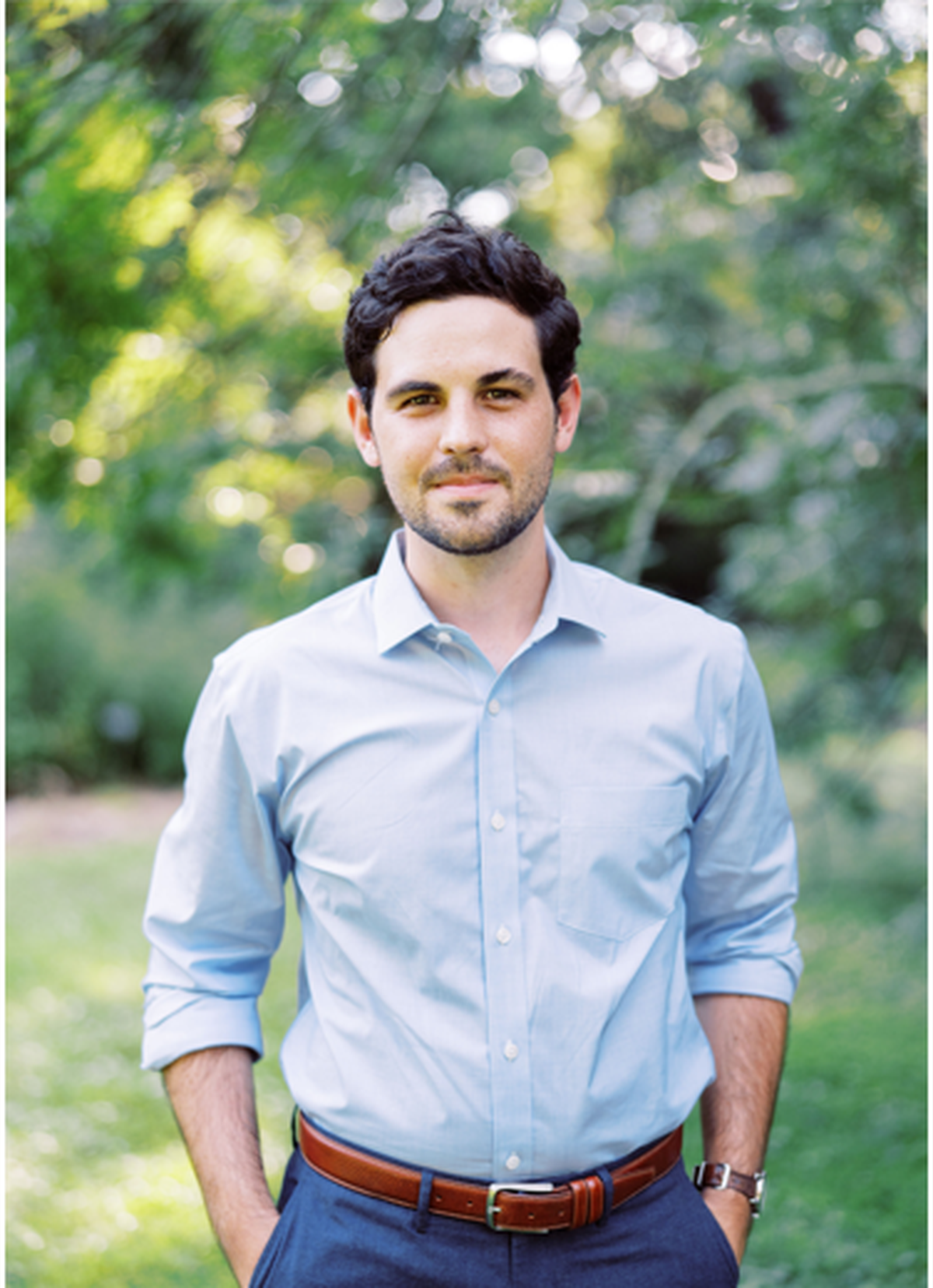
Google’s Black founders summit in Durham aims to help startups thrive despite pandemic
.jpg "DeShawn Brown, right, the founder of the coworking software platform Coworks.")
When Google’s annual summit for Black-led startups kicks off virtually in Durham in October, it will do so amid a pandemic that has devastated Black-owned businesses across the country and a social climate that is reckoning with the lack of opportunities afforded Black people.
Take these bleak statistics for example: The number of active Black business owners declined by 41% during the first few months of the pandemic, according to a study at Stanford University. Active white business owners declined by 17%.
Cash balances for Black businesses were down by 26% at the end of March from a year earlier, compared with a 12% decline for all firms, research by the JPMorgan Chase Institute found.
And just 1% of all venture-capital-backed startups were led by a Black founder, the venture capital tracker Crunchbase reported.
For five years, Google’s Black Founders Exchange, which has made its home at the American Underground in Durham, has gathered to address these inequities and provide mentorship to promising startups led by Black founders. In total, 32 companies have gone through the program.
This year, the program will bring back 23 of them to take stock of how to grow during these uncertain times. Five of those startups are based in the Triangle: Coworks, Courtroom5, Loanwell, Spokehub and Spa Utopia.
The pandemic has meant many of these promising startups have hit a wall. While most are still growing, alumni of the program said in a survey that they anticipate a 50% drop in revenue for 2020 due to COVID-19. And funding remains a challenge for most of them.
But where there are challenges, there are also opportunities.
Look at DeShawn Brown, the founder of the Raleigh-based coworking software company Coworks, for example.
Since it was founded, the company’s platform has been used at a growing number of coworking hubs to help manage their membership and engage their community. Locally, its customers include the coworking hubs Raleigh Founded (the former HQ Raleigh) and Loading Dock as well as N.C. State University.
But the pandemic essentially shut down Coworks’ core customers in the first weeks of the pandemic. “Our direct customers are suffering,” Brown said in an interview with The News & Observer, “because coworking spaces are not at capacity and a lot of people are hesitant to go to office space.”
However, it hasn’t sunk his business. Revenue is still growing, though perhaps not as aggressively as he anticipated at the beginning of the year. Now, Brown believes the pandemic is actually an opportunity to show why his company’s software is crucial to office users.
With the future of offices up in the air — especially as large tenants downsize — landlords need a tool to communicate virtually with potential and current office users.
That potential change started to grow some momentum of interest from investors, and Brown is hoping to close a seven-figure round of funding next month. That would be huge, allowing him to hire marketing and sales people to accelerate growth.
But it’s been a long journey to raising that capital. Even with experience at Google and Techstars accelerators on his resume, it often was a challenge just to land meetings with investors. The topic of funding is perhaps the one that gets the most attention at Google’s Black Founders Exchange, Brown said.
“I certainly think (Black founders) have a much more difficult time in comparison to other founders,” Brown said. “You do have to prove a lot more to get a lot less.”
In the Triangle, he thinks that struggle comes down to two things. One, there isn’t a plethora of early-stage investors in the Southeast looking to fund young companies, so that forces Black entrepreneurs to look out of state. And, two, there is little diversity among local investor groups.
“I haven’t spoken to any women or minority investors here, period. Not a single call,” Brown said. In Atlanta, where he attended the Techstars accelerator, Brown was able to meet several investors of color.
But he’s hopeful that the Triangle is making strides. There are more resources here for minority entrepreneurs now, like the Google summit. And one of the Triangle’s leading foundations for startups, NC IDEA, launched a Black entrepreneurship council to guide grants to places that support Black entrepreneurs.
Yet, despite its large Black population, the positions of power in the Triangle’s startup ecosystem don’t reflect the region’s diversity, Brown said. The state’s technology industry, as a whole, lags behind much of the country when it comes to representation, according to figures provided by the N.C. Tech Association.
Despite that, though, Brown says he wouldn’t tell minority founders to go somewhere else.
“I would say, ‘Yes, the Triangle is a great place.’ There are diverse people and support systems,” Brown said. “But we are still, as a region, learning how to bring that diversity up the chain and into the greater leadership spaces.”
This story was produced with financial support from a coalition of partners led by Innovate Raleigh as part of an independent journalism fellowship program. The N&O maintains full editorial control of the work. Learn more; go to bit.ly/newsinnovate