SAS’s new CTO says it’s time for the ‘quiet giant’ to be loud as competition increases
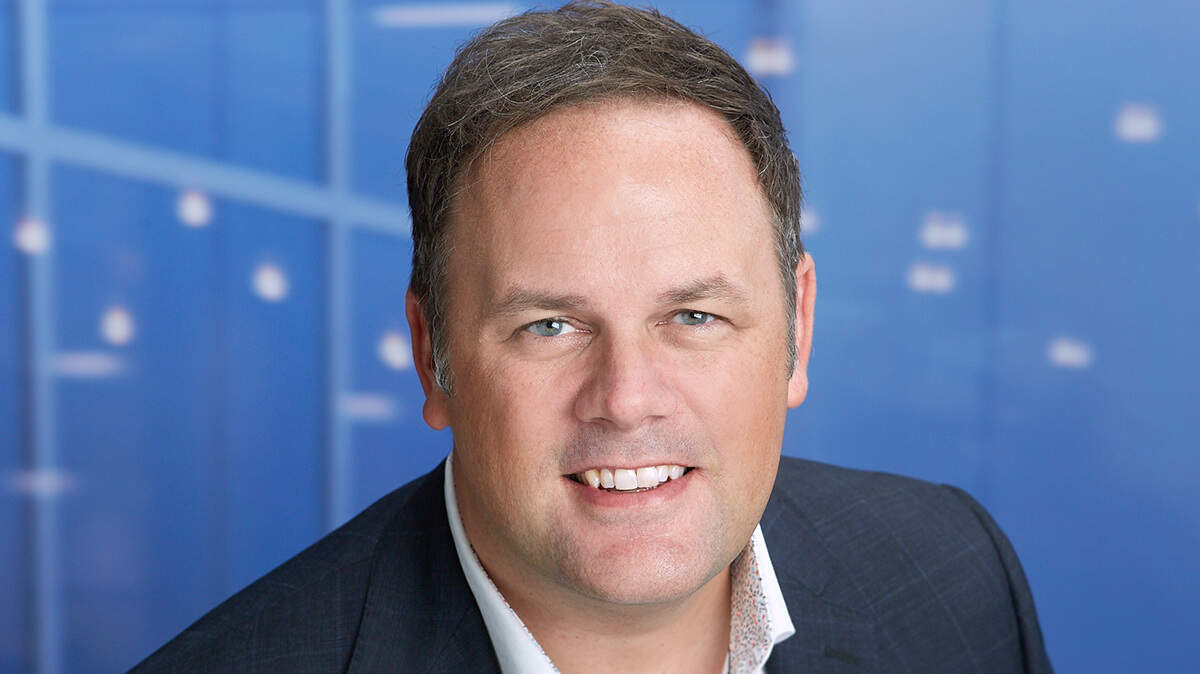
Bryan Harris, the new chief technology officer for SAS Institute, has a big job ahead.
He will be tasked with helping navigate the company’s emergence from the pandemic, shepherd its legions of giant customers into the cloud and guard against an increasingly competitive landscape.
While business is picking up again, the first few months of the pandemic hit SAS hard.
Sales at the company declined, as major customers like airlines pulled back in response to COVID-19.
Jim Goodnight, the company’s founder and CEO, even predicted in May that SAS would not make a profit for the first time since it was started in 1976.
While its financial results haven’t been finalized for the year, spokeswoman Shannon Heath said that revenue ended up down about 2% to 3% from the $3.1 billion it posted in 2019.
Yet, the company gained momentum in the second half of the year and is expected to remain profitable, she said in an email.
‘SAS is going to be louder’
In an interview, Harris said it is time for the company to be aggressive.
“I think in some ways SAS is going to be louder than it ever has (been) in the past,” Harris said in a video call.
“We’ve been a quiet giant for a long time,” he added. “We know it’s a competitive market, and I think we are really doubling down on making sure the market understands how critical we are to so many businesses around the world.”
For years, a wave of free, open-source programs, like the programming tool R, has given customers more options for data analysis.
While SAS is still the dominant player in the space, its growth in recent years has been relatively flat.
Harris said it is incumbent upon SAS to show why it is worth the money that so many companies pour into it.
“Open source keeps commercial companies honest on the value that they should be providing,” he said. “We welcome it. Open source is really lowering the barrier to entry for analytics for so many in the world.”
However, Harris believes SAS has proven to be a partner that companies across the world can trust to be accurate and repeatable.
That is no small feat as institutions rely on the company to make decisions with huge consequences.
Its customers include governments, banks and hospitals who need reliable data to make decisions that could save lives and billions of dollars.
“That’s something we always focus on: accuracy, trust, repeatability,” he said.
Harris is a longtime leader of SAS’s research and development team, a function the company invests heavily in.
He takes on the CTO job after the departure of Oliver Schabenberger in December. Schabenberger — considered next in line to be CEO — was also the company’s chief operating officer.
SAS says the move was set up for months in advance, and that it has no plans to fill the role of chief operating officer at this time.
As a member of the R&D team, Harris focused heavily on making the company’s tools work more seamlessly on cloud-based platforms.
Focusing on cloud analytics
Making its tools available on the cloud, which allows more flexibility than traditional on-site computing, is seen as a critical step for the company.
In June, SAS inked a partnership with Microsoft to make its analytics tools more accessible through its cloud service, Azure.
“That’s not a trivial task,” Harris said. “We know that 90% of customers are still on premises. So, there’s a lot of work that can be done for analytics running in the cloud.”
Harris said that in the next year he expects SAS to unveil several new capabilities in cloud analytics.
It’s doing this while its world-renowned campus — home to more than 5,000 employees and top-notch amenities — sits empty because of COVID-19.
Over one weekend in March, all of its employees had to transition into becoming remote workers. Yet the company has been able to remain productive, Harris said.
“Do we miss actually being with each other and feeling connected in that campus experience? 100 percent,” he said. “That will come back eventually. But what has come out of this entire experience to me is this feeling of confidence that we can handle whatever is thrown at us.”
Harris said it’s time for SAS to focus now on helping companies handle a post-pandemic world.
That world, he believes, is now more complicated than ever.
“This is going to last,” he said. “It is fundamentally changing behaviors of businesses, which means the entire world is trying to reorient themselves on what are the drivers for their business and what are the next demands of their products.”
If SAS can help deliver those answers to customers, Harris said, it should be return to growth quickly.
This story was produced with financial support from a coalition of partners led by Innovate Raleigh as part of an independent journalism fellowship program. The N&O maintains full editorial control of the work. Learn more; go to bit.ly/newsinnovate
This story was originally published January 7, 2021 at 1:59 PM.