Whistleblower raises hygiene concerns from 2018 FDA inspection of Merck’s Durham plant
Inspection officials from the U.S. Food and Drug Administration improperly downgraded hygiene concerns in 2018 at Merck’s Durham facility — a vaccine manufacturing plant that stands to play a key role in producing Johnson & Johnson’s one-shot COVID-19 vaccines, according to a complaint filed by an FDA whistleblower.
The whistleblower, a former FDA safety officer, wrote that he came away with serious public health concerns after touring Merck’s facility in 2018, noting that the Durham plant “produces vaccines for some of the most vulnerable populations.”
But after gathering evidence that there were “significant breaches” of good manufacturing practice, the whistleblower said, “the FDA ... did absolutely nothing to assure that the Merck facility produces quality products.”
The complaint, which originally was filed in 2018, resurfaced Wednesday after the Office of Special Counsel, a federal investigative agency, wrote a letter to the White House about the concerns.
“I am troubled by many aspects of this matter,” Special Counsel Henry Kerner wrote in the letter dated March 31.
The letter comes after the federal government promised to spend $105.4 million retrofitting Merck’s Durham plant for the production of Johnson & Johnson’s COVID-19 vaccine, The N&O reported in March.
Merck’s 262-acre facility in north Durham will be one of two in the country to help ramp up manufacturing of Johnson & Johnson’s one-shot vaccine — part of a massive effort to help stop the spread of the coronavirus.
In a statement to The News & Observer Thursday, Merck said “any suggestions” that the company doesn’t follow regulations and keep safety in mind “are patently and demonstrably false.” Merck said all of its facilities “maintain strict, well-documented safety and quality protocols that adhere to, if not exceed, current Good Manufacturing Practices based on U.S. and international standards.”
“Merck’s highest priorities are the health and safety of patients and our employees and the quality of our medicines and vaccines,” the company added. “We produce our medicines and vaccines to the highest standards, in full compliance with regulations and good manufacturing practices.”
According to a federal database, Merck’s Durham facility has not been inspected since 2018. Before that it was inspected in 2016 and 2014. Its 2020 on-site inspection was put off due to the pandemic.
Whistleblower allegations
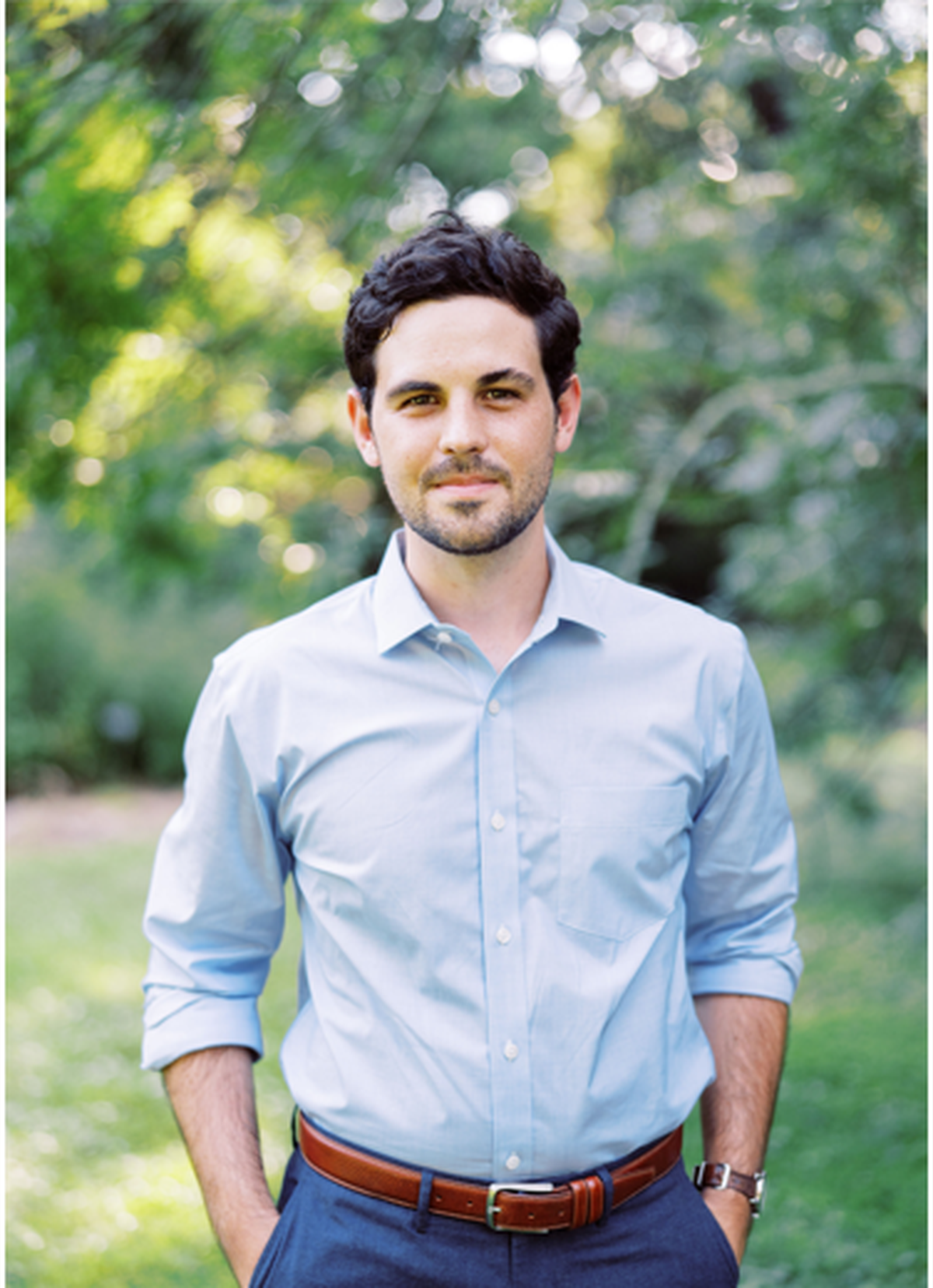
Arie Menachem confirmed Thursday to The News & Observer that he was the whistleblower and that he inspected Merck’s facility in Durham. His complaint was previously reported by Politico and Vanity Fair.
Menachem, who left the FDA in 2019 and now lives in Israel, worked on the FDA’s Team Biologics, a group of 14 workers responsible for inspecting a variety of sensitive manufacturers, including those that make vaccines.
Menachem’s complaint mentions concerns at other facilities, but he told Politico that Merck’s Durham plant was “the straw that broke the camel’s back.”
Kerner, the special counsel, wrote in his letter to President Joe Biden that he is “most concerned” with the FDA’s response to the 2018 inspection at the Durham facility.
“I concur with (the whistleblower) in his assertion that the agency narrowly focuses on procedural issues, and in so doing, disregards the fact that inspection reports detailing serious concerns were downgraded in a manner that may compromise compliance and safety efforts,” Kerner wrote. “While these downgrades appear within the authority of agency management, questions remain about their suitability”
Kerner sent copies of the letter to the Senate Committee on Health, Education, Labor and Pensions, and the House Committee on Energy and Commerce.
The FDA declined to comment for this story. Johnson & Johnson has not responded to The News & Observer’s request for comment.
In an interview with the N&O, Menachem said his team was understaffed heading into the Merck inspection in late October 2018. Typically, plant inspections can take 21 days and require multiple inspectors, he said.
But when he was assigned the Merck facility in Durham, which he said is the size of 13 football fields, he was told he had a week to do the inspection and that he would be the only inspector.
To Menachem, that was unreasonable, especially after a confidential informant had levied strong allegations against the facility. When he asked for more help with the inspection, though, he said he was denied. It made him feel like the FDA wasn’t taking his team’s role seriously, he said.
The letter from the Special Counsel details several potential safety violations that Menachem spoke with the confidential informant about.
The possible violations included: the improper presence of a biohazard bin used to collect employee uniforms that contained blood, urine and feces, and an allegation that employees were “soiling their uniforms” instead of taking bathroom breaks.
The bathroom break, the letter states, would have necessitated disrobing and leaving manufacturing areas. That could be time-consuming, Menachem said.
The letter also outlines an accusation that employees moved between clean rooms and uncontrolled rooms without changing gowns.
Menachem contends that Merck was hiding evidence of violations. He said he met with the on-site whistleblower, who showed him photos of a trash bin with a sign for workers to dispose of gowns that contained feces, urine or blood. The confidential informant told him that trash bins were put out after their gown supplier complained about receiving garments containing urine, blood and feces over the course of a month, he said.
Merck previously told Vanity Fair that biohazard bins had been put in place years prior, “so that in rare circumstances when they may be necessary, it is clear where personnel must dispose of gowns that cannot be relaundered.” The company also told the magazine that “presence of these bins does not indicate that they are needed on a regular basis — they are not.”
What happened after allegations
In Menachem’s written report on his visit, he labeled his concerns as “Official Action Indicated,” a serious warning that would have required the company to work with the FDA to address the findings.
But the findings were downgraded to “Voluntary Action Indicated,” a ruling that indicates a facility should make non-urgent corrections rather than urgent ones, the complaint states. Menachem wrote in his letter that no follow-up inspection occurred.
Menachem said more time should have been put into the Merck investigation rather than downgrading the warning. Instead, there was no follow-up, he said, and the FDA dismissed his complaints when he raised them to supervisors.
That led him to filing a whistleblower complaint with the Office of Special Counsel, he said.
“I wanted them to make sure that they understood that something wrong was happening and that we weren’t taking this situation seriously,” Menachem said. “I wasn’t being given the tools to succeed and to fulfill the FDA’s mission, which is to protect and promote public health.”
Once the Special Counsel had the complaint, it referred it to Alex Azar, the head of Health and Human Services during the Trump administration, in February 2019, and it was investigated by the FDA’s Office of Regulatory Affairs. In June 2019, the FDA wrote in a letter to the Special Counsel that the whistleblower complaint had no merit.
In January, Menachem responded to the FDA’s report defending his account of the inspection. On Wednesday, the Special Counsel closed the matter with the letter to the president, saying he was concerned about the FDA’s conduct in the 2018 inspection of the Merck plant.
Menachem said Thursday he is pleased that the Office of Special Counsel supported him in its letter to the White House.
“I feel vindicated,” he said. “After the FDA wrote their response, where they stated my complaint was totally unsubstantiated, you begin to think, ‘Am I the crazy person in the room?’
“It’s nice to feel like what you were worried about, the (FDA) should have worried about.”
He’s hopeful that the Special Counsel’s letter will have a strong impact on the FDA, an institution he still respects.
“The vast majority of times they get it right. I really do believe that,” he said. “Team Biologics is an aberration. Unfortunately, it’s an aberration that has a lot of impact.”
The N&O asked Matthew Johnson, the senior director of product development at the Duke Human Vaccine Institute, whether consumers should be concerned about the whistleblower complaint.
“The FDA has one of the most rigorous and extensive product safety and facility safety evaluation and inspection programs in the world,” Johnson replied in an email, “and in my experience is very thorough in their ability to conduct investigations and ensure compliance is maintained at facilities during such investigations.”
Still, he said, it’s good to have the whistleblower program in place as a backstop.
Merck’s Durham plant
The Durham plant is expected to make the Johnson & Johnson vaccine substance while another Merck facility in West Point, Pennsylvania, will bottle the doses, Politico reports.
Merck’s Durham facility at the Treyburn Corporate Park is named after Maurice R. Hilleman, a Merck scientist who developed vaccines for measles, mumps, rubella and hepatitis A and B, according to the University of Pennsylvania, where he taught.
The vaccine for measles, mumps and rubella is among the products manufactured at the Durham plant. Amanda Taylor, who leads the Durham site for Merck, told NCBiotech that the facility expected to produce “nearly 50 million doses” of vaccine in 2020.
Menachem’s 2018 visit came at a moment of transition for the Merck facility in Durham. The company, at the time, was producing two vaccines there: one for measles, mumps and rubella and another for shingles and chicken pox.
The informant had told Menachem that demand in the chickenpox and shingles vaccine had fallen because of a competing vaccine from GlaxoSmithKline. The informant told Menachem that he felt the company was cutting corners because it was seeing less demand for that product.
A few months after the inspection, Merck laid off 150 people in Durham, citing “changing market conditions” for its shingles and chickenpox vaccines, The N&O previously reported.
The J&J contract could lead to even more hiring, the company has said.
It’s now more than two years since Menachem visited the Merck plant. When asked whether he would take a COVID-19 vaccine that had been made there, Menachem said he would, citing the severity of the pandemic.
“But that’s not a choice we should have to make,” he said. “We shouldn’t have to fear at all, and we should be able to take them with a whole heart.”
With a stronger inspection team at the FDA, we can restore that confidence, he said.
On Wednesday, The New York Times reported that a mixup at a plant run by Emergent BioSolutions in Baltimore will cause a major delay in shipping some J&J vaccines, due to the contamination of 15 million doses.
This story was produced with financial support from a coalition of partners led by Innovate Raleigh as part of an independent journalism fellowship program. The N&O maintains full editorial control of the work. Learn more; go to bit.ly/newsinnovate