Cree officially becomes Wolfspeed, as company turns focus towards semiconductors and EVs

Before Gregg Lowe was named CEO of Cree in 2017, he pitched the company’s board about transitioning from the lighting and LED products it had been known for since its founding in 1987.
He wanted to center Cree’s future around a small division within the company that made silicon carbide chips.
The division, Wolfspeed, was the smallest of Cree’s three businesses, and just months prior was almost sold to the German company Infineon until the deal fell apart after U.S. regulators raised concerns about it.
There was not much growth left in LED lighting, Lowe argued before taking over the company from Chuck Swoboda. Silicon carbide, on the other hand, had a ton of upside, especially as a key component for electric vehicles.
“I spent my whole life in semiconductors, and I just looked at it from an outside perspective,” said Lowe, who previously led Austin, Texas-based Freescale Semiconductor. “I actually presented to the board: You know, what what we need to focus on is silicon carbide and the transition from internal combustion to electric cars.”
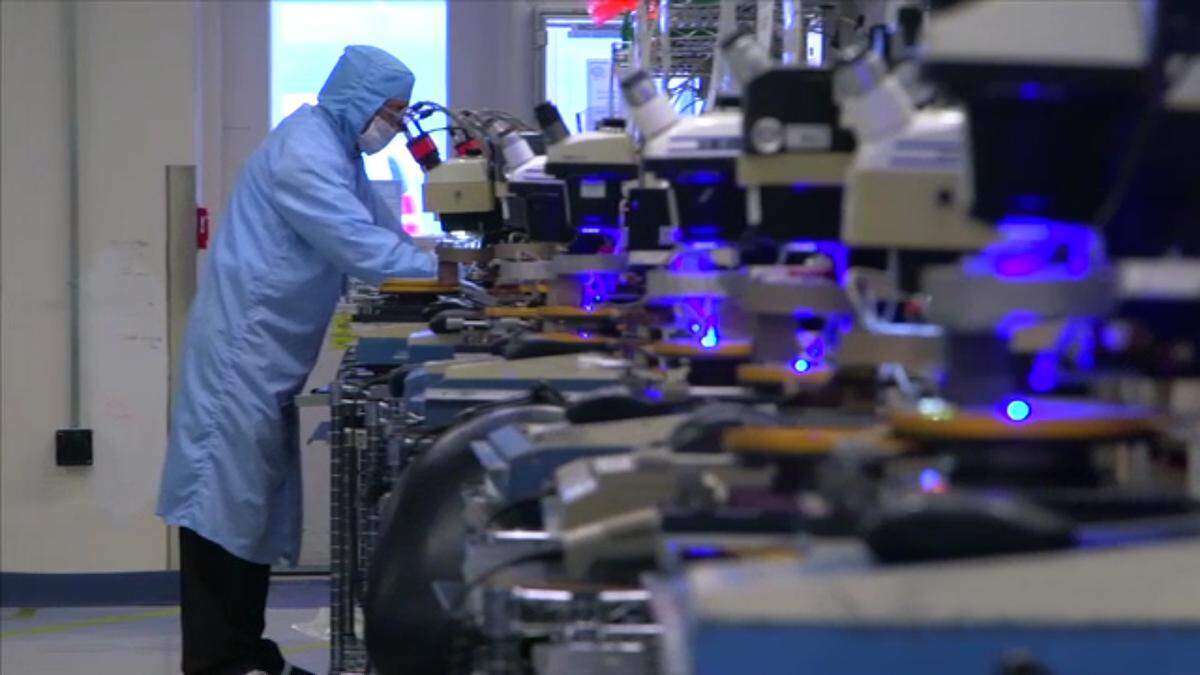
Four years later that transition is complete.
The company has sold off its LED products and lighting business. On Monday, it officially dropped the name Cree, which will still be used on lighting products sold by other companies now.
Going forward, its name will be Wolfspeed, and its stock ticker has changed to “WOLF.” Wolfspeed is an homage to the company’s roots at N.C. State University.
“We’re not an LED company. We’re not a lighting company,” Lowe said. “We are a powerhouse compound semiconductor company focused on silicon carbide, so I think (the name change) will help clarify our identity more than anything.”
Lowe believes silicon carbide will be a key component for electric vehicles, especially as customer demand for EVs has accelerated significantly over the past two years.
On Monday, Wolfspeed got a huge boost in to those efforts. The company said it signed a partnership with General Motors to supply silicon carbide power device solutions for the Detroit car maker’s future electric vehicle program.
Electric car makers are interested in silicon carbide because it can extend the driving range for batteries farther than silicon, the trade publication Semiconductor Engineering noted recently.
“Customers of EVs are looking for greater range, and we see silicon carbide as an essential material in the design of our power electronics to meet customer demand,” Shilpan Amin, GM’s vice president of global purchasing and supply chain, said in a statement. “Working with Wolfspeed will help ensure we can deliver on our vision of an all-electric future.”
Wolfspeed is betting heavily that electric-vehicle demand for silicon carbide chips will explode in the next 10 years.
One forecast, by the International Energy Agency, predicts that the number of electric cars, buses and trucks will reach 145 million by 2030. Currently, there are around 10 million electric vehicles on the road, the IEA reported.
Wolfspeed is building a $1 billion chip factory in New York to meet that potential demand. The New York plant will begin production next year, Lowe said.
It’s a significant investment for a business division that has revenue of around $525 million per year.
Investors have responded tepidly so far this year. Cree’s stock price has fallen around 25% to around $80 a share since the beginning of the year. Though, as Lowe notes, the share price is up more than 183% since he joined the company.
“We have a pretty substantial investment going on right now with expanding capacity in North Carolina and expanding capacity in New York. That costs a lot of money,” Lowe said, adding that investment has sent its free cash flow negative.
But Lowe believes there’s a $15 billion opportunity ahead in silicon carbide.
“Ramping a new production facility and expanding the capacity is not for the faint of heart,” he said. “But I think, over a longer period of time, investors will really be rewarded for the position we have.”
This story was produced with financial support from a coalition of partners led by Innovate Raleigh as part of an independent journalism fellowship program. The N&O maintains full editorial control of the work. Learn more; go to bit.ly/newsinnovate.
This story was originally published October 4, 2021 at 8:57 AM.