How Sheila Mikhail went from being a lawyer to leading a $4B biotech company
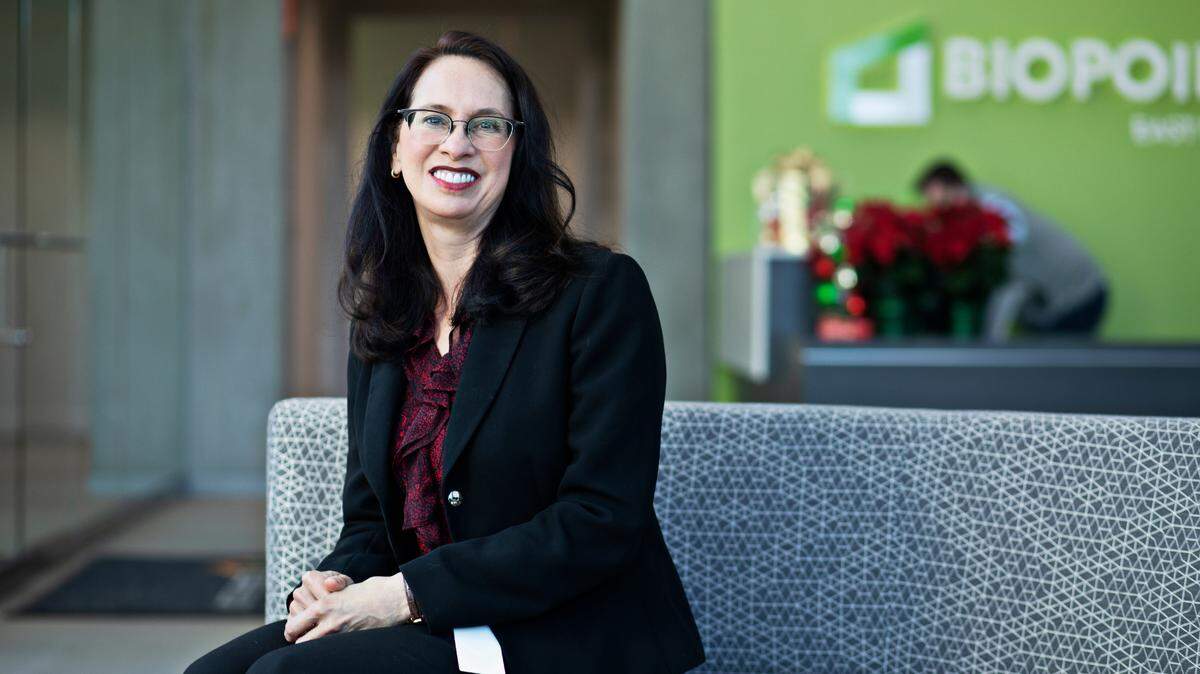
For years, Sheila Mikhail, the chief executive officer of the Research Triangle Park gene therapy company AskBio, carried a note around with her.
Written by a young boy with Duchenne muscular dystrophy — a genetic disease AskBio helped create a gene therapy for — the note motivated Mikhail through every rejection from a potential investor and the numerous demoralizing moments of running a young company, especially one in the experimental field of gene therapy.
She carried it for so long, it began to disintegrate, leaving it nearly illegible. But Mikhail still remembers the words of the patient, whose disease mainly affects young boys, causing their muscles to lose function. Many with the disease do not survive beyond their teenage years, according to the Muscular Dystrophy Association.
“I know you won’t be able to help me in time. But I’ll look down from heaven, and I know, eventually, you’ll be able to help the boys that follow me,” the note said.
“All these kids are so brave,” Mikhail, 55, said in a recent interview. “And they’re so optimistic that, you know, it makes you continue on.”
Already, a few young boys have shown promising results after receiving the experimental gene therapy, NPR Reported. In 2016, she helped sell the potential Duchenne treatment to the pharmaceutical giant Pfizer, which is now putting it through a pivotal Phase 3 study.
A company at the edge
But it has been a long journey to get to that position.
Mikhail — who founded AskBio in 2002 with gene therapy pioneer and UNC professor Jude Samulski — now leads a company on the edge of the gene therapy industry.
Gene therapy has been cast as one of the most promising forms of treatment in recent years for diseases like cancer and some inherited disorders. The treatment uses a variety of methods to replace mutated genes that cause disease with healthy ones or add a new gene to counteract a disease.
But it wasn’t always looked at in a positive light. For 15 years, AskBio could not raise a single dollar from investors or afford to pay a salary to Mikhail, who still worked as a lawyer.
Today, AskBio has nearly 400 employees and played a part in helping Zolgensma, a gene therapy that treats spinal muscular atrophy, become one of the first gene therapies approved by the U.S. Food and Drug Administration in 2019.
And last year, Mikhail negotiated a blockbuster deal to sell AskBio to the German pharmaceutical giant Bayer, which views the company as a linchpin to its own gene therapy ambitions.
AskBio’s pipeline includes experimental treatments for Parkinson’s disease, Pompe disease, multiple system atrophy, Huntington’s disease and several others. It also operates a gene therapy manufacturing business that has become valuable in an industry with capacity constraints.
The Bayer deal, valued at up to $4 billion, came as AskBio was actually on the verge of going public. But Bayer promised to give AskBio a large amount of independence.
“They gave us assurances that we would continue to operate as a independent company with our headquarters in RTP,” Mikhail said. “And that was important to us.”
William Hawkins, the former CEO of the medical device company Medtronic and a Durham native, said deals of that magnitude are extremely rare in the Triangle. It takes “tenacious” leadership, he said, to shepherd a platform with as much promise as AskBio into a multibillion-dollar deal.
“She is extremely intense,” he said in a phone interview. “And when the door gets shut, she finds the window.”
In November, EY, one of the largest accounting firms in the world, named Mikhail its entrepreneur of the year.
A chance meeting
Mikhail’s story with AskBio started in 2000, when she moved to the Triangle from Boston, after her then husband accepted a job at Duke.
Shortly after the move, Mikhail, a native of Illinois who holds a law degree from Northwestern University and an MBA from the University of Chicago, took a job at a local law firm.
It was a terrible fit from the start.
“They actually told me that people in the South would not really like to get complex legal advice from women and women of color in particular,” said Mikhail, who is Mexican-American.
She soon left and started a boutique firm focused on providing legal services to life sciences companies, which she thought were woefully underserved and primed to explode in the next decade.
The firm, called Life Sciences Law, immediately gained a foothold locally, and eventually landed clients like Bayer, Gilead and GSK.
When asked if she feels like she proved her old law partners wrong, Mikhail said she doesn’t worry about them anymore.
“I don’t spend time worrying about what people that I don’t respect think,” she said. “But years later they did ask if I would come back to lead the life sciences law practice for the firm.”
Around the time she was launching her own firm, Ted Zoller, of UNC’s business school, asked Mikhail to talk to one of his classes about how to take promising research and turn it into a business.
Sitting in that day was Samulski, who approached Mikhail after the class. He was looking for help with an idea he had to use adeno-associated viruses (AAV) as a way to replace defective genes with healthy ones.
At the time, gene therapy was in a dark place. In 1999, a patient had died in a gene therapy clinical trial at the University of Pennsylvania. That clinical trial used a different gene-therapy method than Samulksi’s AAV technique, NPR reported. But still, it created a major setback for the field and investment money dried up.
Samulski, however, was still a believer in its promise.
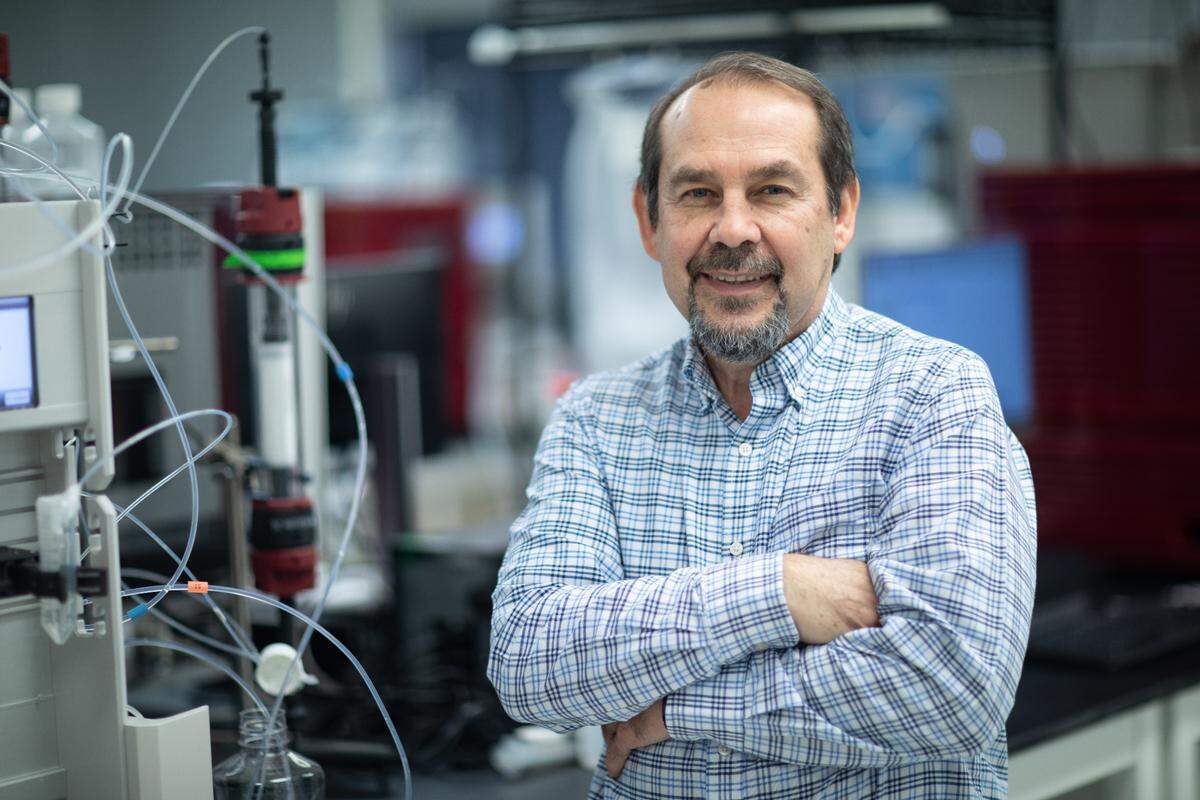
“He said, ‘You know, I won’t be able to pay you, probably for a long time, because everybody thinks that this stuff is science fiction and maybe even dangerous,’” Mikhail recalled. “’But ... if we’re successful and the science works, it will be transformative.’”
The potential for transformation has always attracted Mikhail. She told the Triangle Business Journal in 2008 that she always asks herself: “How did you impact the world?”
Accepting Samulski’s offer made her one of the few female CEOs in the Triangle’s biotech scene — a fact she says remains stubbornly true almost 20 years later.
“It’s a very lonely place,” she said of being a woman in the biotech field. Yet the team she has built at AskBio includes a management team that is majority women.
Samulski credits Mikhail for a large portion of the company’s growth over the past two decades.
“You can’t put on a hat to be a scientist one day and a hat to be a business person the next day,” Samulski told The N&O last year of their dual roles at the company.
Still, Mikhail is no slouch when it comes to understanding the complex science underpinning the company. When she isn’t working at AskBio or hiking with her two dogs, Eno and Boo, Mikhail said one of her favored hobbies is to read medical journals.
“She’s not a trained scientist, but she’s one of these bright individuals who really makes it her mission not just to be superficial and learn the buzzwords,” Hawkins said. “She understands the science in a pretty profound way.”
Protecting AskBio’s future
In the early years, it was really just her and Samulski trying to raise money. Venture capitalists were not interested, so the company’s first funding breaks came from foundations, like the Muscular Dystrophy Association.
The company’s momentum began to change almost a decade ago, when big pharmaceutical companies started becoming interested in gene therapy.
To get funding for certain promising treatments without diluting AskBio, Mikhail decided to license small portions of the firm’s intellectual property to subsidiary firms.
Its potential hemophilia treatment was spun out into Chatham Therapeutics, which was then bought by Baxter International in 2014. Several other treatments, including the one for Duchenne, were turned into Bamboo Therapeutics, which was acquired by Pfizer in 2016 for more than $600 million.
The Pfizer deal and the FDA’s first approvals of gene therapy treatments in 2017 sent a signal to the rest of the market.
Just a few years later, AskBio could go from getting no attention from VC funds to raising $235 million, and Mikhail realized the company could actually thrive.
The change in fortune remains bittersweet for Mikhail, especially because of how close they had grown to the Duchenne patients in the early years.
“Unfortunately, we had to sell our drugs,” she said. “I couldn’t get financing for Bamboo, so Pfizer now is advancing (the Duchenne treatment), which is one of the hardest things for Jude and me. And probably it is one of the biggest regrets because we would have liked to have taken that all the way to completion.”
But “that drug is in phase three clinical trials, right, so it’s doing very well,” she added.
The deal with Bayer allows Samulski and Mikhail to continue the journey with their other potentially life-changing drugs.
Bayer, she said, has remained supportive of the company’s efforts and has allowed it to expand its research into new types of gene therapy.
The company is already thinking beyond using AAVs to deliver gene therapy treatments, exploring other methods like lipid nanoparticles (LNP) and other non-viral forms of gene editing.
“When I talk to Bayer, their commitment ... is to make AskBio the leading gene therapy company,” she said.
That will require expanding AskBio’s research into different directions.
“It’s all about vision,” she said, “and not putting artificial constraints on your growth and development.”
This story was produced with financial support from a coalition of partners led by Innovate Raleigh as part of an independent journalism fellowship program. The N&O maintains full editorial control of the work. Learn more; go to bit.ly/newsinnovate.
This story was originally published December 17, 2021 at 8:30 AM.